TLP:CLEAR · Disclosure is not limited.
Hormuz disruption deepens as Bab-el-Mandeb blockade remains unverified
Time window: Last 1 day · Audience: General analyst · Type: Situation report · DTG: 2026-10-31 12:42Z · Overall confidence: HIGH
BLUF
Commercial passage through the Strait of Hormuz is likely severely constrained, but the evidence does not establish that it is fully closed. Reporting describes Houthi-driven contraction in Red Sea shipping, not a verified current blockade or disruption at four of five key straits. The best dated Brent report puts the 30 October close at $117.70; the reported $108 figure is unreconciled.
Executive summary
UKMTO reporting puts Strait of Hormuz traffic about 70 per cent below pre-war levels, with 277 vessel movements in the seven days to 28 October. UKMTO also reported at least 35 attacks on shipping in the Persian Gulf and Strait of Hormuz during October, its highest monthly total since the war began. A 29 October attack on the Panama-flagged tanker Louise 1 near Khasab is reported as a small-boat limpet-mine attack, but responsibility remains unconfirmed and Iranian accounts dispute the mechanism and incident count. Reporting attributes a contraction in Red Sea shipping to Houthi attacks, but the only dated Bab-el-Mandeb transit figure provided is 11 commodity vessels on 26 July. Brent and tanker earnings are elevated in the supplied reports; those reports do not quantify war-risk insurance premiums or establish a current four-of-five chokepoint disruption count.
Change from previous assessment
Since the 30 October brief, UKMTO reporting adds a weekly count of 277 Hormuz vessel movements and an estimate that traffic remains about 70 per cent below pre-war levels; this supports continued severe constraint but does not establish full closure. New reporting describes Houthi-driven Red Sea shipping contraction and gives a dated count of 11 commodity vessels through Bab-el-Mandeb on 26 July. This raises the assessment of Red Sea disruption from the prior brief, but does not establish a current blockade or four-of-five straits disruption. The $108 Brent figure remains unresolved against a reported 30 October close of $117.70. New reports of US strike preparations and Mojtaba Khamenei's response order add a near-term escalation judgment, with low confidence because accounts of US decision status conflict.
Key judgments
- Commercial passage through the Strait of Hormuz is likely severely constrained rather than fully closed. UKMTO reporting records 277 vessel movements in the seven days to 28 October and puts traffic about 70 per cent below pre-war levels. Donald Trump says the strait is open and mines are cleared, while Iranian forces say passage is closed or restricted; those official claims conflict with one another and with the reported traffic level. (Confidence: medium · ASSESSED)
- I&W: A UKMTO weekly assessment in the next reporting cycle records traffic still more than 50 per cent below pre-war levels, confirming continued constraint. (0-14 days)
- I&W: Two consecutive UKMTO weekly assessments record traffic close to pre-war levels, breaking the assessment of severe constraint. (1-2 months)
- Houthi attacks are likely contributing to reduced Red Sea shipping, but the supplied reporting does not establish a current Bab-el-Mandeb blockade or disruption at four of five key straits. One report describes a major contraction in shipping and falling Red Sea oil transit; the only dated transit count supplied is 11 commodity vessels on 26 July, which does not establish the current October level. This judgment rests on limited reporting and an outdated transit figure. (Confidence: low · ASSESSED)
- I&W: A current, source-verified daily transit series records fewer than 11 commodity-vessel passages through Bab-el-Mandeb on repeated days, confirming continued contraction. (0-14 days)
- I&W: A current daily transit series records more than 11 commodity-vessel passages on repeated days, weakening the assessment of continuing severe contraction. (0-14 days)
- The chokepoint crisis is likely transmitting into oil and tanker costs, while Gulf fertilizer exports remain exposed to further disruption. A trade report says Brent reached $118 and closed at $117.70 on 30 October; an article headline reports $108, while EIA Brent spot was $123.10 on 27 October, so the figures are not directly comparable and the $108 reference is unresolved. Middle East-to-China tanker earnings reached $1.35 million per day on 29 October, against $218,000 per day before the war. The Persian Gulf region accounts for up to 35 per cent of global urea exports and 30 per cent of internationally traded fertilisers. (Confidence: medium · ASSESSED)
- I&W: Brent closes above $117.70 on successive trading days while Middle East-to-China tanker earnings remain above $1.35 million per day, confirming sustained market pressure. (0-14 days)
- I&W: Middle East-to-China tanker earnings return towards the reported pre-war level of $218,000 per day for successive weekly assessments, weakening the assessment of persistent freight pressure. (1-3 months)
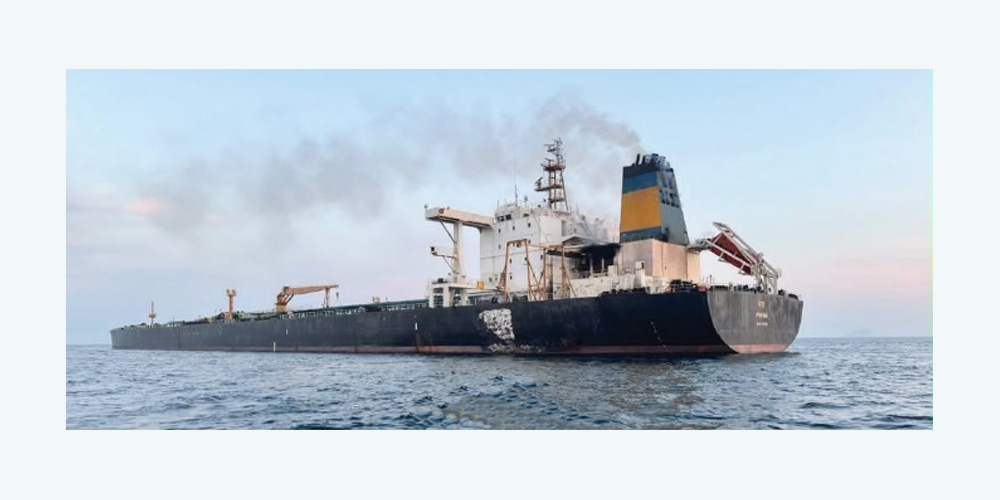
- A small boat attack on the Panama-flagged Louise 1 about 25 nautical miles northeast of Khasab on 29 October is very likely to have involved two explosive devices attached to the hull, causing an engine-room fire. UKMTO reporting confirms the location and that the vessel resumed its voyage, while maritime trade reporting describes the devices and small boat. The attacker is unidentified. Iranian accounts describe other tanker incidents as mine strikes or interceptions, and the reported number and mechanisms of affected vessels remain disputed. (Confidence: medium · REPORTED)
- I&W: A vessel damage survey or crew account independently confirms explosive devices attached by a small boat to the Louise 1, confirming the reported mechanism. (0-14 days)
- I&W: A vessel damage survey establishes that the Louise 1 fire was not caused by an explosive device or small-boat approach, breaking the reported mechanism. (0-14 days)
- A renewed US-Iran strike exchange after 3 November is roughly even chance, but confidence is low because reporting on US preparations conflicts over whether President Donald Trump had made a decision. The Associated Press reports warnings to regional allies about a possible resumption of attacks; MS NOW sources report preparations for strikes on 4 November, while two diplomats say Trump had not made a final decision. Mojtaba Khamenei has ordered an immediate response to enemy threats without geographic limits, raising the stakes if US strikes resume. (Confidence: low · ASSESSED)
- I&W: A US strike on Iran or an official US announcement of an operation after 3 November confirms renewed military action. (0-14 days)
- I&W: Qatari mediators announce an agreed de-escalation framework that includes a Hormuz passage arrangement before any reported strike, weakening the assessment of an imminent strike exchange. (0-14 days)
Outlook & scenarios
Constrained passage continues (35%)
Hormuz traffic remains well below pre-war levels and attacks continue to deter some operators, without a verified full closure. Houthi attacks continue to weigh on Red Sea shipping, but no current evidence establishes a Bab-el-Mandeb blockade. Oil and tanker costs remain under pressure.
Mediation produces a limited maritime arrangement (15%)
Qatari mediation, with Pakistan involved in earlier efforts, produces a limited understanding on passage or de-escalation. Traffic through Hormuz improves from current levels but does not immediately return to normal. Competing US and Iranian claims about control and mine clearance remain unresolved.
Renewed US-Iran strikes widen the crisis (45%)
US military action resumes after the 3 November elections, followed by Iranian retaliation against US-linked assets or regional infrastructure. The existing Hormuz disruption worsens, and tanker operators face additional security and cost pressures. The reported strike preparations and Iranian response orders provide warning indicators, but do not establish that this sequence has been decided.
Wildcard: Houthi attacks cause temporary denial at Bab-el-Mandeb (5%)
Houthi attacks expand from reported shipping disruption to a temporary denial of commercial passage through Bab-el-Mandeb. This would compound the Hormuz crisis and deepen pressure on Red Sea oil transit and Gulf fertilizer exports. The supplied reporting does not establish that a blockade is in place.
Recommendations
- Track UKMTO weekly traffic and attack reporting for Hormuz, and report vessel movements separately from attacks. Do not describe the strait as fully closed or fully safe on the basis of either Iranian or US statements alone.
- Require a current, dated Bab-el-Mandeb transit series before describing a blockade or counting the straits currently disrupted. Keep the 26 July figure separate from October reporting.
- Use dated price observations and identify the measure being reported. Do not combine the $108 headline, the reported 30 October Brent close, and EIA spot data as though they were the same observation.
- Monitor daily tanker earnings and Gulf fertilizer-export exposure in supply assessments. Treat war-risk premium increases and tanker-availability claims as unverified until supported by specific reported figures.
- Keep the reported Louise 1 attack separate from IRGC claims about other tankers. Do not assign responsibility or settle the mine-versus-missile dispute without independent incident reporting.
- Treat reports of US strike preparations as contingency reporting, not confirmation of a presidential decision. Check for an official US announcement, a verified strike, or a documented agreement from Qatari mediation before updating the near-term escalation assessment.
Confidence & uncertainty
Overall confidence is high for the core picture of severe Hormuz disruption and market transmission because UKMTO traffic and attack reporting, maritime trade accounts of the Louise 1 incident, and official EIA price data provide support across source types. Some accounts repeat the same underlying UKMTO reporting. Confidence is lower on current Bab-el-Mandeb traffic, the number and mechanism of tanker incidents, the precise Brent comparison, and whether US strike preparations reflect a decision. US and Iranian statements on passage and mine clearance are opposing interested-party accounts.
Alternative analysis (red cell)
The available reporting indicates heightened US-Iran escalation risk, but a renewed strike exchange after 3 November may be less than an even chance because the strongest reporting includes only conditional warnings and diplomats say no final decision had been made (c8dec6f2-cee6-4bec-b2b5-ecf7bbf611c6; a968c318-cd10-4ccf-9974-cf6d44c8ea6b). The MS NOW account of preparations for 4 November (600bbe04-cbeb-4f52-b991-a7115d5438f7) may reflect contingency planning rather than settled intent, while ongoing diplomatic efforts (589d54fb-2135-44fe-818d-87f34233fa67) provide an alternative pathway.
Intelligence gaps
- [EEI 1.3 · PARTIAL] Daily vessel-transit volume, AIS dark activity, anchorage buildup, and rerouting rates at Hormuz and Bab-el-Mandeb compared with pre-crisis levels. Recommended collection: maritime/AIS
- [EEI 2.1 · PARTIAL] US, coalition, Iranian, Saudi, Omani, and other naval force posture changes, including escorts, convoy schedules, mine-countermeasure deployments, air patrols, and rules-of-engagement announcements. Recommended collection: maritime/defense-reporting
- [EEI 2.2 · UNCOVERED] Tanker and container-ship rerouting through the Cape of Good Hope or other alternatives, including added sailing days, fuel consumption, and available vessel capacity. Recommended collection: shipping-industry/AIS
- [EEI 2.3 · UNCOVERED] War-risk insurance premium, deductible, coverage-exclusion, and voyage-approval changes for Hormuz, Bab-el-Mandeb, Red Sea, Gulf of Aden, and adjacent waters. Recommended collection: insurance-market
- [EEI 2.4 · UNCOVERED] Operational status and export-loading changes at Saudi, UAE, Omani, Iranian, Djiboutian, and Red Sea ports, terminals, pipelines, and storage facilities. Recommended collection: port-operator/energy-infrastructure
- [EEI 3.1 · PARTIAL] Brent and Dubai crude price movements, futures-curve shifts, volatility, and the spread between regional and global crude benchmarks. Recommended collection: commodity-markets
- [EEI 3.2 · PARTIAL] Changes in crude, refined-product, LNG, and LPG volumes transiting the straits and in announced production cuts, strategic-stock releases, or emergency cargo substitutions. Recommended collection: energy-trade/AIS
- [EEI 3.3 · PARTIAL] Fertilizer shipment delays, canceled or redirected cargoes, regional price increases for urea and ammonia, and reported inventory levels in import-dependent markets. Recommended collection: commodity-trade/port-data
- [EEI 3.4 · UNCOVERED] Container freight rates, vessel charter rates, bunker costs, port congestion, and manufacturing or retail supply disruptions attributable to the chokepoint crisis. Recommended collection: shipping-and-logistics-markets
- [EEI 4.2 · PARTIAL] Diplomatic commitments, deconfliction arrangements, prisoner or vessel releases, and publicly announced conditions for reopening commercial transit. Recommended collection: diplomatic-reporting
- [EEI 4.3 · PARTIAL] Shipping-company decisions to resume, suspend, or expand transits and corresponding changes in insurer voyage approvals and war-risk premiums. Recommended collection: shipping-and-insurance-industry
- [EEI 4.4 · PARTIAL] New incidents, military alerts, vessel diversions, or port restrictions at other critical chokepoints indicating geographic spread beyond Hormuz and Bab-el-Mandeb. Recommended collection: maritime/AIS-official-notices
Red cell review: PARTIAL DISSENT
TLP:CLEAR