TLP:CLEAR · Disclosure is not limited.
Hormuz Disruption Deepens as Iran Conflict Raises Regional Costs
Time window: Last 1 day · Audience: General analyst · Type: Situation report · DTG: 2026-09-15 20:35Z · Overall confidence: HIGH
BLUF
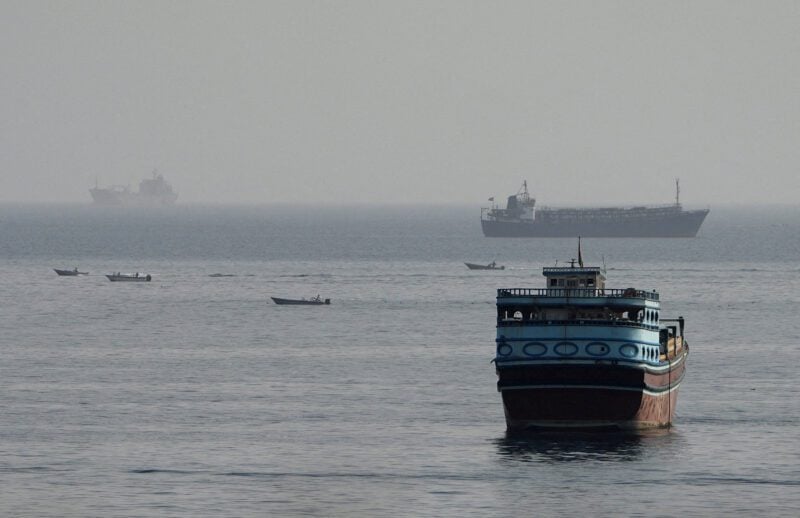
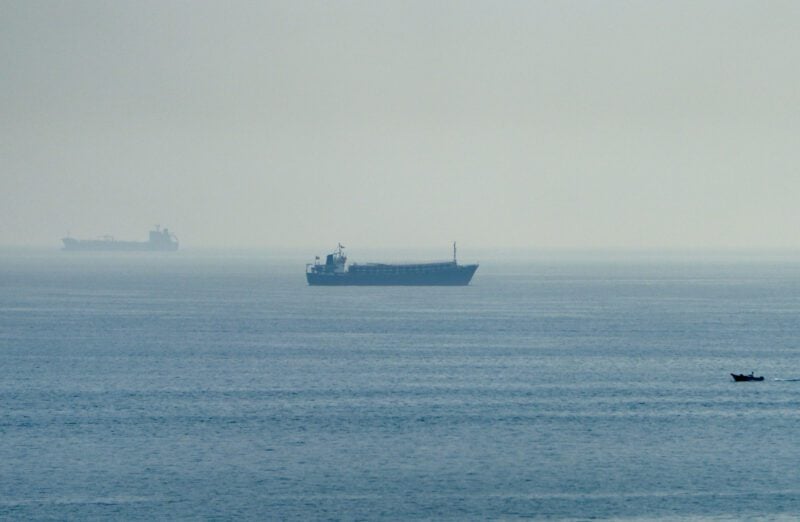
Very likely, commercial shipping through the Strait of Hormuz will remain severely constrained over the next 0-14 days, with three reported vessel attacks in the latest 72-hour period and traffic still about 90% below pre-conflict levels. Likely, energy disruption and US sustainment pressure will remain elevated, while the Oman-Iran maritime track is unlikely to restore normal navigation immediately.
Executive summary
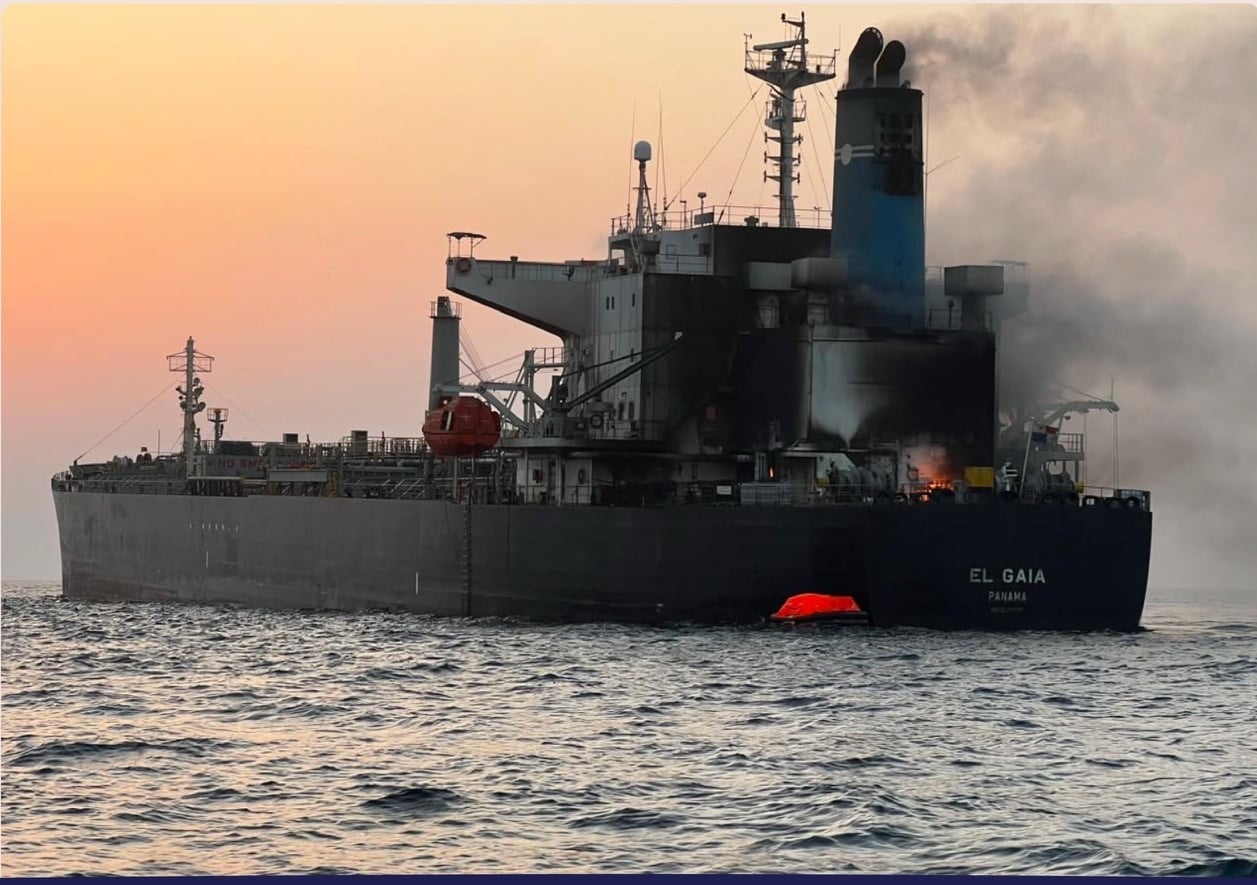
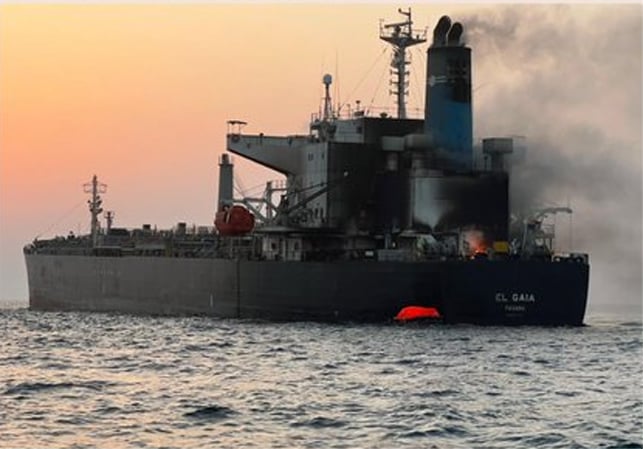
The immediate regional risk is centred on the Strait of Hormuz, where the El Gaia tanker fire, two missing crew members and competing Iranian and US accounts have reinforced an already severe shipping threat. Oman has rescued 23 crew members and is towing the vessel to port, while JMIC reports three vessel attacks in 72 hours and UKMTO reports traffic at roughly 10% of pre-conflict levels. Saudi Arabia has suspended Yanbu loadings, cancelled some September cargoes and cut shipments to Europe after damage to its export infrastructure, although Ras Tanura loaded 22 million barrels during the week ending 13 September. A Pentagon inspector general report also identifies US munitions shortfalls, resupply bottlenecks, aircraft losses and extensive damage to US facilities. Current reporting provides only thin, single-source evidence on continuing Israeli military pressure against Hezbollah in Lebanon.
Change from previous assessment
Compared with the 14 September brief, this assessment strengthens the evidence for continuing Hormuz disruption through the reported attacks on three vessels in 72 hours, traffic at roughly 90% below pre-conflict levels and the El Gaia rescue and towing operation. It adds US munitions shortfalls, aircraft losses, facility damage and war costs as a central judgment. It lowers confidence in any settled account of the El Gaia incident and in the operational status of the Oman-Iran maritime understanding. It does not update the prior Houthi territorial-control or Yemen displacement judgments because the current reporting adds no reliable corroboration to those claims.
Key judgments
- Very likely, commercial shipping through the Strait of Hormuz will remain severely constrained rather than return to normal during the next 0-14 days. JMIC rates the threat as severe and reports three vessel attacks during the latest 72-hour period, while UKMTO places traffic at about 90% below pre-conflict levels. The El Gaia incident adds operational risk: Oman reported 23 crew rescued, two missing and the vessel under tow, but Iran attributes the fire to a naval mine and US Central Command attributes it to an Iranian missile and later drone strikes. The shipping trend is well corroborated by JMIC, UKMTO, Omani authorities and maritime reporting, although responsibility for El Gaia remains unresolved. (Confidence: high · ASSESSED)
- I&W: Confirm: JMIC or UKMTO records another attack on a commercial vessel, or traffic remains near 10% of pre-conflict levels. (0-14 days)
- I&W: Break: UKMTO records traffic rising materially above current levels for seven consecutive days and JMIC downgrades the threat below severe. (0-14 days)
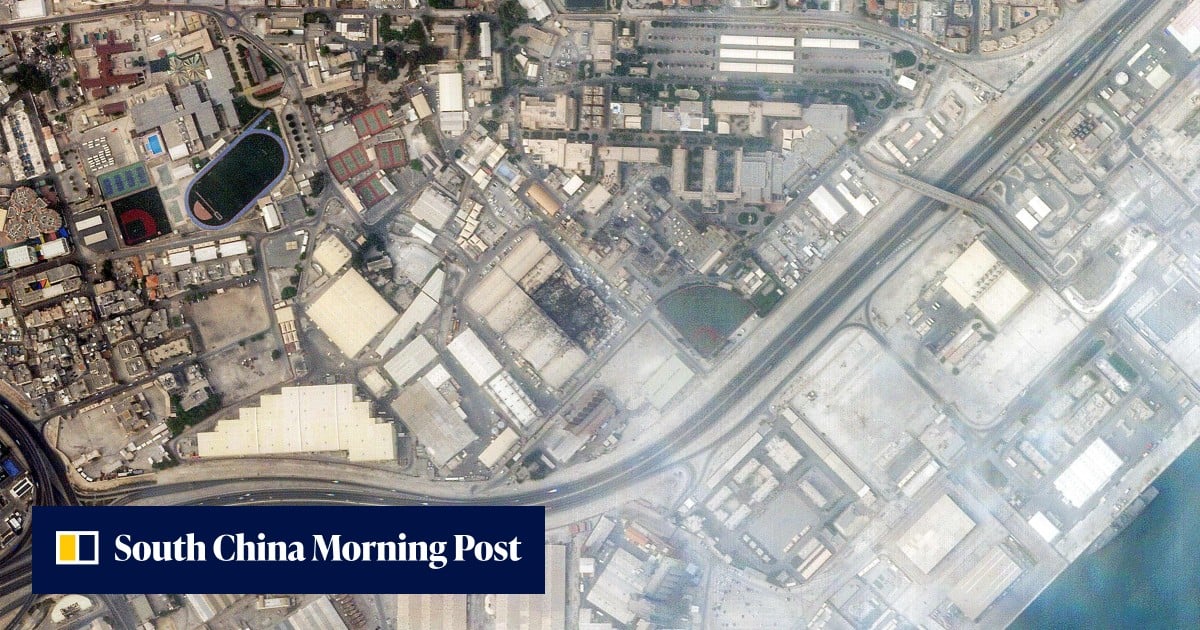
- Very likely, the US will continue to face documented munitions shortfalls and resupply bottlenecks that constrain operational endurance. The Pentagon inspector general reported more than $22 billion in munitions spending from February through June, strategic inventory shortfalls and industrial-base bottlenecks. The same reporting records at least 30 MQ-9 drones, four F-15E aircraft and one F-35 destroyed, while the Pentagon reported at least 11 personnel killed in action, seven deaths in non-hostile events and 417 wounded by 30 June. Official reporting is corroborated by CBO replenishment estimates and CSIS assessments of depleted Patriot and THAAD stocks, despite denials from Donald Trump and Pete Hegseth. (Confidence: high · REPORTED)
- I&W: Confirm: the US announces additional emergency funding near $90 billion, further strategic inventory shortfalls or delays in replenishing Patriot, THAAD or other advanced munitions. (0-3 months)
- I&W: Break: an official update states that the resupply bottleneck has been resolved and that depleted interceptor stocks are returning to required levels. (1-6 months)
- Likely, energy supply and tanker-freight pressure will remain elevated for the next 1-3 months. Saudi Arabia has suspended oil loadings at Yanbu, cancelled some September cargoes and cut shipments to Europe after damage to its Red Sea export pipeline, while Saudi authorities attribute the pipeline attack to Iraqi militia and Iran denies the allegation. Saudi Arabia nevertheless loaded 22 million barrels across 12 vessels at Ras Tanura and Juaymah during the week ending 13 September, compared with six to seven vessels per week during the preceding three weeks. Brent was reported near $108 per barrel, with dated Brent near $122, although another account placed Brent at $100, making the precise price level uncertain. Orlen's purchase of North Sea cargoes to replace disrupted Saudi imports indicates continuing market adjustment. (Confidence: medium · ASSESSED)
- I&W: Confirm: Saudi Arabia reports further cancellations or suspended loadings, while Orlen continues buying substitute North Sea or other non-Saudi cargoes. (0-30 days)
- I&W: Break: Saudi Arabia confirms that the East-West pipeline and Yanbu loadings have resumed, and European customers receive the cancelled September cargoes. (0-30 days)
- Unlikely, the current Oman-Iran diplomatic track will restore normal navigation through the Strait of Hormuz during the next 0-14 days. Iran says it and Oman reached an understanding on shipping lanes, but Oman postponed the Salalah meeting, Saudi Arabia reportedly sought amendments and Iran attributed the postponement to a Saudi request. JMIC continues to rate the shipping threat as severe, and traffic remains sharply below pre-conflict levels. The status of the proposed arrangement is therefore unsettled rather than operational. (Confidence: medium · ASSESSED)
- I&W: Confirm: Oman, Iran and Saudi Arabia fail to reconvene the Salalah meeting or issue a jointly accepted operating procedure for commercial vessels. (0-14 days)
- I&W: Break: the parties publish a common maritime arrangement, Saudi Arabia accepts it and UKMTO records a sustained rise in Hormuz traffic. (0-30 days)
- Likely, Israel will maintain military pressure against Hezbollah in Lebanon during the next 0-14 days. Israel says it destroyed a major underground Hezbollah base in Lebanon, with the blast registering as magnitude 4.1. This judgment rests on a single medium-confidence major-media report reflecting Israel's own account and has no independent corroboration in the supplied reporting, so confidence is low. (Confidence: low · ASSESSED)
- I&W: Confirm: independent reporting or a further Israeli statement records another strike on a Hezbollah facility or personnel in Lebanon. (0-14 days)
- I&W: Break: Israel announces a halt to operations against Hezbollah and no further strike is reported in Lebanon during the period. (0-14 days)
Outlook & scenarios
Sustained Hormuz disruption and market pressure (65%)
Very likely, JMIC continues to rate the Strait of Hormuz threat as severe, commercial traffic remains close to current depressed levels and further vessel incidents occur. Saudi export interruptions and substitute buying by Orlen keep energy and freight pressure elevated.
Partial maritime access through an amended Oman track (30%)
Unlikely, Iran, Oman and Saudi Arabia reach an amended operating arrangement after further talks. Traffic improves from current levels, but the Strait does not return to normal because the El Gaia attribution dispute and broader security threat remain unresolved.
Broader strike cycle involving energy and US facilities (15%)
Unlikely but high impact, additional attacks on commercial vessels, Saudi energy infrastructure or US facilities produce a new US response and deepen the shipping and munitions pressures already documented. The El Gaia incident and the Saudi pipeline dispute provide plausible escalation points.
Localised Israel-Hezbollah pressure (45%)
Likely, Israel maintains strikes against Hezbollah positions in Lebanon while the supplied reporting provides no firm basis for assessing a wider direct Israel-Iran operational exchange. The available evidence for this scenario remains thin and rests on Israel's account of the destroyed underground base.
Recommendations
- Prioritise collection on the El Gaia incident from Omani authorities, UK Maritime Trade Operations, US Central Command and Iranian statements. Separate confirmed facts, including the fire, rescue, towing and missing crew, from the competing mine and missile-drone attributions.
- Maintain a daily Hormuz dashboard covering JMIC threat ratings, UKMTO vessel counts, vessel attacks, distress calls, search-and-rescue activity and the status of the Traffic Separation Scheme. Treat any sustained rise from the current traffic baseline as an early de-escalation signal.
- Track Saudi pipeline repairs, Yanbu loading notices, Ras Tanura throughput, European cargo cancellations and Orlen's substitute purchases. Use these indicators to distinguish temporary rerouting from a lasting reduction in Gulf exports.
- Monitor US Department of Defense, Pentagon inspector general and CBO updates on munitions spending, emergency replenishment funding, interceptor inventories and resupply timelines. Keep the official reporting through 30 June separate from later claims about July casualties.
- Watch for a reconvened Salalah meeting, Saudi acceptance of amendments, a jointly issued Iran-Oman maritime procedure and any corresponding JMIC downgrade. Do not treat an announced understanding as operational until shipping behaviour changes.
- Seek independent confirmation of further Israeli operations against Hezbollah in Lebanon before raising confidence in a sustained Israel-Hezbollah escalation assessment.
Confidence & uncertainty
Overall confidence is high for the core reported developments because the main judgments draw on multiple high-reliability sources, including the Pentagon inspector general, CBO, JMIC, UK Maritime Trade Operations, Omani authorities, major media and wire reporting. The main uncertainties are the cause of the El Gaia fire, the precise status of the Oman-Iran maritime understanding, the exact oil price level and the scope of US casualty reporting after 30 June. Confidence is lower for the Israel-Hezbollah outlook and for low-confidence reporting on Houthi territorial control.
Intelligence gaps
- [EEI 1.1 · UNCOVERED] Detection and characterization of ballistic/cruise missile or rocket launches originating from Iranian territory or from Iran-controlled positions in Iraq/Syria (time, launch coordinates, missile type, flight trajectory/impact area). Recommended collection: satellite/imagery
- [EEI 1.2 · UNCOVERED] Movements and posture changes of Iran-backed proxy forces (Hezbollah units in Lebanon, militias in Syria/Iraq): concentrations of personnel, transport of rocket/artillery launchers, visible logistics build-up within operational range of Israel. Recommended collection: human/intel
- [EEI 1.3 · PARTIAL] Israeli defensive and offensive posture changes: reservist call-ups, mobilization orders, sorties/airstrikes attributed to Israel, and domestic activation of missile-defense systems (locations and activation times). Recommended collection: open-source/media
- [EEI 1.4 · PARTIAL] Evidence of pre-positioning or arming of naval mines, fast attack craft, or anti-ship missile systems in the Gulf of Oman, northern Arabian Sea, or off the Lebanese/Syrian coasts that could be used to interdict Israeli or allied shipping. Recommended collection: maritime/AIS
- [EEI 2.1 · UNCOVERED] Movements and tasking changes of external military assets: carrier strike groups, amphibious ready groups, expeditionary air wings, or ballistic-missile defense units into the Eastern Mediterranean, Persian Gulf, or Red Sea (vessel/aircraft IDs, routing, on-station times). Recommended collection: maritime/AIS
- [EEI 2.2 · PARTIAL] Formal diplomatic/military actions: evacuation orders or embassy closures, public troop posture statements, bilateral/multilateral defense commitments announced, requests for overflight or basing rights in regional states. Recommended collection: diplomatic
- [EEI 2.3 · PARTIAL] Changes to force protection or alert levels at foreign bases in the region (e.g., US bases in Kuwait, Qatar, UAE; Russian bases in Syria): activation of additional air defenses, curfews, or reinforcement shipments (personnel/equipment manifests). Recommended collection: signals/intel
- [EEI 3.2 · PARTIAL] Changes in crude oil and refined product flows from key terminals (reported tanker loading delays, terminal closures, throughput volumes at Kharg, Mina al-Ahmadi, Ras Tanura, and major Gulf ports compared to baseline). Recommended collection: commercial/ports
- [EEI 3.3 · PARTIAL] Market and insurance indicators: sudden spikes in war-risk or hull insurance premiums for Middle East routes, large moves in regional FX/stock indices, and notable changes in commodity futures (oil, freight rates) tied to regional risk perceptions. Recommended collection: financial/transactional
Cited sources
[1] gCaptain · Oman Says 'El Gaia' Being Towed to Port; Two Crew Missing (C) · Tue Sep 15 2026 14:51:52 GMT+0000 (Coordinated Universal Time) · sha256:0a1fa8a433cc [2] gCaptain · U.S. Rejects Iran’s Mine Claim as Hormuz Shipping Threat Remains Severe (C) · Mon Sep 14 2026 20:28:38 GMT+0000 (Coordinated Universal Time) · sha256:e7b203f25a2c [3] BBC · Two sailors missing after tanker attacked in Strait of Hormuz, Oman says (A) · Tue Sep 15 2026 13:05:36 GMT+0000 (Coordinated Universal Time) · sha256:1d192ca6afcc [4] The Maritime Executive · Oman Conducts SAR as US and Iran Argue Over Circumstances of Tanker Attack (C) · sha256:51c152901649 [5] BBC News · US-Israel war with Iran | Latest News and Updates | BBC News (A) · sha256:025ae3049300 [6] BBC · Iran war has led to US munitions shortfalls, Pentagon inspector confirms (A) · Tue Sep 15 2026 15:31:34 GMT+0000 (Coordinated Universal Time) · sha256:399050948508 [7] Al Jazeera · Dozens of aircraft, hundreds of buildings: US loss to Iran attacks revealed (A) · Tue Sep 15 2026 11:17:03 GMT+0000 (Coordinated Universal Time) · sha256:5ff2bed2ae5d [8] South China Morning Post · Price of Epic Fury: Iran war’s toll on US bases, weapons and more (A) · Tue Sep 15 2026 06:20:45 GMT+0000 (Coordinated Universal Time) · sha256:b9002fad035d [9] Devdiscourse · Escalating Costs: The U.S. Conflict with Iran (B) · sha256:860b37f9c88a [10] Reuters (republished by gCaptain) · Oil Prices Surge as Saudi Red Sea Loadings Halt, Libya Shuts Fields (A) · Tue Sep 15 2026 19:11:06 GMT+0000 (Coordinated Universal Time) · sha256:893b27c1d5a7 [11] BBC News · Middle East | Latest News & Updates | BBC News (A) · sha256:66363d502bdc [12] العربي الجديد (The New Arab / Al-Araby Al-Jadeed) · [PDF] تأجيل اجتماع صاللة بشأن مضيق هرمز - العربي الجديد (B) · sha256:48c1aa55b7a0
Source content hashes were computed at collection time; the cited text is preserved unmodified for the life of this product.
TLP:CLEAR