TLP:CLEAR · Disclosure is not limited.
Hormuz disruption is clear, but a four-of-five chokepoint crisis is unproven
Time window: Last 1 day · Audience: General analyst · Type: Situation report · DTG: 2026-10-30 12:16Z · Overall confidence: HIGH
BLUF
Hormuz is the clearest acute disruption: reported daily traffic has fallen from 90 to 120 vessels to fewer than ten, and UKMTO reported an explosive attack on a vessel near Khasab. The supplied evidence does not establish a Bab-el-Mandeb blockade or disruption at four of five key straits; Brent front-month futures briefly topped $117 on 30 October, not $108.
Executive summary
The reporting points to severe but uneven maritime and energy disruption, centred on the Strait of Hormuz. Traffic estimates indicate a sharp decline in passage, although Gulf export figures show continued flows and differ by period and scope: Kpler put Gulf crude exports at 24.6 million barrels per day in the week to 18 October, above the pre-war average, while Vortexa put October exports from terminals west of Hormuz, excluding Iranian shipments, at about 11 million barrels per day against a pre-war 14.5 million. Bab-el-Mandeb traffic averaged 39 daily transits in the three days to 26 October, compared with about 35 per day since August. Brent futures briefly exceeded $117 on 30 October, and freight costs reached as much as $40 per barrel, about ten times the usual rate. Qatari mediators returned to Tehran on 30 October, but the reported US and Iranian proposals differ on which side acts first. Current war-risk insurance premiums are not quantified in the supplied reporting.
Change from previous assessment
Since the 29 October brief, the assessment now includes a Windward count showing an average of 39 daily Bab-el-Mandeb transits through 26 October, which strengthens the view that the supplied evidence does not establish a commercial blockade there. New reporting gives more detail on the 29 October tanker attack near Khasab, including the reported explosive devices, engine-room fire and the vessel resuming its voyage; responsibility remains unresolved. The latest price reporting strengthens the conclusion that $108 is not a supported current Brent figure, with front-month futures briefly above $117 on 30 October. Qatari mediators returned to Tehran on 30 October, but conflicting accounts of negotiating conditions do not establish an agreed reopening plan.
Key judgments
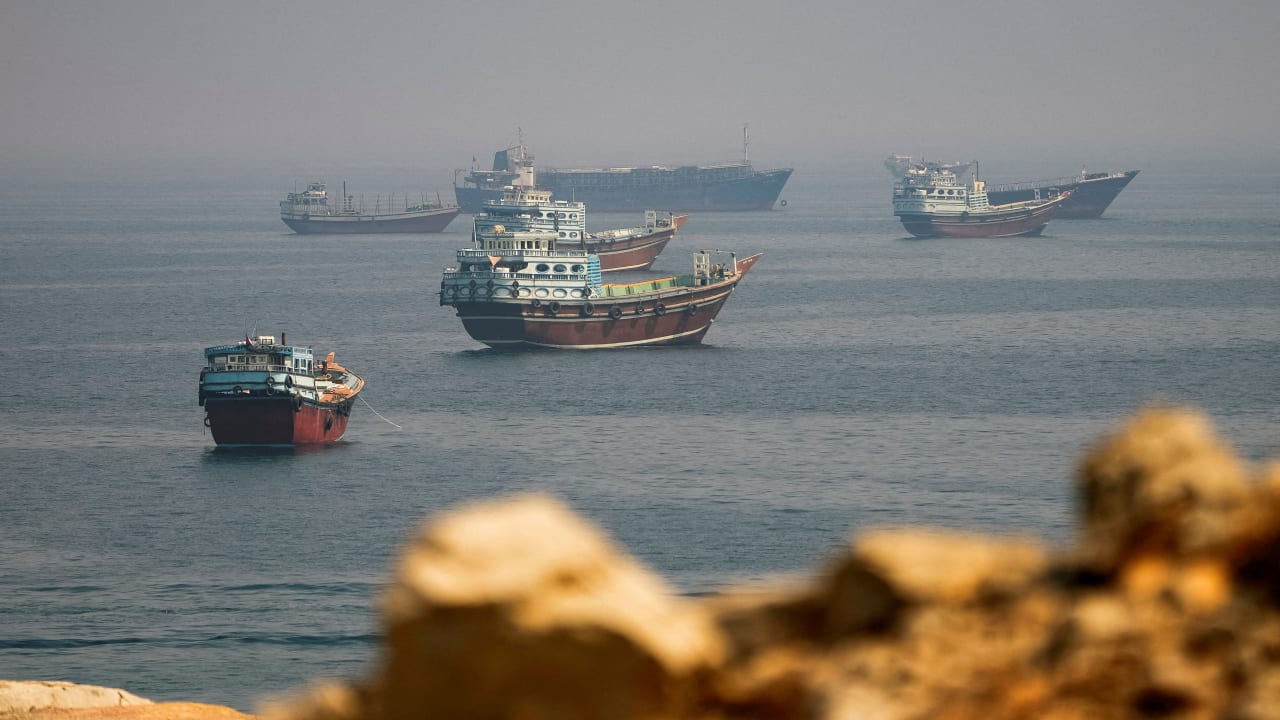
- Commercial passage through the Strait of Hormuz is likely severely constrained rather than fully closed. A trade report puts traffic at fewer than ten vessels per day, down from about 90 to 120. Kpler reported that 40 per cent of Gulf exports bypassed Hormuz in September, up from 17 per cent before the war. Export estimates point to continued but uneven flows: Kpler reported 24.6 million barrels per day of Gulf crude exports in the week to 18 October, while Vortexa put October exports from terminals west of Hormuz, excluding Iranian shipments, at about 11 million barrels per day against a pre-war 14.5 million. The figures cover different periods and scopes, and AIS switched off by some vessels adds uncertainty to traffic counts. (Confidence: medium · ASSESSED)
- I&W: Daily vessel counts through Hormuz remain below ten for seven consecutive days, supporting sustained severe restriction. (0-14 days)
- I&W: A verified daily transit count returns to at least 90 vessels, breaking the assessment of severe passage constraints. (0-14 days)
- A commercial Houthi blockade of Bab-el-Mandeb is unlikely as of 26 October, and the supplied evidence does not establish that four of five key straits are disrupted. Windward recorded an average of 39 daily transits in the three days to 26 October, compared with about 35 per day since August. A separate report says the Houthis captured the Red Sea coast and took over Bab-el-Mandeb in September, but that claim does not establish control of commercial passage. The supplied Malacca claim describes its share of global seaborne trade, and the Panama claim describes drought-related transit cuts in 2023 and 2024; neither establishes a current disruption. Current transit counts for those routes are not provided. (Confidence: medium · ASSESSED)
- I&W: Windward or another named traffic monitor records a sustained fall in Bab-el-Mandeb transits below 20 per day, indicating a material change from the 39-transit average. (0-14 days)
- I&W: A new daily count remains near or above 35 transits and reports continue to show Saudi-affiliated vessels avoiding the route rather than a general cessation of passage. (0-14 days)
- It is very unlikely that $108 per barrel was the latest Brent benchmark reported on 30 October. December-delivery Brent futures briefly topped $117 that day. The EIA reported Brent spot at $123.10 on 27 October, while another 30 October report put Brent at $113.50. These are different instruments or reporting points, but none supports $108 as the latest reported level. (Confidence: high · REPORTED)
- I&W: A timestamped official or exchange price record for 30 October shows Brent at $108 or below, breaking the assessment that $108 was not the latest reported level. (0-7 days)
- I&W: The next EIA daily Brent spot release remains above $108, confirming that the benchmark remains above the stated figure. (0-7 days)
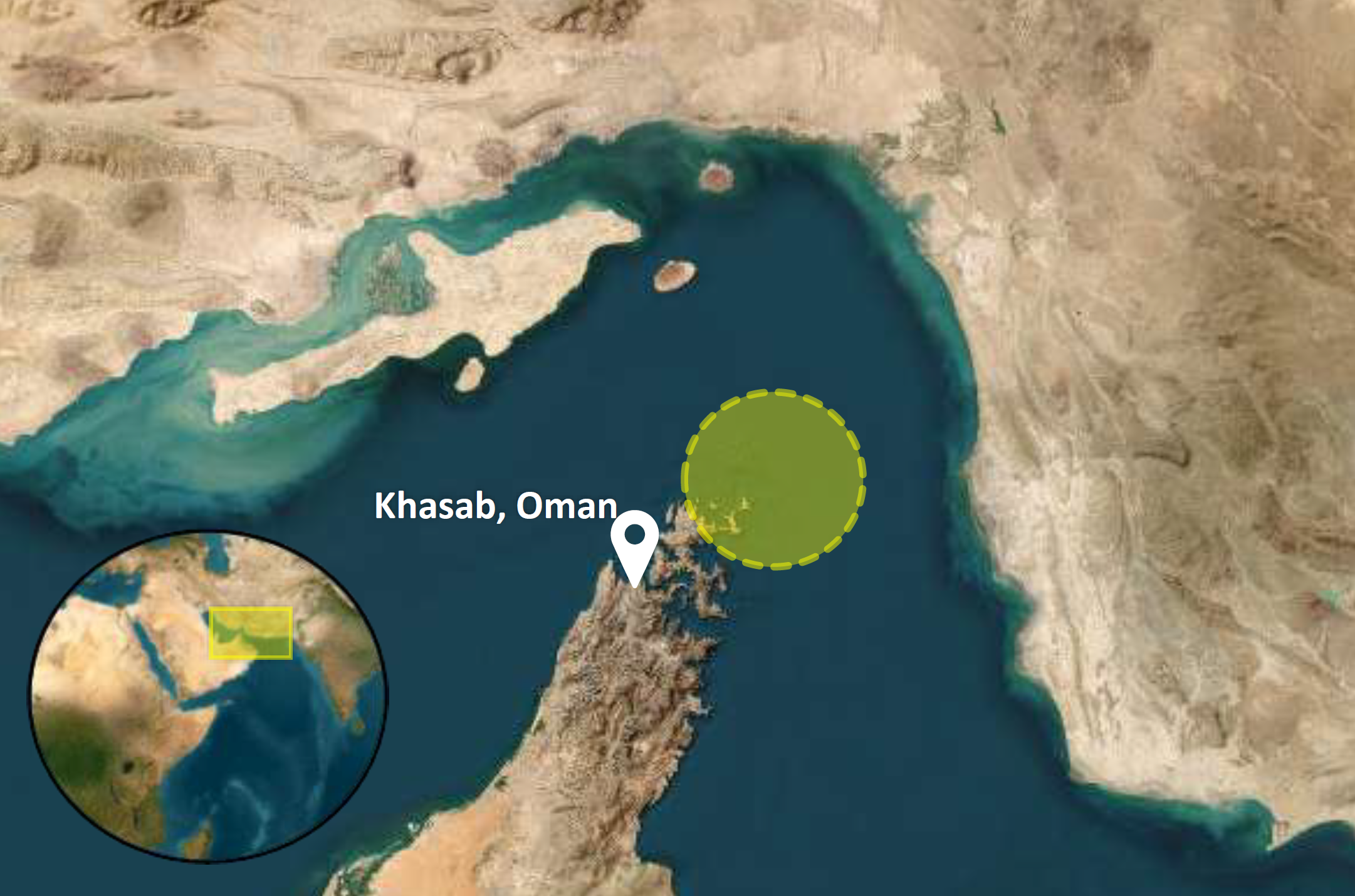
- At least one outbound vessel in the Strait of Hormuz was very likely damaged by an attack near Khasab on 29 October. UKMTO-based reporting says two explosive devices attached to the vessel's hull detonated about 25 nautical miles northeast of Khasab, causing an engine-room fire; the crew extinguished the fire and the vessel resumed its voyage. UKMTO also received a report of another tanker struck by an unknown projectile in the same area. The event details are supported by UKMTO reporting carried by major media and maritime trade outlets, but those accounts do not independently identify the attacker. (Confidence: medium · REPORTED)
- I&W: The vessel operator, flag state or UKMTO publishes a vessel identity and confirms the explosive damage and engine-room fire. (0-14 days)
- I&W: The vessel operator or flag state issues a report contradicting the UKMTO-based account of an explosive attack. (0-14 days)
- It is unlikely that the supplied reporting establishes IRGC responsibility for the 29 October tanker attack. UKMTO did not identify the attacker. A single security analyst attributed the attack to IRGC Navy special forces using a Maham 7 mine, but that account conflicts with UKMTO-based descriptions of two devices attached above the waterline. Iranian military accounts also differ between three and four tankers struck by mines; the Associated Press reported that it could not independently verify the mine-strike claim. The attribution rests on thin, contested reporting, so confidence is low. (Confidence: low · ASSESSED)
- I&W: UKMTO, the vessel's flag state or its operator publishes an evidence-based attribution naming the IRGC Navy. (0-14 days)
- I&W: The operator or flag state identifies a different cause or attacker, or confirms that the reported mine damage did not occur. (0-14 days)
- Tanker availability and freight costs are likely to remain under pressure over the next one to three months. London Stock Exchange Group data put recent freight costs as high as $40 per barrel, about ten times the usual rate. A Windward report estimates that Gulf fleet expansion ties up 15 to 20 per cent of the global VLCC fleet at any given time, while Gulf oil producers are assembling nearly 230 tankers to maintain exports through Hormuz. These figures come from trade reporting and an intelligence estimate, so confidence is medium rather than high. (Confidence: medium · ASSESSED)
- I&W: LSEG-reported freight costs remain near $40 per barrel and Windward continues to estimate that at least 15 per cent of the global VLCC fleet is tied up. (0-30 days)
- I&W: LSEG reports freight costs falling below twice the usual rate and a subsequent fleet estimate puts the share of VLCCs tied up below 10 per cent. (1-3 months)
- A verified agreement to reopen Hormuz before 3 November is unlikely. Qatari mediators returned to Tehran on 30 October, but Iranian conditions and the reported US proposal differ over sanctions relief, nuclear commitments and which side acts first. The reported briefing by CENTCOM commander Admiral Brad Cooper to President Donald Trump on military options adds to the pressure for a near-term decision, but the diplomatic accounts do not establish that either side has accepted a reopening timetable. Confidence is medium because the accounts describe active contact but conflict over terms and sequence. (Confidence: medium · ASSESSED)
- I&W: Qatar or both governments announce a signed text with a dated sequence for reopening Hormuz before 3 November, breaking the assessment. (0-4 days)
- I&W: Tehran issues a formal response rejecting the proposed sequence or sets conditions that prevent an agreed reopening timetable. (0-4 days)
Outlook & scenarios
Constrained Hormuz passage and continued export adaptation (55%)
Through the next one to three months, Hormuz traffic remains well below its reported pre-war range. Gulf producers continue a mix of bypass routes and carefully managed transits, while freight costs and demand for VLCCs remain elevated. Bab-el-Mandeb continues to carry commercial traffic near recent reported levels.
Qatari mediation produces a staged reopening (25%)
Qatari mediators secure agreement between Washington and Tehran on a sequence linking nuclear commitments, sanctions relief and Hormuz passage. A public timetable precedes a measurable increase in daily transits. Disagreement over which side acts first remains the main obstacle.
Renewed strikes deepen maritime and energy disruption (15%)
The US and Iran fail to bridge their negotiating conditions, and military action resumes after or around the 3 November US midterm elections. Further attacks on vessels or energy infrastructure reduce commercial passage through Hormuz and keep freight and oil prices under pressure.
Low-probability, high-impact attacks on Gulf infrastructure (5%)
Iran carries out reported plans to target desalination plants, internet cables or electricity grids in the Gulf. Such attacks would extend the crisis beyond shipping and energy cargoes, with direct risks to essential services and communications.
Recommendations
- Track Hormuz transit counts separately from Gulf export volumes. Record the date, geographic scope and method for each Kpler, Vortexa, Windward or official estimate, and flag AIS gaps when comparing daily traffic.
- Keep the Bab-el-Mandeb takeover claim separate from evidence of commercial passage. Seek updated, route-specific transit counts before describing the strait as blockaded or adding it to a disruption tally.
- Use timestamped prices and identify the benchmark and contract month in each update. Do not repeat $108 as the latest Brent price without a dated market record.
- Seek UKMTO, vessel-operator and flag-state updates on the 29 October incident near Khasab. Keep the confirmed incident details separate from the unresolved attacker attribution and from the differing Iranian claims of three or four affected tankers.
- Monitor freight costs, VLCC availability and Qatari LNG delivery notices as separate indicators. Do not describe war-risk premiums as having reached a particular level without current, quantified insurance reporting.
- Follow Qatari mediation for a signed text, agreed sequence and dated Hormuz reopening steps. Maintain a separate escalation watch for new US military decisions and attacks on Gulf energy or communications infrastructure.
Confidence & uncertainty
Overall confidence is high in the broad assessment that Hormuz disruption is affecting shipping costs, vessel availability and energy markets. The reporting combines official EIA price data, UKMTO-based incident accounts and market or maritime estimates from Kpler, Vortexa, Windward and LSEG. The headline's precise four-of-five disruption count is not supported, and confidence is lower on Hormuz traffic levels, tanker-attack attribution, the number of vessels affected by Iranian-reported mine strikes and the terms of any diplomatic agreement.
Intelligence gaps
- [EEI 1.4 · PARTIAL] Public or private warnings from the US Fifth Fleet, regional naval forces, port authorities, or shipping companies identifying specific routes or vessel categories as unsafe. Recommended collection: official-statements/shipping-notices
- [EEI 2.1 · PARTIAL] US, coalition, Iranian, Saudi, Omani, and other naval force posture changes, including escorts, convoy schedules, mine-countermeasure deployments, air patrols, and rules-of-engagement announcements. Recommended collection: maritime/defense-reporting
- [EEI 2.2 · PARTIAL] Tanker and container-ship rerouting through the Cape of Good Hope or other alternatives, including added sailing days, fuel consumption, and available vessel capacity. Recommended collection: shipping-industry/AIS
- [EEI 2.3 · UNCOVERED] War-risk insurance premium, deductible, coverage-exclusion, and voyage-approval changes for Hormuz, Bab-el-Mandeb, Red Sea, Gulf of Aden, and adjacent waters. Recommended collection: insurance-market
- [EEI 3.3 · UNCOVERED] Fertilizer shipment delays, canceled or redirected cargoes, regional price increases for urea and ammonia, and reported inventory levels in import-dependent markets. Recommended collection: commodity-trade/port-data
- [EEI 3.4 · PARTIAL] Container freight rates, vessel charter rates, bunker costs, port congestion, and manufacturing or retail supply disruptions attributable to the chokepoint crisis. Recommended collection: shipping-and-logistics-markets
- [EEI 4.2 · PARTIAL] Diplomatic commitments, deconfliction arrangements, prisoner or vessel releases, and publicly announced conditions for reopening commercial transit. Recommended collection: diplomatic-reporting
- [EEI 4.3 · PARTIAL] Shipping-company decisions to resume, suspend, or expand transits and corresponding changes in insurer voyage approvals and war-risk premiums. Recommended collection: shipping-and-insurance-industry
- [EEI 4.4 · UNCOVERED] New incidents, military alerts, vessel diversions, or port restrictions at other critical chokepoints indicating geographic spread beyond Hormuz and Bab-el-Mandeb. Recommended collection: maritime/AIS-official-notices
Red cell review: CONCUR WITH COMMENT
TLP:CLEAR