TLP:CLEAR · Disclosure is not limited.
Hormuz disruption persists, while wider chokepoint claims remain unverified
Time window: Last 1 day · Audience: General analyst · Type: Situation report · DTG: 2026-11-01 12:46Z · Overall confidence: HIGH
BLUF
Commercial passage through the Strait of Hormuz is likely severely constrained, but the supplied evidence does not establish a full closure. It also does not substantiate disruption at four of five key straits or verify Brent at $108; the latest supplied EIA figure is $123.10 per barrel on 27 October.
Executive summary
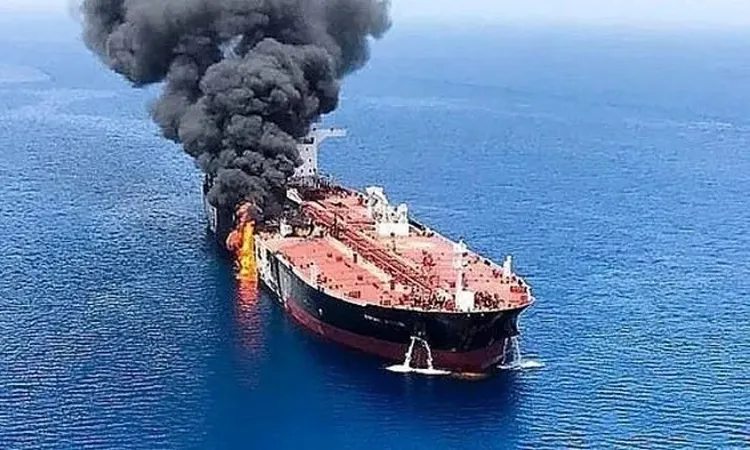
Reports describe extensive attacks on shipping in the Strait of Hormuz, sharply higher war-risk insurance and conflicting estimates of current vessel traffic. Iran's Mohsen Rezaei says full shipping will not resume until Tehran's conditions are met. Abbas Araghchi has discussed a two-day reopening proposal involving a route developed with Oman, but other reporting describes a seven-day timetable, and the proposal's status is unresolved. Iranian and Qatari contacts continue, while US officials say President Donald Trump has not decided whether to resume strikes. The supplied claims document Houthi attacks on Red Sea shipping and Saudi targets, but do not establish a current Bab-el-Mandeb blockade. Saudi claims of Houthi launches towards Mecca and Medina are denied by Houthi spokesmen.
Change from previous assessment
Since the prior brief, new reporting adds Iranian and Qatari contacts in Doha, a two-day Hormuz reopening proposal involving an Oman-developed route, and Iran's stated conditions for restoring full passage. The proposal's status and timetable remain contested, and the new transit estimates still conflict sharply. Reports of Houthi attacks on Saudi targets and allegations concerning Mecca and Medina add a regional security concern, but do not verify a Bab-el-Mandeb blockade. The prior assessment that $108 was unreconciled remains unchanged; the supplied EIA Brent figure is $123.10 on 27 October. The assessment of possible post-3 November strikes remains roughly even chance, with low confidence.
Key judgments
- Commercial traffic through the Strait of Hormuz is likely severely constrained, but the supplied evidence does not establish a full closure or a reliable current throughput level. One estimate puts October traffic at about 2% of pre-crisis throughput, while another reports shipments at about 80% of pre-war levels. Rezaei says the strait will remain closed until Iran's conditions are met, while CENTCOM's reported 95% incident-free rate measures the safety of transits, not their volume. (Confidence: low · ASSESSED)
- I&W: A current IMF PortWatch or equivalent daily series shows commercial transits remaining below one-tenth of its stated pre-crisis baseline for seven consecutive days, confirming severe constraint; sustained traffic near that baseline would break the assessment. (0-14 days)
- I&W: UKMTO reports additional vessel damage or transit suspensions in the strait, confirming continuing operational risk; a sustained period with no incidents alongside rising transit counts would weaken the assessment. (0-14 days)
- Reported war-risk insurance and container freight costs are far above their pre-war benchmarks, but the supplied claims do not verify Brent at $108. Insurers reportedly raised some tanker premiums from about 0.15% of vessel value to about 5% at the peak of tensions, and container costs on some routes rose from about $1,500 to about $10,000. The EIA reported Brent spot at $123.10 per barrel on 27 October, which is a different date and price series from the unverified $108 headline. (Confidence: medium · REPORTED)
- I&W: Current insurer quotes for Hormuz-bound tankers remain near the reported 5% peak, confirming continued elevated premiums; quotes returning towards the reported 0.15% pre-war level would break that assessment. (0-14 days)
- I&W: A dated EIA Brent observation matching $108 per barrel on the same price basis would verify the headline; a comparable observation at another price would not. (0-14 days)
- The supplied reporting does not establish a current Bab-el-Mandeb blockade or disruption at four of five key maritime straits. It reports Houthi attacks on Red Sea shipping and Saudi targets, and identifies Combined Task Force 153 as responsible for maritime security in the Red Sea, Gulf of Aden and Bab-el-Mandeb, but provides no current transit count or confirmed blockade report for the strait. (Confidence: low · ASSESSED)
- I&W: UKMTO or Combined Task Force 153 publishes current Bab-el-Mandeb incident reports or transit data showing sustained interruption of commercial passage, confirming a disruption; records of regular commercial transits would break the blockade assessment. (0-14 days)
- Qatar-mediated contacts between Iran and other parties are very likely continuing, but reports conflict over whether a Hormuz reopening proposal has been agreed and when it would take effect. Araghchi described a two-day plan involving an Oman-developed shipping route; Saudi media reported a draft timetable of up to seven days. Rezaei says Iran will not restore full shipping before its conditions are met, which include sanctions relief, asset releases and changes to the US military presence. (Confidence: medium · REPORTED)
- I&W: Iran, Qatar and Oman announce a signed timetable and operational details for the new shipping route, confirming movement towards reopening; renewed Iranian statements that full passage remains conditional would break that assessment. (0-14 days)
- I&W: A Qatari or Pakistani mediator confirms a negotiating session and publishes agreed next steps, confirming continued talks; an official suspension of consultations would break it. (0-14 days)
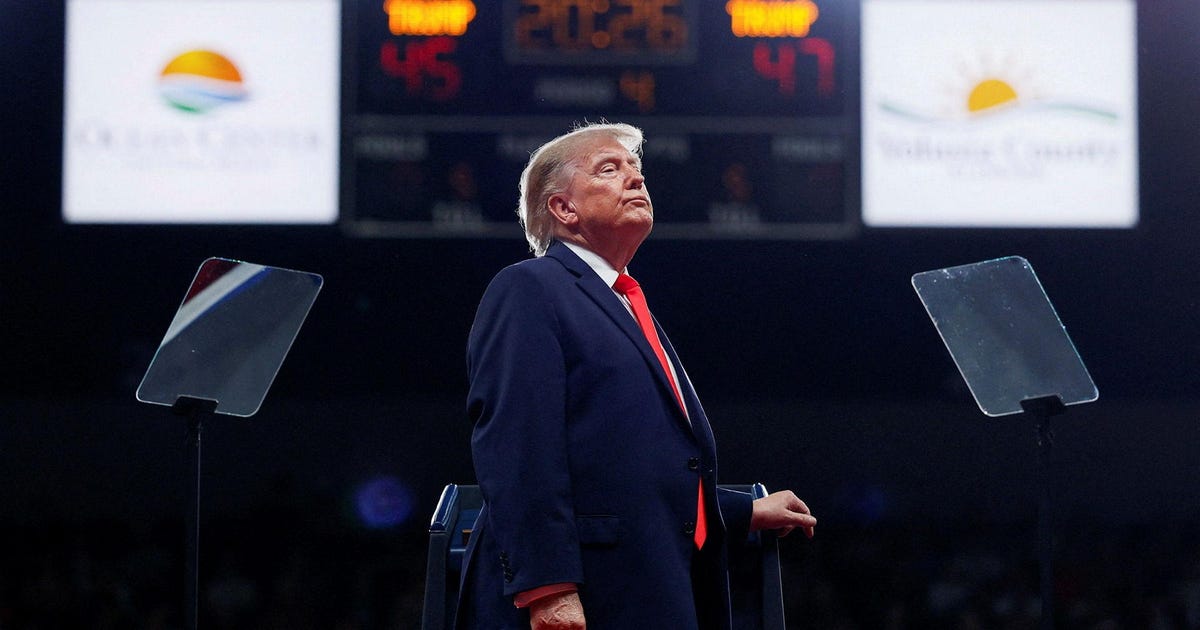
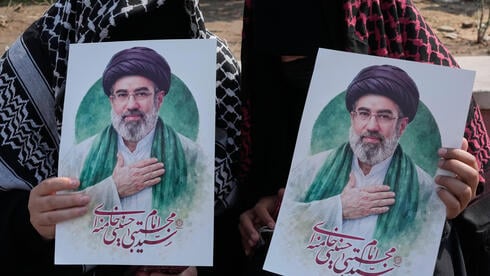
- A renewed US-Iran strike exchange after 3 November is roughly even chance, with low confidence. Donald Trump has referred to remaining Iranian targets, and a senior Israeli official says Israel is preparing for another round after the US midterm elections. Secretary of State Marco Rubio says Trump has not decided whether to resume military action, while Iranian and Qatari contacts continue. Mojtaba Khamenei has ordered target lists updated and threatened an immediate response without geographical restrictions. (Confidence: low · ASSESSED)
- I&W: The White House announces or US forces conduct strikes on Iran after 3 November, confirming the assessment; an official statement that no strike decision has been made, accompanied by a scheduled mediated session, would weaken it. (0-14 days)
- I&W: Iranian forces announce a specific retaliatory operation or strike a US or Israeli asset, confirming escalation; a public Iranian commitment to restraint tied to a mediated agreement would break the immediate-exchange assessment. (0-14 days)
Outlook & scenarios
Prolonged Hormuz standoff with intermittent passage (40%)
Iran continues to condition full passage on sanctions relief, asset releases and changes to the US military presence. Commercial transits remain limited and exposed to further incidents. Qatar-mediated contacts continue without an agreed, implemented reopening plan.
Limited reopening under a mediated route (25%)
Iran, Qatar and Oman agree operating terms for the proposed Oman-developed route. Some commercial traffic resumes, but passage remains conditional and insurers retain elevated premiums while the parties test compliance.
Renewed US or Israeli strikes and Iranian retaliation (30%)
The United States or Israel resumes strikes after 3 November. Iran responds against US or Israeli assets, consistent with Mojtaba Khamenei's public threat. Shipping risk in Hormuz rises and the chance of a mediated reopening declines.
Wider conflict beyond West Asia (5%)
As a low-probability, high-impact outcome, an exchange of strikes expands beyond the immediate theatre. Iranian military officials have warned of a wider confrontation, but the supplied reporting does not establish preparations for such an expansion.
Recommendations
- Do not present four-of-five chokepoint disruption or Brent at $108 as verified. Require current, dated transit data for each named strait and a price series with a stated date and basis.
- Separate transit volume from the share of vessels passing without incident. Track the source, baseline, vessel type and reporting period for each Hormuz estimate.
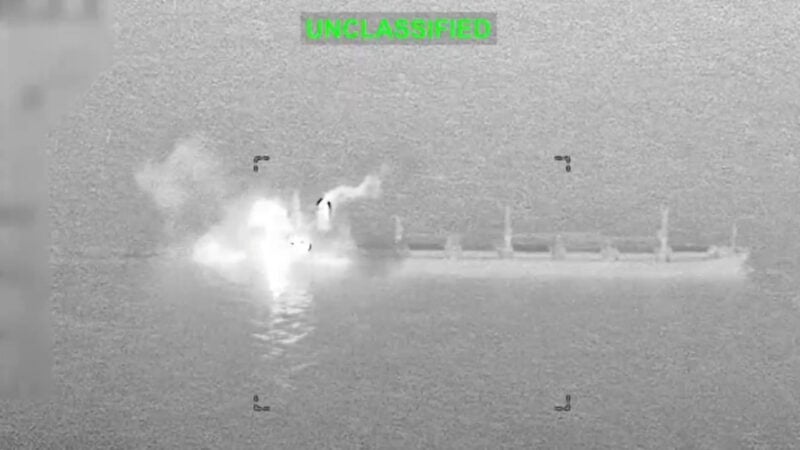
- For tanker incidents, reconcile vessel identity, location, date and cause against UKMTO reporting before attributing an attack to a mine, projectile or named actor.
- Track implementation details for the proposed Oman-linked route, including agreed transit lanes, start date and whether Iran's other conditions remain attached.
- Maintain a post-3 November watch for a US strike decision, Israeli force-preparation statements and Iranian operational retaliation, while reporting Rubio's statement that no US decision has been made.
Confidence & uncertainty
Overall confidence is high for the occurrence of reported maritime incidents, the public positions of Iran and the United States, and the quoted insurance and EIA price figures, which draw on major media, maritime reporting and an official government series. Confidence is lower for current Hormuz traffic volume because supplied estimates conflict, and for a Bab-el-Mandeb blockade, the $108 Brent headline and strike timing because the reporting is incomplete or contested. The high overall rating does not resolve those specific uncertainties.
Alternative analysis (red cell)
The available reporting indicates a serious but indeterminate risk of renewed strikes after 3 November, rather than a roughly even chance that can be justified from the record. Trump and the Israeli official signal readiness or possible intent, but Rubio's statement that no decision had been made and the continuation of mediated contacts leave the timing and likelihood unresolved. Iranian target-list updates and threats demonstrate deterrent posture and preparation, not necessarily an intention to initiate or sustain a new exchange.
Intelligence gaps
- [EEI 1.3 · PARTIAL] Daily vessel-transit volume, AIS dark activity, anchorage buildup, and rerouting rates at Hormuz and Bab-el-Mandeb compared with pre-crisis levels. Recommended collection: maritime/AIS
- [EEI 1.4 · PARTIAL] Public or private warnings from the US Fifth Fleet, regional naval forces, port authorities, or shipping companies identifying specific routes or vessel categories as unsafe. Recommended collection: official-statements/shipping-notices
- [EEI 2.1 · PARTIAL] US, coalition, Iranian, Saudi, Omani, and other naval force posture changes, including escorts, convoy schedules, mine-countermeasure deployments, air patrols, and rules-of-engagement announcements. Recommended collection: maritime/defense-reporting
- [EEI 2.2 · PARTIAL] Tanker and container-ship rerouting through the Cape of Good Hope or other alternatives, including added sailing days, fuel consumption, and available vessel capacity. Recommended collection: shipping-industry/AIS
- [EEI 2.3 · PARTIAL] War-risk insurance premium, deductible, coverage-exclusion, and voyage-approval changes for Hormuz, Bab-el-Mandeb, Red Sea, Gulf of Aden, and adjacent waters. Recommended collection: insurance-market
- [EEI 2.4 · PARTIAL] Operational status and export-loading changes at Saudi, UAE, Omani, Iranian, Djiboutian, and Red Sea ports, terminals, pipelines, and storage facilities. Recommended collection: port-operator/energy-infrastructure
- [EEI 3.1 · PARTIAL] Brent and Dubai crude price movements, futures-curve shifts, volatility, and the spread between regional and global crude benchmarks. Recommended collection: commodity-markets
- [EEI 3.2 · PARTIAL] Changes in crude, refined-product, LNG, and LPG volumes transiting the straits and in announced production cuts, strategic-stock releases, or emergency cargo substitutions. Recommended collection: energy-trade/AIS
- [EEI 3.3 · UNCOVERED] Fertilizer shipment delays, canceled or redirected cargoes, regional price increases for urea and ammonia, and reported inventory levels in import-dependent markets. Recommended collection: commodity-trade/port-data
- [EEI 3.4 · PARTIAL] Container freight rates, vessel charter rates, bunker costs, port congestion, and manufacturing or retail supply disruptions attributable to the chokepoint crisis. Recommended collection: shipping-and-logistics-markets
- [EEI 4.3 · PARTIAL] Shipping-company decisions to resume, suspend, or expand transits and corresponding changes in insurer voyage approvals and war-risk premiums. Recommended collection: shipping-and-insurance-industry
- [EEI 4.4 · UNCOVERED] New incidents, military alerts, vessel diversions, or port restrictions at other critical chokepoints indicating geographic spread beyond Hormuz and Bab-el-Mandeb. Recommended collection: maritime/AIS-official-notices
Red cell review: PARTIAL DISSENT
TLP:CLEAR