TLP:CLEAR · Disclosure is not limited.
Hormuz flashpoint after Ever Lovely: U.S. strikes Iran; Tehran tightens shipping control; Israel, Lebanon framework announced
Time window: Last 1 day · Audience: General analyst · Type: Situation report · DTG: 2026-06-27 09:44Z · Overall confidence: LOW
BLUF
U.S. forces struck Iranian missile, drone and coastal radar sites after the M/V Ever Lovely was hit exiting Hormuz, while Iran signalled it will police routing and retaliate. Maritime risk around Hormuz remains high and uneven, and a Washington‑announced Israel, Lebanon framework will be tested by ongoing Israeli strikes in the south.
Executive summary
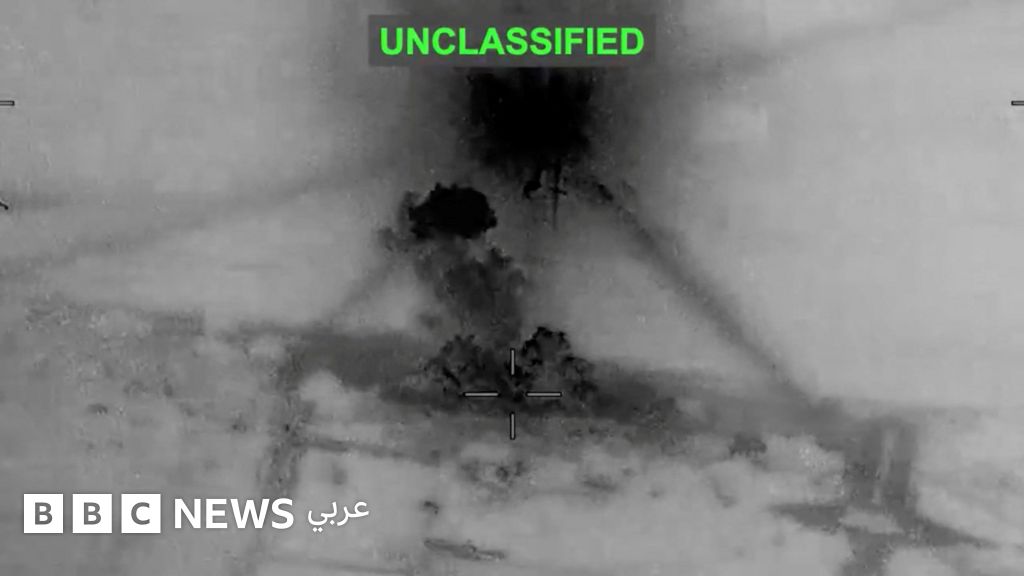
Reporting indicates U.S. retaliatory strikes on Iranian missile, drone and coastal radar facilities following the hit on the Singapore‑flagged Ever Lovely near Oman. Washington describes the action as a response to an Iranian one‑way attack drone, and the United States and Iran now trade accusations of violating their June ceasefire MoU. Tehran’s maritime authorities and the IRGC are asserting control over routing through Hormuz, the IMO has paused evacuation arrangements, tanker transits dipped after the attack though some vessels continue to load, and mine hazards persist. In parallel, the United States announced an Israel, Lebanon framework billed for lasting peace and security, yet Israeli strikes in southern Lebanon and stated conditions on Hezbollah disarmament pose immediate implementation risks. The humanitarian toll in Lebanon remains severe.
Change from previous assessment
New since the prior brief: a confirmed attack on the M/V Ever Lovely exiting Hormuz, public U.S. retaliatory strikes on Iranian missile, drone and radar sites, and explicit IRGC vows of swift, decisive response. The IMO has paused its evacuation scheme following the attack, and tanker transits dipped versus earlier in the week even as some loadings proceeded. Washington announced an Israel, Lebanon framework billed for lasting peace and security, but Israeli strikes in southern Lebanon and leadership statements indicate near‑term friction. Initial assessment of specific strike locations and BDA has been added, with confidence lowered due to conflicting timelines.
Key judgments
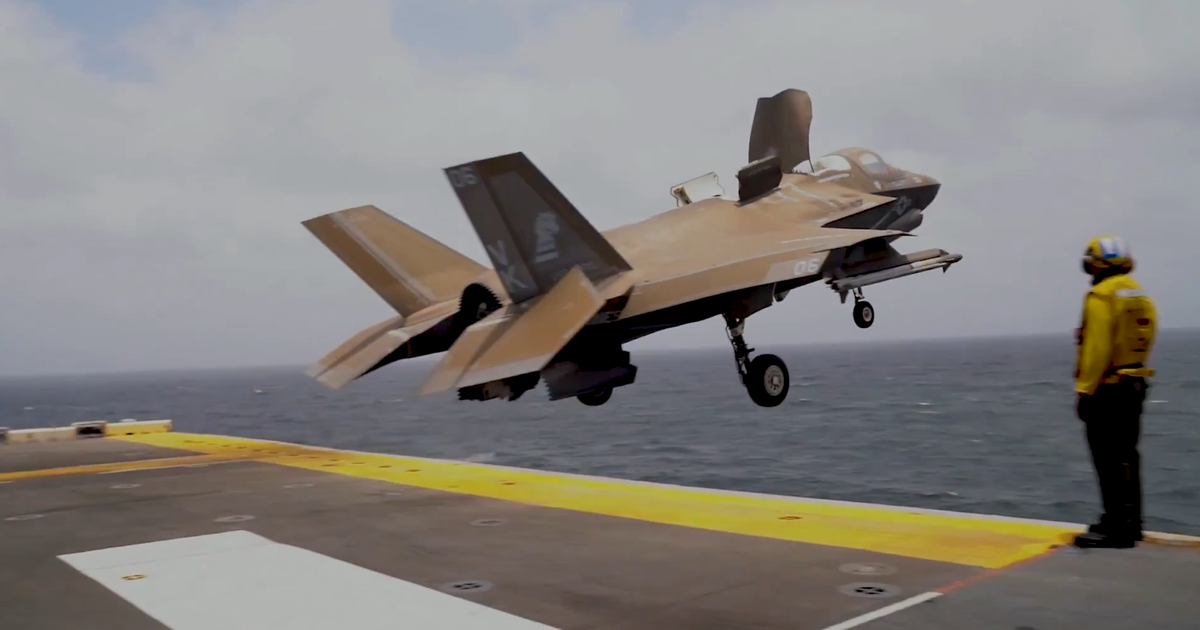
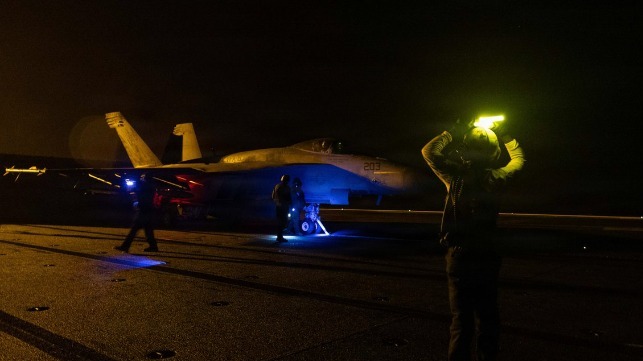
- Very likely: U.S. forces struck Iranian missile and drone storage sites and coastal radar facilities on 26-27 June in or near the Strait of Hormuz in retaliation for the Ever Lovely attack. (Confidence: medium · REPORTED)
- I&W: Public release or independent geolocation of strike imagery showing damage to coastal radar or storage sites near Sirik and along Iran’s Hormuz littoral (0-14 days)
- I&W: Iranian state media footage or satellite imagery showing targeted sites intact, contradicting U.S. claims (0-14 days)
- Likely: The Singapore‑flagged Ever Lovely, operated by Evergreen, was hit by an Iranian IRGC‑linked one‑way attack drone while exiting Hormuz along Oman’s coast on 25 June, with multiple reports placing the impact near Dahit, Oman. (Confidence: medium · REPORTED)
- I&W: Operator or flag‑state release of forensic imagery and incident report attributing damage to a one‑way attack drone (0-1 month)
- I&W: Authoritative third‑party assessment indicating mechanical failure or non‑attack cause for the damage (0-1 month)
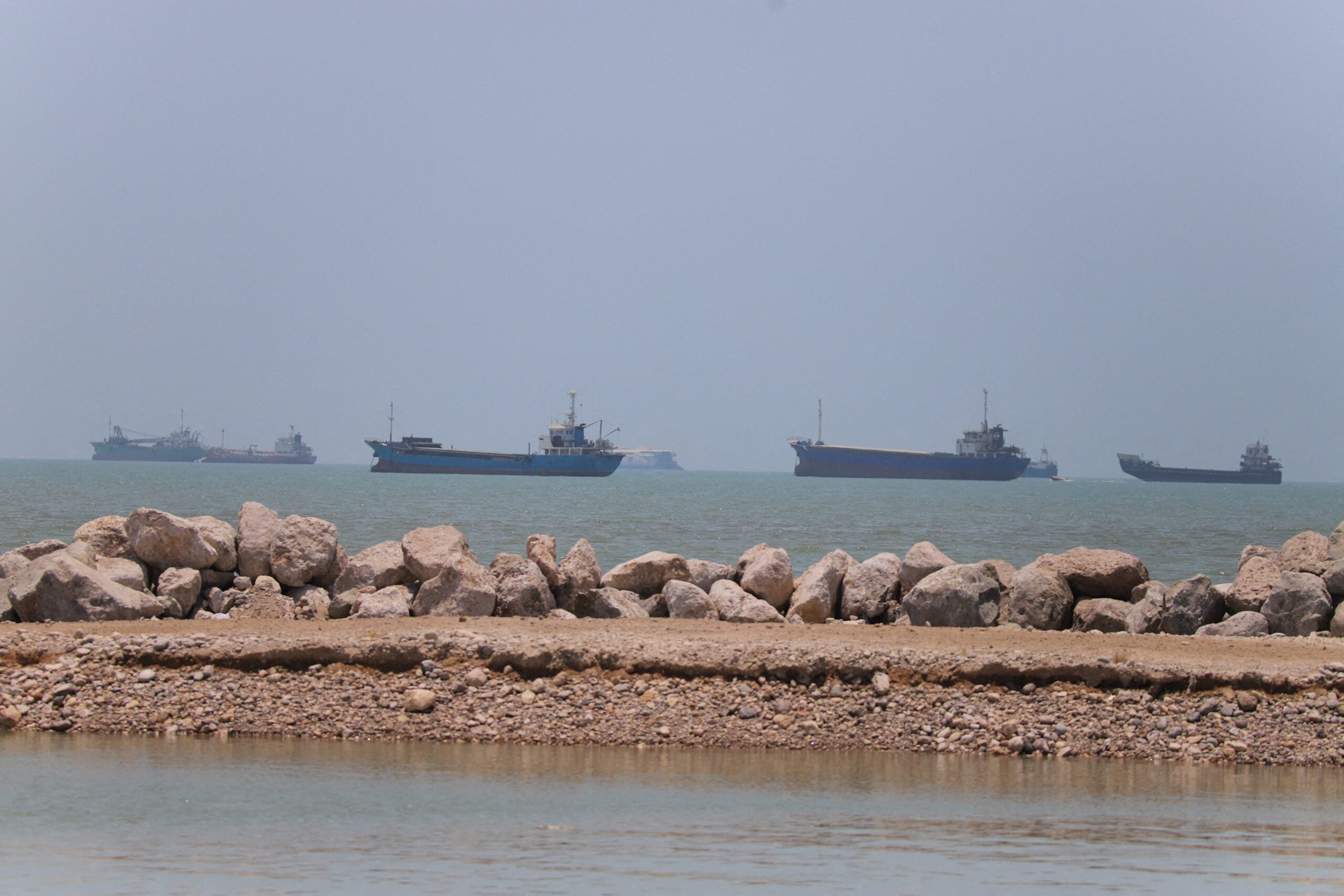
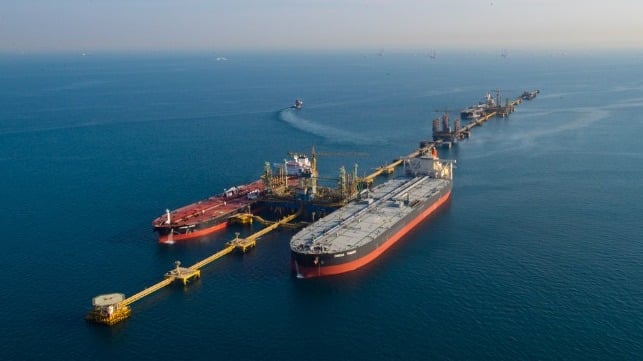
- Likely: Tehran is actively enforcing preferred routing in Hormuz, rejecting the Omani/IMO southern corridor and warning vessels off unauthorised tracks, keeping maritime risk elevated despite partial resumption of flows. (Confidence: high · ASSESSED)
- I&W: Further IRGC Channel 16 warnings and additional vessel turn‑backs or U‑turns recorded by maritime tracking services (0-14 days)
- I&W: IMO formally reactivates the suspended evacuation framework and reports unimpeded use of the Omani coastal corridor (0-1 month)
- Likely: The June U.S., Iran ceasefire MoU is functionally breached, given reciprocal violation claims and renewed strikes following the Ever Lovely incident. (Confidence: medium · ASSESSED)
- I&W: Official statements by both capitals acknowledging suspension or collapse of MoU implementation, including mine‑removal commitments (0-1 month)
- I&W: Sustained halt in new strikes and joint or parallel announcements reaffirming MoU timelines (0-1 month)
- Likely: Further tit‑for‑tat actions between the IRGC and U.S. forces will occur in the near term, given declared intent on both sides after the Hormuz incident. (Confidence: medium · ASSESSED)
- I&W: Another U.S. or IRGC strike publicly claimed and tied to the Ever Lovely sequence (0-14 days)
- I&W: Mutual de‑escalatory signalling and absence of new kinetic claims (0-14 days)
- Likely: The Israel, Lebanon framework announced in Washington will face immediate friction from ongoing Israeli strikes in southern Lebanon and stated conditions on Hezbollah’s disarmament. (Confidence: medium · ASSESSED)
- I&W: Signing ceremony in Washington with published terms and sequencing for LAF deployments (0-14 days)
- I&W: Continuation or expansion of Israeli strikes south of the Litani and official Israeli statements rejecting near‑term withdrawals (0-14 days)
- Almost certainly: The humanitarian toll in Lebanon remains severe, with thousands killed, over 11,600 injured and more than 1.2 million displaced since the current hostilities began. (Confidence: high · REPORTED)
- I&W: Updated Lebanese health and displacement figures from authorities or UN agencies reflecting continued conflict impact (0-1 month)
- I&W: Verified implementation of a ceasefire with LAF reasserting authority in the south and a measurable decline in new casualty reports (1-3 months)
Outlook & scenarios
Managed retaliation around Hormuz, elevated but partial shipping (60%)
U.S. and IRGC conduct limited, localised reprisals tied to the Ever Lovely incident while avoiding strikes that would broaden the fight. IRGC keeps broadcasting routing warnings and rejects the Omani/IMO corridor; the IMO’s evacuation pause persists. Tanker traffic remains below the week’s peak but does not halt entirely, with sporadic loadings and intermittent U‑turns. Insurance and operational risk stay high.
Escalatory spiral and sharper maritime disruption (35%)
Iran follows through on vows of a swift, decisive response with additional attacks on U.S. regional sites or commercial shipping it deems non‑compliant, prompting heavier U.S. strikes on Iranian coastal sensors and storage. Transits through Hormuz drop further, more owners heed industry advice to delay, and mine threats constrain routing. Energy prices remain volatile.
Diplomatic stabilisation window holds (25%)
Washington and Tehran reaffirm the MoU’s 60‑day track after signalling costs of escalation, Oman engages partners on routing, and the IMO restarts evacuation planning. Israel and Lebanon formalise the framework and message de‑confliction, reducing cross‑border strikes. Hormuz volumes improve from post‑attack lows, though risk premia remain elevated.
Recommendations
- Prioritise imagery and open‑source BDA on reported strike sites near Sirik and along Iran’s Hormuz coast to validate target sets and damage claims, and maintain a time‑stamped strike ledger.
- Task maritime monitoring to log IRGC Channel 16 warnings, AIS anomalies and vessel U‑turns daily, and correlate with transits to and from the Gulf to quantify routing compliance and deterrence effects.
- Advise maritime stakeholders to incorporate the stated Iranian position on ‘unauthorised routes’ into risk models and voyage planning assumptions while the IMO evacuation framework remains paused.
- Maintain a rolling indicator deck for Hormuz: daily tanker counts, reported mine sightings, and any official updates on mine‑removal obligations under the MoU.
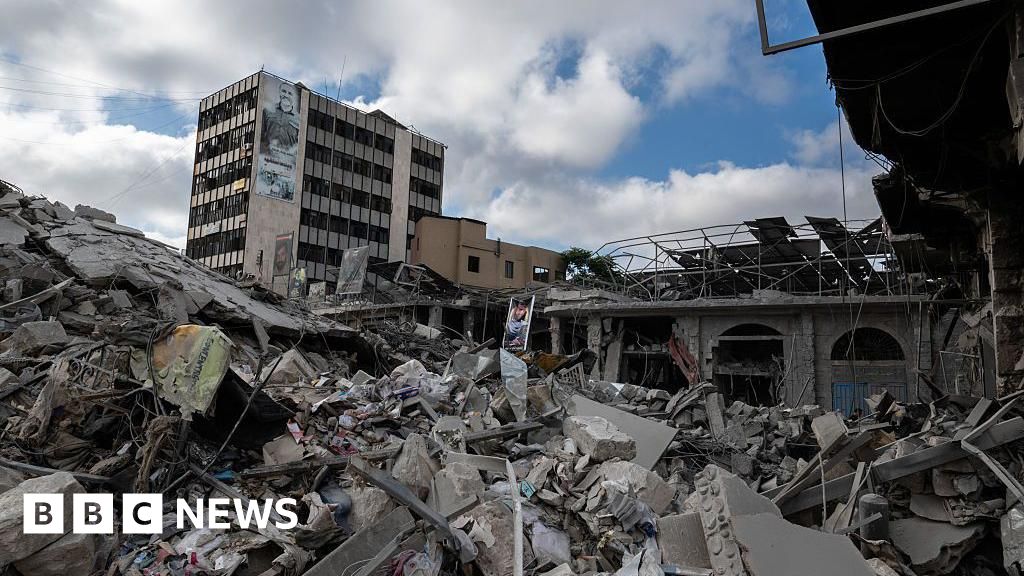
- Track the Israel, Lebanon framework sequencing against continued Israeli strikes and stated conditions on Hezbollah disarmament; prepare branch assessments for slippage or derailment.
- Synchronise diplomatic watch on U.S., Iran messaging about MoU status and violations to anticipate further tit‑for‑tat actions and update escalation ladders for the 0-14 day window.
Confidence & uncertainty
Overall confidence is low due to unresolved contradictions and reliance on official statements without independent corroboration. Key timelines conflict, including dates for U.S. strikes (25, 26 and 27 June) and for the Ever Lovely incident itself (24-26 June), and reporting differs on precise strike locations. Maritime reporting is mixed on the extent of Hormuz disruption, with simultaneous accounts of reduced transits, continued loadings and claims of full shutdown. While multiple major outlets and official sources converge on core events, the absence of verified, geolocated imagery and the presence of reciprocal violation narratives constrain confidence.
Alternative analysis (red cell)
Available reporting is temporally and geographically uneven and mixes operator uncertainty, political claims, and local media reports. It is therefore plausible that the Ever Lovely was struck by an unknown projectile without conclusive IRGC attribution, that reported southern Iranian explosions could reflect air‑defence or accidental detonations rather than confirmed U.S. strikes, and that the MoU is strained but not yet functionally collapsed. Resolving these alternatives requires coordinated forensic, geolocated, and authoritative source material.
Intelligence gaps
- [EEI 1.1 · UNCOVERED] Movement, dispersal, or emplacement of Iranian conventional or IRGC heavy assets (ballistic missile launchers, Khoramshahr/Toofan-class missile transporters, ground-to-ground TELs, air defense batteries, amphibious units) from garrison areas toward forward bases or coastal launch sites. Recommended collection: satellite/IMINT
- [EEI 1.2 · PARTIAL] Authenticated Iranian military orders, NSC/IRGC operations directives, or senior leadership statements explicitly directing strikes against Israel or U.S. forces or authorizing cross-border operations. Recommended collection: human/diplomatic
- [EEI 1.3 · PARTIAL] Changes in Israeli and U.S. force posture indicating anticipation of direct large-scale conflict—elevated readiness levels, mobilization notices, pre-positioning of munitions, or public/private orders to prepare offensive strikes. Recommended collection: open-source/diplomatic
- [EEI 2.1 · PARTIAL] Observable pre-launch preparations for missile/rocket/cruise missile strikes (fueling, warhead mating, launcher orientation, support vehicle congregation) and abnormal munitions handling at known launch sites. Recommended collection: satellite/IMINT
- [EEI 2.2 · UNCOVERED] Indications of proxy arms shipments and weapons transfers (truck convoys, small boat transfers, container movements from Iran to proxies, new stockpiles in Lebanon, Iraq, Yemen, Syria). Recommended collection: maritime/AIS
- [EEI 2.3 · UNCOVERED] Evidence of cyber attack planning or active exploitation campaigns targeting Israeli or U.S. military/critical infrastructure (emergence of new command-and-control servers, spear-phishing campaigns against defense personnel, successful intrusions). Recommended collection: cyber
- [EEI 3.1 · PARTIAL] Movements and posture changes of U.S. regional platforms (carrier strike groups, amphibious ready groups, B-52/B-1/B-2 or fighter deployments, missile defense assets repositioning) and associated armament loadouts. Recommended collection: satellite/IMINT
- [EEI 3.2 · PARTIAL] Official or leaked U.S. government/diplomatic communications indicating thresholds for strikes, authorization for offensive operations, or limits on action (NSC/DoD statements, congressional notifications, diplomatic notes). Recommended collection: diplomatic/human
- [EEI 3.3 · UNCOVERED] Changes in U.S. base force-protection measures and rules of engagement at regional facilities (base lockdowns, evacuation notices, flight restrictions, activation of Local Defense Forces or missile intercept systems). Recommended collection: open-source/local reporting
- [EEI 4.1 · UNCOVERED] Hezbollah-specific indicators: convoys and logistics movements toward Lebanon–Israel border, artillery/rocket emplacement in southern Lebanon, documented strikes-preparation activity, public mobilization orders or recruitment drives. Recommended collection: satellite/IMINT
- [EEI 4.2 · UNCOVERED] Houthi-attributed maritime attack indicators: AIS anomalies/loss of contact for commercial vessels, reports of missile/drone strikes or near-miss incidents in Bab al-Mandeb/Red Sea, Houthi claims paired with imagery of weapons launches. Recommended collection: maritime/AIS
- [EEI 4.3 · UNCOVERED] Militia cross-border attack evidence from Iraq/Syria: recorded rocket/mortar launch events into Israel or strikes against U.S. facilities, movement of armed convoys toward border areas, and intercepted communications coordinating cross-border operations. Recommended collection: signals/ELINT
Cited sources
[1] haaretz.com · U.S. says it struck Iran in retaliation for prior Iranian attack in Strait of Hormuz (A) · sha256:5f9f0815ef46 [2] nypost.com · US military strikes Iran — in payback for 'unwarranted' drone attack on cargo ship (B) · sha256:52047ec8e768 [3] CBS News · U.S.-Iran Latest: U.S. strikes Iran after Trump accuses Tehran of "foolish violation" of ceasefire (A) · sha256:ee50f26393db [4] The Jerusalem Post · Live Updates: Latest from Israel, Iran, and Middle East | The Jerusalem Post (A) · sha256:8b13fe15061f [5] aljazeera.com · US strikes Iran in response to drone strike on commercial ship (A) · sha256:179e73821bb6 [6] gcaptain.com · Drone Strike on Ever Lovely Exposes the Fiction of a Free Strait (B) · sha256:04eb68fde0d0 [7] gcaptain.com · Traffic Through Strait of Hormuz Slows After Attack on Ship (A) · sha256:2e301e3f5194 [8] defensenews.com · US strikes Iranian missile, drone, radar sites (A) · sha256:931ff4209c63 [9] maritime-executive.com · Strait of Hormuz Volumes are Rising, But Iranian Attack Adds Uncertainty (B) · sha256:e3b664ca6d94 [10] maritime-executive.com · Full Steam Ahead In the Strait of Hormuz? Not So Fast (C) · sha256:dc8023b563e8 [11] gcaptain.com · IMO Estimates There Are 80 Mines in Hormuz’s Shipping Lanes (B) · sha256:19d28892a0d8 [12] presstv.ir · Iran condemns 'meddlesome and provocative' GCC-US joint statement (A) · sha256:92dad4d6884e [13] gcaptain.com · Trump Says Iran Violated Ceasefire With Drone Attack on Ship (B) · sha256:8ddb7f77758e [14] BBC News عربي · إيران تعلن تنفيذ ضربات دفاعية ضد أهداف أمريكية وتتهم الولايات المتحدة بـ"انتهاك صارخ" لمذكرة التفاهم - BBC News عربي (A) · sha256:d39d7ab9debe [15] maritime-executive.com · U.S. Conducts Counterstrike on Iran in Retaliation for Ever Lovely Attack (B) · sha256:7ffc572fe20a [16] bbc.com · Israel and Lebanon reach framework agreement (A) · sha256:4c48f0b9602e
Source content hashes were computed at collection time; the cited text is preserved unmodified for the life of this product.
Red cell review: PARTIAL DISSENT
TLP:CLEAR