TLP:CLEAR · Disclosure is not limited.
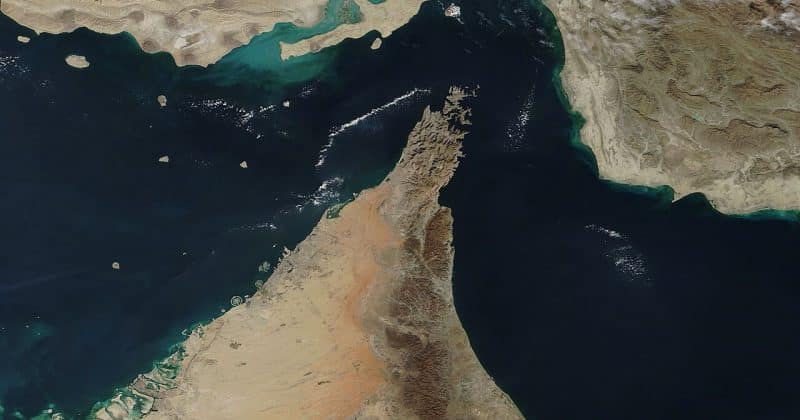
Hormuz: IRGC pressure on shipping persists as traffic inches back and talks seek a managed reopening
Time window: Last 7 days · Audience: General analyst · Type: Situation report · DTG: 2026-06-25 06:18Z · Overall confidence: MEDIUM
BLUF
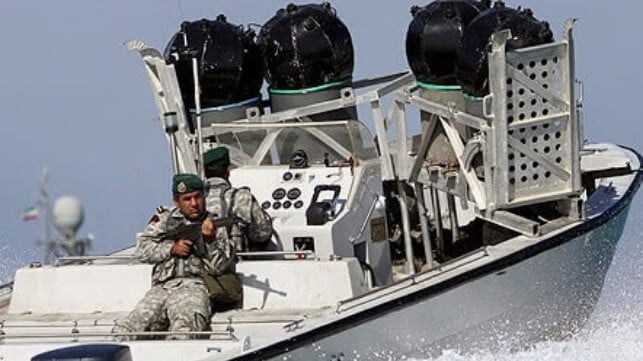
Iran’s IRGC Navy is asserting control over transits in the Strait of Hormuz, rejecting the IMO/Omani southern corridor and pushing an authorisation regime, while commercial traffic continues at depressed volumes along ad hoc routes. An IMO-led evacuation for more than 11,000 seafarers is starting as US-Iran talks and a reported MOU offer a fragile pathway to reopen, with a roughly even chance of setbacks in the next month.
Executive summary
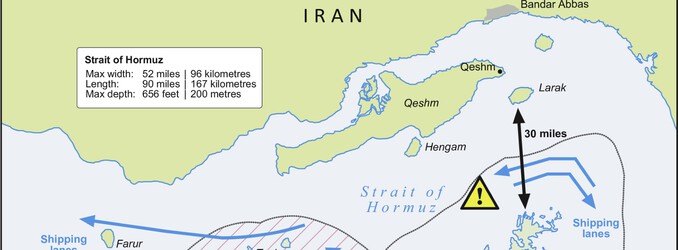
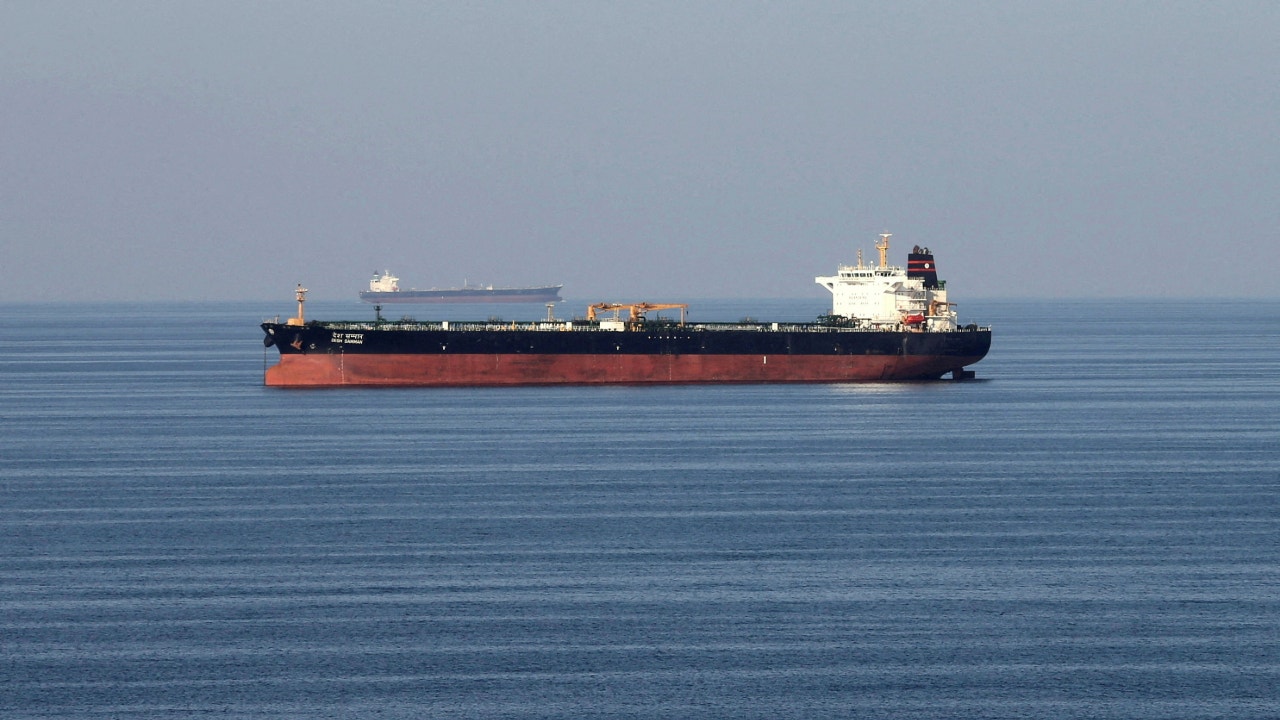
Tehran-linked authorities have signalled that ships need Iranian permission to cross Hormuz and that penalties apply, and the IRGC Navy has rejected the IMO/Omani safe transit route as unsafe. Despite competing Iranian closure announcements and a denial by CENTCOM, 31 to 55 daily transits were recorded on 22-23 June and current flows run at roughly 35-40 per day, far below pre-war levels. The traditional TSS remains off-limits due to reported mines, and the U.S. Navy and Iran are overseeing southern and northern corridors respectively while the IMO begins a large-scale evacuation of seafarers. Freight costs have spiked, yet Brent and WTI are trading near pre-war ranges, reflecting market hope for the reported US-Iran MOU to reopen the waterway even as experts warn of further disruptions.
Key judgments
- Iran is likely enforcing a de facto authorisation-and-control regime over Hormuz transits through the IRGC Navy and the PGSA, using route control and the threat of penalties to steer traffic toward Iran’s preferred channel and entrench long-term administrative control. (Confidence: medium · ASSESSED)
- I&W: PGSA issues publicly verifiable transit permits or penalties for vessels crossing Hormuz. (0-14 days)
- I&W: UKMTO or MICA Centre incident notes cite IRGC Navy checkpoints or boardings on the northern route. (0-14 days)
- Commercial navigation is ongoing at depressed volumes along ad hoc northern and southern corridors despite competing closure announcements, and the traditional TSS remains unusable due to mines, keeping the operating environment hazardous. (Confidence: high · ASSESSED)
- I&W: CENTCOM/Kpler and UKMTO reporting sustains 30-40 daily transits with concurrent oversight of southern and northern corridors. (0-14 days)
- I&W: IMO or coastal-state notice announces mine clearance and restoration of the Strait’s TSS. (1-3 months)
- Humanitarian risk to crews is very likely to persist: the IMO is beginning an evacuation of more than 11,000 seafarers and 500-600 ships, about 20,000 mariners are affected region-wide, and fatalities in the Strait have reached at least 11 to 14. (Confidence: high · ASSESSED)
- I&W: UKMTO/MICA Centre report sequenced departures and port calls for evacuees to Oman or other coastal states. (0-14 days)
- I&W: IMO casualty updates stabilise with no new deaths or injuries among crews transiting the evacuation corridors. (0-14 days)
- Freight and routing costs remain extreme, while crude benchmarks have eased toward pre-war levels, signalling market expectation of partial reopening even as operational friction persists. (Confidence: medium · ASSESSED)
- I&W: Broker reports show Persian Gulf VLCC fixtures returning at non-extreme Worldscale levels and more mainstream VLCCs entering the Gulf. (0-14 days)
- I&W: EIA daily Brent/WTI series hold steady in the 70-80 dollar range without a disruption-led spike. (0-14 days)
- There is a roughly even chance that the reported US-Iran memorandum and ongoing talks will deliver a managed reopening in the next month, but IRGC rejection of the IMO/Omani route and the mine hazard could derail implementation. (Confidence: medium · ASSESSED)
- I&W: Publication of an endorsed corridor plan with operational details co-signed by Iran and uptake by the IRGC Navy. (0-14 days)
- I&W: Persistent IRGC statements rejecting the southern route or evidence of PGSA penalty enforcement against transiting ships. (0-14 days)
- The threat of kinetic spillover against regional energy infrastructure and maritime targets is likely to persist, sustaining elevated security risk for crews and facilities in the Gulf. (Confidence: medium · ASSESSED)
- I&W: New Iranian announcements or verified attacks against LNG, refinery or port sites in Qatar, the UAE or along Gulf coasts. (0-14 days)
- I&W: FAA or State Department raises aviation or travel threat levels for Gulf airspace or the UAE. (0-14 days)
Outlook & scenarios
Phased, negotiated reopening holds (40%)
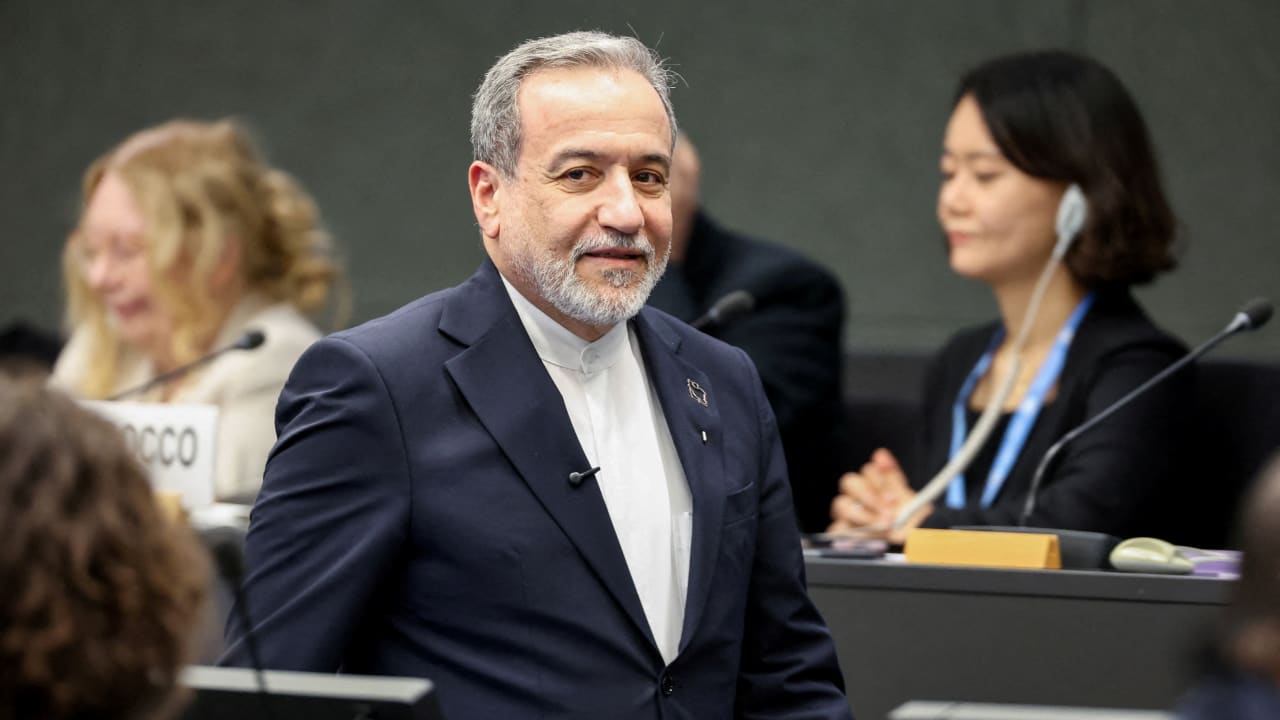
The reported MOU is implemented, with Iran, Oman and partners operationalising coordinated north-south corridors. Daily transits rise steadily from the current 30-40 range as UKMTO/MICA guide traffic, mines are managed, and the IMO evacuation winds down. Brent and WTI remain near pre-war ranges as freight costs normalise. This aligns with White House confirmation of the memorandum’s terms, expectations that the MOU will reopen Hormuz, and ongoing talks and mechanism-building between Washington and Tehran.
Protracted IRGC-controlled choke with low-volume transits (50%)
The IRGC Navy maintains an authorisation regime, rejects the IMO/Omani southern route, and keeps the traditional TSS shut due to mines. Traffic remains depressed around 35-40 daily with repeated pauses as threats and warnings continue. Many operators avoid the Strait, charter rates remain elevated, and the IMO’s evacuation continues in phases.
Hard closure and regional escalation (25%)
Renewed strikes and threats drive a tighter shutdown. Transits collapse, at times dipping below a tenth of pre-conflict levels, with about one-fifth of global oil and meaningful LNG volumes disrupted. Freight spikes recur and rerouting around the Cape becomes the norm.
Wildcard: Iranian fee-and-permit regime entrenched (20%)
Iran institutionalises a toll-and-permit system via the PGSA under IRGC administration. Operators either comply or divert. Revenues flow to Tehran, legal challenges grow at the IMO and in international courts, and traffic only partially recovers under Iranian control.
Recommendations
- Set up a daily common operating picture that fuses CENTCOM and Kpler transit counts with UKMTO/MICA alerts and AIS tracks for VLCCs, including Sinokor hulls that recently entered the Gulf. Flag any sustained move above or below current 30-40 daily transits.
- Task maritime desks to monitor PGSA and IRGC Navy communiqués for authorisation rules, penalties and routing changes; archive notices and match them to UKMTO incident reports.
- Advise operators to plan for extended voyage times and cost from Cape of Good Hope rerouting while the TSS remains unusable; pre-book bunkers and insurance riders accordingly.
- Coordinate with the IMO on the maintained list of affected vessels and evacuation sequencing; ensure U.S.-linked ships are registered, reachable and have UKMTO/MICA contact details at hand.
- Maintain elevated force protection and travel-security posture for U.S.-linked personnel and facilities in the UAE in line with the Department of State order and FAA advisory; rehearse shelter and dispersal plans against drone and missile threats.
- Use EIA daily spot prices as a disruption proxy and track brokered Worldscale quotes out of the Persian Gulf; pre-brief principals on triggers for price spikes or fixture stress that would warrant policy or logistical interventions.
- Engage with Oman and the IMO to obtain operational details of the temporary routes and any mine-clearance timelines; seek clarity on IRGC acceptance to reduce the risk of miscalculation at sea.
Confidence & uncertainty
Multiple independent streams corroborate core elements: transit volumes reported by CENTCOM and Kpler, the IRGC Navy’s rejection of the IMO/Omani route, PGSA permission claims, and the IMO’s evacuation mechanisms and seafarer toll. Oil price data from the EIA and trade press broadly align on a return toward pre-war ranges, albeit with notable volatility. Key uncertainties remain: contradictory closure claims versus observed transits, differing casualty tallies for mariners, and mixed signalling on the status and implementation of the reported US-Iran memorandum. These gaps and some single-source elements warrant an overall medium confidence rating.
Alternative analysis (red cell)
Alternative reading: Iran and its agencies are presently asserting administrative control over Hormuz (permits, safety claims, toll rhetoric), and these assertions have contributed to commercial caution and some rerouting, but the evidence does not yet show systematic, enforceable control (no documented pattern of denials, seizures, or widespread penalization). Freight-market dislocations appear uneven — extreme fixture rates exist as notable outliers rather than a demonstrated market-wide rate structure — and crude prices' recent easing could reflect transient market adjustments rather than settled expectations of a managed reopening. Finally, even if a US–Iran memorandum exists or is being negotiated, implementation faces clear operational obstacles (IRGC rejection of proposed routes, mines in the TSS) that make near-term, assured reopening uncertain (see claims 7fafb930 B1; 18b22c39 B6; contradictions highlighting uncertainty over signing).
Cited sources
[1] worldoil.com · Iran closes Strait of Hormuz again, citing Lebanon ceasefire violations (A) · sha256:d3d88f1c9e73 [2] The Jerusalem Post · Iran's Hormuz strait rules include enforcing penalties, revoking permissions if ships do not comply (B) · sha256:02ae025eb7ff [3] maritime-executive.com · IRGC Navy Rejects IMO's Safe-Passage Plan for Strait of Hormuz (B) · sha256:5b015abb1741 [4] cryptobriefing.com · Iran shuts Strait of Hormuz again, sharply reducing shipping traffic (B) · sha256:551fc75ae55f [5] Al Jazeera · Shipping stalls in Strait of Hormuz after Iran declares key waterway shut (A) · sha256:03caf0f6310a [6] maritime-executive.com · Strait of Hormuz Traffic is Rising, and Oil Prices are Plummeting (B) · sha256:81a343afce81 [7] foxbusiness.com · Oil tanker traffic through Strait of Hormuz hits highest level since conflict began but mines remain (B) · sha256:efb851aa9f6f [8] gcaptain.com · IMO Tells Ships to Stay Put, Await Instructions as Hormuz Evacuation Begins (B) · sha256:2eaa3088e4a6 [9] 联合国新闻 · 滞留霍尔木兹海峡的海员开始大规模撤离行动 (A) · sha256:4af4abe2472a [10] International Maritime Organization (IMO) · 中东 (A) · sha256:555398e372f1 [11] U.S. Department of State · United Arab Emirates Travel Advisory (A) · sha256:7a0c71f2991b [12] gcaptain.com · Oil Tanker Booked in Persian Gulf at 897% of Benchmark Rate (B) · sha256:892e1c064a6b [13] U.S. Energy Information Administration · EIA crude oil spot prices — 2026-06-22 (A) · sha256:fc0e8841f16c [14] gcaptain.com · UAE Oil Exports Surged to 85% of Pre-War Levels, IEA Says (B) · sha256:eaa0f3244cc1 [15] whitehouse.gov · President Trump’s Iran Agreement Is America First in Action (A) · sha256:8298f9e42718 [16] congress.gov · [PDF] CONGRESSIONAL RECORD—SENATE S2929 - Congress.gov (A) · sha256:748fc03cf914 [17] Atlantic Council · What the US-Iran deal means for the rest of the Middle East (and beyond) (C) · sha256:5f93318fe142 [18] marinelink.com · Fertilizer Shipments Should Bounce Back with U.S.-Iran Deal (C) · sha256:b9e127c1daf6 [19] Wikipedia · Reactions to the 2026 Iran war (B) · sha256:44a3532ec705 [20] Wikipedia · 2026 Iran war fuel crisis (B) · sha256:493766254a73
Source content hashes were computed at collection time; the cited text is preserved unmodified for the life of this product.
Red cell review: PARTIAL DISSENT
TLP:CLEAR