TLP:CLEAR · Disclosure is not limited.
Hormuz Maritime Pressure and Regional Escalation, 12 October 2026
Time window: Last 1 day · Audience: General analyst · Type: Situation report · DTG: 2026-10-12 14:14Z · Overall confidence: HIGH
BLUF
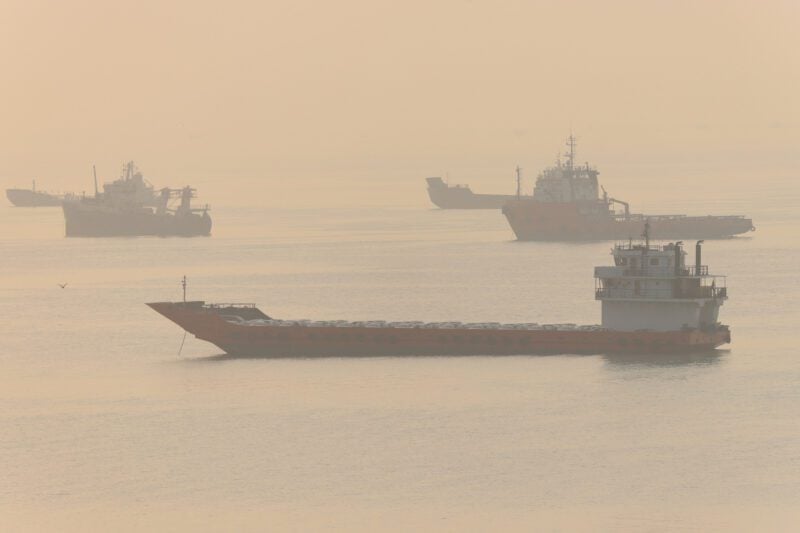
Very likely, commercial shipping around the Strait of Hormuz and the Gulf of Oman will remain exposed to attacks and coercive restrictions over the next 14 days. The US strike on M/V Ocean Molica, recent tanker incidents and stalled US-Iran talks keep the maritime confrontation acute; responsibility for several attacks remains unconfirmed.
Executive summary
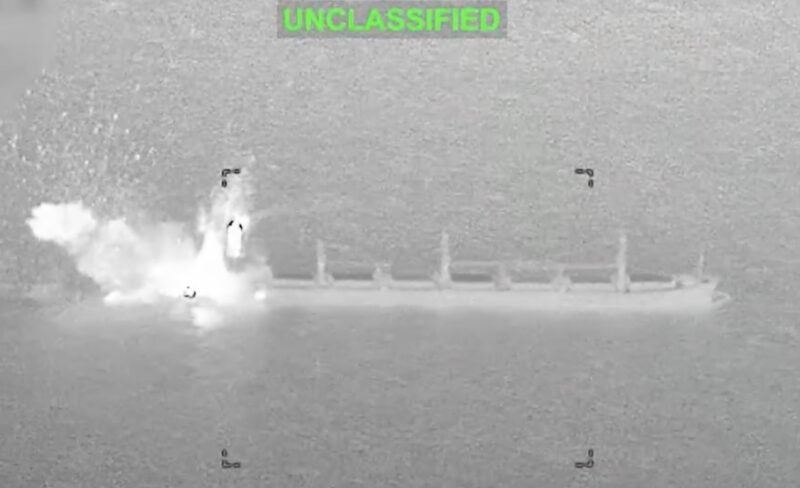
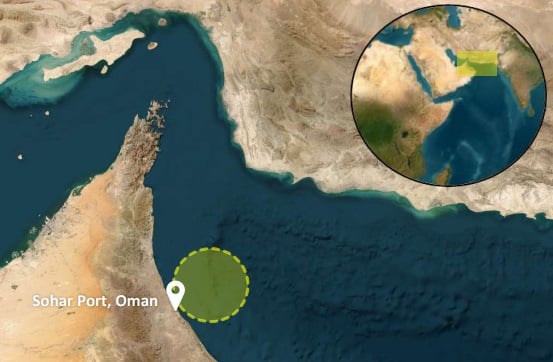
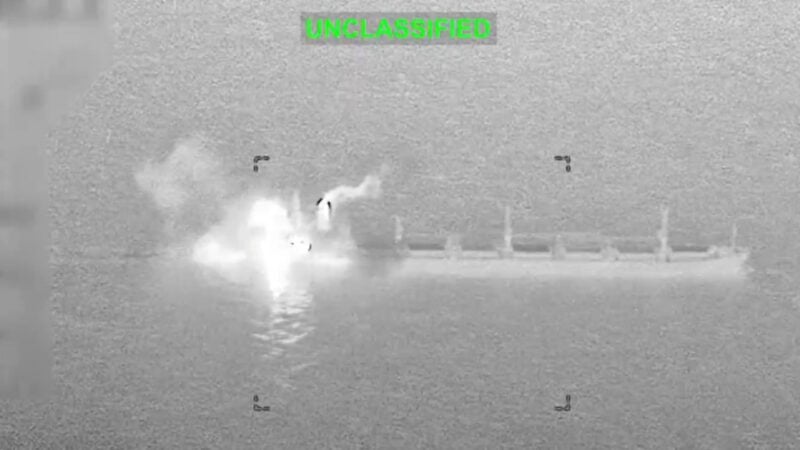
The US blockade of Iranian ports remains in force. On 10 October, a US fighter jet struck and disabled the Panama-flagged M/V Ocean Molica in the Gulf of Oman after, according to CENTCOM, it ignored warnings and attempted to breach the blockade. UKMTO reported projectile strikes on outbound tankers in the Strait of Hormuz on 10 and 11 October. A drone attack on MT Petro Dolphin at Sohar Anchorage, Oman, on 11 October left two seafarers missing; reports differ on whether nine or 10 crew members were rescued. Iran proposed reopening Hormuz within seven days if its conditions were met, but President Donald Trump said he had rejected the proposal. Iranian security chief Mohsen Rezaei called the US response insufficient and said Iran was no longer responding. Separate reporting attributes an attack on King Khalid International Airport in Riyadh to the Houthis, but sources differ on its date, attribution and death toll.
Change from previous assessment
Since the 11 October brief, reporting adds the 11 October drone attack on MT Petro Dolphin off Sohar, with two seafarers missing, and another UKMTO-reported projectile strike on an outbound tanker in Hormuz. The diplomatic picture is clearer but less encouraging: Iran's proposal was rejected by Trump, Rezaei called the US response insufficient, and Qatar continues to relay messages. The prior assessment of elevated shipping exposure remains; this update adds the Sohar incident and sharpens the near-term outlook for a negotiated reopening.
Key judgments
- Very likely, commercial vessels will face further attacks or coercive interference around the Strait of Hormuz and the Gulf of Oman over the next 14 days. UKMTO reported projectile strikes on outbound tankers on 10 and 11 October, and confirmed an attack on MT Petro Dolphin off Sohar on 11 October. The Joint Maritime Information Center warned on 8 October that attacks on shipping had become more frequent. The attacks are reported by maritime security and trade sources, but the attackers and the cause of several incidents remain unconfirmed. Confidence is high in continued exposure, but lower in any attribution. (Confidence: high · ASSESSED)
- I&W: Confirm: UKMTO issues another advisory documenting a projectile or drone attack on a commercial vessel in Hormuz, the Gulf of Oman or off Sohar. (0-14 days)
- I&W: Break: UKMTO reports no further vessel attacks or forced anchorage departures, and reports of commercial transits show a sustained recovery. (0-14 days)
- Unlikely, Washington and Tehran will agree to reopen the Strait of Hormuz within the next 14 days. Iran proposed restoring normal passage within seven days if its conditions were met, but Trump said he rejected the proposal. Rezaei described the US response as insufficient and said Iran had stopped responding, although Qatar and other mediators continue to transmit messages. The conflicting public signals and active mediation leave room for a change in position. Confidence is medium because the accounts of the proposal and response rely mainly on official statements reported by media. (Confidence: medium · ASSESSED)
- I&W: Confirm: Trump or Rezaei publicly restates rejection of the other side's terms, or Iran states that Hormuz will remain closed to US-linked passage until its conditions are met. (0-14 days)
- I&W: Break: Washington and Tehran announce agreed terms and UKMTO reports normal maritime passage restored within the stated seven-day period. (0-14 days)
- Likely, US blockade enforcement and Iranian efforts to control passage through Hormuz will sustain a coercive maritime confrontation over the next 14 days. CENTCOM says US forces have turned back 135 ships, disabled four commercial vessels and destroyed 10 IRGC-linked tankers since the blockade resumed on 14 July; the 10 October strike on Ocean Molica was the fourth commercial vessel disabled. The IRGC Navy claims control over transit and says it struck a tanker using an unauthorised route. These figures and accounts are reported, but the reporting does not independently establish the circumstances of every blockade encounter or tanker strike. Confidence is medium. (Confidence: medium · ASSESSED)
- I&W: Confirm: CENTCOM reports another vessel disabled or turned back after a blockade warning, or the IRGC Navy announces enforcement against another vessel using an unauthorised route. (0-14 days)
- I&W: Break: CENTCOM announces a suspension of blockade enforcement and the IRGC Navy withdraws its claim to control transit. (0-14 days)
- Unlikely, the United States will launch direct strikes on the Houthis in Yemen within the next 14 days, but the Riyadh airport attack raises the risk of a policy shift. Trump said he was considering direct strikes after the attack, while an earlier White House position opposed direct intervention in Yemen. Reporting conflicts over whether the attack occurred on 8 or 10 October, whether the Houthis were responsible, and whether 12 or at least 13 people were killed. The intervention signal is not an announced operation, and the conflicting incident reporting limits confidence. Confidence is low. (Confidence: low · ASSESSED)
- I&W: Confirm: The White House or CENTCOM announces a direct US strike on a named Houthi position in Yemen. (0-14 days)
- I&W: Break: The White House rules out direct action and reports the US role remains limited to intelligence or advisory support to Saudi Arabia. (0-14 days)
Outlook & scenarios
Maritime pressure continues (65%)
US blockade enforcement continues while Iran maintains its claims over Hormuz transit. Further vessel incidents keep commercial shipping exposed around Hormuz and the Gulf of Oman, without clear public attribution for every attack.
A mediated reopening (20%)
Qatar sustains exchanges between Washington and Tehran, and the parties reach terms that meet enough of Iran's stated conditions for normal passage to resume within the proposed seven-day period. The current public rejection of Iran's proposal makes this a less likely near-term outcome.
The Yemen front draws in the United States (10%)
After the Riyadh airport attack, the United States moves from intelligence and advisory support to direct strikes on Houthi positions in Yemen. Houthi attacks on Saudi aviation or energy infrastructure continue, increasing pressure for a US response.
Wildcard: direct US-Iran maritime exchange (5%)
A further US blockade strike or an Iranian operation against a vessel triggers a direct exchange involving US and Iranian forces. This low-probability outcome would sharply widen the confrontation and further disrupt passage through Hormuz.
Recommendations
- Maintain a daily incident log using UKMTO and Joint Maritime Information Center advisories. Record vessel name, coordinates, time, reported weapon and crew impact, and separate confirmed details from attribution claims.
- Track CENTCOM blockade notices and reported enforcement actions alongside IRGC Navy statements. Flag any new US strike on a vessel or any named Iranian claim of an attack for immediate review.
- Monitor statements from Washington, Tehran and Qatar for changes to the seven conditions, the US response or the status of mediation. Treat public statements as positions, not proof that operational orders have changed.
- Keep a separate watch on the Riyadh airport incident and US policy toward the Houthis. Reconcile the conflicting dates, attribution and casualty totals before using them in assessments of escalation.
- Use the reported Petro Dolphin rescue discrepancy carefully. Retain both figures, nine and 10 rescued, until an official update resolves the count; track the status of the two missing seafarers.
Confidence & uncertainty
Confidence is high that the principal reported events occurred: maritime advisories document recent vessel incidents, CENTCOM has publicly described the Ocean Molica strike and blockade totals, and major media and wire reporting covers the US-Iran proposal and response. Confidence is lower on responsibility for several vessel attacks, the exact circumstances of some blockade encounters, and the Riyadh attack's date, attribution and death toll. Some reporting repeats the same official accounts, so corroboration is stronger for event occurrence than for attribution or intent.
Alternative analysis (red cell)
The available evidence does not establish that direct US strikes are unlikely within the period. Trump's stated consideration of strikes (a3796907-c688-40e8-bdd2-66641fe7ade3), combined with the reported Riyadh attack and casualties (4b6fe896-e018-4254-ba41-e5e0df957a14), supports a meaningful possibility of escalation even though the earlier non-intervention position was documented (3faae438-c863-4d26-a56a-44cf70a5c318). The conflicting incident reporting limits confidence in the trigger, but it does not by itself justify a directional unlikely assessment.
Intelligence gaps
- [EEI 1.1 · UNCOVERED] Unusual long-range missile/rocket transporter-launcher (TEL) movements, storage activation, or assembly activity at known IRGC missile sites or forward staging areas. Recommended collection: satellite/imagery
- [EEI 1.2 · PARTIAL] Orders, threat-alert messages, or changes in posture from IRGC, Quds Force, or senior Iranian military leadership indicating attack timelines or rules of engagement changes. Recommended collection: signals/ELINT and HUMINT
- [EEI 1.3 · UNCOVERED] Large-scale transfers, deliveries, or convoy movements of armed UAVs/drones, guided munitions, or spare parts from Iran into Lebanon (Hezbollah), Iraq, Syria, or Gaza. Recommended collection: air/aviation track and HUMINT
- [EEI 1.4 · UNCOVERED] Sustained changes in Israeli air-defense usage (SAM launches, radar activations), wide-area alerts, or NOTAMs indicating elevated imminent strike response. Recommended collection: air/aviation/NOTAMs and signals
- [EEI 2.1 · PARTIAL] Concentration, repositioning, or sortie patterns of Iranian naval/IRGC patrol boats and fast-attack craft near shipping chokepoints or commercial lanes. Recommended collection: maritime/AIS and satellite/imagery
- [EEI 2.3 · PARTIAL] Insurance market indicators: sudden spikes in war-risk or hull insurance premiums for routes through the Red Sea, Suez corridor, or Persian Gulf, and major carriers announcing route changes. Recommended collection: financial/market and commercial shipping notices
- [EEI 2.4 · PARTIAL] Port closures, naval escorts requested by commercial operators, or formal rerouting advisories issued by major shippers (e.g., Maersk, Hapag-Lloyd) for regional transits. Recommended collection: commercial/OSINT
- [EEI 3.3 · UNCOVERED] Confirmed arms transfers, expedited weapons shipments, or transfer authorizations to Israel, Iran, or their proxies (aircraft parts, munitions, air defenses). Recommended collection: customs/INTEL and HUMINT
- [EEI 3.4 · UNCOVERED] Issuance of travel warnings, embassy evacuations or reductions, and closure of diplomatic missions by major capitals indicating escalation risk or shifted threat assessments. Recommended collection: OSINT/diplomatic
Cited sources
[1] gCaptain · More Tankers Hit in Hormuz as U.S. Strikes Cargo Ship (C) · 11 October 2026 · sha256:80b4c744c804 [2] The Maritime Executive · Two Seafarers Missing in Drone Attack on Product Tanker off Oman (C) · sha256:96cedc4ea135 [3] Reuters (republished by gCaptain) · Iran Says US Response To Its Proposal To Reopen Hormuz Was 'Insufficient' (A) · 11 October 2026 · sha256:d6e9b7e6343b [4] Rappler · Iran says US response to its proposal to reopen Hormuz 'insufficient' (B) · 12 October 2026 · sha256:80a2cf1c4918 [5] William Usher (Substack) · Iran Claims Hormuz Control as Tankers Burn and Exports Near Zero (E) · 12 October 2026 · sha256:39451e022d90 [6] gCaptain (re-publishing Reuters wire content) · US Says It Disabled Cargo Vessel Trying To Run Iran Blockade (C) · 11 October 2026 · sha256:2bb2601f8585 [7] BBC · Riyadh airport attacks another dangerous moment in already tense conflict (A) · 11 October 2026 · sha256:51ebdd0bc027 [8] The Independent · Houthi agents of chaos are no unruly tribesmen. They have joined Iran and Russia’s plot to wreak havoc (B) · 12 October 2026 · sha256:8590663f5036
Source content hashes were computed at collection time; the cited text is preserved unmodified for the life of this product.
Red cell review: PARTIAL DISSENT
TLP:CLEAR