TLP:CLEAR · Disclosure is not limited.
Hormuz remains hazardous; four-strait disruption and $108 Brent are unverified
Time window: Last 1 day · Audience: General analyst · Type: Situation report · DTG: 2026-11-13 16:47Z · Overall confidence: HIGH
BLUF
Very likely, shipping through the Strait of Hormuz remains hazardous and disrupted, but the evidence does not establish a complete closure or disruption at four of five key straits. The latest supplied Brent futures quote was $96.35 on 13 November, not $108; Bab-el-Mandeb recorded vessel transits in October, and the reported 6 November explosion there remains unexplained.
Executive summary
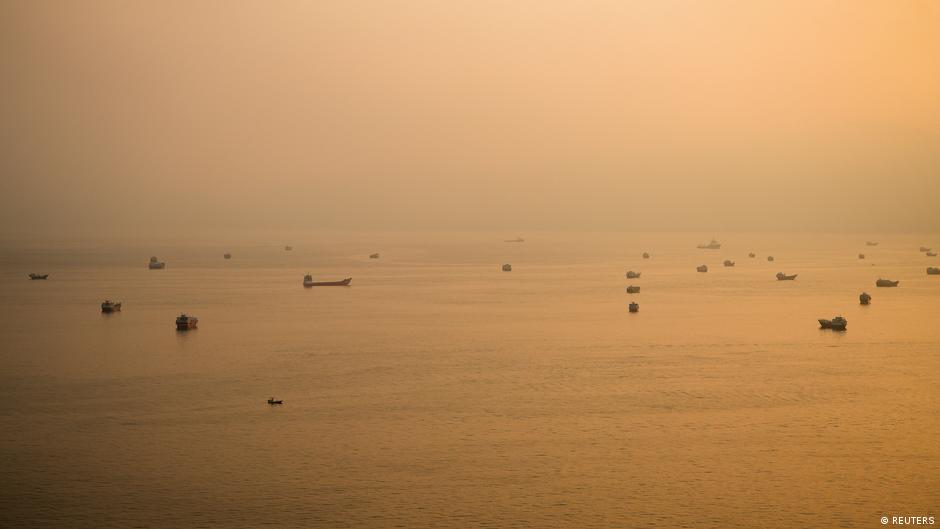
UKMTO listed five reports of vessel attacks in the Strait of Hormuz area between 6 and 11 November, while JMIC estimated 211 commercial vessels stationary at anchorages east of the strait on 12 November. CENTCOM also reported that thousands of ships had crossed with US military assistance, so the evidence points to serious disruption and continued movement, not a verified closure. Reports of a mine strike on a liquefied gas tanker and Iran's claims about tanker explosions remain unverified or inconsistent. Reporting on Bab-el-Mandeb records October transits and no confirmed attacks there since 24 August, although an explosion on 6 November has no established cause. Brent futures were quoted at $96.35 on 13 November. The supplied reporting does not establish a $108 price, quantified war-risk insurance premiums, a general tanker shortage or an interruption to fertiliser trade.
Change from previous assessment
Since the 12 November brief, reporting adds a 13 November Brent futures quote of $96.35, new vessel-attack reporting around Hormuz, an alleged liquefied gas tanker mine strike and the disputed Bahrain drone and radar incident. Houthi claims of attacks on Saudi energy infrastructure and October transit data for Bab-el-Mandeb and Suez add detail, but do not establish a Bab-el-Mandeb blockade or disruption at four of five straits. The assessment of Hormuz remains one of severe disruption without proof of complete closure. The new price quote is above the prior brief's reported $92 to $94 range, but does not support $108.
Key judgments
- Very likely, commercial movement through the Strait of Hormuz remains heavily disrupted and exposed to attack, but a complete closure is not established. UKMTO listed five vessel-attack reports in the area between 6 and 11 November, and JMIC estimated 211 commercial vessels stationary at anchorages east of the strait on 12 November. CENTCOM said at least 4,000 ships had crossed with US military assistance by 11 November. Iran's accounts of mine strikes and tanker explosions do not establish the cause of reported damage. (Confidence: medium · ASSESSED)
- I&W: Confirm: a new JMIC update still counts at least 200 stationary commercial vessels at the anchorages east of Hormuz, or UKMTO records another vessel attack in the area. (0-14 days)
- I&W: Break: JMIC reports fewer than 100 stationary vessels and independently reported daily transit counts show sustained recovery through Hormuz. (0-14 days)
- Unlikely, the supplied record establishes a Bab-el-Mandeb blockade or disruption at four of five key straits. Bab-el-Mandeb recorded 1,363 transits in October, although that was below its pre-Houthi-crisis level; UKMTO reported no attacks there after 24 August, while the cause of the 6 November explosion is unknown. Suez Canal data also record October transits, including crude tanker traffic above the cited pre-crisis monthly average. The material provides no current transit data for the other straits. (Confidence: low · ASSESSED)
- I&W: Confirm: updated transit data show regular Bab-el-Mandeb crossings and UKMTO records no confirmed attack there. (0-14 days)
- I&W: Break: UKMTO confirms a Houthi attack at Bab-el-Mandeb and transit reporting shows crossings stop for at least 48 hours. (0-14 days)
- Very unlikely, Brent crude was $108 on 13 November based on the supplied reporting. Brent futures were quoted at $96.35 at 0900 GMT that day; the EIA reported Brent spot at $92.14 on 11 November, and another report placed futures at $93.40 on 12 November. These are different measures and times, but none supports the $108 figure. (Confidence: medium · ASSESSED)
- I&W: Confirm: published Brent futures settlements remain below $100 per barrel. (0-7 days)
- I&W: Break: a published Brent futures settlement reaches or exceeds $108 per barrel. (0-7 days)
- Likely, the Houthis attempted to target Saudi energy infrastructure on 12 November, but successful impacts remain unverified. The Houthis said they attacked a pumping station on the East-West Pipeline, an oil facility in Yanbu and an Aramco building in Riyadh. The Saudi-led coalition separately reported intercepting two Houthi drones, leaving the extent of any damage unresolved. (Confidence: medium · REPORTED)
- I&W: Confirm: Saudi authorities or independent reporting document damage at the East-West Pipeline pumping station, the Yanbu oil facility or the Riyadh Aramco building. (0-14 days)
- I&W: Break: Saudi authorities report no damage at the named sites and the coalition confirms the reported drones were intercepted before reaching them. (0-14 days)
- Likely, the unresolved 13 November confrontation around Bahrain will sustain near-term risk of further direct Iran-US exchanges. CENTCOM said it intercepted two Iranian drones and reported no casualties or damage. The IRGC claimed it destroyed a US early-warning radar in retaliation for US action at Sirik; the radar's status is disputed. (Confidence: medium · ASSESSED)
- I&W: Confirm: CENTCOM or Bahraini authorities report another Iranian drone launch or interception directed at a named facility. (0-14 days)
- I&W: Break: Iran and the United States confirm a stand-down, with no further reported attack attempts during the period. (0-14 days)
- Unlikely, the United States and Iran will agree on a ceasefire and Hormuz reopening within 14 days. Donald Trump said the United States did not need a deal and told JD Vance to stop pursuing one. Mohammad Bagher Ghalibaf said Iran had sent a seven-condition proposal through Qatari mediators, and Masoud Pezeshkian said Supreme Leader Mojtaba Khamenei wanted the conflict ended. These competing signals leave a diplomatic channel open but do not show agreement on terms. (Confidence: medium · ASSESSED)
- I&W: Confirm: the Trump administration maintains that it does not need a deal and no US-Iran meeting or agreed ceasefire terms are announced. (0-14 days)
- I&W: Break: Qatar confirms a meeting between US and Iranian representatives and both sides announce agreed steps on a ceasefire or Hormuz transit. (0-14 days)
Outlook & scenarios
Continued Hormuz disruption, without a verified multi-strait blockade (60%)
Likely, vessel attacks, congestion and US-assisted transits continue around Hormuz. Saudi Arabia maintains some oil movement through the East-West Pipeline, while the available evidence remains insufficient to describe Bab-el-Mandeb as blocked.
Limited diplomatic opening and cautious traffic recovery (30%)
Unlikely, Qatar's mediation produces initial ceasefire steps and Iran permits a measured increase in Hormuz traffic. Competing US and Iranian positions on terms, sanctions and the naval blockade remain obstacles to a full reopening.
Concurrent attacks disrupt another route (10%)
Very unlikely, but high impact: a confirmed Houthi maritime attack at Bab-el-Mandeb coincides with continued attacks in Hormuz. That combination would widen the shipping disruption beyond the route for which the supplied evidence currently shows the clearest incidents.
Recommendations
- Publish separate daily measures for Hormuz vessel attacks, transits and stationary vessels. Keep UKMTO incident reports, JMIC anchorage estimates and CENTCOM transit claims distinct rather than treating them as interchangeable measures of closure.
- Require a confirmed incident report and current transit evidence before describing Bab-el-Mandeb as blockaded or claiming that four of five straits are disrupted. Track UKMTO updates alongside Bab-el-Mandeb and Suez transit data.
- Use a standard price comparison in updates: identify Brent spot or futures, the quote time and the source. Do not repeat the $108 figure without a dated market quote.
- Seek Saudi or independent confirmation of damage at the East-West Pipeline pumping station, the Yanbu oil facility and the Riyadh Aramco building before assessing effects on Saudi export capacity.
- Track the Bahrain radar claim separately from the reported drone interception. Record any independent damage assessment and any subsequent Iran-US attack attempt before updating the escalation assessment.
- Do not present war-risk premium increases, tanker shortages or fertiliser-trade disruption as established facts without specific premium quotations, vessel-availability data or cargo-flow reporting.
Confidence & uncertainty
Overall confidence is high for the core reported events and dated price observations. UKMTO, Ambrey, JMIC, wire reporting, official statements and the EIA provide reliable reporting on vessel incidents, congestion, interceptions and market prices. Confidence is lower on the causes and attribution of individual attacks, the operational status of Hormuz, the damage claimed by the Houthis and the status of the Bahrain radar. The supplied material does not substantiate the four-strait disruption or $108 Brent headline.
Alternative analysis (red cell)
The Strait of Hormuz appears operational but hazardous rather than heavily disrupted. The 4,000 reported crossings and continuing US-assisted escorts (fe5fe588-4b05-4985-95b0-d03100418bcc; 7c42df2a-3488-408b-9840-75feccb5b913) indicate substantial movement, while the five UKMTO reports and 211 vessels at anchorages (3985eabc-3865-47ea-b228-fc7b4f9d70e9; a86b990c-92b9-40b3-a052-e183b56e7026) show localized risk and delay. The available record therefore supports an exposed and selectively constrained route, but not yet the stronger characterization of heavy disruption.
Intelligence gaps
- [EEI 1.1 · PARTIAL] Changes in IRGC Navy, Houthi, and affiliated maritime unit deployments, patrol patterns, missile-drone activity, mine-laying indicators, or boarding attempts near the two straits. Recommended collection: maritime/ISR-AIS
- [EEI 2.1 · PARTIAL] US, coalition, Iranian, Saudi, Omani, and other naval force posture changes, including escorts, convoy schedules, mine-countermeasure deployments, air patrols, and rules-of-engagement announcements. Recommended collection: maritime/defense-reporting
- [EEI 2.2 · UNCOVERED] Tanker and container-ship rerouting through the Cape of Good Hope or other alternatives, including added sailing days, fuel consumption, and available vessel capacity. Recommended collection: shipping-industry/AIS
- [EEI 2.3 · UNCOVERED] War-risk insurance premium, deductible, coverage-exclusion, and voyage-approval changes for Hormuz, Bab-el-Mandeb, Red Sea, Gulf of Aden, and adjacent waters. Recommended collection: insurance-market
- [EEI 2.4 · UNCOVERED] Operational status and export-loading changes at Saudi, UAE, Omani, Iranian, Djiboutian, and Red Sea ports, terminals, pipelines, and storage facilities. Recommended collection: port-operator/energy-infrastructure
- [EEI 3.1 · PARTIAL] Brent and Dubai crude price movements, futures-curve shifts, volatility, and the spread between regional and global crude benchmarks. Recommended collection: commodity-markets
- [EEI 3.2 · PARTIAL] Changes in crude, refined-product, LNG, and LPG volumes transiting the straits and in announced production cuts, strategic-stock releases, or emergency cargo substitutions. Recommended collection: energy-trade/AIS
- [EEI 3.3 · UNCOVERED] Fertilizer shipment delays, canceled or redirected cargoes, regional price increases for urea and ammonia, and reported inventory levels in import-dependent markets. Recommended collection: commodity-trade/port-data
- [EEI 3.4 · UNCOVERED] Container freight rates, vessel charter rates, bunker costs, port congestion, and manufacturing or retail supply disruptions attributable to the chokepoint crisis. Recommended collection: shipping-and-logistics-markets
- [EEI 4.2 · PARTIAL] Diplomatic commitments, deconfliction arrangements, prisoner or vessel releases, and publicly announced conditions for reopening commercial transit. Recommended collection: diplomatic-reporting
- [EEI 4.3 · PARTIAL] Shipping-company decisions to resume, suspend, or expand transits and corresponding changes in insurer voyage approvals and war-risk premiums. Recommended collection: shipping-and-insurance-industry
- [EEI 4.4 · UNCOVERED] New incidents, military alerts, vessel diversions, or port restrictions at other critical chokepoints indicating geographic spread beyond Hormuz and Bab-el-Mandeb. Recommended collection: maritime/AIS-official-notices
Red cell review: PARTIAL DISSENT
TLP:CLEAR