TLP:CLEAR · Disclosure is not limited.
Hormuz Shipping Attacks and Houthi-Saudi Escalation
Time window: Last 1 day · Audience: General analyst · Type: Situation report · DTG: 2026-10-13 16:06Z · Overall confidence: MEDIUM
BLUF
Further attacks on commercial shipping in the Strait of Hormuz are likely over the next 14 days, with vessel traffic reported at about 29 transits per day against a historical average of 138. The Houthi-Saudi confrontation is also intensifying, increasing the risk of wider US involvement, although no supplied reporting confirms a US decision to strike Iran.
Executive summary
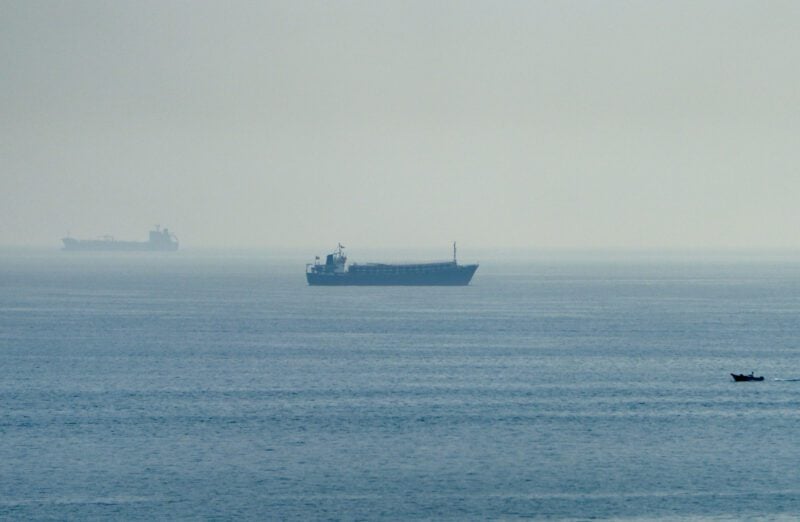
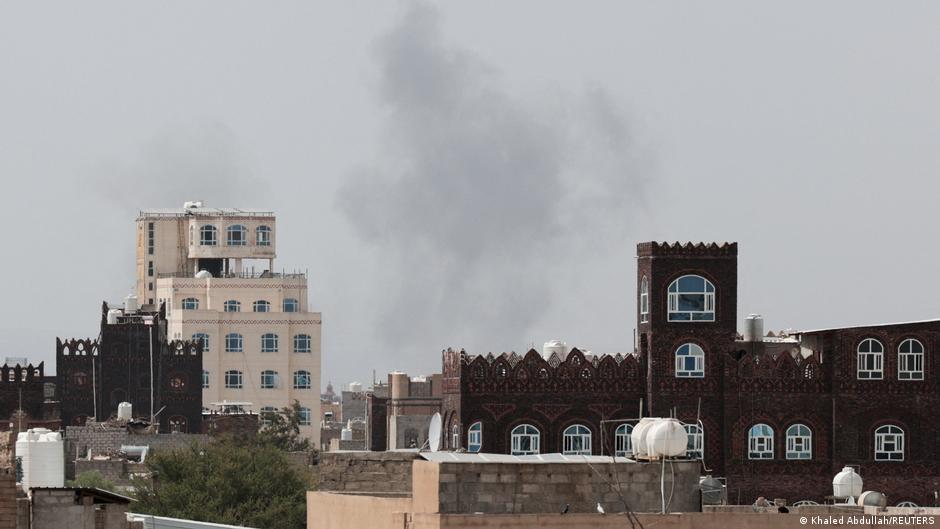
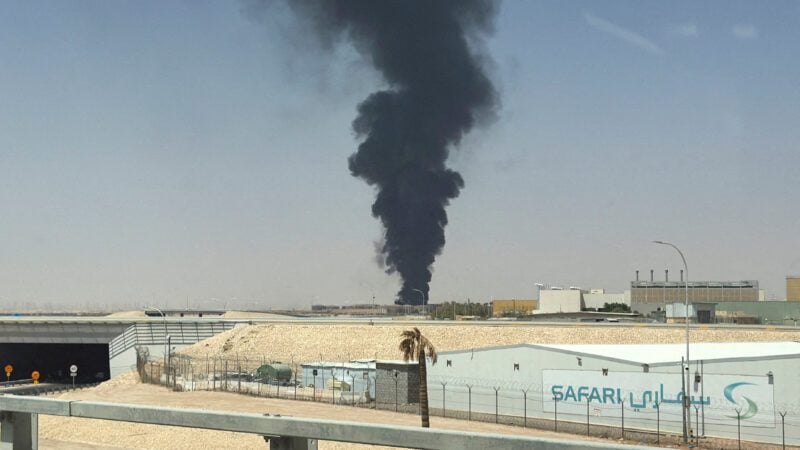
Reporting on 11 October describes six commercial vessels struck in and around the Strait of Hormuz, while JMIC recorded three confirmed attacks over the preceding 72 hours. The different counts may reflect different confirmation standards, and responsibility for the attacks remains unestablished. The Indian government confirmed that a UAV struck the product tanker Petro Dolphin near Sohar, Oman, leaving two seafarers missing. In Saudi Arabia, Houthi attacks on King Khalid International Airport caused deaths and injuries, with reported casualty totals differing; Saudi authorities extended the airport closure to 17 October. The Saudi-led coalition warned civilians to leave sites in Sanaa, Houthi spokesman Yahya Saree threatened retaliation and warned people near Aramco facilities to evacuate, and Houthi-affiliated media reported airstrikes in Sanaa. The United States has reported naval blockade and shipping-restoration activity in the Gulf of Oman and Strait of Hormuz. The reporting supplied for this update centres on these maritime and Yemen developments, rather than new direct Israel-Iran exchanges.
Change from previous assessment
Since the 12 October brief, the assessment of immediate maritime risk has strengthened: reporting now describes six vessels struck on 11 October, JMIC maintains a SEVERE threat level, and US NCAGS data puts traffic at about 29 daily transits against a historical average of 138. The reported US disabling of Ocean Molica and the Houthi-Saudi escalation add a distinct risk of US involvement in Yemen. The supplied reporting does not resolve the prior brief's judgments on Israeli strike timing, Iran's missile drill or Qatar-mediated contacts.
Key judgments
- Further deliberate attacks on commercial shipping in the Strait of Hormuz are likely over the next 14 days, but the incident count remains unsettled and the attackers have not been identified. UKMTO-related reporting described six commercial vessels struck on 11 October, whereas JMIC recorded three confirmed attacks; US NCAGS data put recent traffic at about 29 transits per day, compared with a historical average of roughly 138. The JMIC SEVERE rating and an IRGC Navy warning to vessels cooperating with the US military add to the risk picture. Confidence is medium because several reporting channels describe the threat, but counts differ and attribution is unresolved. (Confidence: medium · ASSESSED)
- I&W: UKMTO reports a new strike on a named commercial vessel in or near the Strait of Hormuz and JMIC subsequently records it as confirmed. (0-14 days)
- I&W: US NCAGS reports a sustained seven-day average of at least 100 daily transits and JMIC records no further confirmed attacks. (0-14 days)
- Further Houthi attacks on Saudi targets are likely over the next 14 days, and Saudi-led coalition action against sites in Sanaa risks prompting Houthi retaliation against Saudi infrastructure. The coalition reported intercepting three drones north of Riyadh after a ballistic missile was aimed at the city; Yahya Saree warned people near Aramco facilities to evacuate and threatened a response to attacks on Sanaa. Reports of casualties at King Khalid International Airport differ, so the precise toll and outcome of individual attacks remain uncertain. Confidence is medium: both Houthi and coalition statements describe continuing confrontation, but some incident details rely on claims by the parties involved. (Confidence: medium · ASSESSED)
- I&W: The coalition reports another Houthi missile or drone interception aimed at Riyadh, or Yahya Saree issues a new evacuation warning for an identified Saudi Aramco facility. (0-14 days)
- I&W: Saudi authorities reopen King Khalid International Airport before 17 October and report no further Houthi attacks or interceptions during the following week. (0-14 days)
- The United States is likely to continue naval enforcement and efforts to restore commercial shipping through Hormuz; US offensive strikes against the Houthis have a roughly even chance over the next 14 days. US forces reportedly disabled the bulk carrier Ocean Molica on 10 October during blockade operations, while President Donald Trump did not rule out joining Saudi Arabia in targeting the Houthis after attacks that killed an American. These actions and statements do not establish a decision to strike Iran. Confidence in the strike estimate is low because the public signals are ambiguous and the supplied reporting contains no announced US authorisation for offensive action. (Confidence: low · ASSESSED)
- I&W: The White House or US Central Command announces authorisation for offensive action against a named Houthi target, or reports a US strike. (0-14 days)
- I&W: The US President explicitly rules out US offensive strikes against the Houthis while US forces continue blockade and shipping-restoration activity. (0-14 days)
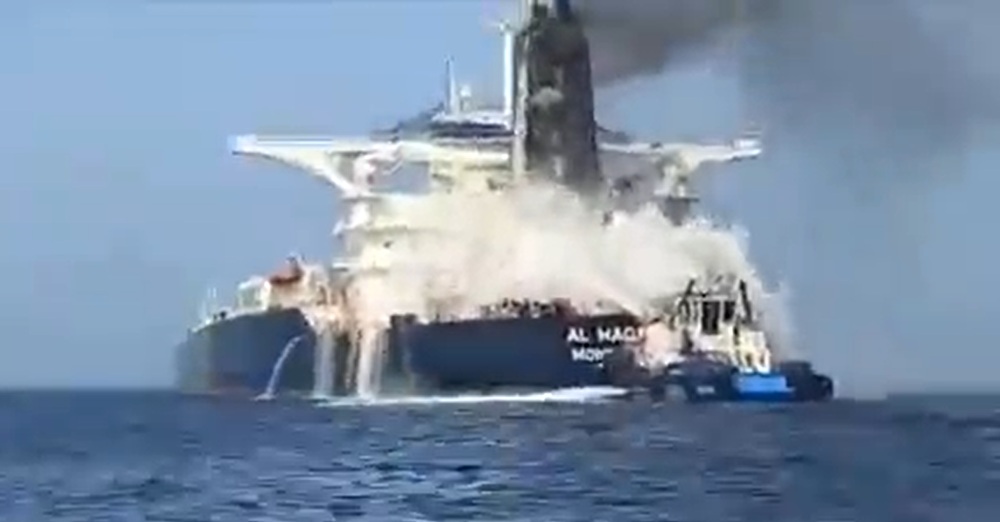
- Iranian responsibility for the reported 11 October Hormuz attacks remains unestablished. The available accounts describe unidentified attackers; the IRGC Navy released footage purporting to show an attack on the tanker Al Maqam and warned commercial vessels cooperating with the US military, but neither fact identifies the perpetrators of the six reported vessel strikes. Confidence is medium because reporting distinguishes confirmed incidents from attribution, while the footage and warning leave the Iranian role unresolved. (Confidence: medium · ASSESSED)
- I&W: An official investigation by Oman, JMIC, UKMTO or a vessel's flag state publishes forensic evidence linking a specific Hormuz strike to an Iranian state unit. (1-3 months)
- I&W: An official investigation identifies a different attacker or rules out Iranian involvement in a specific strike. (1-3 months)
Outlook & scenarios
Continued maritime attrition and constrained transit (50%)
Further attacks on commercial vessels are likely, keeping Hormuz traffic well below its historical average. The United States continues blockade and shipping-restoration activity, while the IRGC Navy maintains warnings to vessels cooperating with US forces.
Expanded Houthi-Saudi fighting with US offensive action (25%)
A new Houthi attack on Riyadh or Saudi energy infrastructure prompts expanded Saudi-led operations in Yemen. US offensive strikes against Houthi targets follow, increasing the risk of attacks on US interests and further disruption to regional shipping.
Temporary restraint through diplomatic contact (20%)
A pause in attacks is less likely, but Saudi-Iranian contact and Iran's offer to facilitate dialogue provide channels for restraint. The coalition limits operations and the Houthis suspend attacks on Saudi targets, easing immediate pressure on Riyadh and maritime traffic.
High-impact widening across both maritime chokepoints (5%)
This outcome is unlikely but would have high impact. Fighting around Bab al-Mandab resumes or expands while attacks continue in Hormuz, drawing further Saudi and US military action and sharply reducing commercial shipping through both routes.
Recommendations
- Maintain a vessel-by-vessel incident register for the Strait of Hormuz. Reconcile UKMTO warnings 164-26 through 169-26 with JMIC's confirmed-attack count before circulating a definitive total or vessel-type breakdown.
- Track daily US NCAGS transit figures against the reported 29 transits per day and historical average of 138. Flag any further sustained decline alongside verified strikes or new UKMTO warnings.
- Keep incident reporting separate from attribution. Do not treat IRGC footage or warnings as proof that Iran directed a specific vessel attack; update attribution only when an official investigation or other corroborated evidence identifies an attacker.
- Monitor Saudi General Authority of Civil Aviation notices on King Khalid International Airport's scheduled reopening on 17 October, alongside coalition interception reports, evacuation warnings and Houthi statements naming Aramco facilities.
- Separate US blockade and shipping-restoration operations from offensive action against Iran or the Houthis. Record a shift to direct US strikes only after an explicit US announcement or a corroborated report of an attack.
Confidence & uncertainty
Overall confidence is medium. UKMTO, JMIC and US NCAGS reporting supports the assessment of severe Hormuz risk and sharply reduced traffic, while Indian government reporting confirms the Petro Dolphin strike. Confidence is limited by discrepancies in incident counts and Saudi casualty figures, unknown attackers in the Hormuz reports, and reliance on statements by the parties to the Houthi-Saudi conflict. The US position on offensive action remains ambiguous.
Alternative analysis (red cell)
The evidence supports continued maritime pressure and a heightened risk of further incidents, but it does not support assigning roughly even odds to US offensive strikes against the Houthis. The cited US signals show conditional political consideration and ongoing enforcement, while the record contains no authorization or operational indicator for an attack. The strike outcome is therefore better treated as indeterminate rather than as a quantitatively grounded near-even possibility.
Intelligence gaps
- [EEI 1.1 · UNCOVERED] Movement, dispersal, or emplacement of Iranian conventional or IRGC heavy assets (ballistic missile launchers, Khoramshahr/Toofan-class missile transporters, ground-to-ground TELs, air defense batteries, amphibious units) from garrison areas toward forward bases or coastal launch sites. Recommended collection: satellite/IMINT
- [EEI 1.2 · UNCOVERED] Authenticated Iranian military orders, NSC/IRGC operations directives, or senior leadership statements explicitly directing strikes against Israel or US forces or authorizing cross-border operations. Recommended collection: human/diplomatic
- [EEI 1.3 · UNCOVERED] Changes in Israeli and US force posture indicating anticipation of direct large-scale conflict, elevated readiness levels, mobilization notices, pre-positioning of munitions, or public/private orders to prepare offensive strikes. Recommended collection: open-source/diplomatic
- [EEI 2.1 · UNCOVERED] Observable pre-launch preparations for missile/rocket/cruise missile strikes (fueling, warhead mating, launcher orientation, support vehicle congregation) and abnormal munitions handling at known launch sites. Recommended collection: satellite/IMINT
- [EEI 2.3 · UNCOVERED] Evidence of cyber attack planning or active exploitation campaigns targeting Israeli or US military/critical infrastructure (emergence of new command-and-control servers, spear-phishing campaigns against defense personnel, successful intrusions). Recommended collection: cyber
- [EEI 3.1 · UNCOVERED] Movements and posture changes of US regional platforms (carrier strike groups, amphibious ready groups, B-52/B-1/B-2 or fighter deployments, missile defense assets repositioning) and associated armament loadouts. Recommended collection: satellite/IMINT
- [EEI 3.2 · UNCOVERED] Official or leaked US government/diplomatic communications indicating thresholds for strikes, authorization for offensive operations, or limits on action (NSC/DoD statements, congressional notifications, diplomatic notes). Recommended collection: diplomatic/human
- [EEI 3.3 · UNCOVERED] Changes in US base force-protection measures and rules of engagement at regional facilities (base lockdowns, evacuation notices, flight restrictions, activation of Local Defense Forces or missile intercept systems). Recommended collection: open-source/local reporting
- [EEI 4.1 · UNCOVERED] Hezbollah-specific indicators: convoys and logistics movements toward Lebanon, Israel border, artillery/rocket emplacement in southern Lebanon, documented strikes-preparation activity, public mobilization orders or recruitment drives. Recommended collection: satellite/IMINT
- [EEI 4.2 · UNCOVERED] Houthi-attributed maritime attack indicators: AIS anomalies/loss of contact for commercial vessels, reports of missile/drone strikes or near-miss incidents in Bab al-Mandeb/Red Sea, Houthi claims paired with imagery of weapons launches. Recommended collection: maritime/AIS
- [EEI 4.3 · UNCOVERED] Militia cross-border attack evidence from Iraq/Syria: recorded rocket/mortar launch events into Israel or strikes against US facilities, movement of armed convoys toward border areas, and intercepted communications coordinating cross-border operations. Recommended collection: signals/ELINT
Cited sources
[1] gCaptain · Six Ships Struck in Single Day as Hormuz Attacks Accelerate (C) · 12 October 2026 · sha256:827b82e39440 [2] The Maritime Executive · UKMTO Reports Six Strikes in One Day on Tankers in the Mideast (C) · sha256:d9f8f55e1ec7 [3] alhurra.com · ترامب والحوثيون. حسابات دعم السعودية ومخاطر التصعيد (F) · 13 October 2026 · sha256:8faf26c90390 [4] dw.com · أنباء عن غارات على صنعاء عقب تبادل التهديدات بين التحالف والحوثيين (F) · 12 October 2026 · sha256:c9474977da55 [5] gcaptain.com · Deadly Attacks on Saudi Arabia Risk Wider War That Draws In US (F) · 12 October 2026 · sha256:12e5390910a1
Source content hashes were computed at collection time; the cited text is preserved unmodified for the life of this product.
Red cell review: PARTIAL DISSENT
TLP:CLEAR