TLP:CLEAR · Disclosure is not limited.
Hormuz Shipping Attacks and Saudi-Houthi Escalation, 13 October 2026
Time window: Last 1 day · Audience: General analyst · Type: Situation report · DTG: 2026-10-13 16:05Z · Overall confidence: MEDIUM
BLUF
Another maritime incident in or near the Strait of Hormuz is likely within 14 days, while normal commercial passage through the strait is very unlikely by 27 October. Iran's announced understanding with Oman on a temporary safe corridor has not established a full reopening, and Tehran says reopening remains conditional on US commitments.
Executive summary
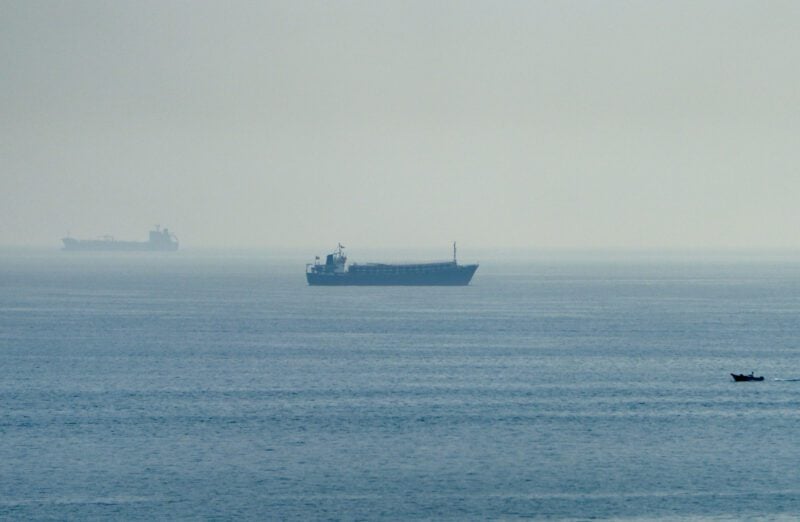
Reporting describes the regional crisis as part of a US-Israeli war against Iran that began on 28 February, with Iran responding with missiles and drones. In the current reporting window, attention centres on attacks against shipping: six commercial vessels were reported struck in and around the Strait of Hormuz on 11 October, and the IRGC Navy claimed it had hit another tanker, though UKMTO did not identify a responsible party in its account of a tanker strike. Vessel traffic remains far below its historical average. Saudi Arabia reported intercepting three drones bound for Riyadh, while the Houthis warned people near Saudi Aramco facilities to evacuate. Qatar's Emir reported export disruption linked to the closure of Hormuz and damage to energy facilities; Etihad extended Riyadh flight cancellations through 19 October.
Change from previous assessment
Since the 12 October brief, the assessment adds Iran's announcement of a temporary safe corridor with Oman, while Tehran continues to condition reopening on US commitments. The reported maritime picture has broadened with six vessels struck on 11 October, an IRGC Navy claim involving a tanker, and a reported drone attack near Sohar; the IRGC attribution remains disputed. The Saudi-Houthi risk assessment remains likely, with new reporting of three drones intercepted near Riyadh and evacuation warnings near Aramco facilities. New reporting also documents disruption to Qatari exports and Riyadh flights, and gives conflicting dates for the US action against Ocean Molica. Initial confidence in continued maritime risk remains medium; confidence in the strait's near-term reopening remains low.
Key judgments
- Likely, at least one further attack on commercial shipping will be reported in the Strait of Hormuz, Persian Gulf or Gulf of Oman within 14 days. JMIC maintained a SEVERE threat level and warned that further deliberate attacks were highly likely; six vessels were reported struck on 11 October, and a tanker was hit near Sohar anchorage. The IRGC Navy claimed responsibility for a tanker strike, but UKMTO reported an unknown projectile and did not identify the attacker. Confidence is medium because multiple incident reports and JMIC's warning point to continuing risk, but several accounts come from trade reporting and attribution remains unresolved. (Confidence: medium · ASSESSED)
- I&W: A new UKMTO or JMIC report records a vessel attack in the Strait of Hormuz, Persian Gulf or Gulf of Oman. (0-14 days)
- I&W: JMIC lowers the Strait of Hormuz threat level below SEVERE and US NCAGS reports a seven-day average above 100 vessel transits per day. (0-14 days)
- Very unlikely, normal commercial passage through the Strait of Hormuz will be restored by 27 October. US NCAGS data put recent traffic at about 29 transits per day, compared with a historical average of roughly 138. Iran announced an understanding with Oman on a temporary safe corridor, but said implementation details were still being followed up and separately stated that reopening depended on US commitments. Qatar's Emir also reported that the closure and damage to energy facilities had disrupted a significant part of Qatar's exports. Confidence is low because the traffic figure and corridor details rely on limited reporting, and the Iranian statements leave the corridor's operational status unclear. (Confidence: low · ASSESSED)
- I&W: US NCAGS reports a seven-day average of at least 100 daily transits, alongside published Iran-Oman corridor procedures and confirmed vessel movements under them. (0-14 days)
- I&W: US NCAGS reports that daily transits remain below 50 and no official corridor implementation details or confirmed transits are announced. (0-14 days)
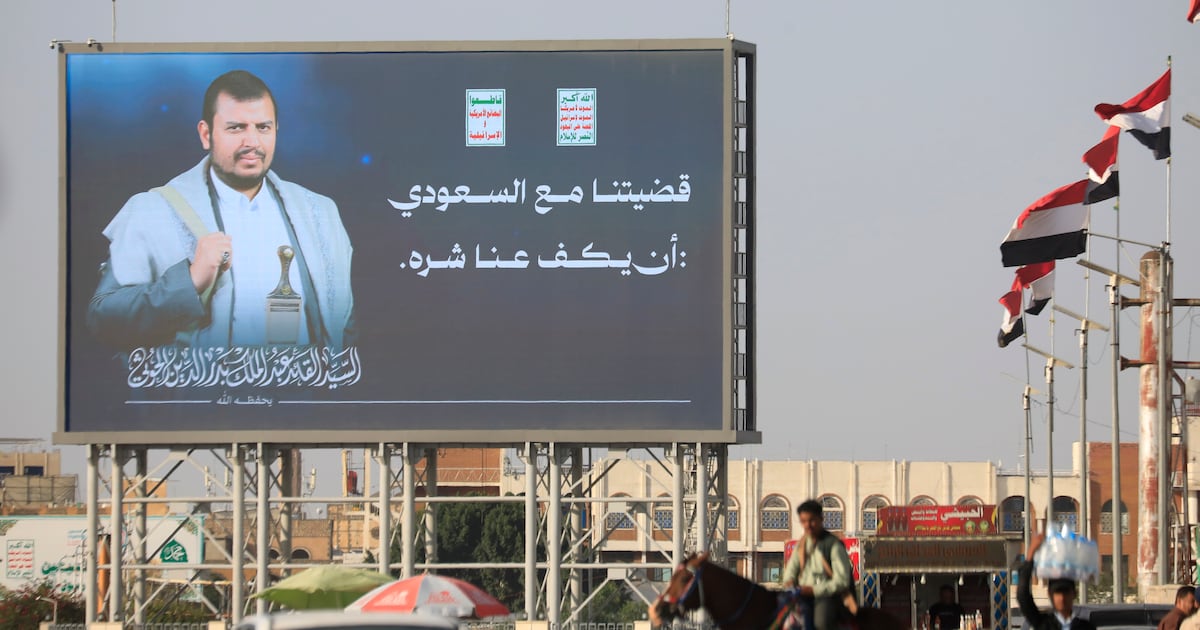
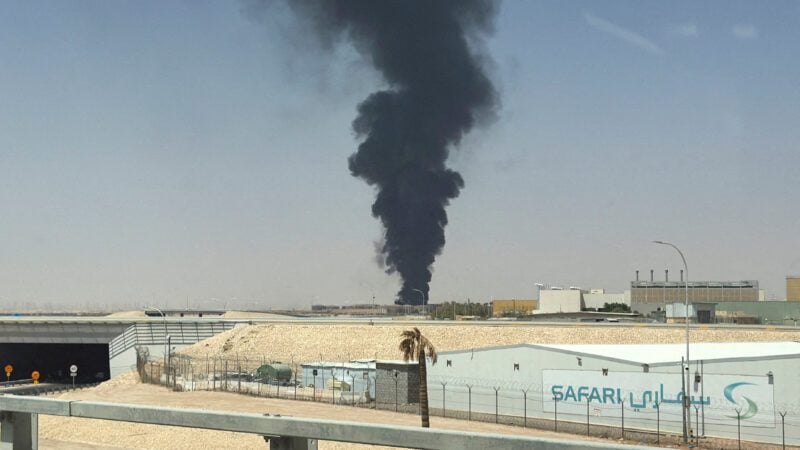
- Likely, the Saudi-Houthi exchange will continue through 27 October. The Houthis claimed responsibility for attacks on Riyadh's main airport on 10 and 11 October; reporting gives 12 deaths and 309 wounded from the first attack, and one death and 11 injured from the second. Saudi Arabia reported intercepting three drones bound for Riyadh, and the Houthis warned people near Saudi Aramco facilities to evacuate. Confidence is medium: wire and major-media reporting supports the attacks and subsequent warnings, but casualty figures and some attribution details rely on limited reporting. (Confidence: medium · ASSESSED)
- I&W: The Houthis claim a further attack on a Saudi airport or Aramco facility, or Saudi Arabia reports another interception of a drone or missile bound for a Saudi target. (0-14 days)
- I&W: No further Houthi attack claims or Saudi interception reports appear, and the Saudi-led coalition announces a halt to air operations in Yemen. (0-14 days)
- Likely, Gulf transport and energy disruptions will persist over the next 14 days. The Emir of Qatar reported that Hormuz's closure and damage to energy facilities, including Ras Laffan facilities, had disrupted a significant part of Qatar's exports. Etihad extended cancellations of Riyadh flights through 19 October, and executives from BP and Shell withdrew from the World Petroleum Congress in Riyadh. Confidence is medium: the reported disruptions are supported by several outlets and statements, but the duration of the export impact is not established. (Confidence: medium · ASSESSED)
- I&W: Qatari officials report export disruption continuing, or Etihad extends Riyadh cancellations beyond 19 October. (0-14 days)
- I&W: Qatari officials report exports restored and Etihad reinstates Riyadh flights without extending cancellations beyond 19 October. (0-14 days)
- Reporting supports that US forces disabled the bulk carrier Ocean Molica in the Gulf of Oman, but the incident date remains unresolved: one account dates it to 10 October and another to 13 October. Confidence is medium because the earlier date is attributed to US Central Command, while a separate report gives a conflicting date without resolving whether it describes the same incident. (Confidence: medium · REPORTED)
- I&W: US Central Command clarifies the date and circumstances of the Ocean Molica incident, or identifies whether the 13 October report concerns a separate vessel. (0-14 days)
- I&W: US officials announce another vessel interdiction linked to the Iran blockade. (0-14 days)
Outlook & scenarios
Maritime attacks continue while passage remains restricted (50%)
Likely. Further vessel attacks or warnings keep commercial traffic through the Strait of Hormuz well below its historical level. The Iran-Oman corridor remains an announced arrangement without enough operational detail to constitute normal passage.
Saudi-Houthi attacks draw in US forces (25%)
Unlikely, but a further Houthi attack causing Saudi casualties or damage at an Aramco facility prompts Saudi retaliation and US participation. President Trump has said the US is considering strikes against the Houthis.
Limited corridor arrangements ease maritime pressure (25%)
Unlikely. Iran and Oman publish and implement safe-corridor procedures, and vessel transits rise, while Tehran's stated condition for full reopening remains unresolved. This would ease some shipping pressure without establishing that the strait is fully open.
A high-impact incident widens the conflict (10%)
Low probability, high impact. A maritime attack causes substantial casualties or an additional strike damages a Gulf energy facility, prompting direct US or Saudi military action and a sharp deterioration in regional security.
Recommendations
- Maintain a daily incident ledger for the Strait of Hormuz, Persian Gulf and Gulf of Oman. Record vessel name, location, incident time, damage, crew status, reporting agency and attribution separately.
- Treat the Iran-Oman corridor announcement as distinct from a full reopening. Track published transit procedures, confirmed vessel movements and daily US NCAGS transit counts before revising the assessment.
- Monitor Houthi statements naming Riyadh, Dammam or Saudi Aramco facilities, and compare them with Saudi interception announcements and any reported coalition action in Yemen.
- Seek clarification from US official reporting on whether the Ocean Molica account dated 13 October describes the same event as the CENTCOM-attributed report dated 10 October.
- Track Qatar's export status and Etihad's Riyadh schedule as observable measures of whether the reported energy and transport disruption is continuing.
Confidence & uncertainty
Overall confidence is medium. Wire and major-media reporting supports the Saudi attacks, flight cancellations and several official statements; maritime reporting includes UKMTO and JMIC information alongside trade-publication accounts. The current pattern of shipping risk and Saudi-Houthi tension is clearer than responsibility for individual vessel attacks. The Iran-Oman corridor's operating status is not established, and the Ocean Molica reporting gives conflicting dates.
Alternative analysis (red cell)
The evidence does not yet establish that US forces disabled Ocean Molica specifically. Claim 5e47f962-3bec-498f-b628-620cf1885e69 provides a single medium-confidence account, while claim cd45b219-6244-4714-a40d-2412101a41c6 describes an unidentified cargo ship and cannot resolve the contradiction. The more defensible assessment is that a US disabling operation was reported, but its vessel identity and date remain unconfirmed.
Intelligence gaps
- [EEI 1.1 · UNCOVERED] Detection and characterization of ballistic/cruise missile or rocket launches originating from Iranian territory or from Iran-controlled positions in Iraq/Syria (time, launch coordinates, missile type, flight trajectory/impact area). Recommended collection: satellite/imagery
- [EEI 1.2 · UNCOVERED] Movements and posture changes of Iran-backed proxy forces (Hezbollah units in Lebanon, militias in Syria/Iraq): concentrations of personnel, transport of rocket/artillery launchers, visible logistics build-up within operational range of Israel. Recommended collection: human/intel
- [EEI 1.3 · PARTIAL] Israeli defensive and offensive posture changes: reservist call-ups, mobilization orders, sorties/airstrikes attributed to Israel, and domestic activation of missile-defense systems (locations and activation times). Recommended collection: open-source/media
- [EEI 1.4 · UNCOVERED] Evidence of pre-positioning or arming of naval mines, fast attack craft, or anti-ship missile systems in the Gulf of Oman, northern Arabian Sea, or off the Lebanese/Syrian coasts that could be used to interdict Israeli or allied shipping. Recommended collection: maritime/AIS
- [EEI 2.1 · UNCOVERED] Movements and tasking changes of external military assets: carrier strike groups, amphibious ready groups, expeditionary air wings, or ballistic-missile defense units into the Eastern Mediterranean, Persian Gulf, or Red Sea (vessel/aircraft IDs, routing, on-station times). Recommended collection: maritime/AIS
- [EEI 2.2 · PARTIAL] Formal diplomatic/military actions: evacuation orders or embassy closures, public troop posture statements, bilateral/multilateral defense commitments announced, requests for overflight or basing rights in regional states. Recommended collection: diplomatic
- [EEI 2.3 · UNCOVERED] Changes to force protection or alert levels at foreign bases in the region (e.g., US bases in Kuwait, Qatar, UAE; Russian bases in Syria): activation of additional air defenses, curfews, or reinforcement shipments (personnel/equipment manifests). Recommended collection: signals/intel
- [EEI 3.2 · PARTIAL] Changes in crude oil and refined product flows from key terminals (reported tanker loading delays, terminal closures, throughput volumes at Kharg, Mina al-Ahmadi, Ras Tanura, and major Gulf ports compared to baseline). Recommended collection: commercial/ports
- [EEI 3.3 · PARTIAL] Market and insurance indicators: sudden spikes in war-risk or hull insurance premiums for Middle East routes, large moves in regional FX/stock indices, and notable changes in commodity futures (oil, freight rates) tied to regional risk perceptions. Recommended collection: financial/transactional
Cited sources
[1] gCaptain · Six Ships Struck in Single Day as Hormuz Attacks Accelerate (C) · 12 October 2026 · sha256:827b82e39440 [2] Ean Libya (eanlibya.com) · قائد الحرس الثوري الإيراني: أي تهديد لـ«مضيق هرمز» سيواجه برد حاسم (D) · 13 October 2026 · sha256:629f6e852490 [3] Bloomberg (via gcaptain.com) · Deadly Attacks on Saudi Arabia Risk Wider War That Draws In US (A) · 12 October 2026 · sha256:12e5390910a1 [4] The National · Middle East latest: Houthis threaten 'painful' response to any attack on Sanaa after coalition warning (A) · 13 October 2026 · sha256:504b42450074
Source content hashes were computed at collection time; the cited text is preserved unmodified for the life of this product.
Red cell review: PARTIAL DISSENT
TLP:CLEAR