TLP:CLEAR · Disclosure is not limited.
Hormuz Shipping Risk Persists Amid US-Iran Contacts and Strike Warnings
Time window: Last 1 day · Audience: General analyst · Type: Situation report · DTG: 2026-11-01 15:10Z · Overall confidence: HIGH
BLUF
Commercial shipping in the Strait of Hormuz remains exposed to further vessel damage, while the attribution of recent attacks is unresolved. Qatar-mediated contacts are continuing, but a US-Iran agreement in the next two weeks is unlikely; US strike rhetoric has intensified without confirmation that President Trump has made a decision.
Executive summary
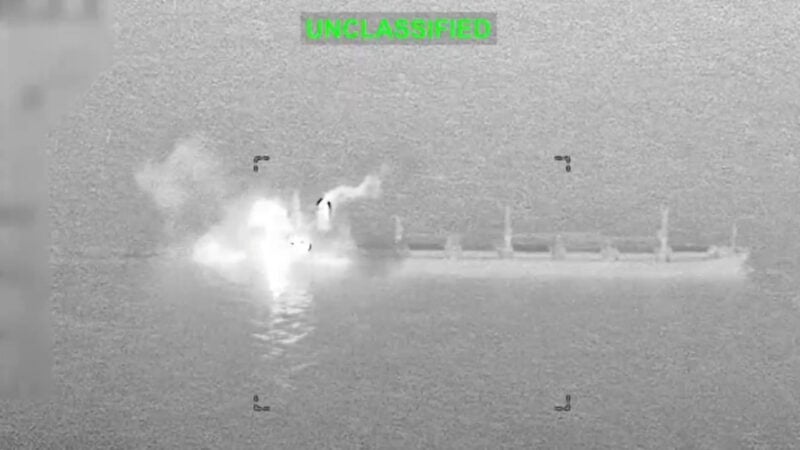
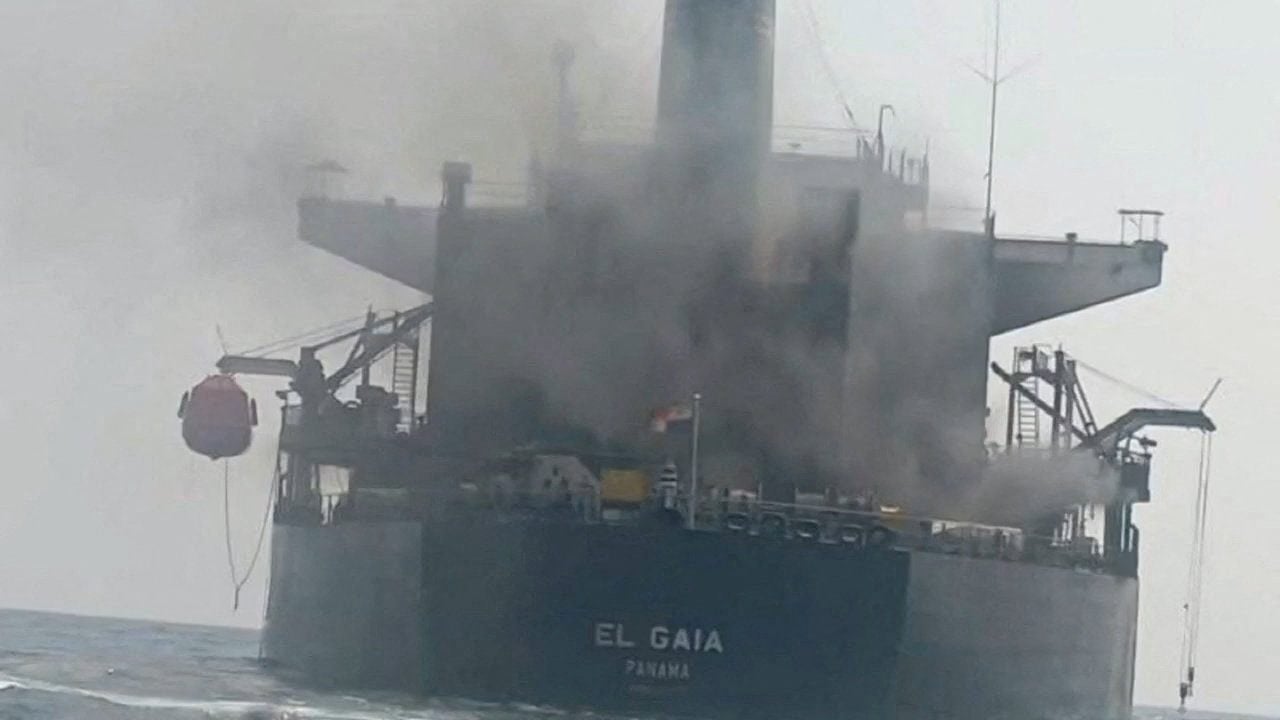
Reports identify at least four tankers hit in or around the Strait of Hormuz on 30 and 31 October. UKMTO reported a vessel struck by an unknown projectile near Iran’s Lavan Island, while another account attributed a strike in that area to Iranian projectiles. The International Maritime Organization estimates 121 incidents in Hormuz and the wider region since the war began, including 24 confirmed seafarer fatalities. Shipping-industry reporting puts Hormuz shipments at about 80% of pre-war levels, with elevated insurance costs. Iranian negotiators met Qatari mediators in Doha, but reports that US officials took part in talks conflict with Abbas Araghchi’s statement that no meeting with US officials was planned. Iran has proposed a two-day process for reopening the strait and attached conditions to renewed talks. Donald Trump has said US forces still have Iranian sites to address; Marco Rubio said no decision on fresh strikes had been made. We assess that maritime disruption and the risk of renewed strikes remain live, while neither a settled negotiating process nor a decision to resume US attacks is established.
Change from previous assessment
Since the 31 October brief, reporting now identifies at least four tankers hit on Friday and Saturday and adds a UKMTO report of a vessel struck near Lavan Island. Attribution remains uncertain. Qatar-mediated contacts in Doha are more clearly reported, but accounts conflict over whether US officials participated. A shipping-industry estimate now places Hormuz shipments at about 80% of pre-war levels, compared with the prior brief’s report of traffic 70% below pre-war levels; the measures and reporting bases are not reconciled, so this is not a confirmed recovery. The assessment of a near-term agreement remains unlikely, while renewed US strikes remain an unresolved risk.
Key judgments
- Further intermittent damage to commercial vessels in or near the Strait of Hormuz over the next 14 days is likely, but the attacker and cause of some incidents remain unconfirmed. Reports identify at least four tankers hit on Friday and Saturday; UKMTO separately reported a vessel struck by an unknown projectile about 40 nautical miles south of Lavan Island. A separate account attributed a strike in that area to Iranian projectiles, while the UKMTO-based account did not identify the attacker. (Confidence: medium · ASSESSED)
- I&W: UKMTO reports another commercial vessel struck, damaged or set alight in the Strait of Hormuz or near Lavan Island. (0-14 days)
- I&W: UKMTO records no new vessel-damage incident in the Strait of Hormuz for 14 consecutive days. (0-14 days)
- A US-Iran agreement in the next two weeks is unlikely. Iranian negotiators met Qatari mediators in Doha, but reporting conflicts over whether US officials participated, and Araghchi said no meeting with US officials was planned. Iran’s stated conditions include sanctions relief, restored oil waivers, a reduced US military presence and recognition of new shipping routes. The reported proposal also varies between partial and full reopening of the Strait of Hormuz. (Confidence: medium · ASSESSED)
- I&W: Qatar confirms a scheduled meeting attended by named US and Iranian officials, which would establish direct talks and weaken this assessment. (0-14 days)
- I&W: Washington publicly accepts at least one of Iran’s stated conditions and both governments announce an agreed timetable for reopening the Strait of Hormuz. (0-14 days)
- There is a roughly even chance that the United States strikes Iranian nuclear sites between 3 and 15 November. Trump said US forces still had one or two sites to address, and separate reporting identified the suspected underground nuclear complex Pickaxe Mountain. Rubio said Trump had not decided whether to resume military action, so public strike rhetoric does not establish an order or timetable. (Confidence: medium · ASSESSED)
- I&W: The White House or Pentagon announces an order or start time for renewed strikes on Iranian nuclear sites, including Pickaxe Mountain. (0-14 days)
- I&W: Trump or Rubio publicly rules out strikes through 15 November and confirms a diplomatic-only course for that period. (0-14 days)
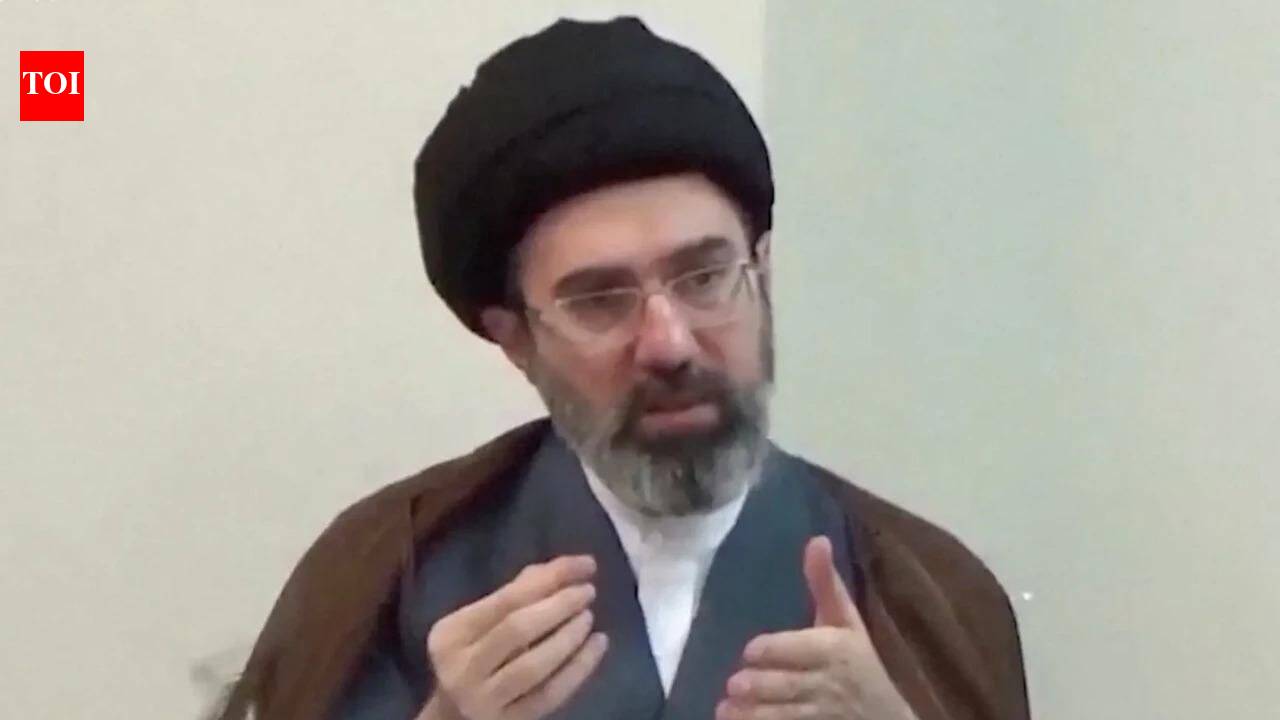
- Iran is very likely reinforcing deterrent messaging against further US or Israeli attacks, but the reporting does not establish a decision to initiate a new attack. Mojtaba Khamenei warned of an immediate response without geographic limits, and Iran’s military said it was strengthening readiness. Mohsen Rezaei’s statements conflict on whether Tehran is considering a change to its nuclear doctrine, so that issue remains unresolved. (Confidence: medium · ASSESSED)
- I&W: Khamenei or Iranian military command repeats an immediate, geographically unrestricted response warning without a reported Iranian attack. (0-14 days)
- I&W: Iranian forces carry out an independently confirmed strike before a new US or Israeli attack, or Tehran formally announces a change to its nuclear doctrine. (0-14 days)
- Hormuz traffic is likely to remain below pre-war levels and insurance costs elevated over the next month. Shipping-industry reporting puts shipments at about 80% of pre-war levels, while US Central Command says about 95% of ships transit without incident; these figures measure different things and are not directly comparable. The IMO’s estimate of 121 incidents and 24 confirmed seafarer fatalities shows that the operating risk remains material. (Confidence: medium · ASSESSED)
- I&W: Shipping-industry reporting continues to place Strait of Hormuz shipments at or below 80% of pre-war levels and reports elevated insurance costs. (1 month)
- I&W: Shipping-industry data show transit volumes at 95% or more of pre-war levels for seven consecutive days, with no new UKMTO vessel-damage reports. (1 month)
Outlook & scenarios
Mediated contacts continue without a near-term settlement (40%)
Qatar-mediated contacts continue, but Washington and Tehran do not bridge their differences over sanctions, US forces and Hormuz routes. The two-day reopening proposal remains under discussion rather than becoming an agreed operating arrangement. A US-Iran agreement within 14 days remains unlikely.
Maritime standoff persists (35%)
Intermittent damage to commercial vessels continues without a confirmed decision by Washington to resume strikes. Shipping remains below pre-war levels and elevated insurance costs persist. Iran and the United States maintain public warnings while Qatar continues its mediator role.
US strikes resume after the midterm elections (20%)
The United States strikes one or more Iranian nuclear sites after 3 November. Iran responds in line with Khamenei’s warning of an immediate response without geographic limits, widening the risk of further attacks and shipping disruption.
Wildcard: Israel initiates another round of conflict (5%)
Israel initiates military action against Iran independently of a US decision. Tehran treats the strike as grounds for a geographically broad response, disrupting mediated contacts and increasing the risk of a wider conflict.
Recommendations
- Maintain a daily incident log using UKMTO and IMO reporting. Record the vessel, location, date, reported weapon or damage, source and attribution status separately; do not present Iranian attribution as established when UKMTO reports an unknown attacker.
- Track Qatar-mediated contacts separately from direct US-Iran meetings. Require named participants or an explicit confirmation from a mediator before describing a meeting as direct talks.
- For the reopening proposal, distinguish partial access from full reopening and record any stated conditions, enforcement period and announcement of an agreed timetable.
- Monitor public statements from Trump and Rubio for a formal decision, order or explicit ruling out of strikes. Treat references to potential targets as rhetoric unless an operational decision is confirmed.
- Compare shipping-volume estimates only when their time period and measurement are clear. Keep transit volumes, the share of vessels passing without incident and insurance costs as separate indicators.
Confidence & uncertainty
Overall confidence is high for the broad situation because major-media and wire reporting, UKMTO-based incident reports, IMO figures and public statements by US and Iranian officials support the assessment of ongoing maritime risk, active Qatari mediation and heightened strike rhetoric. Confidence is lower on the attribution and cause of individual vessel incidents, whether US officials joined the Doha discussions, and whether Trump has decided to resume strikes; reporting on those points is contested or incomplete.
Alternative analysis (red cell)
The available reporting supports continued negotiation and a non-trivial risk of renewed US strikes, but it does not justify treating either outcome as clearly unlikely or roughly even-probability. Active mediator engagement and reported reopening proposals in, and 632e22b6-9f04-4bb0-87e4-e0650a180e2d leave an agreement plausible despite the conditions in 60320986-f506-44d5-88ad-2d77e93ebe14. Similarly, a strike remains possible based on a70d0ac4-dd72-41ec-81a8-5bd535548333 and 12834600-a8b4-4588-81ae-c96a7a976b28, but f40123d6-8ae9-4d9f-8dfc-345d365b0015 provides no basis for assigning an even chance within the specified window.
Intelligence gaps
- [EEI 1.1 · UNCOVERED] Concentrations or unusual movements of IRGC-Navy fast attack craft, small boat swarms, or escort vessels within 200 km of US/allied ships, including approach distances and formation changes. Recommended collection: maritime/AIS
- [EEI 1.2 · UNCOVERED] Detected pre-launch activity at coastal missile or rocket batteries (vehicle dispersal, fuel/warhead handling, radars powering up, transport erector launchers moving to firing positions). Recommended collection: imagery/signals
- [EEI 1.3 · UNCOVERED] Increased launch/arming/positioning of armed UAVs (MALE/loitering munitions) or tactical aircraft at Iranian coastal bases with sortie generation rates and munitions loadouts. Recommended collection: air/ADS-B/imagery
- [EEI 1.4 · PARTIAL] Command-and-control indications of attack orders or elevated rules-of-engagement from IRGC/General Staff (intercepted communications, internal order messages, force-wide alert messages). Recommended collection: signals/human
- [EEI 2.2 · PARTIAL] Issuance of formal orders, mobilization directives, travel restrictions, or official internal communications within IRGC/Armed Forces indicating escalation posture or stand-down. Recommended collection: human/diplomatic
- [EEI 2.3 · UNCOVERED] Directives, logistics movements, or communications from Iranian commanders to regional proxy militias (Houthis, Iraqi Shia militias, Lebanese groups) that change their threat posture or task them with specific operations. Recommended collection: signals/human
- [EEI 3.2 · PARTIAL] Discovery or reporting of naval mines, unexploded ordnance, or damage to fixed maritime infrastructure (oil platforms, terminals, pipelines) with geolocated imagery or on-scene assessments. Recommended collection: imagery/open-source
- [EEI 3.4 · UNCOVERED] Movements or posture changes of regional state navies/air forces (Saudi, UAE, Kuwait, Bahrain, UK) such as task group departures, airbase dispersals, or announced maritime patrols near choke points. Recommended collection: open-source/imagery
Red cell review: PARTIAL DISSENT
TLP:CLEAR