TLP:CLEAR · Disclosure is not limited.
Hormuz Shipping Risks and Regional Escalation, 11 October 2026
Time window: Last 1 day · Audience: General analyst · Type: Situation report · DTG: 2026-10-11 15:10Z · Overall confidence: HIGH
BLUF
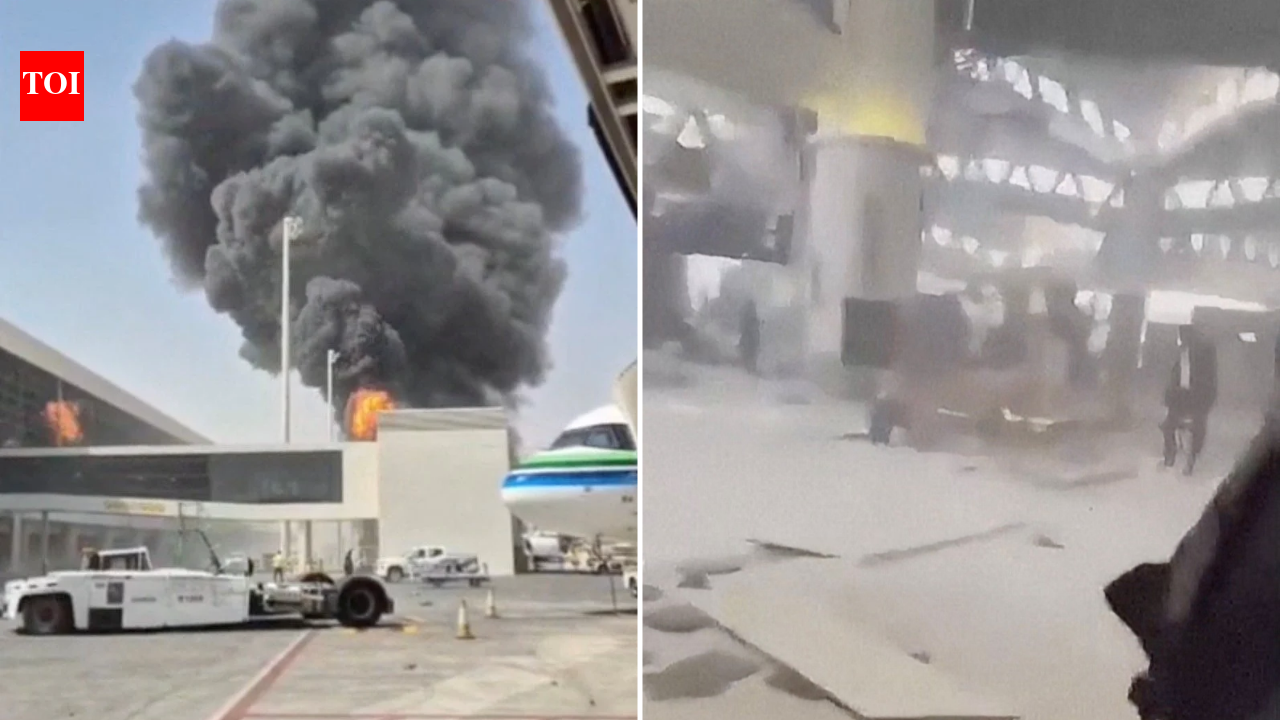
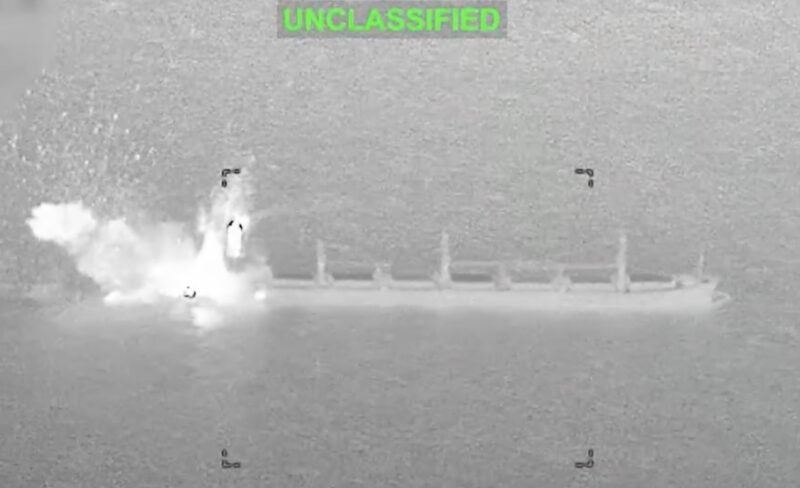
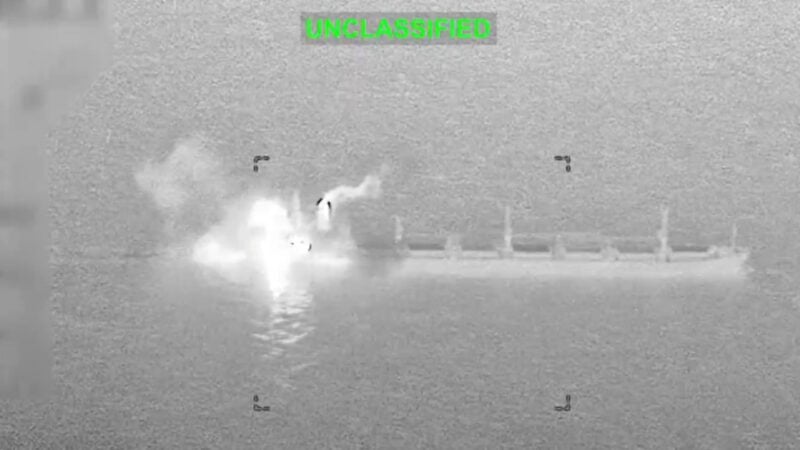
The immediate escalation is concentrated on commercial shipping in the Strait of Hormuz and Gulf of Oman, rather than a newly documented Iran-Israel exchange. UKMTO and company-security reporting describe another tanker hit on 11 October, while CENTCOM says it disabled the Panama-flagged Ocean Molica on 10 October to enforce the US blockade; the cause of a separate tanker incident remains disputed. Strait crude flows were 8.5 million barrels per day for the week ending 7 October, about 40 per cent below normal, and the Riyadh airport attack adds a separate risk of Saudi-Houthi escalation.
Executive summary
Reporting in this window documents further maritime incidents and coercive statements around the Strait of Hormuz, alongside US enforcement of its blockade against Iranian ports. UKMTO and a company security officer reported that an outbound tanker was damaged by an unidentified projectile on 11 October. For a separate tanker incident on 10 October, projectile reporting conflicts with the IRGC Navy account that the vessel struck a mine. CENTCOM says a US fighter jet disabled the Panama-flagged Ocean Molica, also known as Arika Sun, in the Gulf of Oman. No supplied report documents a new direct Iran-Israel exchange in this window. Separately, a missile attack on King Khalid International Airport in Riyadh killed 12 people and injured more than 300; the Saudi-led coalition blamed the Houthis and vowed a response. The available claims also conflict over Iran's remaining weapons-production capacity and over whether hostilities are active or paused.
Change from previous assessment
Since the 10 October brief, the core assessment of elevated shipping risk remains, with an additional UKMTO-reported tanker strike on 11 October and new IRGC and Habibollah Sayyari warnings. Confidence in the occurrence of maritime incidents is reinforced, but confidence in attribution remains medium because the attacker is unidentified and the 10 October tanker cause is disputed. This brief adds CENTCOM's disabling of the Panama-flagged Ocean Molica and assesses the 10 October Riyadh airport attack as a distinct Saudi-Houthi escalation risk. Kpler's estimate of 8.5 million barrels per day in Strait crude flows adds a current measure of disruption but does not resolve differences between flow and transit measures. The prior Yemen-conflict assessment is updated with the Riyadh casualties and coalition retaliation language. No supplied report establishes a new direct Iran-Israel exchange. The earlier Russia-diesel judgment is not carried forward because it is outside this brief's conflict focus.
Key judgments
- Likely, commercial vessels will face further attacks or coercive warnings in and around the Strait of Hormuz over the next 14 days. Reporting attributed at least 10 ships targeted in the past week to Iran, UKMTO and a company security officer reported damage to an outbound tanker on 11 October, and IRGC and senior Iranian army officials issued warnings. The attacker in the 11 October incident is unidentified, and the reported cause of the 10 October tanker incident is disputed between an unidentified projectile and the IRGC Navy's mine account. Confidence is medium because incident reporting is corroborated, but attribution and cause remain unresolved. (Confidence: medium · ASSESSED)
- I&W: UKMTO issues another report of a tanker strike, projectile damage or forced vessel movement in the Strait of Hormuz or Gulf of Oman. (0-14 days)
- I&W: No new UKMTO reports of attacks or forced vessel movement through 25 October, alongside recovery in reported Strait transits, would weaken this assessment. (0-14 days)
- Likely, Strait of Hormuz crude flows will remain below normal over the next 14 days. Kpler data put the average at 8.5 million barrels per day for the week ending 7 October, roughly 40 per cent below normal; separate reporting said vessel transits had fallen to their lowest level in more than two months and the Strait had not fully reopened. These measures cover different indicators, so they do not establish a single precise level of disruption. Confidence is medium because the flow and transit reports point in the same direction, but the supplied reporting does not provide a consistent time series. (Confidence: medium · ASSESSED)
- I&W: Kpler's next weekly estimate remains below its stated normal level and near or below 8.5 million barrels per day. (0-14 days)
- I&W: Kpler reports crude flows back at its stated normal level and shipping reports show transits above the recent low. (0-14 days)
- Likely, the Saudi-led coalition will increase military pressure on the Houthis after the 10 October missile attack on King Khalid International Airport in Riyadh. The attack killed 12 people and injured more than 300; the coalition blamed the Houthis and vowed a response, while Houthi warnings against Saudi airports were reported on 11 October. The coalition's attribution followed an initial report describing the projectile as unidentified, and the supplied reporting does not establish that retaliation has begun. Confidence is medium because the attack and coalition response were reported by major media, but attribution and the next operational step remain uncertain. (Confidence: medium · ASSESSED)
- I&W: The Saudi-led coalition announces or conducts further air strikes on identified Houthi positions after its retaliation statement. (0-14 days)
- I&W: The coalition publicly withdraws its retaliation threat and no new Houthi missile or drone attack on a named Saudi target is reported. (0-14 days)
- Likely, Iran retains some ability to threaten regional targets with missiles or drones, but the size of its remaining arsenal and its reconstitution rate are unresolved. Bloomberg Economics was cited as estimating that Iran launched more than 4,000 Shahed loitering munitions and at least 2,000 ballistic missiles since 28 February; Israel estimated a pre-war stockpile of about 2,500 ballistic missiles, with the remaining number unknown. Officials familiar with intelligence assessments say Iran can manufacture weapons and rebuild its arsenal, while US Defence Secretary Pete Hegseth said the military-industrial base had been destroyed and White House spokesperson Anna Kelly rejected the contrary assessments. Confidence is low because the key assessments are contested and include anonymous official reporting. (Confidence: low · ASSESSED)
- I&W: A new, independently corroborated report documents Iranian ballistic-missile or Shahed launches, or identifies active Iranian missile or drone production. (1-3 months)
- I&W: A publicly released, evidence-backed US or Israeli assessment identifies disabled Iranian missile and drone production sites and reports no reconstitution. (1-3 months)
- Unlikely, the US will resume direct strikes on Iranian territory before 3 November, although CENTCOM is using force at sea to enforce the blockade. Treasury Secretary Scott Bessent said President Donald Trump did not expect strikes before the midterm elections, and reporting attributed a similar position to Trump. CENTCOM says a fighter jet disabled the Panama-flagged Ocean Molica in the Gulf of Oman after it ignored warnings and attempted to breach the blockade; this is evidence of maritime enforcement, not a reported strike on Iranian territory. Accounts in the supplied reporting differ on whether hostilities are active or paused, and public statements do not guarantee future action. Confidence is medium. (Confidence: medium · ASSESSED)
- I&W: Trump or Bessent publicly reiterates that US strikes on Iranian territory will not resume before 3 November. (0-23 days)
- I&W: The White House or CENTCOM announces or reports a US strike on a target inside Iran before 3 November. (0-23 days)
Outlook & scenarios
Continued maritime coercion (50%)
This is the most likely near-term course. Iranian warnings and unidentified attacks on commercial vessels continue alongside US blockade enforcement. Strait flows remain below normal, while the reported incidents do not establish that Iran was responsible for each tanker strike.
Saudi-Houthi retaliation cycle (25%)
The Saudi-led coalition acts on its vow to respond to the Riyadh airport attack, and the Houthis sustain threats against Saudi airports or other targets. US direct intervention remains contingent: Trump indicated possible military involvement, but the supplied reporting does not establish a decision.
Constrained shipping without a new regional front (20%)
An unlikely containment scenario sees no further reported tanker strike or direct US strike on Iranian territory before 3 November. The blockade and incomplete reopening of the Strait continue to constrain shipping even if the incident rate falls.
Renewed direct strikes on Iran, high-impact wildcard (5%)
A low-probability, high-impact scenario is a renewed US or Israeli strike on Iranian territory, followed by Iranian missile or drone retaliation. This would widen the conflict beyond the current maritime pressure and Saudi-Houthi risk. The supplied reporting does not indicate that such a strike is imminent.
Recommendations
- Maintain a daily incident log separating confirmed vessel damage, reported attacker, and claimed cause. Record the 10 October projectile and IRGC Navy mine accounts as competing explanations until further evidence resolves them.
- Track UKMTO advisories and company-security reports for the Strait of Hormuz, Gulf of Oman and Ras al-Khaimah. Record vessel transits and reported anchorage movements separately from crude-flow estimates.
- Treat CENTCOM's Ocean Molica action as blockade enforcement at sea. Track any separately reported US strike on Iranian territory against the 3 November date and distinguish public expectations from operational decisions.
- Monitor Saudi-led coalition statements and reported strikes on Houthi positions, Houthi warnings about Saudi airports, and any public US decision on intervention. Keep coalition attribution of the Riyadh attack distinct from independently established attribution.
- Assess Iranian missile and drone capability using new, corroborated reporting on launches or production. Do not treat either Hegseth's destruction claim or anonymous officials' reconstitution assessments as settled without supporting evidence.
Confidence & uncertainty
Overall confidence is high for the broad picture of escalating maritime pressure and regional risk. The strongest support concerns observable events: UKMTO and company-security reporting describe tanker incidents, while CENTCOM publicly reported disabling the Ocean Molica. Major-media and trade reporting also documents the Riyadh casualties and coalition response. Confidence is lower on attribution for individual attacks, the cause of the 10 October tanker incident, Iran's remaining weapons capacity, and whether hostilities are active or paused; these uncertainties lower the relevant individual judgments.
Intelligence gaps
- [EEI 1.1 · PARTIAL] Detection and characterization of ballistic/cruise missile or rocket launches originating from Iranian territory or from Iran-controlled positions in Iraq/Syria (time, launch coordinates, missile type, flight trajectory/impact area). Recommended collection: satellite/imagery
- [EEI 1.2 · UNCOVERED] Movements and posture changes of Iran-backed proxy forces (Hezbollah units in Lebanon, militias in Syria/Iraq): concentrations of personnel, transport of rocket/artillery launchers, visible logistics build-up within operational range of Israel. Recommended collection: human/intel
- [EEI 1.3 · PARTIAL] Israeli defensive and offensive posture changes: reservist call-ups, mobilization orders, sorties/airstrikes attributed to Israel, and domestic activation of missile-defense systems (locations and activation times). Recommended collection: open-source/media
- [EEI 1.4 · PARTIAL] Evidence of pre-positioning or arming of naval mines, fast attack craft, or anti-ship missile systems in the Gulf of Oman, northern Arabian Sea, or off the Lebanese/Syrian coasts that could be used to interdict Israeli or allied shipping. Recommended collection: maritime/AIS
- [EEI 2.1 · PARTIAL] Movements and tasking changes of external military assets: carrier strike groups, amphibious ready groups, expeditionary air wings, or ballistic-missile defense units into the Eastern Mediterranean, Persian Gulf, or Red Sea (vessel/aircraft IDs, routing, on-station times). Recommended collection: maritime/AIS
- [EEI 2.2 · PARTIAL] Formal diplomatic/military actions: evacuation orders or embassy closures, public troop posture statements, bilateral/multilateral defense commitments announced, requests for overflight or basing rights in regional states. Recommended collection: diplomatic
- [EEI 2.3 · UNCOVERED] Changes to force protection or alert levels at foreign bases in the region (e.g., US bases in Kuwait, Qatar, UAE; Russian bases in Syria): activation of additional air defenses, curfews, or reinforcement shipments (personnel/equipment manifests). Recommended collection: signals/intel
- [EEI 3.2 · PARTIAL] Changes in crude oil and refined product flows from key terminals (reported tanker loading delays, terminal closures, throughput volumes at Kharg, Mina al-Ahmadi, Ras Tanura, and major Gulf ports compared to baseline). Recommended collection: commercial/ports
- [EEI 3.3 · UNCOVERED] Market and insurance indicators: sudden spikes in war-risk or hull insurance premiums for Middle East routes, large moves in regional FX/stock indices, and notable changes in commodity futures (oil, freight rates) tied to regional risk perceptions. Recommended collection: financial/transactional
Cited sources
[1] Al Qahera News (alqaheranews.net) · مع استعداد ترامب للتجديد النصفي. إيران تعيد ترتيب قوتها الصاروخية (B) · 10 October 2026 · sha256:c2f94374ce6a [2] Al Jazeera · Hormuz attacks intensify as efforts to end war on Iran stall (A) · 11 October 2026 · sha256:fc6dd9e6b843 [3] gCaptain · More Tankers Hit in Hormuz as U.S. Strikes Cargo Ship (C) · 11 October 2026 · sha256:0571f1ae32da [4] The Times of India · US-Iran War Live Updates: Fresh projectile targets Riyadh airport a day after strike killed 12 (B) · 11 October 2026 · sha256:5703a874c663 [5] gCaptain (republishing Reuters) · US Says It Disabled Cargo Vessel Trying To Run Iran Blockade (C) · 11 October 2026 · sha256:20a9593f1e7c [6] BBC · Riyadh airport attack another dangerous moment in already tense conflict (A) · 11 October 2026 · sha256:4f5df4fa4610 [7] jpost.com · Live Updates: Latest from Israel, Iran, and the Middle East | The Jerusalem Post (F) · 11 October 2026 · sha256:5ba8c75ad735
Source content hashes were computed at collection time; the cited text is preserved unmodified for the life of this product.
Red cell review: CONCUR WITH COMMENT
TLP:CLEAR