TLP:CLEAR · Disclosure is not limited.
Hormuz shipping under acute pressure, wider chokepoint and $108 claims unverified
Time window: Last 1 day · Audience: General analyst · Type: Situation report · DTG: 2026-11-22 20:47Z · Overall confidence: HIGH
BLUF
Commercial shipping in the Strait of Hormuz faces sustained attack risk, and reported tanker traffic fell in the week ending 18 November. More than 14 Iranian tankers are reported gathered near Kharg Island, raising the risk of a US-Iran maritime encounter, but no departure is confirmed. The supplied reporting does not substantiate disruption at four of five key straits or Brent crude at $108.
Executive summary
Attacks on shipping around the Strait of Hormuz remain frequent. UKMTO reported at least 22 attacks in November by 22 November, while its transit figures show 263 ships, including 37 oil tankers, crossed between 12 and 18 November. Iran is reported to have more than 14 tankers assembled at Kharg Island and preparing to leave through the US blockade. The Houthis have claimed operations against Saudi energy targets, including the Rabigh refinery, but Saudi authorities have not confirmed refinery damage. Reporting warns of higher war-risk premiums and possible tanker shortages, but the supplied price data do not show Brent at $108. There is no comparable evidence here of an actual Bab-el-Mandeb blockade or disruption at three other straits.
Change from previous assessment
Since the 21 November brief, confidence that Hormuz traffic is materially degraded has risen from low to medium: current UKMTO figures give a specific weekly total and tanker count, while reporting records at least 22 attacks in November by 22 November. The Kharg Island convoy assessment is strengthened by reports that more than 14 tankers are gathered and loaded, but no departure is confirmed. The Houthi assessment has shifted from threats to Saudi Red Sea ports to claimed operations against Rabigh, Shaqiq and Jazan; Rabigh damage remains unverified. The assessment that the evidence does not substantiate four disrupted straits or Brent at $108 is unchanged. The prior seven-day forecast on a convoy encounter has not reached its horizon, so no outcome is available to score.
Key judgments
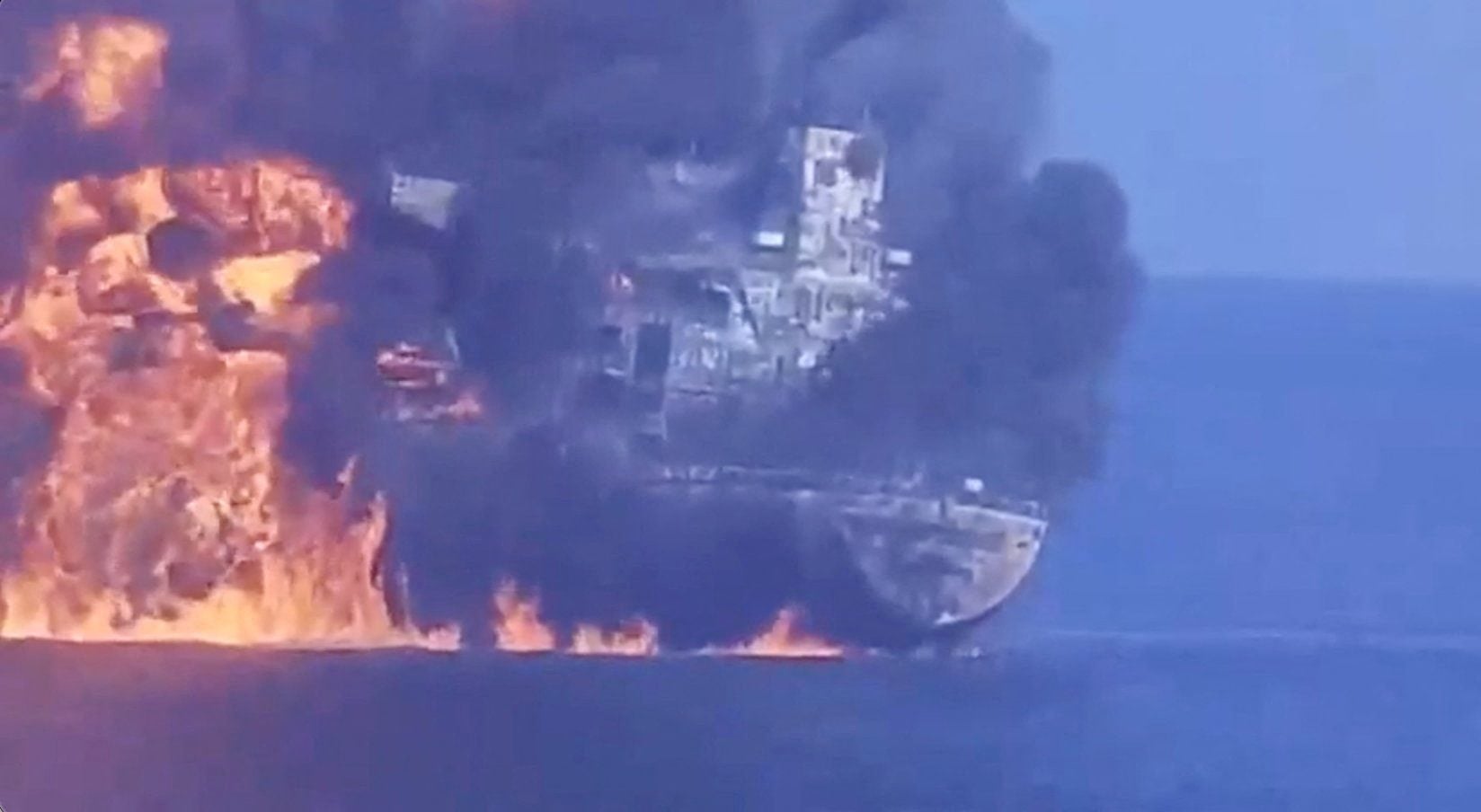
- Very likely, commercial vessels in and around the Strait of Hormuz will remain exposed to attack over the next 14 days. UKMTO reported at least 22 attacks in November by 22 November and two tankers hit by unidentified projectiles near Khasab on 21 November. Responsibility for the projectile incidents remains unestablished. (Confidence: high · ASSESSED)
- I&W: A new UKMTO report records a projectile, mine or other attack against commercial shipping in the Strait of Hormuz, near Khasab, or in the Gulf of Oman. (0-14 days)
- I&W: UKMTO reports no attacks for 14 consecutive days and weekly oil-tanker passages rise to at least 52. (0-14 days)
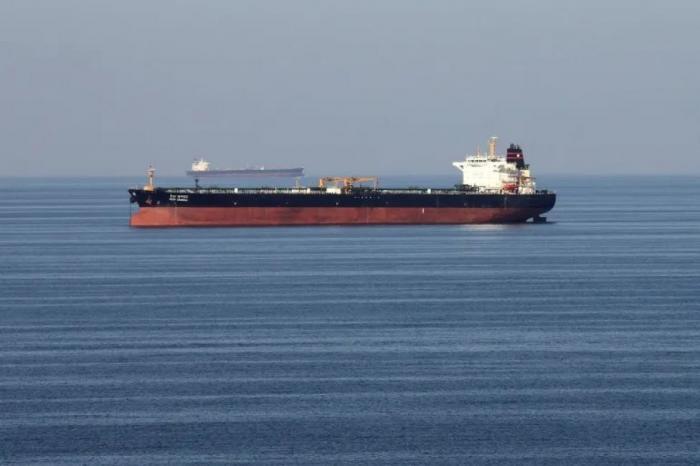
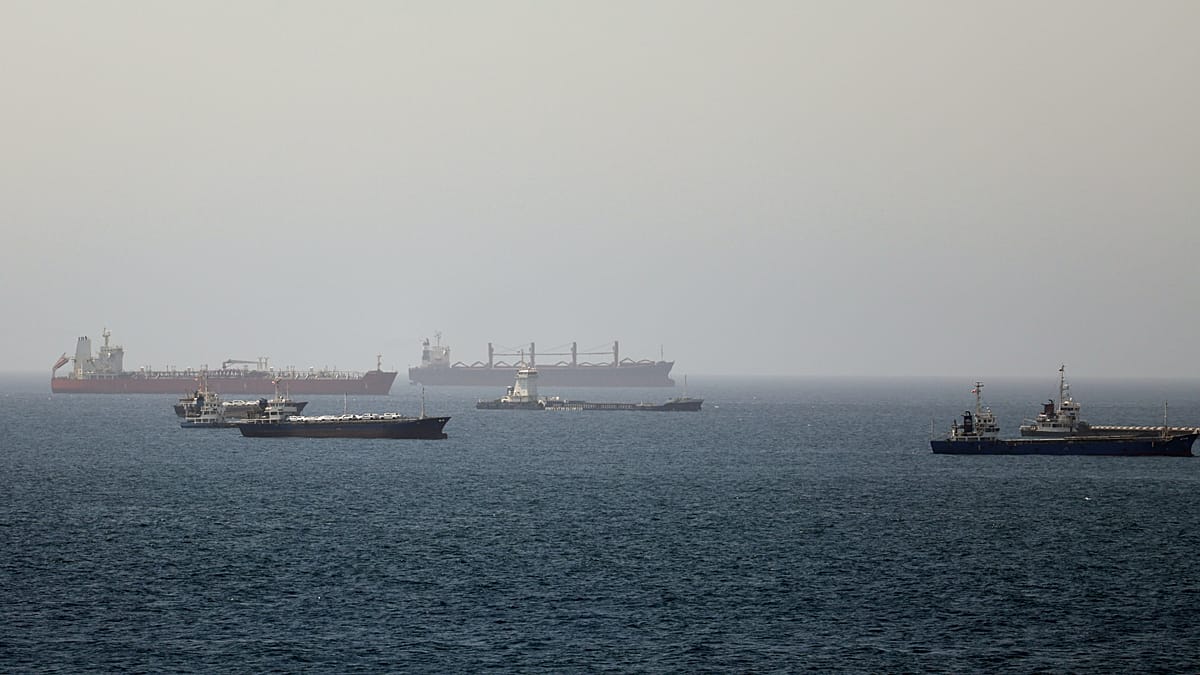
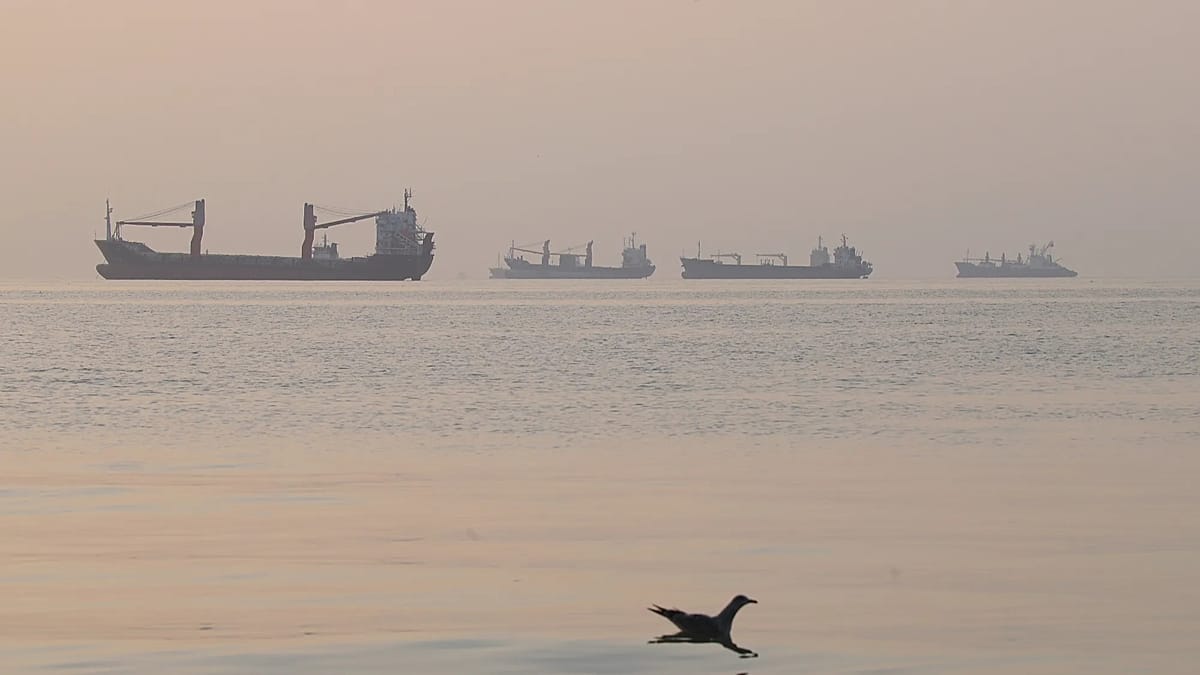
- Likely, the Strait of Hormuz remains open to some commercial traffic but is materially degraded. UKMTO reported 263 ship passages from 12 to 18 November, 15 per cent fewer than the previous week; oil-tanker passages fell to 37 from 52, a decline of about 29 per cent. (Confidence: medium · ASSESSED)
- I&W: The next complete UKMTO weekly report records fewer than 263 total ship passages or fewer than 37 oil-tanker passages. (0-14 days)
- I&W: UKMTO records zero commercial passages through the Strait of Hormuz over a complete seven-day period. (0-14 days)
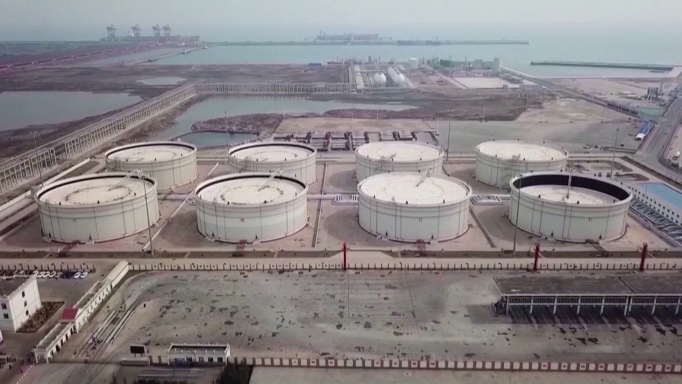
- Likely, Iran will attempt to move the reported group of more than 14 tankers from Kharg Island through the US blockade within seven days. Ship-tracking reports place more than 14 tankers near Kharg Island, and reporting says the vessels are loaded and being prepared to sail towards the Gulf of Oman. Iran has threatened retaliation against Gulf energy facilities if the US stops the group. No departure is confirmed. (Confidence: medium · ASSESSED)
- I&W: Ship-tracking data show one or more of the Kharg Island tankers departing towards the Gulf of Oman, or US forces report an encounter with the group. (0-7 days)
- I&W: No outbound movement is reported and the tankers remain at Kharg Island or disperse without sailing. (0-7 days)
- Likely, Houthi-Saudi hostilities will keep Saudi Red Sea energy targets at elevated risk over the next 14 days. The Houthis have claimed operations against the Rabigh refinery and previously announced targeting the Shaqiq power station and Jazan port. The reported Rabigh damage is unconfirmed, and the supplied reporting does not establish a Bab-el-Mandeb blockade. (Confidence: low · ASSESSED)
- I&W: Saudi authorities or Petro Rabigh confirm damage or an operational interruption at the Rabigh refinery. (0-14 days)
- I&W: Saudi and Houthi authorities announce a halt to attacks, followed by 14 days without a new Saudi alert or Houthi claim against a Saudi target. (0-14 days)
- Unlikely, the supplied evidence substantiates disruption at four of five key maritime straits or Brent at $108. It provides detailed transit figures for Hormuz, but the Saudi Foreign Ministry warning about Bab-el-Mandeb and Red Sea navigation does not document a blockade or reduced passage there. The latest official Brent spot observation supplied is $92.94 on 17 November, not $108. (Confidence: high · ASSESSED)
- I&W: Published, date-stamped transit data show sustained disruption at Bab-el-Mandeb and at least three of the other straits included in the five-strait claim. (0-14 days)
- I&W: The EIA publishes a Brent spot observation of $108 per barrel for 22 November or a subsequent date. (0-14 days)
- Roughly even chance, tanker availability will tighten over the next one to three months if attacks persist. Rystad Energy warned of a possible shortage as repairs delay damaged tankers' return to service, while EOS Risk Group said higher war-risk premiums are limiting operators' willingness to transit Hormuz. (Confidence: medium · ASSESSED)
- I&W: Rystad Energy reports a worsening shortage or tanker operators report vessels unavailable for service because of repairs. (1-3 months)
- I&W: Rystad withdraws its shortage warning as damaged tankers return to service and reported war-risk premiums decline. (1-3 months)
Outlook & scenarios
Sustained Hormuz pressure and a tense blockade (60%)
Likely, attacks continue at an elevated tempo and tanker passages remain below the latest reported levels. Iran keeps the Kharg Island group assembled or begins moving some vessels, while the US blockade remains in force. Shipping risk and insurance costs stay high, without a confirmed closure of Hormuz or Bab-el-Mandeb.
Mediated pause and partial traffic recovery (25%)
Unlikely, Qatar or Oman helps secure a limited US-Iran understanding that delays the Kharg Island departure or adjusts enforcement. Attacks ease and tanker operators cautiously resume passages through Hormuz. Houthi-Saudi exchanges also pause, but the claims of damage at Rabigh and the status of Bab-el-Mandeb remain unresolved.
Blockade encounter widens into regional attacks (15%)
Very unlikely, but high impact. US forces intercept or obstruct the Iranian tanker group, Iran follows through on its threats against energy facilities in Saudi Arabia, the UAE or Qatar, and the Houthis extend attacks from Saudi targets to commercial shipping near Bab-el-Mandeb. The combined shock deepens shipping and supply disruption across both routes.
Recommendations
- Keep the four-of-five-straits claim and the Brent $108 figure out of current reporting unless dated transit data and an official price observation verify them. Track Hormuz and Bab-el-Mandeb separately, and request comparable passage figures for each strait in the composite claim.
- Maintain a daily Kharg Island watch using ship-tracking reports and available imagery. Escalate the assessment if any of the reported tankers depart towards the Gulf of Oman or US forces report contact with the group.
- Reconcile UKMTO incident notices with Iranian Navy statements before attributing tanker damage or mines. Record vessel count, incident location, event date and reporting date separately.
- Seek Saudi confirmation or independent evidence of damage and operating status at Petro Rabigh, Shaqiq and Jazan. Distinguish Houthi claims from verified damage, and do not describe Bab-el-Mandeb as blockaded without transit or closure evidence.
- Track the next UKMTO weekly passage report, Rystad Energy's tanker-availability updates and EOS Risk Group's insurance assessment to test whether reduced traffic is translating into a broader capacity constraint.
Confidence & uncertainty
Overall confidence is high in the core assessment that shipping through and around Hormuz faces frequent attacks and reduced tanker traffic. UKMTO incident reporting and weekly passage figures are reported across major-media and maritime sources. Confidence is lower on responsibility for individual attacks, the conflicting Iranian accounts of mine-hit tanker numbers, Houthi damage claims at Rabigh, and the wider five-strait and Brent $108 assertions. The high headline confidence applies to the core Hormuz assessment, not to those unverified elements.
Alternative analysis (red cell)
The tanker-convoy evidence establishes assembly and reported preparation, but not a probable decision to challenge the blockade within seven days. Conflicting counts and the absence of confirmed departure leave continued delay, dispersal, or negotiated passage at least as plausible as an attempted transit. The associated retaliation threats may be intended to deter interdiction rather than signal imminent movement.
Intelligence gaps
- [EEI 1.1 · PARTIAL] Changes in IRGC Navy, Houthi, and affiliated maritime unit deployments, patrol patterns, missile-drone activity, mine-laying indicators, or boarding attempts near the two straits. Recommended collection: maritime/ISR-AIS
- [EEI 1.3 · PARTIAL] Daily vessel-transit volume, AIS dark activity, anchorage buildup, and rerouting rates at Hormuz and Bab-el-Mandeb compared with pre-crisis levels. Recommended collection: maritime/AIS
- [EEI 1.4 · PARTIAL] Public or private warnings from the US Fifth Fleet, regional naval forces, port authorities, or shipping companies identifying specific routes or vessel categories as unsafe. Recommended collection: official-statements/shipping-notices
- [EEI 2.1 · PARTIAL] US, coalition, Iranian, Saudi, Omani, and other naval force posture changes, including escorts, convoy schedules, mine-countermeasure deployments, air patrols, and rules-of-engagement announcements. Recommended collection: maritime/defense-reporting
- [EEI 2.2 · PARTIAL] Tanker and container-ship rerouting through the Cape of Good Hope or other alternatives, including added sailing days, fuel consumption, and available vessel capacity. Recommended collection: shipping-industry/AIS
- [EEI 2.3 · PARTIAL] War-risk insurance premium, deductible, coverage-exclusion, and voyage-approval changes for Hormuz, Bab-el-Mandeb, Red Sea, Gulf of Aden, and adjacent waters. Recommended collection: insurance-market
- [EEI 2.4 · PARTIAL] Operational status and export-loading changes at Saudi, UAE, Omani, Iranian, Djiboutian, and Red Sea ports, terminals, pipelines, and storage facilities. Recommended collection: port-operator/energy-infrastructure
- [EEI 3.1 · UNCOVERED] Brent and Dubai crude price movements, futures-curve shifts, volatility, and the spread between regional and global crude benchmarks. Recommended collection: commodity-markets
- [EEI 3.2 · PARTIAL] Changes in crude, refined-product, LNG, and LPG volumes transiting the straits and in announced production cuts, strategic-stock releases, or emergency cargo substitutions. Recommended collection: energy-trade/AIS
- [EEI 3.3 · UNCOVERED] Fertilizer shipment delays, canceled or redirected cargoes, regional price increases for urea and ammonia, and reported inventory levels in import-dependent markets. Recommended collection: commodity-trade/port-data
- [EEI 3.4 · PARTIAL] Container freight rates, vessel charter rates, bunker costs, port congestion, and manufacturing or retail supply disruptions attributable to the chokepoint crisis. Recommended collection: shipping-and-logistics-markets
- [EEI 4.2 · PARTIAL] Diplomatic commitments, deconfliction arrangements, prisoner or vessel releases, and publicly announced conditions for reopening commercial transit. Recommended collection: diplomatic-reporting
- [EEI 4.3 · PARTIAL] Shipping-company decisions to resume, suspend, or expand transits and corresponding changes in insurer voyage approvals and war-risk premiums. Recommended collection: shipping-and-insurance-industry
Red cell review: PARTIAL DISSENT
TLP:CLEAR