TLP:CLEAR · Disclosure is not limited.
Hormuz Standoff: Closure Claims, Oman Threats and Shipping Risk
Time window: Last 7 days · Audience: General analyst · Type: Situation report · DTG: 2026-08-20 00:12Z · Overall confidence: LOW
BLUF
The Strait of Hormuz remains operationally contested after the US-Iran memorandum expired on 17 August without a breakthrough. A sustained coercive standoff is likely over the next 0-14 days, while the reported US threats against Oman raise the risk that route negotiations become an escalation point.
Executive summary
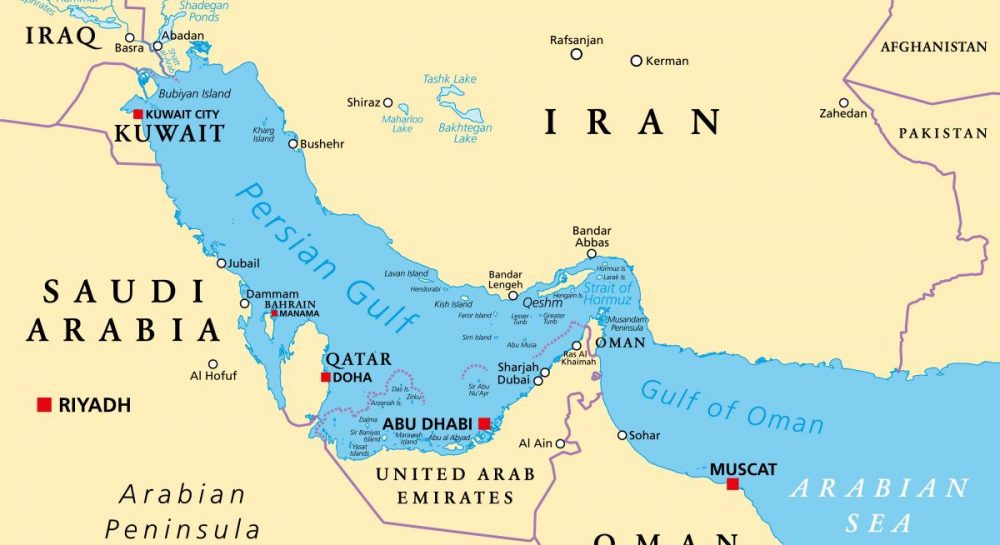
Between 15 and 20 August 2026, Iranian and US positions hardened around the Strait of Hormuz. Iran's parliament speaker Mohammad Bagher Qalibaf said the strait would remain closed until the US lifted its naval blockade, while Donald Trump said the blockade remained in force but the strait was open. The 60-day US-Iran arrangement expired on 17 August without a breakthrough, and neither side reported scheduled talks. Iran and Oman were discussing a new route through the strait as Trump threatened military action against Oman. The economic exposure remains high: the strait carried 20% of global LNG and 25% of seaborne oil trade during 2023-2025, while Brent crude settled at $91.02 per barrel on 19 August.
Key judgments
- The reported operational status of the Strait of Hormuz is contested. Iran's parliament speaker Mohammad Bagher Qalibaf said on 19 August that the strait would remain closed until the US lifted its naval blockade, while Donald Trump said the blockade remained in force but the strait was open. The US-Iran memorandum and its 60-day period expired on 17 August without a breakthrough. Abbas Araghchi said Iran had not decided to resume negotiations, and Trump said no talks were scheduled. The current status therefore remains unresolved. (Confidence: medium · REPORTED)
- I&W: Confirm: Within 0-14 days, Mohammad Bagher Qalibaf, Abbas Araghchi or the IRGC issues a further closure order and vessel reports show halted or sharply reduced transits. (0-14 days)
- I&W: Break: Within 0-14 days, the US and Iranian governments announce an extension or replacement for the memorandum and jointly acknowledge commercial passage through the strait. (0-14 days)
- A renewed or sustained closure of the Strait of Hormuz is very likely to produce further shipping and energy-market disruption. During 2023-2025, 20% of global LNG and 25% of seaborne oil trade passed through the strait annually. The International Maritime Organization reported about 20,000 mariners and 2,000 ships stranded in the Persian Gulf during a previous closure in April 2026. Brent crude settled at $91.02 per barrel on 19 August. Current exposure remains uncertain because separate reporting described the strait as open and reported traffic above the level previously expected. (Confidence: medium · ASSESSED)
- I&W: Confirm: Within 0-14 days, verified commercial transits fall sharply or another closure strands vessels, while Brent settles above the 19 August level of $91.02 per barrel. (0-14 days)
- I&W: Break: Within 1-3 months, multiple vessel reports show sustained normal passage through the strait and Brent remains below $91.02 per barrel for seven consecutive days. (1-3 months)
- Oman's role in route discussions is likely to remain a pressure point, while a direct US strike on Oman is unlikely in the next 0-14 days. The US reportedly warned Oman on 17 August over negotiations with Iran, and Donald Trump reportedly threatened on 20 August to bomb Oman if it obstructed further Washington-Tehran talks. Iran has begun and is reportedly finalising discussions with Oman on a new route through the Strait of Hormuz. The threat reporting is not independently corroborated in the supplied material, so confidence is low. (Confidence: low · ASSESSED)
- I&W: Confirm: Within 0-14 days, Donald Trump repeats the threat, announces military action against Oman, or Oman suspends its route discussions with Iran. (0-14 days)
- I&W: Break: Within 0-14 days, Oman, Iran and the US announce a route arrangement and Washington publicly accepts Omani facilitation without issuing further threats. (0-14 days)
- Iran is likely to sustain an offensive signalling posture and rely on missiles, drones and regional allies to impose costs on US assets and shipping. Iranian officials reportedly signalled readiness for a fully offensive posture. Separate reporting attributed attacks on multiple ships in the Persian Gulf and drone attacks in Iraq to Iran, while the IRGC issued warnings forbidding passage through the Strait of Hormuz. The evidence is thin and largely single-source major-media reporting, so confidence is low. (Confidence: low · ASSESSED)
- I&W: Confirm: Within 0-14 days, Iran, the IRGC or an Iranian regional partner claims a new missile or drone attack on a US asset or commercial vessel and a second source corroborates it. (0-14 days)
- I&W: Break: Within 0-14 days, Iranian officials withdraw the offensive posture and no further attacks on commercial vessels, US bases or US-aligned forces are reported. (0-14 days)
Outlook & scenarios
Sustained coercive standoff (45%)
This is the most likely near-term path. Iran repeats its condition that the Strait of Hormuz remains closed until the US lifts the blockade, while Washington maintains its blockade claim and asserts control of the waterway. Talks remain suspended, vessel movements remain irregular and energy-market pressure persists.
Oman-facilitated partial deconfliction (30%)
Iran and Oman finalise a new route arrangement, allowing limited commercial passage while the US maintains military and economic pressure. Oman avoids direct military involvement, but the arrangement remains vulnerable to further US or Iranian threats.
Direct escalation involving shipping or Oman (20%)
This outcome is unlikely but high impact. An Iranian attack on commercial shipping, a US action to enforce the blockade, or a further threat against Oman triggers retaliatory military action and a wider interruption of traffic through the Strait of Hormuz.
Rapid diplomatic reset (5%)
This outcome is very unlikely but high impact. Donald Trump and Abbas Araghchi restart talks, replace or extend the expired memorandum, and the US and Iran withdraw their competing closure and blockade claims. Iran and Oman then advance a route arrangement without a further military incident.
Recommendations
- For the next 0-14 days, maintain a daily position matrix for Donald Trump, Abbas Araghchi, Mohammad Bagher Qalibaf, Kazem Garibabadi, the IRGC and Omani authorities. Record whether each statement addresses closure, blockade, commercial passage, negotiations or a route agreement.
- Prioritise vessel-level corroboration over government assertions. Track reported transponder activity, verified Strait of Hormuz transits, vessel damage and any new reports of ships being stranded.
- Treat any renewed US threat against Oman, any Iranian closure announcement, or any reported attack on a commercial vessel as an immediate escalation trigger for same-day reassessment.
- Use NASA FIRMS data as corroboration rather than attribution. The 63 Middle East thermal detections recorded from 16 to 19 August included no high-confidence detections, and NASA states that thermal signatures record heat but not cause.
- Keep current status and forward risk as separate analytic lines. The evidence supports a low-confidence assessment of the strait's present operational condition, but a higher-confidence assessment that continued confrontation threatens shipping and energy markets.
Confidence & uncertainty
Overall confidence is low because the relevant reporting is dominated by medium-confidence major-media claims, with limited independent corroboration and several lower-confidence claims from unknown or social-media sources. The central contradiction is unresolved: Donald Trump described the US blockade as active while also saying the Strait of Hormuz was open, whereas Mohammad Bagher Qalibaf said Iran would keep it closed. The supplied material also does not establish whether threats against Oman represent policy decisions or rhetoric, the actual volume of current shipping, or reliable attribution for reported attacks.
Cited sources
[1] gulfnews.com · Iran rejects new ceasefire, demands permanent end to conflict as Hormuz standoff drives oil prices higher (B) · sha256:89fc09eb7549 [2] devdiscourse.com · Tensions Surge as Strait of Hormuz Standoff Continues (B) · sha256:a43c37e7a85d [3] BBC News Русская служба · Срок действия меморандума о взаимопонимании между США и Ираном истек, война не закончилась. Что будет дальше? - BBC News Русская служба (A) · sha256:a4868f1edbc6 [4] Wikipedia · Strait of Hormuz (B) · sha256:4fc7a4c0bad0 [5] Wikipedia · 2026 Strait of Hormuz crisis (B) · sha256:0dabd014b58b [6] unian.net · Иран утратил значительную часть контроля над Ормузским проливом, - CNN (B) · sha256:26b52c161f68 [7] hespress.com · التوتر في هرمز. ماذا بعد نهاية مهلة الـ60 يوماً بين واشنطن وطهران؟ (B) · sha256:4b3b7842cdad [8] AGI Era · Geopolitical Updates on 2026-08-17 (B) · sha256:8e7cc427bdb1 [9] gulfnews.com · Trump threatened Iran. Now Oman. Who is listening? (B) · sha256:f9b6ee5ea732 [10] trtworld.com · Can Iran's offensive strategy force a US rethink? (B) · sha256:c9ff0949c4ff
Source content hashes were computed at collection time; the cited text is preserved unmodified for the life of this product.
TLP:CLEAR