TLP:CLEAR · Disclosure is not limited.
Hormuz Traffic Remains Severely Reduced; Wider Chokepoint Claims Unverified
Time window: Last 1 day · Audience: General analyst · Type: Situation report · DTG: 2026-11-14 17:18Z · Overall confidence: HIGH
BLUF
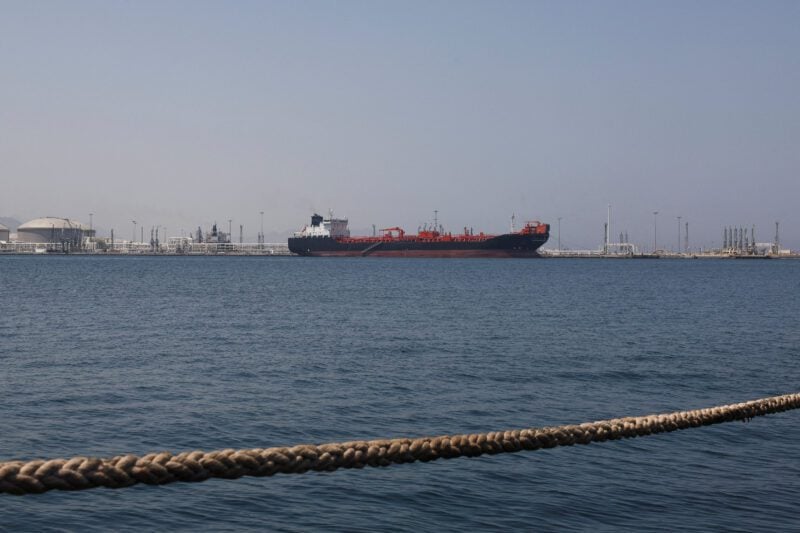
Very likely, commercial traffic through the Strait of Hormuz remains severely reduced but is not fully stopped: UKMTO recorded 308 weekly transits, about 65% below pre-conflict levels, and Qatar sent two escorted LNG carriers through during a lull. The supplied evidence does not establish disruption at four of five key straits or Brent at $108; the latest quoted Brent futures price was $95.71 on 13 November. Houthi attacks threaten the Red Sea export route, but the reporting does not establish a Bab-el-Mandeb blockade.
Executive summary
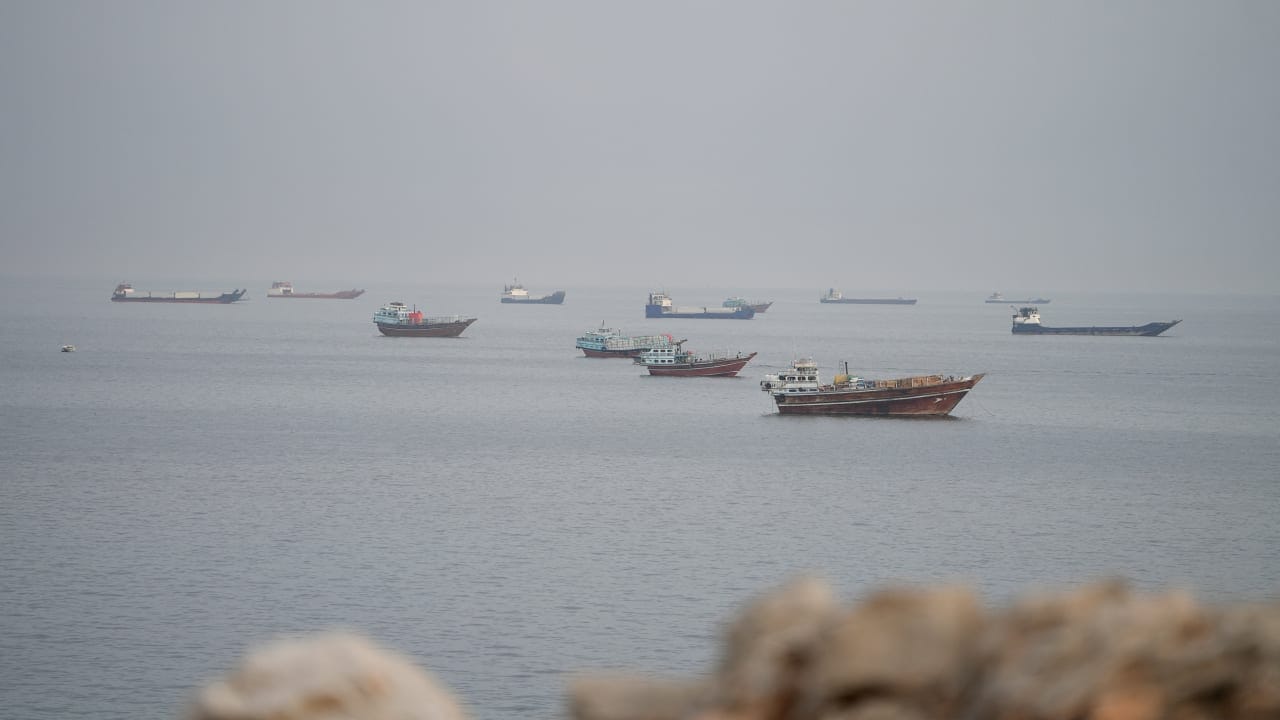
The Strait of Hormuz remains the clearest shipping constraint. Iran has imposed passage restrictions and issued warnings, while UKMTO transit counts and incident reports show severe disruption. Iranian accounts of tanker mine strikes remain unverified, and the record conflicts on whether the strait is fully closed or allows passage under Iranian conditions. Saudi Arabia has rerouted about 4 million barrels per day to Yanbu, while October Gulf oil exports remained below pre-war levels. The reported $108 Brent price is not supported by the supplied price data. Houthi attacks have reduced the Red Sea export option for larger tankers, but current Bab-el-Mandeb transit figures are absent. The supplied claims also provide no quantified war-risk premium or tanker availability series.
Change from previous assessment
Since the 13 November 2026 brief, UKMTO's latest weekly tally adds 308 Hormuz transits, still about 65% below pre-conflict levels, and reporting records two Qatari LNG carriers passing under US naval escort during a lull. New reporting adds Saudi Arabia's 4 million barrels per day reroute to Yanbu, October Gulf export figures, and the Houthis' claim of two missiles fired at Saudi forces at Al-Tuwal on 14 November. Reporting also describes Houthi attacks as removing the Red Sea export option for larger tankers, raising the assessed Bab-el-Mandeb risk, but it still does not establish a blockade or disruption at four of five straits. The latest supplied Brent quote remains below $108. This brief adds explicit assessments of Saudi target claims and the economic pressure; the tanker mine reports remain unverified.
Key judgments
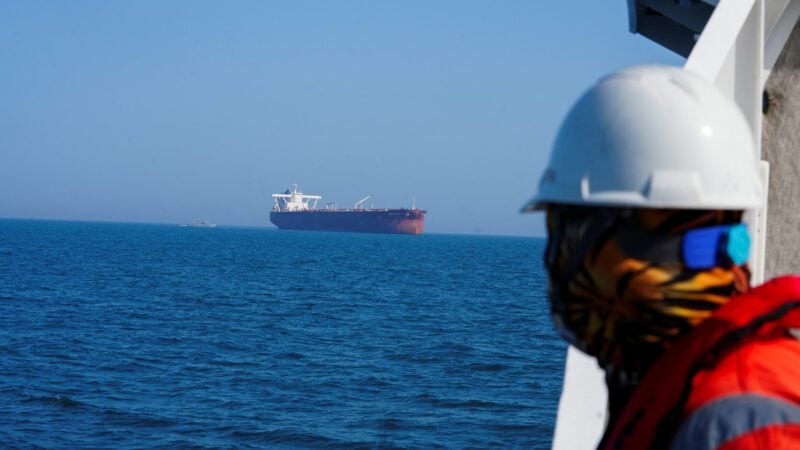
- Very likely, commercial traffic through the Strait of Hormuz remains severely reduced but is not fully stopped. UKMTO recorded 139 outbound and 169 inbound transits in its latest weekly tally, about 65% below pre-conflict levels; Qatar also sent two loaded LNG carriers through during a lull, escorted by US naval warships. Iran's reports of tanker mine strikes remain unverified, and claims that the strait is fully closed conflict with reporting on restricted, authorised passage. (Confidence: medium · ASSESSED)
- I&W: UKMTO's next weekly count remains below half of its stated pre-conflict transit baseline. (0-14 days)
- I&W: UKMTO records weekly transits at or above 80% of the pre-conflict baseline, alongside further LNG carrier passages without reported incident. (0-14 days)
- Unlikely, the supplied record substantiates disruption at four of five key maritime straits or a complete Bab-el-Mandeb blockade. It reports Houthi attacks that eliminated the Red Sea export option for larger tankers and a Houthi advance towards the strait, but provides no current Bab-el-Mandeb transit count or comparable evidence for four straits. (Confidence: low · ASSESSED)
- I&W: Shipping operators announce suspensions of large-tanker passages through Bab-el-Mandeb following independently verified attacks on named vessels. (0-14 days)
- I&W: Carrier schedules or transit reporting show large tankers continuing to use Bab-el-Mandeb without reported attack. (0-14 days)
- Likely, the crisis is sustaining elevated energy and shipping costs, but the supplied record does not verify Brent at $108 per barrel. Brent was reported at $95.71 on 13 November, while the EIA's Brent spot price was $92.14 on 11 November; these are different measures and dates. European diesel remained about 77% above pre-war levels, and Middle East to Asia crude freight rates were reported near record levels. The IEA's forecast fourth-quarter oil surplus and planned emergency stock releases temper, but do not remove, the supply risk. (Confidence: medium · ASSESSED)
- I&W: A named Brent futures contract closes at or above $108 per barrel in a dated market report. (0-14 days)
- I&W: Brent falls below $90 per barrel and reported Middle East to Asia crude freight rates ease from near-record levels. (0-14 days)
- Likely, the Houthis will continue to threaten Saudi targets over the next 14 days, but the reported 14 November missile attack on Saudi forces at Al-Tuwal and the Houthi claims concerning King Khalid International Airport and an East-West Pipeline pumping station do not establish successful impacts. The missile account comes from the Houthis, and Saudi Arabia had not immediately confirmed the airport and pipeline claims; confidence is low. (Confidence: low · ASSESSED)
- I&W: Saudi authorities confirm an impact or damage at Al-Tuwal, King Khalid International Airport, or an East-West Pipeline facility. (0-14 days)
- I&W: Saudi authorities report no new Houthi missile or drone incidents and the Houthis issue no further claims against named Saudi targets. (0-14 days)
- Unlikely, the United States and Iran will reach a durable agreement restoring routine commercial passage through the Strait of Hormuz by 28 November. Donald Trump has said the United States does not need a deal and redirected JD Vance away from Iran talks, while Reuters reported that Trump was considering restraint if Iran or the Houthis did not provoke the United States further. These competing signals, and reporting that no final decision on further attacks had been made, leave policy unsettled. (Confidence: medium · ASSESSED)
- I&W: The United States and Iran announce a formal agreement with published passage arrangements and a timetable for easing restrictions. (0-14 days)
- I&W: The White House announces new strikes on Iran or Iran publicly rejects a proposed passage arrangement. (0-14 days)
Outlook & scenarios
Restricted Hormuz passage persists (55%)
Iran maintains its restrictions and warning regime. Hormuz traffic remains well below pre-conflict levels, while Saudi Arabia continues rerouting about 4 million barrels per day to Yanbu. IEA stock releases and its forecast fourth-quarter oil surplus limit some pressure on crude markets, while diesel and freight costs remain elevated.
Limited US-Iran accommodation (25%)
US and Iranian restraint statements lead to a mediated arrangement that permits more commercial transits without resolving the wider conflict. UKMTO counts rise from current levels, and Qatar and other Gulf exporters resume some shipments through Hormuz. The reported tanker incidents remain unresolved.
Wider Red Sea and Saudi shipping risk (15%)
Houthi attacks extend pressure on Saudi targets and the Bab-el-Mandeb route. Operators further reduce large-tanker use of the Red Sea export option, increasing reliance on the East-West Pipeline and Yanbu. The evidence supplied does not establish that this scenario has begun.
Tanker incident triggers renewed US-Iran strikes (5%)
Independent evidence confirms a tanker mine strike and the United States attributes it to Iran. A US response prompts further Iranian action against shipping or US forces, sharply reducing Hormuz traffic and adding a wider military crisis to the existing supply shock.
Recommendations
- Do not brief four-of-five strait disruption, a Bab-el-Mandeb blockade, or Brent at $108 as established facts. Label each as unsubstantiated by the current record unless new transit or market data confirm it.
- Maintain a daily shipping picture using UKMTO and JMIC incident reports, vessel transit counts, and operator route announcements for Hormuz and Bab-el-Mandeb. Distinguish verified incidents from Iranian or Houthi claims.
- Keep Brent spot prices, named futures contracts, and their reporting times separate in assessments. Track European diesel prices and Middle East to Asia crude freight rates alongside the IEA stock-release schedule.
- Assess exposure to loss of the Red Sea route for larger tankers against Saudi Arabia's reported 4 million barrels per day reroute to Yanbu. Include pipeline and Yanbu operating status in supply-risk updates.
- Seek Saudi confirmation and independent vessel, facility, or imagery evidence before assessing the Houthi claims concerning Al-Tuwal, King Khalid International Airport, or the East-West Pipeline.
Confidence & uncertainty
Overall confidence is high for the central assessment that Hormuz traffic is sharply reduced, supported by UKMTO transit counts, incident reporting, and separate reporting of escorted LNG passages. The economic picture also draws on distinct price, diesel, freight, and IEA market measures. Confidence is lower on tanker mine claims, Bab-el-Mandeb traffic conditions, and the breadth of disruption: the tanker accounts remain unverified, the record conflicts on full closure versus conditional passage, and it does not establish disruption at four of five straits or a $108 Brent quote.
Intelligence gaps
- [EEI 1.3 · PARTIAL] Daily vessel-transit volume, AIS dark activity, anchorage buildup, and rerouting rates at Hormuz and Bab-el-Mandeb compared with pre-crisis levels. Recommended collection: maritime/AIS
- [EEI 1.4 · PARTIAL] Public or private warnings from the US Fifth Fleet, regional naval forces, port authorities, or shipping companies identifying specific routes or vessel categories as unsafe. Recommended collection: official-statements/shipping-notices
- [EEI 2.1 · PARTIAL] US, coalition, Iranian, Saudi, Omani, and other naval force posture changes, including escorts, convoy schedules, mine-countermeasure deployments, air patrols, and rules-of-engagement announcements. Recommended collection: maritime/defense-reporting
- [EEI 2.2 · UNCOVERED] Tanker and container-ship rerouting through the Cape of Good Hope or other alternatives, including added sailing days, fuel consumption, and available vessel capacity. Recommended collection: shipping-industry/AIS
- [EEI 2.3 · UNCOVERED] War-risk insurance premium, deductible, coverage-exclusion, and voyage-approval changes for Hormuz, Bab-el-Mandeb, Red Sea, Gulf of Aden, and adjacent waters. Recommended collection: insurance-market
- [EEI 3.1 · PARTIAL] Brent and Dubai crude price movements, futures-curve shifts, volatility, and the spread between regional and global crude benchmarks. Recommended collection: commodity-markets
- [EEI 3.3 · PARTIAL] Fertilizer shipment delays, canceled or redirected cargoes, regional price increases for urea and ammonia, and reported inventory levels in import-dependent markets. Recommended collection: commodity-trade/port-data
- [EEI 3.4 · PARTIAL] Container freight rates, vessel charter rates, bunker costs, port congestion, and manufacturing or retail supply disruptions attributable to the chokepoint crisis. Recommended collection: shipping-and-logistics-markets
- [EEI 4.2 · PARTIAL] Diplomatic commitments, deconfliction arrangements, prisoner or vessel releases, and publicly announced conditions for reopening commercial transit. Recommended collection: diplomatic-reporting
- [EEI 4.3 · UNCOVERED] Shipping-company decisions to resume, suspend, or expand transits and corresponding changes in insurer voyage approvals and war-risk premiums. Recommended collection: shipping-and-insurance-industry
- [EEI 4.4 · UNCOVERED] New incidents, military alerts, vessel diversions, or port restrictions at other critical chokepoints indicating geographic spread beyond Hormuz and Bab-el-Mandeb. Recommended collection: maritime/AIS-official-notices
Red cell review: CONCUR WITH COMMENT
TLP:CLEAR