TLP:CLEAR · Disclosure is not limited.
Hormuz under strain as U.S.-Iran strikes and a disputed deal keep shipping constrained
Time window: Last 7 days · Audience: General analyst · Type: Situation report · DTG: 2026-06-18 00:12Z · Overall confidence: MEDIUM
BLUF
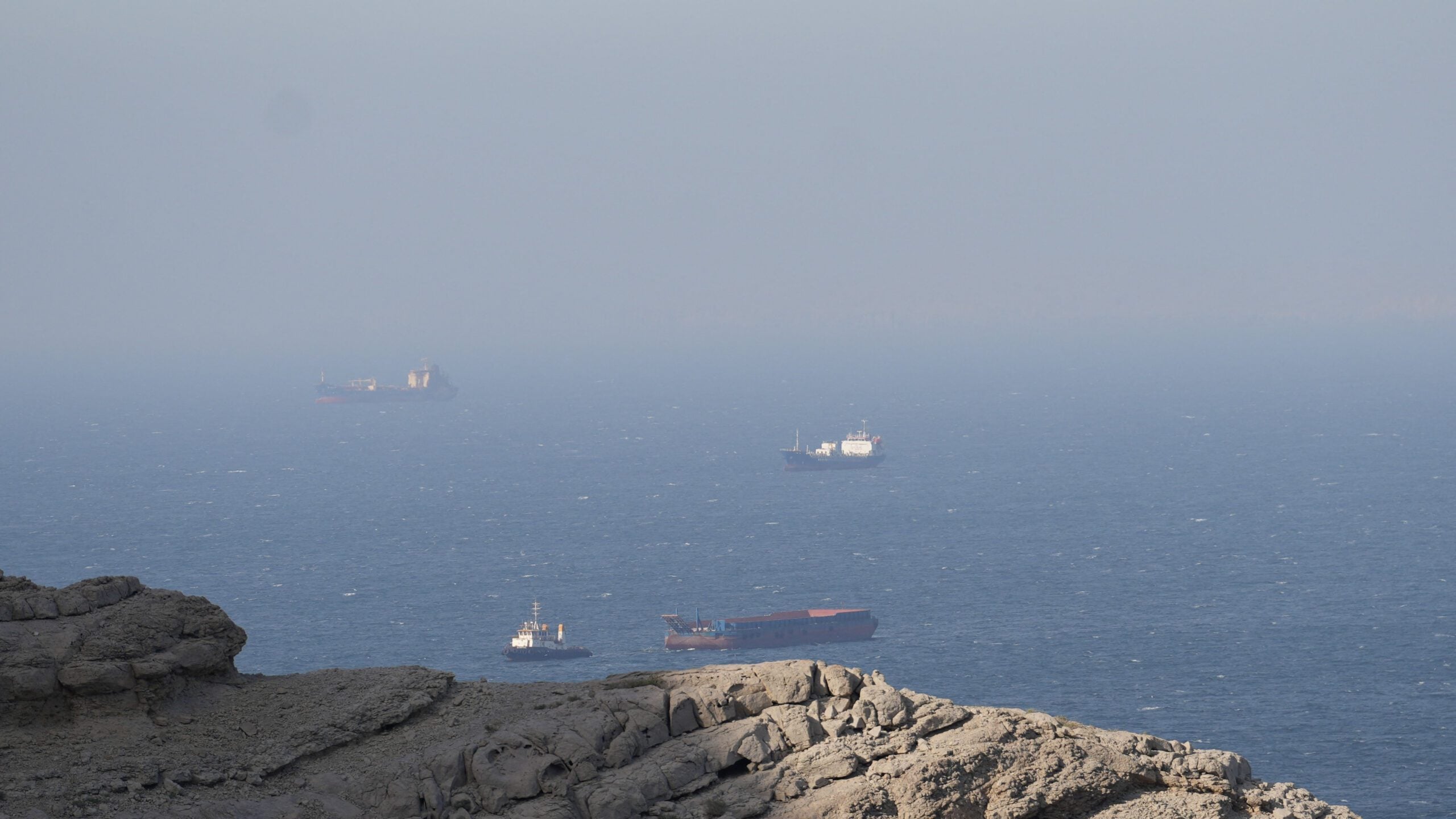
U.S. and Iran exchanged air and missile strikes around 10 to 11 June and Tehran declared the Strait of Hormuz closed, even as both sides tout an interim agreement with conflicting details. Maritime traffic remains sharply reduced and diverted through Omani waters, keeping near‑term escalation risks high despite talk of a ceasefire.
Executive summary
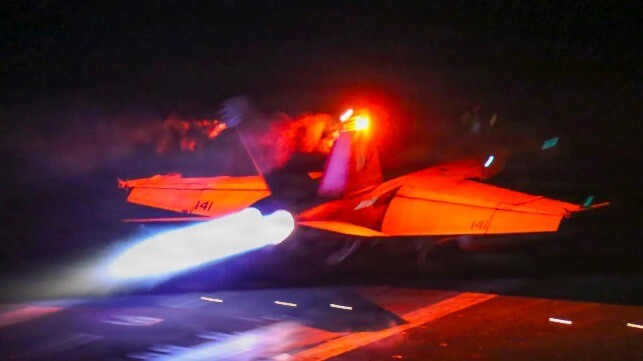
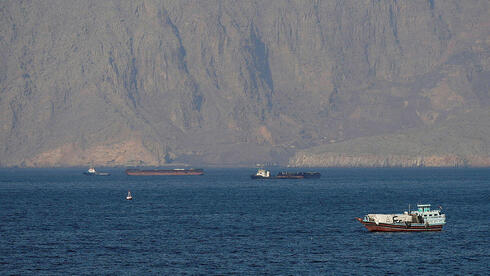
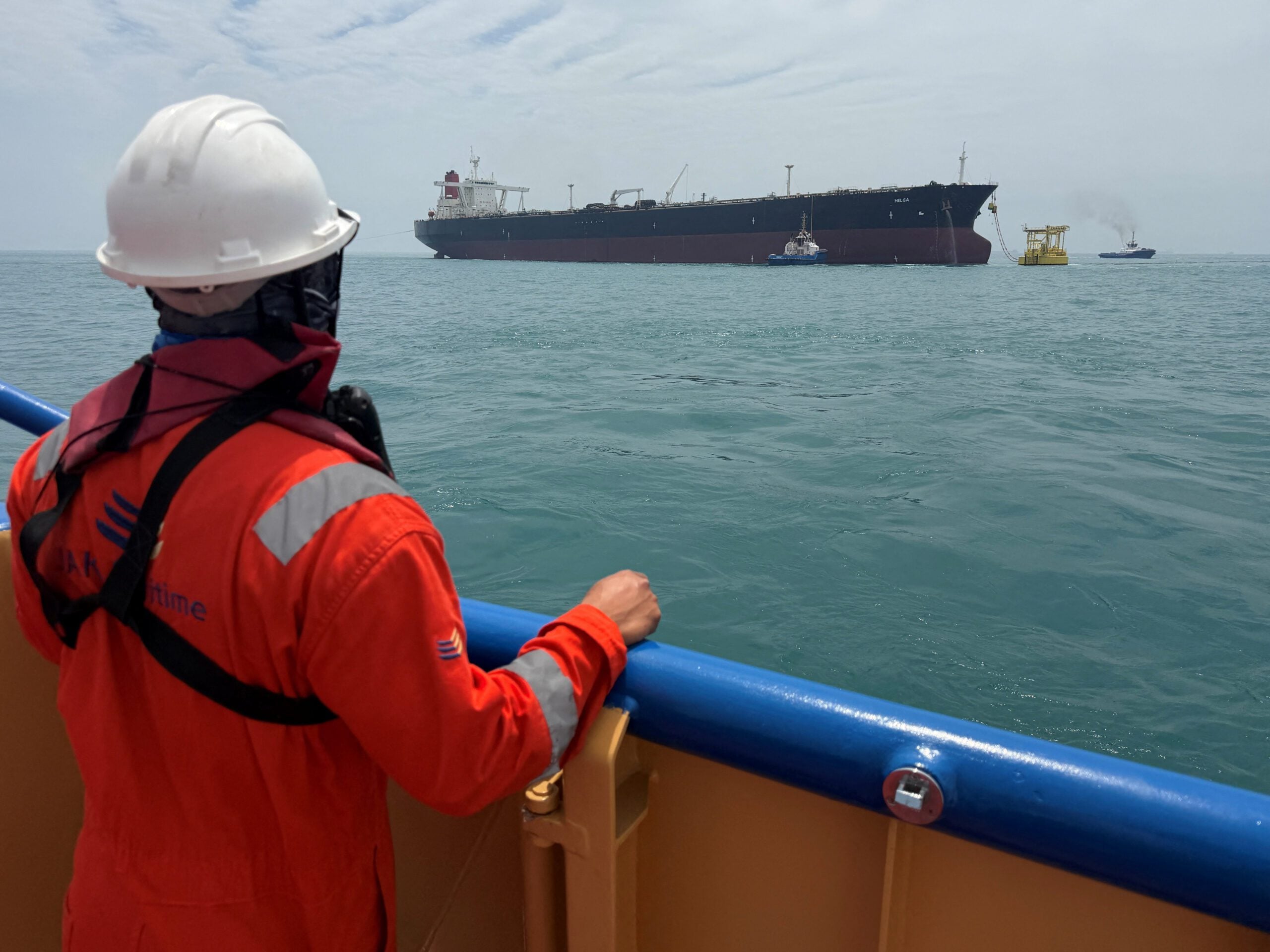
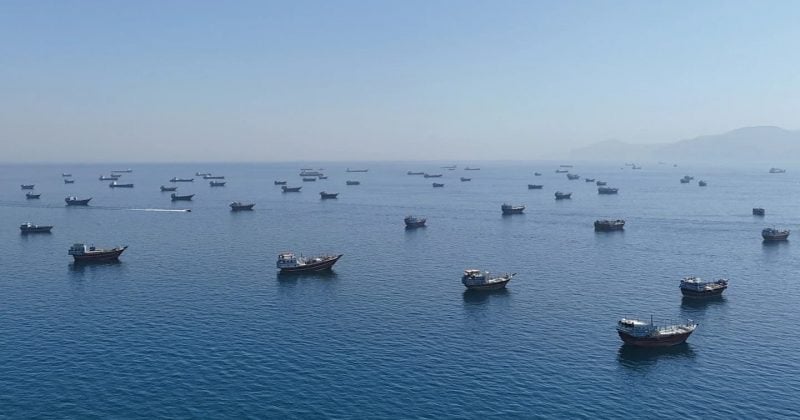
U.S. strikes on 10 June to degrade Iranian military capabilities were followed by Iranian ballistic missile and drone attacks on U.S. bases on 11 June, ongoing maritime drone activity, and a U.S. naval blockade targeting Iranian oil shipments. Iran declared the Strait of Hormuz closed to all vessels, and commercial traffic remains very limited, with operators queueing outside the Gulf and routing via an emergency corridor in Omani waters. In parallel, Washington and Tehran have announced an interim understanding and preparations for a signing ceremony, but public accounts diverge on both status and terms, with Iranian officials calling U.S. statements premature and each side describing different obligations. Energy markets are whipsawing between relief on prospective reopening and spikes on renewed hostilities. The operating picture points to a constrained and volatile maritime environment over the next two weeks, even if a memorandum is signed.
Key judgments
- Hormuz remains largely constrained, with commercial traffic sharply reduced and routing concentrated through Omani waters despite talk of reopening. (Confidence: high · REPORTED)
- I&W: JMIC advisories report transits rising well above the seven recorded on 15 June and a return to the Strait’s standard traffic separation scheme (0-14 days)
- I&W: Official notices from Tehran and Washington lifting the closure announcement and the oil blockade (0-14 days)
- Reciprocal U.S.-Iran strikes since 10-11 June make further incidents in and around the Strait of Hormuz likely in the near term. (Confidence: high · REPORTED)
- I&W: CENTCOM reports additional drone shoot‑downs or Iranian ballistic launches against named U.S. regional installations (0-14 days)
- I&W: Iranian state media cease reporting warning fire near Sirik and Qeshm with no U.S.-Iran kinetic claims over a two‑week period (0-14 days)
- An interim U.S.-Iran understanding is likely, but the status and content are contested and implementation risks are high. (Confidence: medium · ASSESSED)
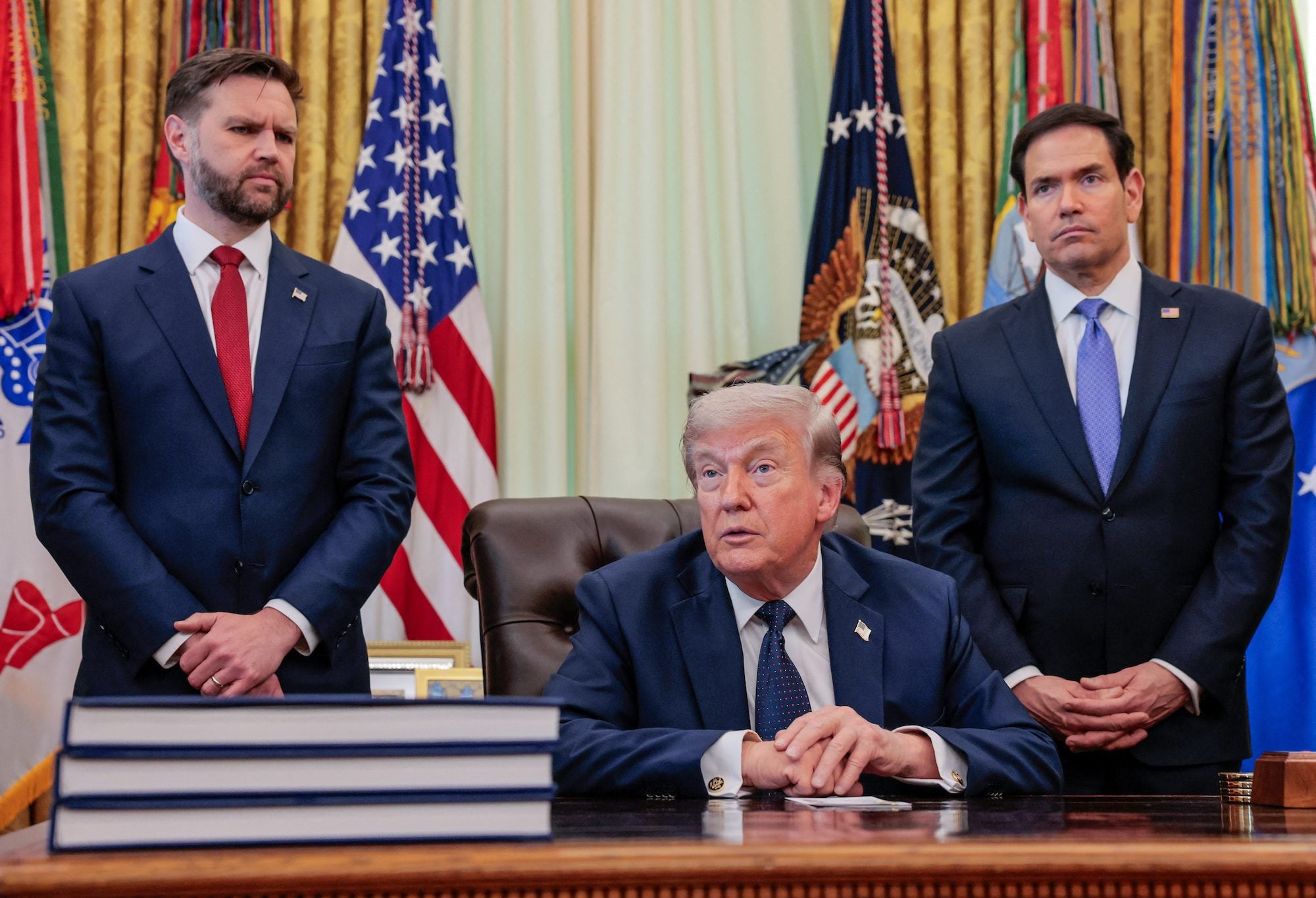
- I&W: Public signing in Bürgenstock by JD Vance and Mohammad Bagher Ghalibaf, with aligned readouts on nuclear and maritime clauses (0-14 days)
- I&W: Renewed Iranian statements labelling U.S. announcements premature and no signing on the stated timetable (0-14 days)
- Energy markets are pricing a prospective reopening, but volatility will persist as flows and threats normalise slowly. (Confidence: medium · ASSESSED)
- I&W: Benchmark Brent holds below 80 dollars alongside official guidance cautioning against immediate normalisation (0-14 days)
- I&W: Fresh price spikes of roughly 3 dollars following reported strikes or maritime incidents near Hormuz (0-14 days)
- Regional exporters are positioning to exploit controlled corridors, with ADNOC using the Omani side and Qatari LNG carriers returning toward the Gulf. (Confidence: medium · ASSESSED)
- I&W: Additional ADNOC and Qatari hulls signal Fujairah or Omani‑side routing and depart holding areas off the Gulf of Oman (0-14 days)
- I&W: Iranian moves to interdict vessels transiting the Omani‑side corridor (0-14 days)
- There is a roughly even chance that Tehran’s closure narrative is amplified by information operations while enforcement remains selective. (Confidence: low · ASSESSED)
- I&W: Iranian outlets continue to stress total closure as JMIC logs limited but recurring daily transits via Omani waters (0-14 days)
- I&W: Complete cessation of recorded transits for two weeks with contemporaneous interdiction reports naming specific blocked vessels (0-14 days)
Outlook & scenarios
Managed de‑escalation with a signed framework and controlled corridor (45%)
A memorandum is publicly signed within days, pairing initial sanctions waivers for oil sales with conditions and a monitored maritime corridor via Omani waters. JMIC keeps the threat level elevated but more traffic shifts from holding areas to Fujairah and the Gulf of Oman route. Kinetic activity tapers to isolated drone incidents without ballistic salvos.
Protracted limbo and tit‑for‑tat in a constrained strait (50%)
Divergent readouts and domestic pushback stall formalisation. U.S. and Iranian forces continue limited strikes and intercepts, Iran selectively interdicts transits, and most commercial traffic stays reduced and south of the TSS. Operators keep tankers staged off Oman pending clearer guarantees.
Re‑escalation and renewed closure pressure (30%)
A high‑profile incident at sea or on a regional base triggers a fresh exchange of missile and air strikes. Tehran intensifies interdictions, Washington tightens the oil blockade, and JMIC reports near‑zero daily transits as insurers pull cover. Prices jump on supply risk despite prior expectations of reopening.
Wildcard: External spoiler widens the theatre (15%)
Escalation on the Israel, Lebanon front or a high‑visibility tanker strike near Hormuz derails talks. Tehran leverages allied actors while insisting on maximalist terms, and maritime incidents expand beyond the corridor, complicating any near‑term reopening.
Recommendations
- Maintain daily fusion of JMIC advisories, AIS movements to and from Fujairah, and company port calls to quantify any shift from holding patterns off the Gulf of Oman to active transits via Omani waters.
- Task collection on Iranian coastal hubs and islands named in strike reporting, including Qeshm, Bandar Abbas and Sirik, to watch for renewed air‑defence activity or missile preparations that would signal re‑escalation risk.
- Track CENTCOM and Iranian state media claims of drone launches and intercepts in near‑real time, flagging any pattern change from warning fire to confirmed strikes on commercial hulls.
- Prepare a decision matrix keyed to public signing signals in Bürgenstock, delegation travel by JD Vance and Mohammad Bagher Ghalibaf, and issuance of formal sanction waivers, to update the expected timeline for restored flows.
- Advise operators transiting the corridor to follow U.S. procedures for the Deep South Route and to document non‑Iran‑bound intentions, consistent with current maritime guidance.
- Update energy risk assumptions to reflect a slow normalisation curve even if a memorandum is signed, integrating price relief claims with continued warnings of delayed full recovery.
Confidence & uncertainty
Overall confidence is medium. Kinetic activity and maritime disruption are well‑sourced and mutually reinforcing across multiple reports, which supports high confidence in the strike timeline and the constrained operating picture. Assessments of an interim agreement’s status and terms are less certain due to conflicting public accounts from Washington and Tehran and simultaneous claims of both electronic and in‑person signings. Market signals are mixed across the period, with both price drops tied to deal expectations and spikes tied to hostilities, which constrains confidence on the pace of normalisation.
Alternative analysis (red cell)
The open-source reporting presents a mixed picture: there is evidence of violent exchanges and of Rerouting/diversions, but many core items are contradictory or rest on medium/low-admiralty procedural claims (signing locations, delegation lists, and large-volume flow shifts). A defensible alternative estimate is that while episodic closures, selective enforcement, and opportunistic rerouting have occurred, the Strait is not uniformly 'largely constrained' and any interim deal remains unverified; markets and regional actors are reacting to uncertainty rather than to a clear, durable change in status.
Cited sources
[1] maritime-executive.com · After US Airstrikes, Iran Declares Hormuz "Closed" to All Vessel Traffic (B) · sha256:783eb5661ca4 [2] lenta.ru · США и Иран начали боевые действия в районе Персидского залива. Перед этим Трамп и Пентагон анонсировали мощные удары (B) · sha256:c6a7afc5219e [3] gcaptain.com · Iranian Tankers Reappear as Crude Exports Show Signs of Restart After Hormuz Deal (B) · sha256:e75a2d244d92 [4] gcaptain.com · U.S. Military Guidance Reveals High-Risk Reality of Hormuz's 'Southern Highway' (B) · sha256:bd15873ddf06 [5] maritime-executive.com · UAE Wants to End its Reliance on Shipping Through Strait of Hormuz (B) · sha256:e84b1561cddd [6] Institute for the Study of War (ISW) and The Critical Threats Project (CTP) at the American Enterprise Institute · Iran Update Special Report, June 11, 2026 (B) · sha256:22f4cd0e4605 [7] ynetnews.com · Tensions persist as US-Iran agreement nears and drones target Israel and Hormuz shipping (B) · sha256:32b715464452 [8] cryptobriefing.com · US forces down two Iranian drones near Strait of Hormuz (B) · sha256:e18145f6b81f [9] gcaptain.com · Oil Tankers U-Turn, Rush to Middle East Before Hormuz Reopening (B) · sha256:b566a498089f [10] gcaptain.com · Trump Signs Interim Iran Deal as Focus Shifts to Hormuz (B) · sha256:448e576b1f29 [11] gcaptain.com · U.S., Iran Prepare for Deal Signing as Financial Details Emerge (B) · sha256:a0f2cb9d784d [12] dw.com · Трамп в 39-й раз обещает сделку с Ираном (B) · sha256:fd8cfd7f60a2 [13] Institute for the Study of War (ISW) and The Critical Threats Project (CTP) at the American Enterprise Institute · Iran Update Special Report, June 12, 2026 (B) · sha256:1d92477fba93 [14] gcaptain.com · While Trump Hails Gulf Oil Flowing, Iran's Fleet Also Gearing Up to Boost Exports (B) · sha256:15edb8e54ad0 [15] globalbankingandfinance.com · US & Iran Trade Attacks Again, Threatening Shaky Middle East Ceasefire (B) · sha256:72ca174b5bc9 [16] gcaptain.com · Hormuz Crisis Leaves Lasting Mark on Oil Markets as Demand Slumps, IEA Says (B) · sha256:94cffb7a2859
Source content hashes were computed at collection time; the cited text is preserved unmodified for the life of this product.
Red cell review: PARTIAL DISSENT
TLP:CLEAR