TLP:CLEAR · Disclosure is not limited.
Hormuz under strain, Lebanon ceasefire fragile: Iran, Israel crisis update
Time window: Last 1 day · Audience: General analyst · Type: Situation report · DTG: 2026-06-26 09:18Z · Overall confidence: MEDIUM
BLUF
IRGC route-control broadcasts and a 25 June attack off Dahit, Oman have paused the IMO-led clearance of stranded ships and kept Hormuz risk high even as Saudi loadings restart. In Lebanon, the 19 June ceasefire is largely holding under a nascent deconfliction effort, but Israel refuses to withdraw and Hezbollah rejects the talks, capping prospects for a durable settlement.
Executive summary
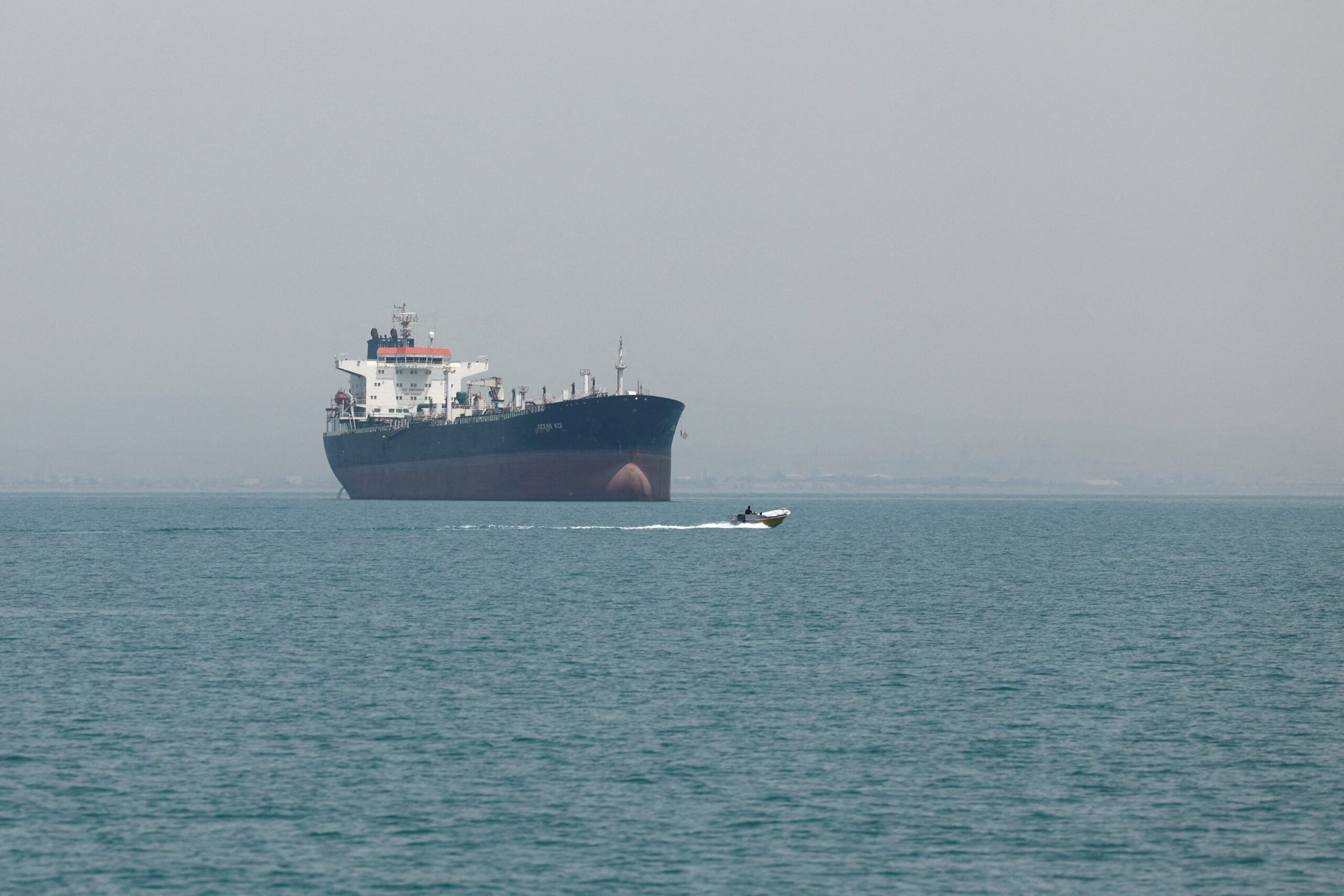
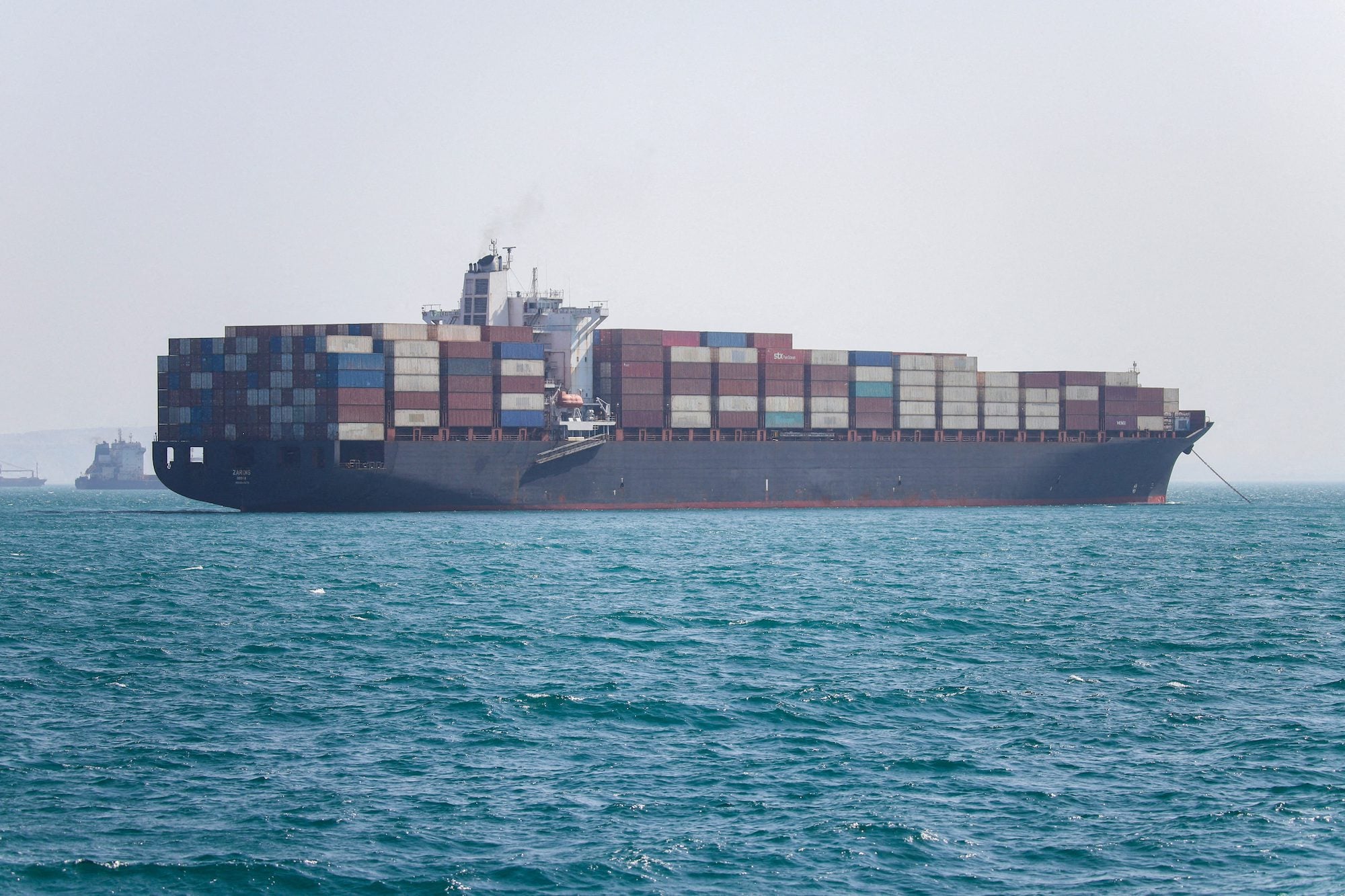
Tensions remain acute across the maritime and Lebanese fronts. In the Strait of Hormuz, the IRGC has renewed radio warnings asserting control over designated routes, commercial ships have turned around, and a Singapore-flagged boxship was hit near Dahit on 25 June, prompting the IMO to pause its coordinated evacuation of more than 11,000 stranded seafarers. At the same time, Saudi Arabia is restarting loadings at Ras Tanura and ships have resumed transiting since 23 June, reflecting a contested reopening. In Lebanon, a 19 June ceasefire is generally holding with UNIFIL reporting no new missile launches or airstrikes since Tuesday, though Israeli drones continue to violate airspace and Jerusalem says its forces will stay in the south. Washington and Gulf partners have signalled support for free navigation and are advancing a deconfliction track with Tehran, including a Doha channel involving CENTCOM and IRGC counterparts, while domestic and regional scepticism persists.
Change from previous assessment
Since the 25 June brief, the first reported post-MoU attack on a commercial vessel near Dahit, Oman prompted the IMO to pause its evacuation plan and ships began turning back following renewed IRGC broadcasts asserting control. Saudi Arabia moved to restart loadings at Ras Tanura and VLCCs queued off Ju’aymah, while 57 ships transited the strait since 23 June, indicating a contested but resuming flow. In Lebanon, the 19 June ceasefire is generally holding with UNIFIL reporting no new launches or airstrikes, though Israeli drones continue airspace violations and Jerusalem insists forces will remain in the south. Washington and Gulf partners issued statements backing free navigation, and US officials announced a Doha deconfliction channel with the IRGC, even as Senate Republicans blocked an Iran war powers resolution and Gulf scepticism lingers. Initial assessment of this topic’s indicators is revised to reflect the IMO pause and the IRGC’s active route-control posture.
Key judgments
- It is likely the IRGC will sustain attempts to control Strait of Hormuz traffic in the near term, keeping disruption elevated despite international efforts to restore free navigation. (Confidence: medium · ASSESSED)
- I&W: UKMTO or industry reporting of additional IRGC enforcement actions, such as boardings or further strikes in the Oman inshore traffic zone. (0-14 days)
- I&W: Public revocation of IRGC route-control broadcasts and UKMTO notice that the IMO-led convoy plan has resumed without Iranian pre-clearance. (0-14 days)
- It is likely the 19 June Lebanon ceasefire will largely hold over the next fortnight under a deconfliction mechanism, but with periodic airspace violations and no Israeli withdrawal from southern Lebanon, limiting prospects for a durable deal. (Confidence: medium · ASSESSED)
- I&W: UNIFIL daily summaries continue to report no missile launches or airstrikes along the Blue Line. (0-14 days)
- I&W: Official Israeli announcements of force consolidation or withdrawal timetables from southern Lebanon. (1-3 months)
- It is likely Washington and Tehran will operationalise a Doha deconfliction channel involving CENTCOM and IRGC counterparts, but scope will remain narrow due to US domestic constraints and unresolved ballistic-missile and financial issues. (Confidence: medium · ASSESSED)
- I&W: Official US or Iranian readouts naming CENTCOM and IRGC participants after an initial Doha session. (0-14 days)
- I&W: Congressional moves to restrict executive branch contacts with the IRGC or public Iranian repudiation of the deconfliction format. (0-14 days)
- It is likely Gulf oil exports will gradually normalise from inside the Persian Gulf as Ras Tanura restarts and ships re-enter central lanes, although stop-start flows will persist while the IMO plan remains paused and the IRGC asserts route control. (Confidence: medium · ASSESSED)
- I&W: Multiple VLCC loadings observed at Ras Tanura and steady AIS outflows through the central corridor over two consecutive weeks. (0-1 month)
- I&W: Fresh UKMTO advisories on vessel strikes near Dahit or continued suspension of the IMO convoy plan. (0-14 days)
- It is very likely the humanitarian picture is deteriorating: Gaza’s crisis is worsening despite UN operations via Kerem Shalom, and the Gulf shipping crisis has left more than 11,000 mariners stranded with at least 14 killed in verified attacks. (Confidence: high · REPORTED)
- I&W: UN updates continue to cite Kerem Shalom as the sole cargo entry and report rising shortages. (0-14 days)
- I&W: IMO announces resumption of evacuations with a marked reduction in the seafarer headcount awaiting clearance. (0-14 days)
Outlook & scenarios
Managed deconfliction holds and maritime reopening consolidates (45%)
CENTCOM, IRGC contacts in Doha reduce miscalculation risk, IRGC scales back radio interference, and the IMO restarts phased convoys. Saudi loadings at Ras Tanura normalise and transits through the central corridor increase. The Lebanon ceasefire endures with low-level airspace violations but no return to missile exchanges.
IRGC coercion escalates and shipping disruption persists (40%)
The IRGC hardens route-control enforcement with more stops or strikes near Oman’s inshore traffic zone. The IMO evacuation remains paused and industry avoids the strait without Iranian authorisation, prolonging crew stranding and insurance complications. Energy flows recover only partially and with delays.
Lebanon relapse into cross-border fire (30%)
Talks stall over Hezbollah disarmament and Israel’s refusal to withdraw. Hezbollah’s political rejection of the process gives way to renewed attacks or Israeli pre-emptive action, breaking UNIFIL’s calm reports and forcing a rapid re-posture along the Blue Line. The deconfliction cell is overwhelmed or sidelined.
Recommendations
- Prioritise near-real-time monitoring of UKMTO advisories, IRGC radio broadcast reports, and AIS movements in the Oman inshore traffic zone and central corridor to flag any shift from warnings to enforcement.
- Use JMIC threat level updates alongside industry reporting to adjust maritime risk levels and advise on routing, convoy participation, and port calls at Ras Tanura and Ju’aymah.
- Track official readouts from Doha and statements by CENTCOM and Iranian counterparts for indications the deconfliction channel is active, and map potential policy headwinds in Washington tied to IRGC’s legal status.
- Maintain a Lebanon watchboard keyed to UNIFIL daily summaries, Israeli cabinet statements on force posture, and Hezbollah messaging to anticipate ceasefire breaches.
- Coordinate with humanitarian reporting on Gaza to anticipate access constraints through Kerem Shalom and to adjust logistics planning and NGO partner support accordingly.
Confidence & uncertainty
Overall confidence is medium because multiple, mutually reinforcing reports from multilateral bodies, major media and a high-reliability think tank corroborate the key developments in Hormuz, Lebanon and the diplomatic track. Maritime disruption details, the 25 June strike near Dahit, the IMO pause, and IRGC route-control broadcasts are well attested. However, some elements rely on single outlets or think tank assessments, attribution of the vessel attack is partly contested in open reporting, and political signals around the US, Iran channel and Lebanese negotiations are fluid. These gaps and the fast-moving environment preclude a high-confidence call.
Alternative analysis (red cell)
The reporting reliably documents IRGC warnings and sporadic attacks and a fragile ceasefire and humanitarian deterioration, but contemporaneous indicators of resumed transits, a lowered threat level, and the paused IMO plan create an ambiguous operational picture. Given unresolved contradictions (tradecraft lint: contradiction_unaddressed) and the absence of direct operational evidence (IRGC enforcement logs, AIS/ISR continuity, confirmed Doha channel procedures), the more defensible interpretation is episodic disruption with real potential to re‑escalate rather than assured, sustained Iranian control or clear, steady normalisation of exports.
Intelligence gaps
- [EEI 1.1 · PARTIAL] Detection and characterization of ballistic/cruise missile or rocket launches originating from Iranian territory or from Iran-controlled positions in Iraq/Syria (time, launch coordinates, missile type, flight trajectory/impact area). Recommended collection: satellite/imagery
- [EEI 1.2 · UNCOVERED] Movements and posture changes of Iran-backed proxy forces (Hezbollah units in Lebanon, militias in Syria/Iraq): concentrations of personnel, transport of rocket/artillery launchers, visible logistics build-up within operational range of Israel. Recommended collection: human/intel
- [EEI 1.3 · PARTIAL] Israeli defensive and offensive posture changes: reservist call-ups, mobilization orders, sorties/airstrikes attributed to Israel, and domestic activation of missile-defense systems (locations and activation times). Recommended collection: open-source/media
- [EEI 1.4 · PARTIAL] Evidence of pre-positioning or arming of naval mines, fast attack craft, or anti-ship missile systems in the Gulf of Oman, northern Arabian Sea, or off the Lebanese/Syrian coasts that could be used to interdict Israeli or allied shipping. Recommended collection: maritime/AIS
- [EEI 2.1 · UNCOVERED] Movements and tasking changes of external military assets: carrier strike groups, amphibious ready groups, expeditionary air wings, or ballistic-missile defense units into the Eastern Mediterranean, Persian Gulf, or Red Sea (vessel/aircraft IDs, routing, on-station times). Recommended collection: maritime/AIS
- [EEI 2.3 · UNCOVERED] Changes to force protection or alert levels at foreign bases in the region (e.g., US bases in Kuwait, Qatar, UAE; Russian bases in Syria): activation of additional air defenses, curfews, or reinforcement shipments (personnel/equipment manifests). Recommended collection: signals/intel
- [EEI 3.2 · UNCOVERED] Changes in crude oil and refined product flows from key terminals (reported tanker loading delays, terminal closures, throughput volumes at Kharg, Mina al-Ahmadi, Ras Tanura, and major Gulf ports compared to baseline). Recommended collection: commercial/ports
- [EEI 3.3 · PARTIAL] Market and insurance indicators: sudden spikes in war-risk or hull insurance premiums for Middle East routes, large moves in regional FX/stock indices, and notable changes in commodity futures (oil, freight rates) tied to regional risk perceptions. Recommended collection: financial/transactional
Cited sources
[1] gcaptain.com · Trump Row With Republican Senator Clouds US Drive to Sell Iran Deal to Gulf Allies (B) · sha256:5b3902477e56 [2] gcaptain.com · Ship Attack Off Oman Derails IMO's Hormuz Evacuation Effort (B) · sha256:693c5a0ec6f4 [3] gcaptain.com · Ships Turn Back in Strait of Hormuz as IRGC Renews Transit Warnings (B) · sha256:c680e7773c5a [4] gcaptain.com · Ship Hit Off Oman After IRGC Renewed Hormuz Transit Warnings (B) · sha256:8087946de71c [5] Institute for the Study of War (ISW) and The Critical Threats Project (CTP) at the American Enterprise Institute · Iran Update Special Report, June 25, 2026 (B) · sha256:b5f433d7cd05 [6] United Nations · From Lebanon to the Strait of Hormuz, a Middle East hanging on fragile peace talks (A) · sha256:d0d950f95951 [7] ynetnews.com · ‘Worst round yet’: Rubio optimistic despite tense Israel-Lebanon talks on pilot zones (B) · sha256:86f197f200f2 [8] jpost.com · Israel-Lebanon talks continue under US mediation despite deadlock over Hezbollah disarmament (B) · sha256:44dbd0033555 [9] Al Jazeera · Deconfliction and disarmament: Can both be pursued in Lebanon? (A) · sha256:872ce8c09d23 [10] The Jerusalem Post · Vance announces unprecedented CENTCOM-IRGC talks aimed at reducing military tensions (B) · sha256:63bac855f7fc [11] haaretz.com · Vance says U.S. and Iran agreed to set up direct channel with IRGC 'to settle disputes' (A) · sha256:da86bafae1bc [12] Newsweek · Where the new Middle East order stands today (A) · sha256:6380a230f6b1 [13] gcaptain.com · Rubio Wraps up Gulf Tour as Allies Share Concerns Over Iran Peace Accord (A) · sha256:7845f0641edc [14] gcaptain.com · Major Saudi Oil Terminal to Restart as Gulf Reboot Ramps Up (A) · sha256:a377b9293abc [15] gcaptain.com · Day of the Seafarer 2026: The Human Cost of Keeping World Trade Moving (B) · sha256:7a5dfd48b26a
Source content hashes were computed at collection time; the cited text is preserved unmodified for the life of this product.
Red cell review: PARTIAL DISSENT
TLP:CLEAR