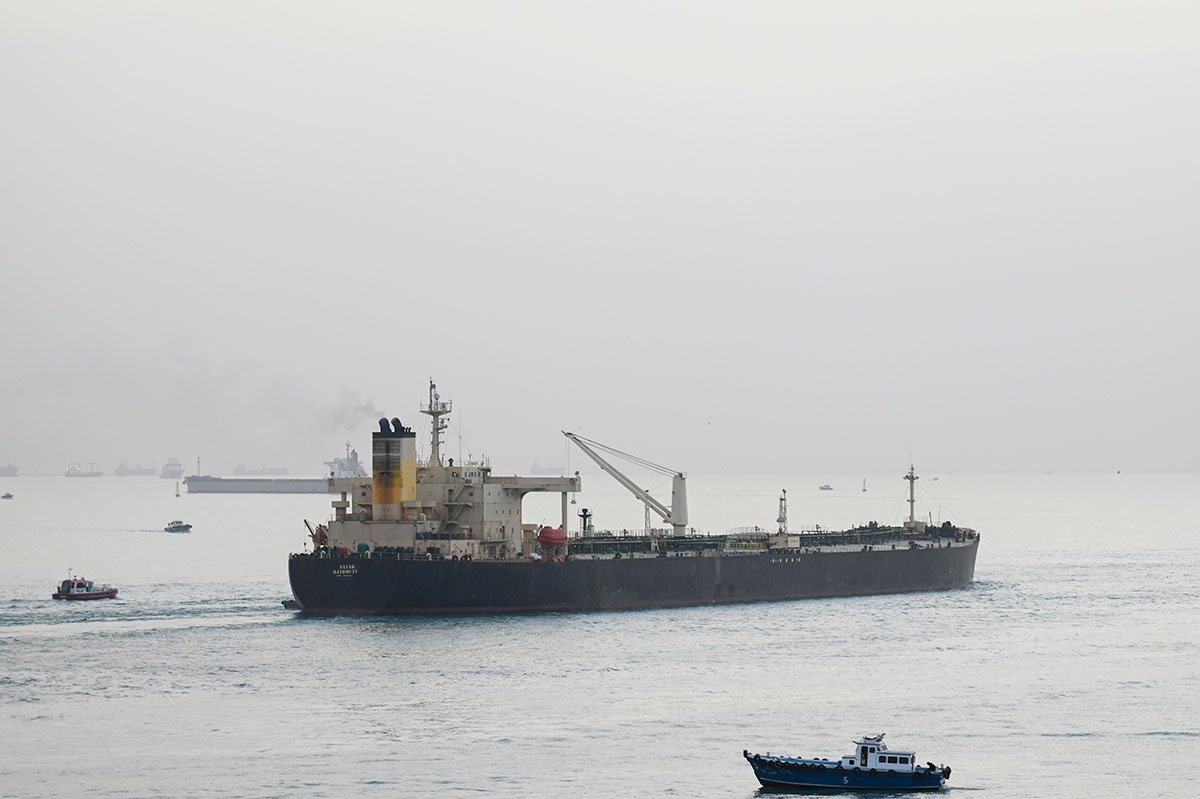
Houthis declare total Red Sea ban on Israeli shipping; Bab el-Mandeb risk rises as Saudi crude reroutes to Yanbu
Time window: Last 7 days · Audience: General analyst · Type: Situation report · DTG: 2026-06-10 01:12Z · Overall confidence: MEDIUM
BLUF
It is very likely the Houthi movement will enforce a targeted interdiction against Israeli‑linked vessels in the Red Sea/Bab el‑Mandeb following 8 June announcements, sustaining depressed traffic and forcing further rerouting. Saudi Arabia has already diverted >70% of crude exports to Yanbu, and prior campaigns saw Bab el‑Mandeb oil flows fall from 8.8 to ~4 mbpd, signaling material supply risk if enforcement persists.
Executive summary
Reported: On 8 June 2026, the Houthi movement announced a total ban on Israeli shipping in the Red Sea; spokesman Yahya Saree declared a “complete ban,” and multiple outlets reported closure of Bab el‑Mandeb to Israeli‑linked vessels. The group has repeatedly targeted Israel‑linked shipping since 2023, causing traffic collapses and Cape of Good Hope diversions that add weeks to voyages. Energy logistics are shifting: Saudi Arabia has diverted more than 70% of crude exports to the Red Sea port of Yanbu via the East‑West Pipeline; during previous Houthi campaigns, oil flows through Bab el‑Mandeb fell from 8.8 to ~4 mbpd. On 8 June, the IDF identified a missile launched from Yemen as the Houthis announced/claimed missile attacks against Israel, reinforcing the threat backdrop to shipping. Context: UN Security Council Resolution 2722 condemned Houthi attacks and the United States launched Operation Prosperity Guardian in 2024 to protect Red Sea shipping, but these actions did not prevent the 8 June ban. NASA detected eight thermal anomalies in the Red Sea between 6-8 June; NASA cautions thermal signatures record heat, not its cause.
Key judgments
- Very likely the Houthi movement will attempt to enforce a selective blockade of Israeli‑linked vessels in the Red Sea/Bab el‑Mandeb over the next 30-60 days, treating any Israeli vessel as a military target. (Confidence: high)
- Likely traffic through the southern Red Sea and Bab el‑Mandeb will remain materially below pre‑October 2023 baselines and see renewed diversions around the Cape of Good Hope in the near term, sustaining longer voyages and higher operating costs. (Confidence: medium)
- Very likely Red Sea energy logistics will tighten: Saudi Arabia’s diversion of more than 70% of crude exports to Yanbu via the East‑West Pipeline and prior drops in Bab el‑Mandeb flows from 8.8 to ~4 mbpd indicate elevated supply and price risk if Houthi enforcement persists or escalates. (Confidence: medium)
- Likely the Houthis will pair maritime threats with intermittent missile and UAV activity against Israel, sustaining elevated risk around Bab el‑Mandeb and Eilat approaches; on 8 June the IDF reported a missile from Yemen as Houthi spokesmen announced and claimed strikes. (Confidence: medium)
- Roughly even chance that Houthi enforcement remains selective rather than producing a universal closure to all commercial traffic, as indicated by steady Red Sea war‑risk rates near ~0.3% and continuing (though reduced) sailings since early 2026. (Confidence: low)
- If hostilities widen or misidentification occurs, it is likely exports from Saudi Arabia’s Red Sea port of Yanbu will face increased targeting risk, creating a high‑impact supply vulnerability given concentration of flows via the East‑West Pipeline. (Confidence: medium)
Outlook & scenarios
Selective Houthi blockade persists against Israeli‑linked vessels, 55%
Through the next 4-8 weeks, the Houthis focus interdiction and threats on ships linked to Israel (ownership, operation, or use of Israeli ports), consistent with 8 June statements of a total ban and prior target selection. Non‑Israeli‑linked traffic continues with elevated caution, while diversions around the Cape remain common and southern Red Sea volumes stay below pre‑October 2023 baselines. Insurance war‑risk pricing hovers near current levels absent mass‑casualty events.
Escalation to de facto partial closure of Bab el‑Mandeb, 30%
Broader interdiction or misidentification incidents expand risk beyond Israeli‑linked ships. Tanker operators withdraw, pushing Bab el‑Mandeb oil flows toward prior‑campaign lows (~4 mbpd), Cape diversions surge, and Red Sea exports via Yanbu face greater jeopardy. Price pressures intensify as Saudi reliance on the East‑West Pipeline concentrates flows at Yanbu.
Managed de‑escalation and gradual recovery, 20%
Diplomatic pressure (e.g., UNSCR 2722 condemnation) and maritime security cooperation (e.g., Operation Prosperity Guardian) constrain Houthi actions largely to rhetoric; missile activity abates. Red Sea war‑risk rates remain stable and monthly sailings trend upward from depressed levels, though still below pre‑2023.
Recommendations
- Map exposure: Build and maintain a registry of vessels and companies with Israeli linkages (ownership, operation, cargoes, and recent Israeli port calls) aligned to Houthi target definitions to flag highest‑risk transits approaching Bab el‑Mandeb. [Supports tasking grounded in]
- Enhance maritime watch: Task persistent AIS and voyage‑plan monitoring for Israeli‑linked vessels transiting the southern Red Sea and Bab el‑Mandeb; alert on course/speed changes indicative of evasion or distress.
- Oil logistics tracking: Monitor Yanbu loadings and East‑West Pipeline utilization as a leading indicator of tightening supply; track the share of Saudi exports routed to Yanbu to detect shifts from the reported >70% baseline.
- Remote‑sensing corroboration: Use NASA FIRMS to cue checks on reported incidents near Bab el‑Mandeb anchorages and approaches, noting that thermal detections record heat but do not establish cause.
- Risk pricing sentinel: Collect weekly Red Sea war‑risk quotes from brokers to detect abrupt repricing from the ~0.3% level, which would signal changing operator risk perceptions.
- Threat‑activity fusion: Correlate Houthi missile/UAV claims and IDF intercept reports with maritime movements near Eilat and the southern Red Sea to refine windows of elevated risk.
- Scenario triggers: Pre‑define tripwires for escalation (e.g., attack or credible threat against Yanbu export infrastructure or tankers near Perim/Hanish Islands) to accelerate warning and policy options.
- Deconflict narratives: Reconcile contradictory open‑source reporting on regional maritime security by incorporating Joint Maritime Information Center assessments and IMO leadership warnings into analytic baselines for operator behavior.
Confidence & uncertainty
Overall confidence is medium. The 8 June Houthi ban is corroborated across multiple independent outlets and direct statements by Yahya Saree, supporting high confidence in intent to target Israeli‑linked shipping. Evidence for sustained traffic depression and diversions is consistent but partly historical or aggregated, reducing confidence for precise near‑term magnitudes. Energy‑flow judgments rest on credible reporting of Saudi rerouting and historical Bab el‑Mandeb throughput declines, though some sources are medium‑reliability and not all figures are contemporaneous. Key uncertainty stems from conflicting regional signals (e.g., stable Red Sea war‑risk pricing versus prior traffic collapses; divergent views on adjacent Hormuz conditions), which constrain forecast precision.
Cited sources
[1] euronews.com, Houthis join Iran war, threatening Red Sea trade amid Hormuz closure (A) [2] malaymail.com, With Hormuz shut and Saudi oil rerouted, Iran‑aligned Houthi threats to Red Sea shipping hit harder in today’s market (B) [3] ynetnews.com, Houthis renew Red Sea blockade on Israel (B) [4] marinelink.com, Yemeni Houthis Threaten Israeli Red Sea Shipping (A) [5] New York Post, Iranian-backed Houthi rebels vow to block Israeli ships sailing in Red Sea (B) [6] The Sound Around Us, Houthis Threaten Red Sea Shipping as Middle East Tensions Escalate (B) [7] insurancejournal.com, Houthis to Impose 'Complete Ban' on Israeli Ships in Red Sea (B) [8] investing.com, Risks to Red Sea Oil Exports Could Roil Oil Market Further (B) [9] Oil & Gas 360, Why are the Houthis threatening to attack Red Sea shipping and what does it mean for oil markets? - Oil & Gas 360 (B) [10] Wikipedia, East, West Crude Oil Pipeline (F) [11] Wikipedia, 2026 Houthi strikes on Israel (B) [12] Los Angeles Times, Contributor: How the looming Houthi threat could turn the Iran war - Los Angeles Times (A) [13] KFDM YouTube, Houthi Rebels Claim Missile Attack on Israel, Threaten Red Sea Shipping (B)