TLP:CLEAR · Disclosure is not limited.
Indo-Pacific: PLA naval and coast guard pressure around Taiwan draws allied counter‑posturing
Time window: Last 1 day · Audience: General analyst · Type: Situation report · DTG: 2026-06-29 08:41Z · Overall confidence: HIGH
BLUF
China is very likely normalising frequent China Coast Guard and PLA Navy activity across the Taiwan Strait median line and closer to Taiwan’s 24‑nautical‑mile zone, while the United States, Japan and the Philippines expand joint deterrence on Taiwan’s flanks. The crowded operating picture raises the near‑term risk of miscalculation at sea.
Executive summary
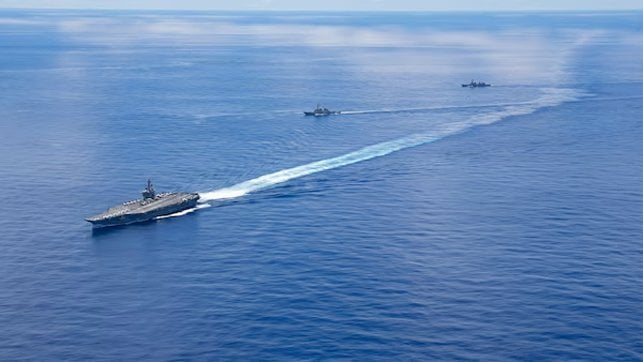
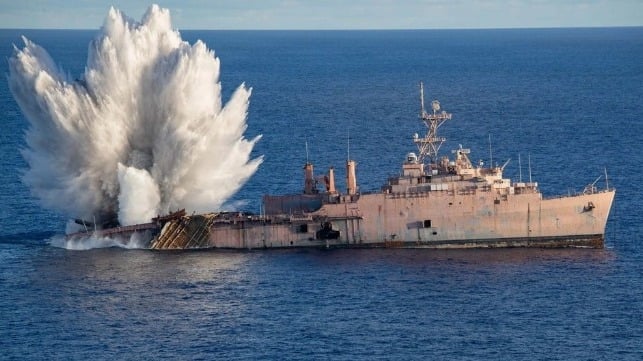
Reporting indicates Chinese naval and coast guard vessels now often cross the Taiwan Strait median line and press closer to Taiwan’s 24‑nautical‑mile contiguous zone, adding to a pattern of increasing military pressure on Taipei. In parallel, allied posture has hardened along Taiwan’s northern and southern approaches: the U.S. Marine Corps has delivered NMESIS and MADIS to the 12th Marine Littoral Regiment in Okinawa, the Japan Ground Self‑Defense Force has deployed new amphibious ships for the Nansei islands, U.S. and Japanese forces are training across Kyushu, Okinawa and the Nansei chain, and the U.S. leads RIMPAC and a Pacific SINKEX with allied participation. Taipei publicly rejects Beijing’s territorial claims, and Manila and Beijing continue to clash diplomatically over the 2016 South China Sea ruling, underscoring a hardening political backdrop.
Change from previous assessment
The update shifts from a single‑day maritime snapshot to a structural assessment. New reporting reinforces that Chinese naval and coast guard units often cross the median line and approach 24 nm, and adds detail on allied posture building in Okinawa, the Nansei islands and the wider Pacific. We now explicitly assess an elevated miscalculation risk given concurrent grey‑zone operations and allied exercises, while maintaining the judgment that pressure around Taiwan is being normalised.
Key judgments
- China is very likely normalising frequent China Coast Guard and PLA Navy crossings of the Taiwan Strait median line and operating closer to Taiwan’s 24‑nautical‑mile zone, sustaining year‑round pressure on Taipei. (Confidence: high · ASSESSED)
- I&W: Daily Taiwan reports continue to log multiple PLAN or China Coast Guard median‑line crossings with instances of approaches within 24 nm of Taiwan’s coast. (0-14 days)
- I&W: A two‑week period with no recorded median‑line crossings or approaches inside 24 nm around Taiwan. (0-14 days)
- The United States, Japan and the Philippines are actively expanding joint deterrence around Taiwan’s periphery through exercises, new amphibious lift, coastal fires, and expanded access arrangements. (Confidence: high · ASSESSED)
- I&W: Announcements of NMESIS integration with Japanese units or additional U.S. littoral regiment deployments in or near Okinawa. (1-3 months)
- I&W: Use of Philippine sites by U.S. forces for maritime strike or anti‑ship training facing the Bashi Channel or Luzon Strait. (1-3 months)
- Allied concern over Chinese operations off Taiwan’s east coast has increased, and it is likely the PLA will continue activity to the east that complicates Taiwan’s defence planning. (Confidence: medium · ASSESSED)
- I&W: Japan or Taiwan publicly tracks PLA surface groups or aviation operating east of Taiwan and along the Nansei chain. (0-14 days)
- I&W: A lull in PLA surface presence east of Taiwan reported by Japan or Taiwan for at least two consecutive weeks. (0-14 days)
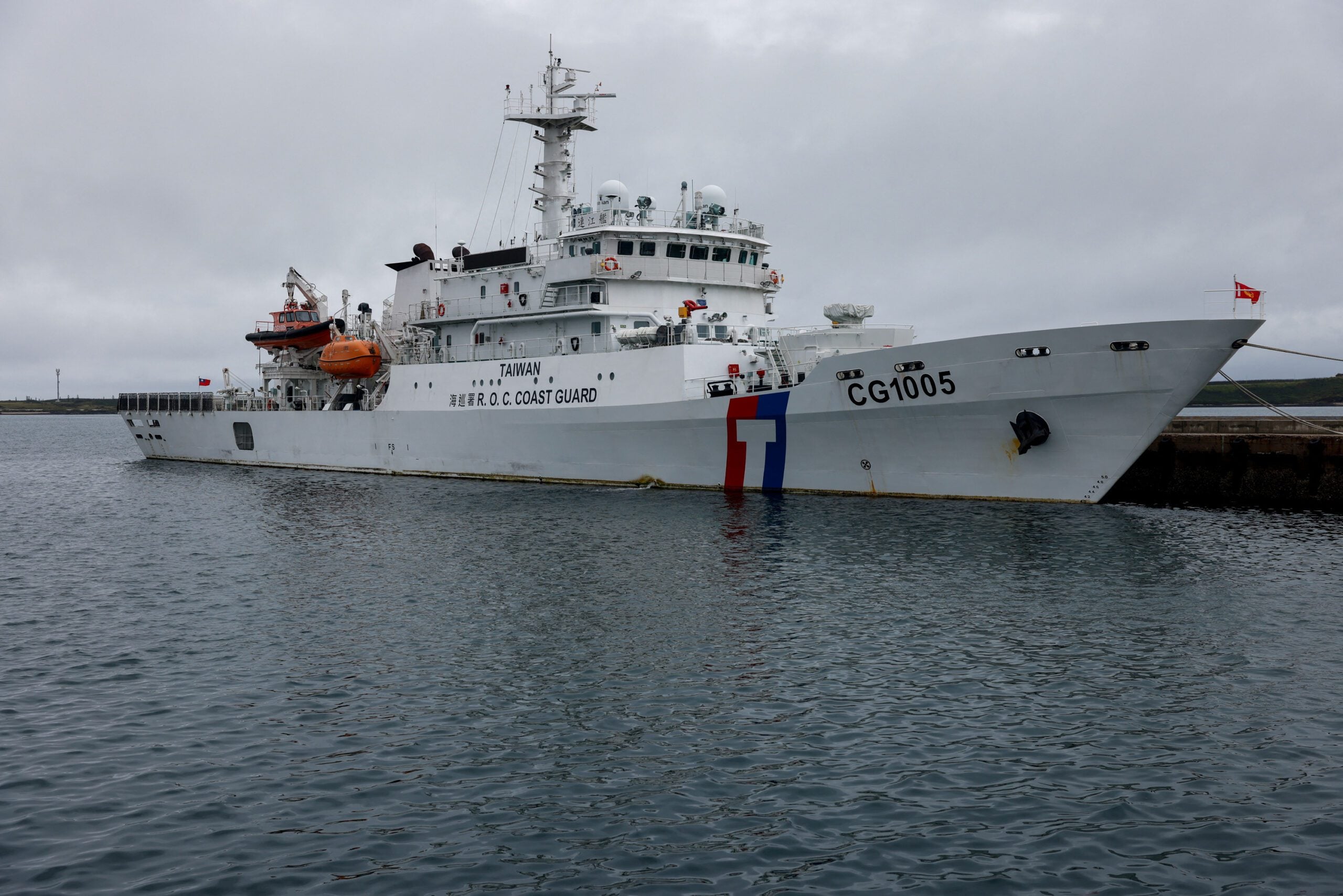
- Taiwan’s Coast Guard is sustaining visible patrols from Penghu that warn off Chinese vessels with loudspeakers and water cannon to protect shipping and fishermen. (Confidence: high · REPORTED)
- I&W: Taiwan Coast Guard reports or footage of new loudspeaker or water‑cannon engagements near the median line or within 24 nm. (0-14 days)
- I&W: Redeployment of larger Coast Guard hulls to Penghu and adjacent patrol sectors. (1-3 months)
- The political and legal backdrop remains hard‑line: Taipei publicly rejects Beijing’s territorial claims, and Manila and Beijing continue clashing over the 2016 South China Sea award, reinforcing Beijing’s assertive law‑enforcement posture. (Confidence: high · REPORTED)
- I&W: Fresh PRC statements asserting ‘law enforcement’ rights near Taiwan or Philippines’ renewed public legal steps invoking the 2016 ruling. (1-3 months)
- I&W: A notable softening in public rhetoric by either side on maritime jurisdiction. (1-3 months)
- Given sustained grey‑zone operations and concurrent allied training across the Nansei chain and Western Pacific, the risk of a maritime miscalculation around Taiwan is likely to rise in the near term. (Confidence: medium · ASSESSED)
- I&W: Public reporting of unsafe encounters, near‑collisions or damage during median‑line or Nansei‑area interactions. (0-14 days)
- I&W: A full RIMPAC cycle and follow‑on drills conclude without any reported unsafe intercepts or close approaches in the Taiwan Strait or adjacent seas. (1-3 months)
Outlook & scenarios
Baseline: Grey‑zone pressure persists around the median line (60%)
PLAN and China Coast Guard maintain routine crossings of the median line and periodic approaches inside 24 nm, while Taiwan sustains Coast Guard patrols from Penghu and public messaging. Allied training and RIMPAC continue without direct confrontation, but the operating picture remains crowded.
Escalatory signalling: PLA activity expands to Taiwan’s east (30%)
The PLA increases surface and air operations east of Taiwan, paralleling allied drills along the Nansei chain. Allied concern grows and public tracking by Japan and Taiwan increases. Risks of unsafe encounters rise, though both sides avoid deliberate combat.
Limited de‑escalation via political messaging and exchanges (20%)
Cross‑Strait political events on the mainland, such as forums gathering participants from both sides of the Strait, continue and are amplified in state media. This softens rhetoric temporarily, but maritime operating patterns remain largely unchanged.
Wildcard: Maritime collision triggers acute crisis (10%)
A collision between a China Coast Guard vessel and a Taiwan Coast Guard cutter during a warning operation causes injuries, driving rapid deployments on both sides and emergency hot‑line use. De‑confliction follows, but the incident hardens positions and prompts more forward basing by allies.
Recommendations
- Stand up a daily OSINT feed to log and geo‑reference every reported PLAN or China Coast Guard median‑line crossing and any approach within 24 nm of Taiwan; catalogue hull numbers and patrol patterns for trend analysis.
- Task coverage of Japan’s Nansei training areas and Okinawa to document NMESIS and MADIS deployments with imagery and exercise schedules; correlate with PLA activity east of Taiwan to assess action‑reaction dynamics.
- Maintain a watch on U.S., Japan exercise outputs and RIMPAC serials, including SINKEX outcomes and participating platforms, to refine indicators of allied anti‑ship and amphibious proficiency near Taiwan’s flanks.
- Exploit Taiwan Coast Guard channels for incident footage and reports of loudspeaker or water‑cannon engagements; build a timeline of interactions to identify escalation thresholds and seasonal patterns.
- Track Philippines defence posture relating to U.S. access and long‑range strike integration, and monitor Manila, Beijing exchanges on the 2016 ruling for potential spillover effects into Taiwan‑adjacent waters.
- Prepare a miscalculation checklist: predefined tripwires such as unsafe intercepts, AIS dark behaviour near the median line, and multi‑day PLA surface concentrations east of Taiwan; align with rapid‑brief templates for leadership.
Confidence & uncertainty
Multiple independent, reliable outlets report that Chinese naval and coast guard vessels frequently cross the Taiwan Strait median line and approach 24 nm, that Taipei rejects Beijing’s territorial claims, and that U.S., Japan, Philippines activities have increased around Taiwan’s approaches, including deliveries to Okinawa, Nansei‑area training, and large‑scale RIMPAC and SINKEX events. These strands corroborate a consistent picture of sustained pressure and allied counter‑posturing. Uncertainties remain on PLA intent and tempo east of Taiwan given single‑source allied concern reporting, hence medium confidence on that specific vector, but the overall evidentiary base supports a high headline confidence.
Alternative analysis (red cell)
The ledger documents episodic PRC median‑line crossings, discrete allied exercises, and individual Taiwan Coast Guard responses, but lacks the quantitative trend data, proximity metrics, or incident logs needed to support high‑confidence claims of normalization, sustained posture shifts, or an immediate rise in miscalculation risk. A more cautious analytic estimate is that both sides are conducting routine and occasionally overlapping activities that merit monitoring; however, the current evidence does not yet demonstrate durable normalization of closer operations to Taiwan’s 24‑nm zone, a concrete reinforcement of PRC law‑enforcement tied to the arbitration dispute, or a measurable uptick in miscalculation incidents without additional trend and incident data.
Intelligence gaps
- [EEI 1.1 · PARTIAL] Number, type, and precise locations (latitude/longitude or named sea areas) of PLAN surface combatants, amphibious ships, and auxiliaries operating within 200 nautical miles of Taiwan or transiting the Taiwan Strait over the past 72 hours. Recommended collection: maritime/AIS
- [EEI 1.2 · UNCOVERED] NOTAMs, maritime safety warnings, or official PRC civil/maritime notices that close or restrict airspace/sea lanes around Taiwan, and any concurrent cancellation of commercial ferry or airline services to/from Taiwanese ports/airports. Recommended collection: open-source/diplomatic
- [EEI 1.3 · UNCOVERED] Number and sortie patterns of PLA air assets (fighters, bombers, airborne early warning, aerial refuellers) crossing the median line or entering Taiwan ADIZ, including time-on-station and armament indications (e.g., weapons pylons loaded). Recommended collection: air/flight-radar
- [EEI 2.1 · UNCOVERED] Location and composition of any PLAN carrier strike groups or task forces within the Western Pacific (carrier identity, escort ships, embarked air wing size and aircraft types) and recent underway replenishment events. Recommended collection: satellite/imagery
- [EEI 2.2 · UNCOVERED] Presence, numbers, and readiness indicators of amphibious assault ships, large landing craft, and pre-positioned amphibious equipment at eastern PRC ports (Fujian, Zhejiang, Guangdong), including evidence of loading, embarkation or training ramps/vehicles staged for embarkation. Recommended collection: maritime/AIS
- [EEI 2.3 · UNCOVERED] Submarine activity: detections or reported transits of PLAN attack or ballistic submarines on routes between mainland bases and patrol areas around Taiwan, and indications of increased sonar/contact reports or anti-submarine warfare activity by regional navies. Recommended collection: undersea/acoustic
- [EEI 3.1 · PARTIAL] Movements and positions of US and allied naval and air forces (carrier strike groups, amphibious ready groups, maritime patrol aircraft) toward the Taiwan region, including orders to sortie, transit times, and change in deployment status. Recommended collection: maritime/AIS
- [EEI 3.3 · UNCOVERED] Commercial indicators of regional escalation: rapid increases in war-risk insurance premiums for Taiwan-related sea lanes, suspension of shipping lines or insurance-backed rerouting, and major port/terminal closures affecting logistic lifelines. Recommended collection: financial/insurance
Cited sources
[1] Reuters · Facing China, One Taiwan Coast Guard Officer Draws Strength From The Gods (A) · sha256:ac2e0ae17609 [2] mezha.net · 台灣海巡隊員攜廟裡護身符出海,守護漁民與航道安全 (B) · sha256:d2b4626a3295 [3] maritime-executive.com · Resolute Dragon Exercise Upsets the Chinese Navy East of Taiwan (B) · sha256:429b8e570c4d [4] h5.ifeng.com · 31国剑指第一岛链,美军抵近侦察南海1200架次,菲防长又口出恶言 (B) · sha256:f9f46e1d330f [5] maritime-executive.com · Photos: U.S. and Allies Conduct SINKEX 2026 Using Former Amphib (B) · sha256:50a720b5ef3f
Source content hashes were computed at collection time; the cited text is preserved unmodified for the life of this product.
Red cell review: PARTIAL DISSENT
TLP:CLEAR