TLP:CLEAR · Disclosure is not limited.
Indo-Pacific SITREP: China’s posture around Taiwan and regional responses
Time window: Last 1 day · Audience: General analyst · Type: Situation report · DTG: 2026-07-18 14:41Z · Overall confidence: LOW
BLUF
China’s capability build-out and recent history of drills around Taiwan point to a sustained, assertive maritime posture. The risk of a near-term close-quarters incident is likely elevated as allied presence and diplomatic friction intensify across the Taiwan Strait and South China Sea.
Executive summary
Open sources indicate the People’s Liberation Army has the means and intent to operate persistently around Taiwan, evidenced by December 2025 live-fire exercises, the commissioning of the carrier Fujian after a Taiwan Strait transit in September 2025, and infrastructure to refine anti-ship targeting. Markets are pricing higher odds of regional clashes involving China and Japan and China and the Philippines, while Manila has hardened its diplomacy against Beijing and received allied backing. Reporting also shows Chinese research icebreakers transiting through the Bering Sea under U.S. Coast Guard monitoring, underscoring a broader pattern of blue-water presence. These dynamics, alongside continued modernisation and A2/AD development, raise the likelihood of frictions around Taiwan in the near term.
Change from previous assessment
Initial assessment of this topic for this run. Compared with the prior brief’s focus on active coast guard patrols east of Taiwan and a 6 July missile event, this update leans on documented 2025 drills and commissioning milestones, current capability development, and allied diplomatic signalling. There is no fresh multi-source reporting in this set on new Chinese naval movements around Taiwan, so confidence is lower and indicators are emphasised to validate change in the near term.
Key judgments
- China is very likely sustaining an enhanced maritime posture around Taiwan, indicated by December 2025 live-fire drills around the island, the commissioning of the carrier Fujian after a September 2025 Taiwan Strait transit, and parallel development of anti-ship targeting infrastructure. Taken together, these point to intent and readiness for persistent operations near Taiwan. (Confidence: medium · ASSESSED)
- I&W: Publicly announced or verifiable PLAN carrier group operations east or south of Taiwan. (0-14 days)
- I&W: Marked decline for two consecutive weeks in Taiwan Ministry of National Defense reporting on nearby PLA naval and air activity. (1-3 months)
- The risk of a close-quarters incident around the Taiwan Strait and adjacent airspace is likely elevated over the next 1-3 months, as market-implied conflict odds rise, Manila steps up diplomatic pressure and secures allied backing, Beijing continues to reject the 2016 arbitral ruling, and the United States reportedly shifts patrol assets toward the South China Sea. The reported U.S. patrol boat movement is single-source and should be weighted lightly. (Confidence: medium · ASSESSED)
- I&W: Credible reports of unsafe intercepts or collisions near the Taiwan Strait median line or Bashi Channel. (0-14 days)
- I&W: Announcement of new crisis-communication mechanisms or rules-of-behaviour arrangements involving China and regional counterparts. (1-3 months)
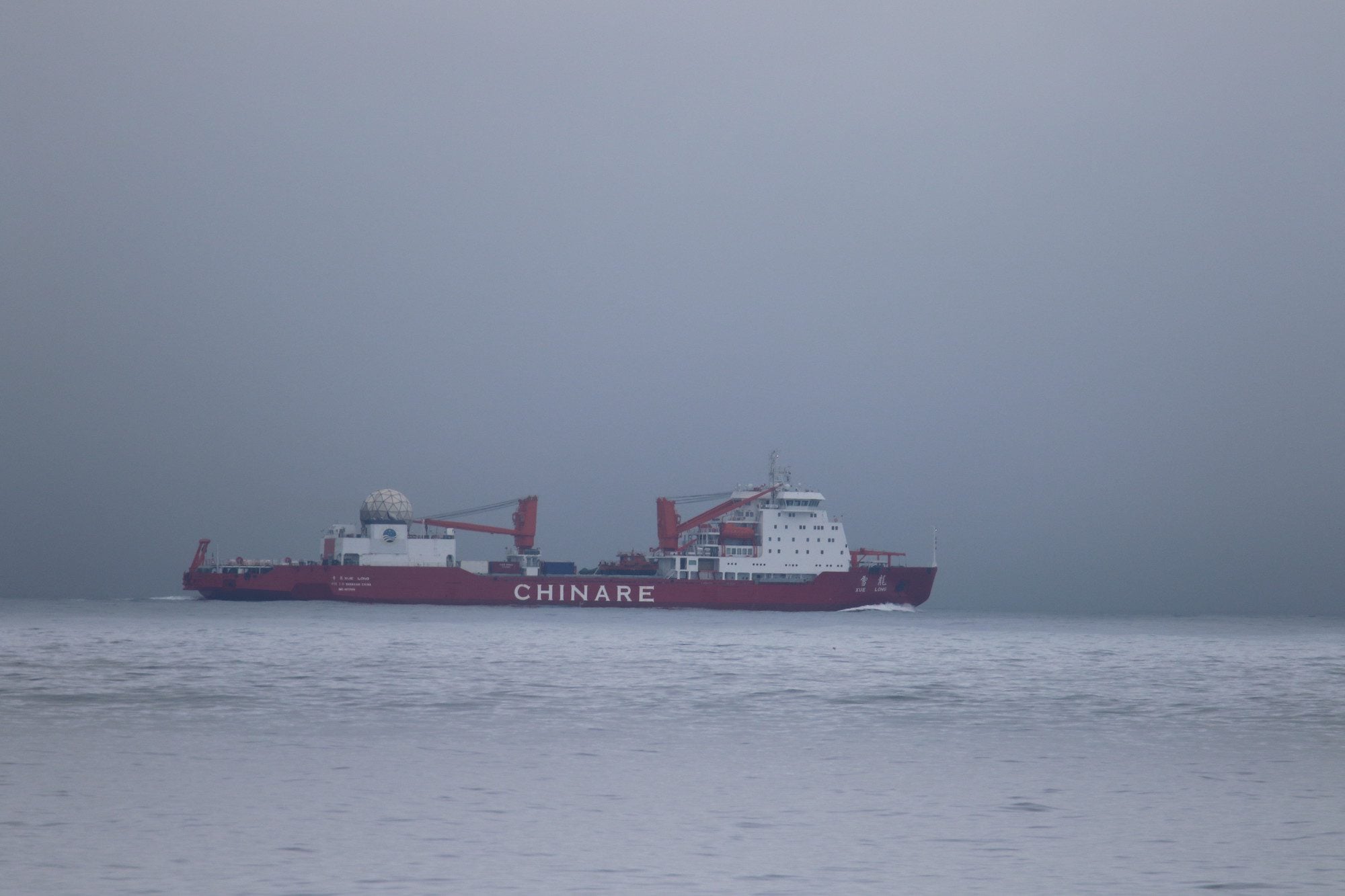
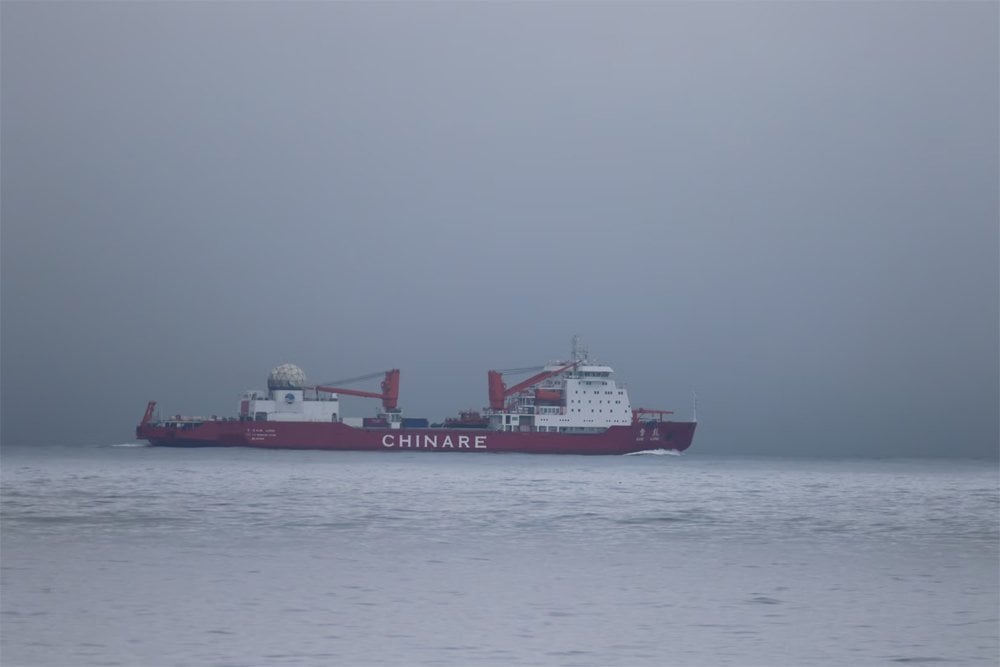
- China is likely signalling broader blue-water ambition by operating research icebreakers through the Bering Sea toward the Arctic, which the U.S. Coast Guard monitored with Cutter Munro under Operation Frontier Sentinel. (Confidence: medium · ASSESSED)
- I&W: Repeat Chinese research or PLA Navy transits along the Aleutians or through the Bering Strait. (1-3 months)
- I&W: Sustained absence of Chinese high-latitude deployments through the 2026 Arctic season. (1-3 months)
- PLA modernisation, including A2/AD enhancements, increased 2026 defence spending, and strategic systems growth, likely strengthens deterrence and coercive leverage over Taiwan and complicates allied planning. Open-source estimates of China’s nuclear arsenal diverge and rest on limited public data, so this element carries lower confidence. (Confidence: low · ASSESSED)
- I&W: Imagery or announcements of new anti-ship missile deployments or coastal battery exercises along China’s southeast coast. (1-3 months)
- I&W: Reported cancellation or delay of major PLA procurement lines or live-fire test events. (1-3 months)
Outlook & scenarios
Managed coercion around Taiwan without shots fired (60%)
PLA Navy and China Coast Guard sustain near-daily presence and drills around Taiwan, paired with air sorties, while the United States and allies maintain transits and presence operations. Markets continue to assign non-trivial conflict odds, and diplomatic spats persist, but deconfliction prevents collisions or weapons use.
Acute incident triggers short standoff (35%)
An unsafe intercept or collision near the Taiwan Strait median line or Bashi Channel prompts reciprocal deployments and elevated alerts. Communications limit escalation, but commercial shipping reroutes temporarily and market risk premia rise.
Regional pushback shifts centre of friction to the South China Sea (40%)
Manila’s diplomatic pressure, allied statements of support, and Beijing’s rejection of the 2016 award refocus immediate frictions to the South China Sea. Taiwan-facing activity continues at a steady state while rhetoric and legal manoeuvring intensify around Manila’s claims.
High-impact wildcard: Carrier-led encirclement drill around Taiwan (15%)
Fujian leads a multi-axis exercise around Taiwan with complex missile-targeting trials. No weapons are used against targets, but exclusion zones and close approaches force rapid allied signalling and trigger a temporary surge in market-implied conflict odds.
Recommendations
- Prioritise OSINT collection on PLAN carrier movements, with persistent AIS, satellite and SAR tasking focused on Fujian’s homeport and likely egress routes to waters east and south of Taiwan.
- Establish a daily feed that fuses Taiwan defence ministry activity reports with commercial satellite cues to quantify PLA naval and air activity trends around the island.
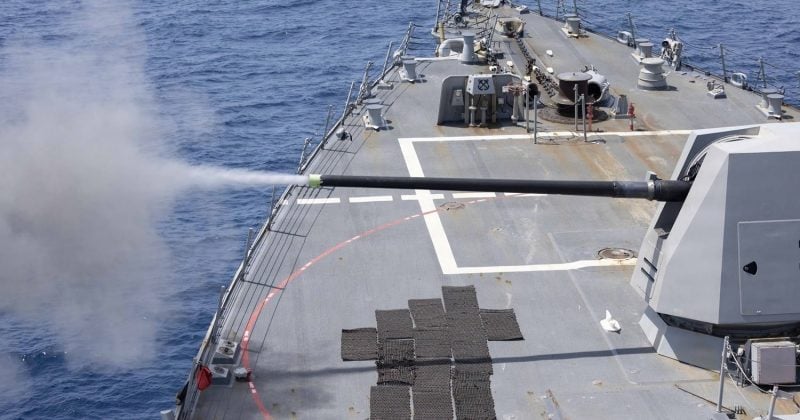
- Maintain a watch on Chinese missile-targeting infrastructure in the Taklamakan Desert using time-series imagery to detect upgrades or new replica targets that inform anti-ship capability.
- Track market-implied conflict indicators for China, Japan and China, Philippines as an early warning overlay to operational reporting, and alert on sharp moves.
- Monitor U.S. and allied presence operations through public releases and ship-spotting to validate or refute reports of patrol asset shifts into the South China Sea.
- Pre-plan escalation and de-escalation indicator sets for the Taiwan Strait and Bashi Channel, including thresholds for unsafe intercepts, collision reports, and public crisis-communication announcements.
Confidence & uncertainty
Overall confidence is low because few claims in the current window directly report new Chinese naval movements around Taiwan, several key elements rely on events from 2025 to infer current posture, and some underlying sources present contradictions or single-source reporting. The assessment of strategic systems growth is weakened by divergent open-source estimates of China’s nuclear arsenal. While multiple independent claims corroborate capability development and regional diplomatic friction, gaps in near-term, multi-source reporting on activity around Taiwan constrain confidence.
Alternative analysis (red cell)
The evidence documents capability demonstrations and episodic operations (carrier testing, live-fire drills, Arctic research transits), but these items better support an interpretation of intermittent demonstrations and capability development rather than sustained, campaign-level posture near Taiwan or definitive signalling of blue-water military ambition. Regional diplomatic disputes and market indicators point to rising background tension—particularly around the South China Sea and the Philippines—but do not provide specific tactical indicators that would justify a higher short-term probability of close-quarters incidents in the Taiwan Strait.
Intelligence gaps
- [EEI 1.1 · UNCOVERED] Number, type, and precise locations (latitude/longitude or named sea areas) of PLAN surface combatants, amphibious ships, and auxiliaries operating within 200 nautical miles of Taiwan or transiting the Taiwan Strait over the past 72 hours. Recommended collection: maritime/AIS
- [EEI 1.2 · UNCOVERED] NOTAMs, maritime safety warnings, or official PRC civil/maritime notices that close or restrict airspace/sea lanes around Taiwan, and any concurrent cancellation of commercial ferry or airline services to/from Taiwanese ports/airports. Recommended collection: open-source/diplomatic
- [EEI 1.3 · UNCOVERED] Number and sortie patterns of PLA air assets (fighters, bombers, airborne early warning, aerial refuellers) crossing the median line or entering Taiwan ADIZ, including time-on-station and armament indications (e.g., weapons pylons loaded). Recommended collection: air/flight-radar
- [EEI 2.1 · UNCOVERED] Location and composition of any PLAN carrier strike groups or task forces within the Western Pacific (carrier identity, escort ships, embarked air wing size and aircraft types) and recent underway replenishment events. Recommended collection: satellite/imagery
- [EEI 2.2 · UNCOVERED] Presence, numbers, and readiness indicators of amphibious assault ships, large landing craft, and pre-positioned amphibious equipment at eastern PRC ports (Fujian, Zhejiang, Guangdong), including evidence of loading, embarkation or training ramps/vehicles staged for embarkation. Recommended collection: maritime/AIS
- [EEI 2.3 · UNCOVERED] Submarine activity: detections or reported transits of PLAN attack or ballistic submarines on routes between mainland bases and patrol areas around Taiwan, and indications of increased sonar/contact reports or anti-submarine warfare activity by regional navies. Recommended collection: undersea/acoustic
- [EEI 3.1 · UNCOVERED] Movements and positions of US and allied naval and air forces (carrier strike groups, amphibious ready groups, maritime patrol aircraft) toward the Taiwan region, including orders to sortie, transit times, and change in deployment status. Recommended collection: maritime/AIS
- [EEI 3.2 · UNCOVERED] Public and official diplomatic statements, military advisories, and changes in rules of engagement or defensive posture from the United States, Japan, Australia, and Taiwan, including emergency meetings, sanctions announcements, or military aid pledges. Recommended collection: diplomatic
- [EEI 3.3 · UNCOVERED] Commercial indicators of regional escalation: rapid increases in war-risk insurance premiums for Taiwan-related sea lanes, suspension of shipping lines or insurance-backed rerouting, and major port/terminal closures affecting logistic lifelines. Recommended collection: financial/insurance
Cited sources
[1] 163.com · 台海若开打,中国能否硬刚美国?我们犯的最大错误,是妄自菲薄 (B) · sha256:aab1f33b2825 [2] Fox News · China builds detailed replicas of US warships, jets in desert | Fox News Video (B) · sha256:ada2df56d2bf [3] cryptobriefing.com · China builds US Navy destroyer replica for missile testing in Xinjiang desert (B) · sha256:bd32fff68451 [4] aljazeera.com · Manila protests ‘racist’ portrayal of Filipinos in China Daily videos (A) · sha256:3fbf09b6fb7b [5] gcaptain.com · U.S. Coast Guard Tracks Chinese Icebreakers as They Transit U.S. Arctic Waters (B) · sha256:5b37ba5dea10 [6] maritime-executive.com · USCG Resumes Monitoring of Chinese Research Vessels Entering the Arctic (B) · sha256:dadac68cb9f2 [7] Wikipedia · Nuclear weapons of China (C) · sha256:f089c7df9e29
Source content hashes were computed at collection time; the cited text is preserved unmodified for the life of this product.
Red cell review: PARTIAL DISSENT
TLP:CLEAR