TLP:CLEAR · Disclosure is not limited.
Indo-Pacific SITREP: PLA Navy tempo and allied responses around Taiwan
Time window: Last 1 day · Audience: General analyst · Type: Situation report · DTG: 2026-07-03 10:42Z · Overall confidence: HIGH
BLUF
China is likely intensifying maritime coercion signalling around Taiwan, prompting Taipei to rehearse for a ‘quarantine’ scenario and allies to harden posture. Near-term risk of a coercive maritime drill is elevated, though a managed signalling track remains more probable.
Executive summary
Taipei has moved to strengthen resilience to PRC maritime coercion and ran a tabletop exercise simulating a response to a potential PRC maritime ‘quarantine’. Beijing has raised the tempo and visibility of naval activity and messaging, while Japan’s Ministry of Defense has been kept busy by Chinese naval operations. In parallel, Washington and Manila are tightening cooperation and the Philippine Air Force plans upgrades to bases on islands contested by China. Political signalling in Washington has sharpened, with a bipartisan group of US lawmakers urging a public condemnation of a new Chinese law. A PLA Navy warship pair made a high-visibility five-day port call in Hong Kong with an embarked helicopter and marines, underscoring a sustained operations tempo along the first island chain.
Change from previous assessment
Since the prior brief, Taipei has executed a tabletop exercise against a potential PRC maritime ‘quarantine’ and the President has ordered resilience measures against PRC maritime coercion. Reporting now highlights Japan’s defence bureaucracy being taxed by Chinese naval activity and a PLA Navy five-day port call in Hong Kong with embarked forces, indicating sustained visibility operations. In Washington, a bipartisan group of lawmakers urged a public condemnation of a new Chinese law, adding to the political signalling baseline. These developments collectively raise the assessed likelihood of a coercive maritime drill in the near term and increase confidence that allied hardening will continue.
Key judgments
- Beijing is likely intensifying maritime coercion signalling around Taiwan, as reflected in Taipei’s 23 June directive to strengthen resilience to PRC maritime coercion and a 25 June tabletop exercise against a PRC maritime ‘quarantine’, alongside PLA Navy long-distance training and stepped-up public updates. (Confidence: medium · ASSESSED)
- I&W: PLA Eastern Theater Navy issues or state media amplifies notices of interdiction or blockade-rehearsal drills near Taiwan’s ports or the Bashi Channel. (0-14 days)
- I&W: Taiwan’s defence authorities pause or cancel follow-on ‘quarantine’ response drills and messaging on maritime coercion. (1-3 months)
- Japan and the Philippines are very likely to scale up monitoring and basing to counter Chinese naval activity along Taiwan’s approaches in the near term, enabled by existing US-Philippine defence cooperation and EDCA sites. (Confidence: medium · ASSESSED)
- I&W: Tokyo announces additional destroyer or maritime patrol aircraft tasking around the Nansei Islands and Bashi Channel. (1-3 months)
- I&W: Manila publicises construction milestones at EDCA sites or begins upgrades on contested islands’ air and surveillance infrastructure. (1-3 months)
- Political signalling in Washington and Taipei is likely hardening against Beijing’s legal and maritime moves, raising the likelihood of sharper US public responses to future PLAN operations near Taiwan. (Confidence: medium · ASSESSED)
- I&W: US State Department issues a formal public condemnation of China’s new law and links it to maritime activity affecting Taiwan. (0-14 days)
- I&W: US forces elevate public messaging around Taiwan Strait transits or joint activities with regional partners. (1-3 months)
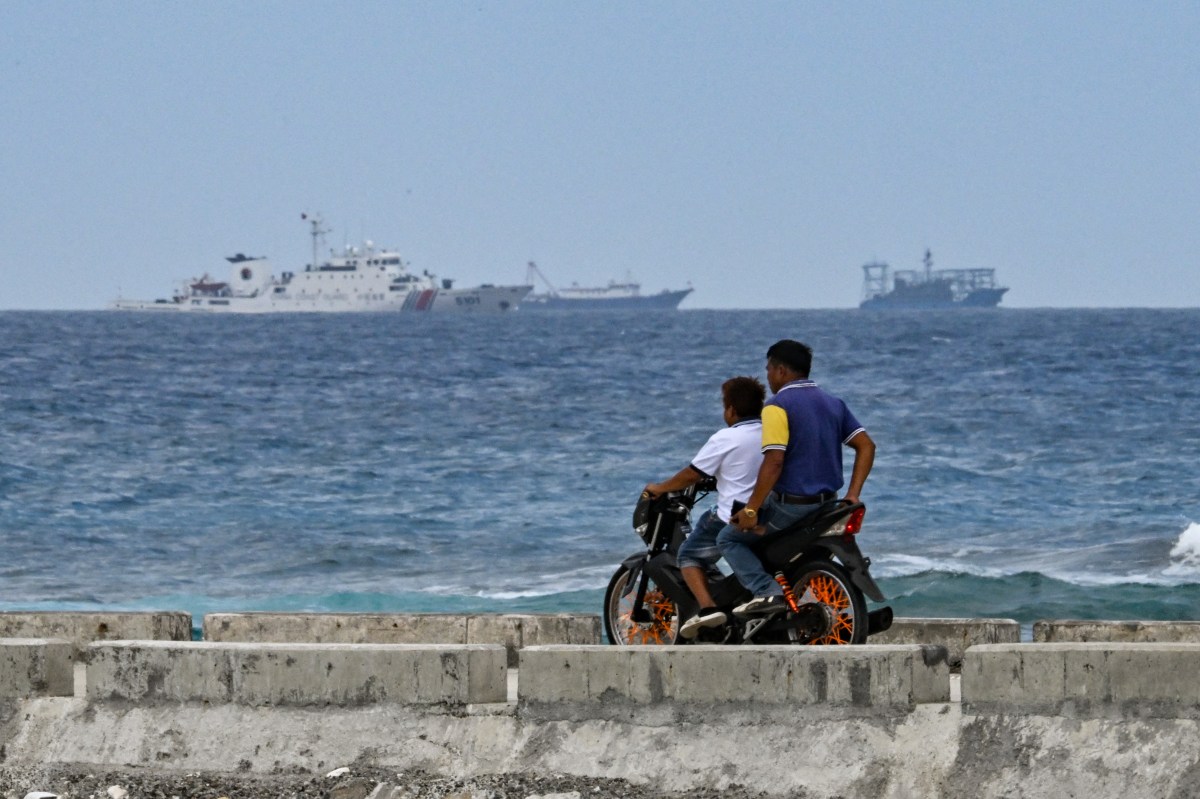
- PLA Navy public-facing port calls and visibility events are continuing alongside activity that is taxing regional monitoring, evidenced by the five-day Hong Kong visit of destroyer Nanning and frigate Hengyang with an embarked helicopter and marines and by Japan’s defence bureaucracy reporting heavy tasking tied to Chinese naval activity. (Confidence: medium · REPORTED)
- I&W: Further PLA Navy port calls or open days along the first island chain are announced with embarked marines and aviation assets. (0-14 days)
- I&W: Japan’s Ministry of Defense reports a sustained decline in Chinese naval activity in its public releases. (1-3 months)
Outlook & scenarios
Coercive maritime drill around Taiwan (40%)
PLA Navy conducts a ring-shaped exercise with interdiction elements near key approaches to Taiwan, testing procedures consistent with a ‘quarantine’ concept. Taipei continues resilience measures and publicly signals readiness. This follows PLA long-distance training and stepped-up messaging and aligns with Taiwan’s June tabletop planning and the President’s resilience directive.
Managed signalling with allied hardening (50%)
Beijing sustains high-tempo naval visibility and messaging without close-in interdiction practice, while Japan increases patrol tasking and the Philippines advances EDCA-linked basing and surveillance upgrades with US support. Washington’s rhetoric hardens but operational postures aim to avoid direct confrontation.
Flashpoint at the first island chain (20%)
A close quarter interaction between Chinese and regional forces near the Nansei Islands or Bashi Channel escalates into a short crisis. Japan’s monitoring load spikes and Taipei elevates readiness, prompting urgent US and allied statements and deconfliction efforts.
Recommendations
- Prioritise daily monitoring of PLA Navy exercise notices and state-media releases for interdiction or blockade-rehearsal language, and fuse with Taiwan defence announcements on maritime coercion readiness.
- Task collection on EDCA site developments in northern Philippines and on planned Philippine Air Force base upgrades in contested areas to assess timeline and potential impacts on Taiwan’s approaches.
- Establish a rolling 30-day incident log for Japanese Ministry of Defense reporting on Chinese naval activity around the Nansei Islands to quantify operational tempo and escalation risk.
- Prepare an interagency playbook for a PRC ‘quarantine’ demonstration, including lines-to-take, allied consultation triggers with Tokyo and Manila, and watch centres for Bashi and Miyako transits.
- Develop tripwire thresholds for public US messaging escalation tied to PLA activities near Taiwan, aligned with congressional sentiment, to avoid ad hoc responses in a fast-moving crisis.
Confidence & uncertainty
Overall confidence is high because multiple independent sources corroborate key elements: Taiwan’s planning and presidential directive are reported by a reputable analytical source; Japanese media report sustained tasking tied to Chinese naval activity; and Manila’s and Washington’s posture shifts are supported by consistent major-media reporting. Evidence of PLA Navy activity and messaging tempo is reinforced by both major media and social posts about the Hong Kong port call. Uncertainties remain over the scope and timing of any coercive drill near Taiwan and the precise content of the cited Chinese law, and some naval-visit details rely on medium-reliability social media, which tempers confidence on specific modalities while not undermining the central assessments.
Alternative analysis (red cell)
The evidence more plausibly indicates precautionary preparation by Taipei and routine PRC training and public outreach rather than a sustained intensification of coercive maritime operations. Allied activity and planning appear to be maintenance or modest enhancements of posture, not an immediate, substantial scale-up of monitoring or basing aimed at Taiwan approaches. Absent corroborating operational indicators—explicit PLAN blockade/quarantine maneuvers, operational orders, or observable base construction/deployments—the most supportable estimate is heightened vigilance and signaling rather than definitive escalation.
Intelligence gaps
- [EEI 1.1 · PARTIAL] Number, type, and precise locations (latitude/longitude or named sea areas) of PLAN surface combatants, amphibious ships, and auxiliaries operating within 200 nautical miles of Taiwan or transiting the Taiwan Strait over the past 72 hours. Recommended collection: maritime/AIS
- [EEI 1.2 · UNCOVERED] NOTAMs, maritime safety warnings, or official PRC civil/maritime notices that close or restrict airspace/sea lanes around Taiwan, and any concurrent cancellation of commercial ferry or airline services to/from Taiwanese ports/airports. Recommended collection: open-source/diplomatic
- [EEI 1.3 · UNCOVERED] Number and sortie patterns of PLA air assets (fighters, bombers, airborne early warning, aerial refuellers) crossing the median line or entering Taiwan ADIZ, including time-on-station and armament indications (e.g., weapons pylons loaded). Recommended collection: air/flight-radar
- [EEI 2.1 · PARTIAL] Location and composition of any PLAN carrier strike groups or task forces within the Western Pacific (carrier identity, escort ships, embarked air wing size and aircraft types) and recent underway replenishment events. Recommended collection: satellite/imagery
- [EEI 2.2 · UNCOVERED] Presence, numbers, and readiness indicators of amphibious assault ships, large landing craft, and pre-positioned amphibious equipment at eastern PRC ports (Fujian, Zhejiang, Guangdong), including evidence of loading, embarkation or training ramps/vehicles staged for embarkation. Recommended collection: maritime/AIS
- [EEI 2.3 · UNCOVERED] Submarine activity: detections or reported transits of PLAN attack or ballistic submarines on routes between mainland bases and patrol areas around Taiwan, and indications of increased sonar/contact reports or anti-submarine warfare activity by regional navies. Recommended collection: undersea/acoustic
- [EEI 3.1 · PARTIAL] Movements and positions of US and allied naval and air forces (carrier strike groups, amphibious ready groups, maritime patrol aircraft) toward the Taiwan region, including orders to sortie, transit times, and change in deployment status. Recommended collection: maritime/AIS
- [EEI 3.3 · UNCOVERED] Commercial indicators of regional escalation: rapid increases in war-risk insurance premiums for Taiwan-related sea lanes, suspension of shipping lines or insurance-backed rerouting, and major port/terminal closures affecting logistic lifelines. Recommended collection: financial/insurance
Cited sources
[1] understandingwar.org · China & Taiwan Update, July 2, 2026 (C) · sha256:e5ca6cfb4fd9 [2] CCTV · [正午国防军事]7天发布10条中国海军动态 日本防卫省“忙坏了” 海军常态化远海训练迈上新台阶 (B) · sha256:be2b9e80a283 [3] newsweek.com · U.S. ally Philippines plans bases on front lines of South China Sea dispute (B) · sha256:bbfe12aae835 [4] ntdtv.com · 【新闻直击】俄全面开炸 基辅陷火海 伊挑衅求战 (B) · sha256:39f155bd5a2b [5] Touch 大灣區頻道 · 【中國海軍南寧艦、衡陽艦抵達香港 海軍南寧艦編隊中校軍官雷霄:期待與廣大市民相見】 7月2日上午,由中國人民解放軍海軍導彈驅逐艦南寧艦、導彈護衛艦衡陽艦組成的海軍艦艇編隊,攜艦載直升機、陸戰隊員抵達香港,開啟為期5天的系列開放參觀和文化交流活動。海軍南寧艦編隊中校軍官雷霄表示,此次活動讓廣大港澳同胞更直觀深入地了解新時代國防和軍隊建設發展情況,十分期待與廣大市民在昂船洲軍營碼頭相見。 | Touch 大灣區頻道 (E) · sha256:4bcc088d84f4
Source content hashes were computed at collection time; the cited text is preserved unmodified for the life of this product.
Red cell review: PARTIAL DISSENT
TLP:CLEAR