TLP:CLEAR, Disclosure is not limited.
Indo-Pacific SITREP: PLAN/CCG Buildup Near Taiwan, Taiwan’s HIMARS Signaling, and Japan’s Southwest Posture
Time window: Last 7 days · Audience: General analyst · Type: Situation report · DTG: 2026-06-13 00:14Z · Overall confidence: MEDIUM
BLUF
China likely expanded its naval and coast guard presence across the first island chain near Taiwan in late May, June, while Taiwan conducted a first-ever HIMARS live-fire into the Taiwan Strait on 10 June. Japan is hardening defenses on its southwestern islands, raising the risk of persistent near-sea confrontations even as Taiwan’s opposition leader advocates renewed cross-strait dialogue.
Executive summary
In late May 2026, China deployed over 100 People’s Liberation Army Navy and China Coast Guard vessels across the first island chain, with additional law-enforcement operations reported east of Taiwan and Taiwan’s coast guard expelling Chinese government ships from restricted waters southwest of the island. On 10 June, Taiwan fired U.S.-supplied HIMARS rockets into the Taiwan Strait, assessed as the first such live-fire, during drills simulating a response to a Chinese invasion and using reduced-range practice rockets. Regionally, Japan began moving a Type 12 anti-ship missile launcher to Minamitorishima and confirmed plans to deploy Chu-SAM air-defense units to Yonaguni while advancing frigate-transfer talks with the Philippines, steps Chinese officials characterize as “remilitarization.” In contrast to these hardening positions, Taiwan opposition leader Cheng Li-wun is on a 15‑day U.S. trip promoting institutionalized cross-strait dialogue and noted reunification was not discussed in her March meeting with Xi Jinping.
Key judgments
- China likely expanded its naval and coast guard presence across the first island chain near Taiwan in late May, June 2026, with over 100 PLA Navy and China Coast Guard ships operating and additional PRC “law-enforcement” activity east of Taiwan, while Taipei reports increased Chinese coast guard activity and expulsions near its southern restricted waters. (Confidence: medium · REPORTED)
- I&W: Open-source vessel tracking and Taiwan MND/Coast Guard bulletins for 0-14 days show concurrent PLAN/CCG deployments exceeding 80 hulls across the first island chain and continued operations east of Taiwan. (0-14 days)
- I&W: Sustained drawdown in publicly reported PLAN/CCG activity to under 20 hulls for two consecutive weeks around Taiwan’s southwest approaches and east coast. (1-3 months)
- Taiwan very likely used U.S.-supplied HIMARS in a first-ever live-fire into the Taiwan Strait on 10 June 2026 during drills explicitly simulating a PRC invasion, employing reduced‑range practice rockets to demonstrate rapid-deployment and precision-strike concepts. (Confidence: high · REPORTED)
- I&W: Taiwan announces or conducts additional HIMARS live-fires into the Strait as part of forthcoming training cycles. (1-3 months)
- I&W: Public cancellation or relocation inland of planned long-range rocket live-fires citing de-escalation with the PRC. (1-3 months)
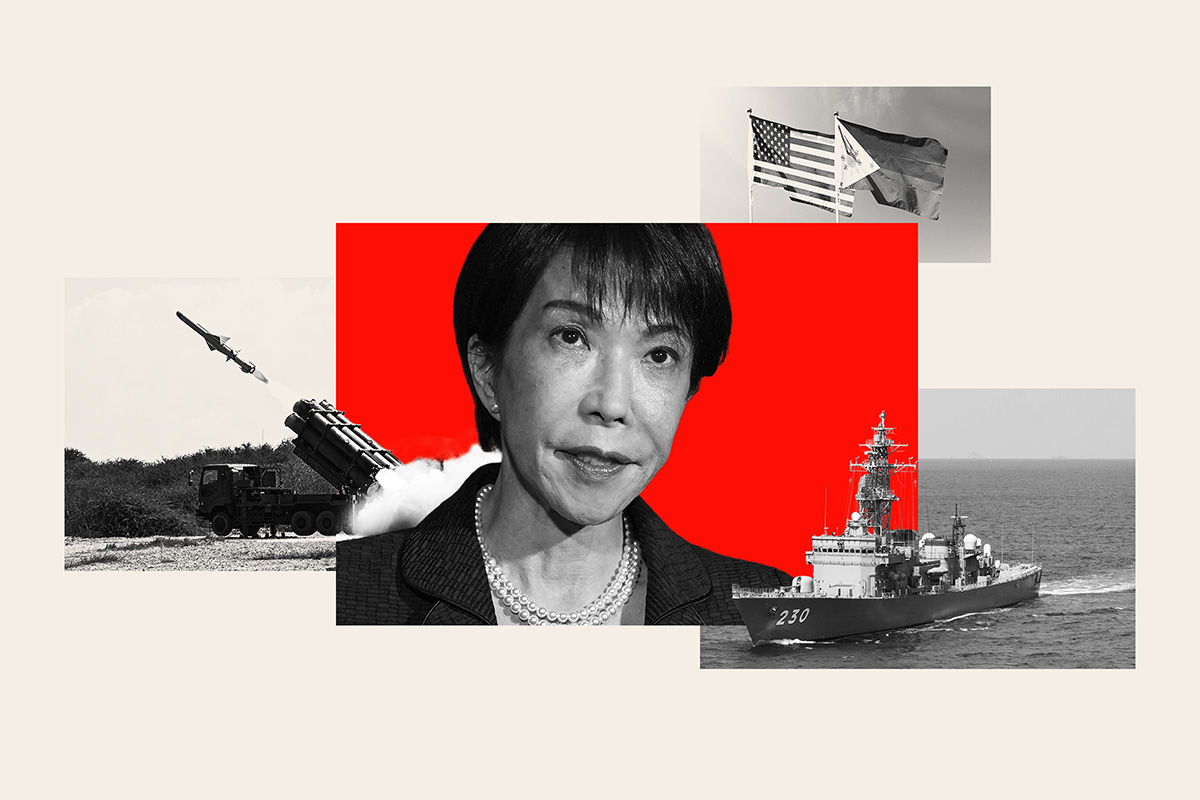
- Japan is likely hardening its southwestern defenses pertinent to a Taiwan contingency, moving a Type 12 surface-to-ship missile launcher to Minamitorishima and confirming Chu-SAM air-defense deployments to Yonaguni, while advancing discussions to transfer Abukuma-class frigates to the Philippines; PRC officials frame these steps as “remilitarization.” (Confidence: medium · REPORTED)
- I&W: Japan MOD announces operational status of Chu-SAM units on Yonaguni and/or signs a transfer agreement for Abukuma-class frigates with the Philippines. (1-3 months)
- I&W: Budgetary or logistical delays publicly postpone the Yonaguni deployment and frigate transfer discussions. (1-3 months)
- Cross-strait political signaling in Taiwan likely will feature parallel deterrence and outreach: while the military showcases readiness, opposition leader Cheng Li-wun is pursuing institutionalized dialogue and emphasized that reunification was not discussed with Xi and that conditions are not present, positions that could temper immediate escalation risks. (Confidence: medium · ASSESSED)
- I&W: Announcements of working-level cross-strait talks or new liaison mechanisms following Cheng Li-wun’s U.S. trip. (1-3 months)
- I&W: Prominent KMT statements disavowing near-term dialogue or PRC rejection of any proposed working channels. (1-3 months)
- Maritime law-enforcement frictions around Taiwan are likely to persist, as Taipei asserts the PRC has no sovereign rights east of Taiwan and reports expelling Chinese government ships from restricted waters southwest of the island; the risk of a boarding, collision, or hazardous manoeuver incident is nontrivial. (Confidence: low · ASSESSED)
- I&W: Taiwan Coast Guard reports multiple weekly expulsions or close approaches by CCG/PRC government ships in restricted waters southwest of Taiwan and east of the island. (0-14 days)
- I&W: Public reporting for two consecutive weeks shows no CCG/PRC government ship entries into Taiwan’s restricted waters. (0-14 days)
Outlook & scenarios
Managed Standoff with Elevated Military Presence, 60%
PLAN/CCG deployments remain high around Taiwan through the summer, while Taiwan conducts periodic coastal-defense and rocket training. Japan proceeds with missile deployments on Yonaguni and equipment movement to Minamitorishima; frigate-transfer talks with the Philippines advance. Encounters remain tense but controlled, with no lethal incidents.
Escalatory Encounter Triggers Short Crisis, 35%
A close-quarters incident between Taiwan Coast Guard and CCG or an aggressive PRC “law-enforcement” push east or southwest of Taiwan sparks reciprocal shows of force. Taiwan schedules additional live-fires near the Strait; PRC surges additional hulls across the first island chain. Diplomacy contains the episode within weeks, but rules-of-the-road remain unsettled.
Limited Diplomatic Thaw via Political Outreach, 20%
KMT-led outreach yields working-level cross-strait dialogue, prompting a modest, temporary reduction in PRC near-sea activity. Military training continues on all sides but with greater geographic separation. The respite is fragile and contingent on continued political engagement.
Recommendations
- Establish a daily OSINT vessel-tracking dashboard geofenced to the first island chain, waters east of Taiwan, and Taiwan’s southwest restricted zone; log concurrent PLAN/CCG hull counts and closest points of approach to Taiwan-administered waters.
- Create a timeline of Taiwan’s 10 June HIMARS event (firing windows, impact boxes, NOTAMs) and set alerts for upcoming live-fire notices to assess continuity of the signaling campaign.
- Monitor Japan MOD and government releases for Chu-SAM deployment milestones on Yonaguni and logistics for the Type 12 movement to Minamitorishima; track Japan, Philippines frigate-transfer communiqués and legislative actions.
- Build an Indicators and Warnings matrix for maritime frictions: recurrent CCG entries into restricted waters; PRC-announced “special maritime traffic law-enforcement” operations east of Taiwan; Taiwan Coast Guard “expulsion” reports.
- Track Taiwan political signaling: statements and travel by Cheng Li-wun; any cross-strait liaison announcements; PRC Taiwan Affairs Office reactions, flag developments enabling sustained working-level talks.
Confidence & uncertainty
Overall confidence is medium. Taiwan’s 10 June HIMARS live-fire and invasion-response framing are well-corroborated by major media. The assessment of a widened PRC maritime presence near Taiwan relies on a medium-confidence think-tank report of 100+ PLAN/CCG vessels, supported by lower-confidence reporting on PRC operations east of Taiwan and Taiwan Coast Guard expulsions; this mix lowers confidence and keeps the risk of mischaracterizing scope and persistence. Some details, such as the “first-ever” HIMARS firing into the Strait and the precise scale of PLAN/CCG deployments, rest on single or medium-confidence sources, and location specifics vary across reports.
Alternative analysis (red cell)
The available reporting is often single‑sourced, low admiralty, or internally inconsistent (see kj_single_origin and contradiction_unaddressed). A more cautious estimate is that episodic PRC maritime patrols and discrete Japanese adjustments occurred, and Taiwan conducted notable live‑fire drills potentially involving HIMARS, but the current evidence does not robustly demonstrate a coordinated 100+ ship expansion, an unambiguous first‑ever HIMARS strike into the Strait without further corroboration, nor that Cheng Li‑wun's outreach materially reduces immediate escalation risk. Additional ISR, independent on‑the‑record confirmations, and primary documentation are needed to strengthen these judgments.
Cited sources
[1] uscc.gov, China Bulletin: June 9, 2026 (B) · sha256:c192c3e34dda [2] marinelink.com, Taiwan “Expels” Chinese Ships from Restricted Waters (A) · sha256:daf04fce32cd [3] Los Angeles Times, Taiwan fires rockets in China's direction from a U.S.-supplied mobile launching system in drill - Los Angeles Times (A) · sha256:74c7bab1a2bd [4] hppr.org, Taiwan drills with U.S. rocket system, firing in China's direction (A) · sha256:fd9e9659c784 [5] newsweek.com, Why "pacifist" Japan has China worried (B) · sha256:a42c246a3962 [6] news.wfsu.org, Taiwan opposition leader says Xi meeting avoided 'reunification' talk (A) · sha256:8f8902ad81ce
Source content hashes were computed at collection time; the cited text is preserved unmodified for the life of this product.
Red cell review: PARTIAL DISSENT
TLP:CLEAR