TLP:CLEAR · Disclosure is not limited.
Indo-Pacific SITREP: PRC Coast Guard Patrols East of Taiwan and 6 July SLBM Test Raise Tensions
Time window: Last 1 day · Audience: General analyst · Type: Situation report · DTG: 2026-07-16 14:00Z · Overall confidence: LOW
BLUF
China has sustained coast guard patrols east of Taiwan since May and launched a submarine-launched ballistic missile into the Pacific on 6 July, drawing protests and a legal challenge from Taipei. This combination likely raises the risk of close-quarters incidents east of Taiwan over the next several weeks.
Executive summary
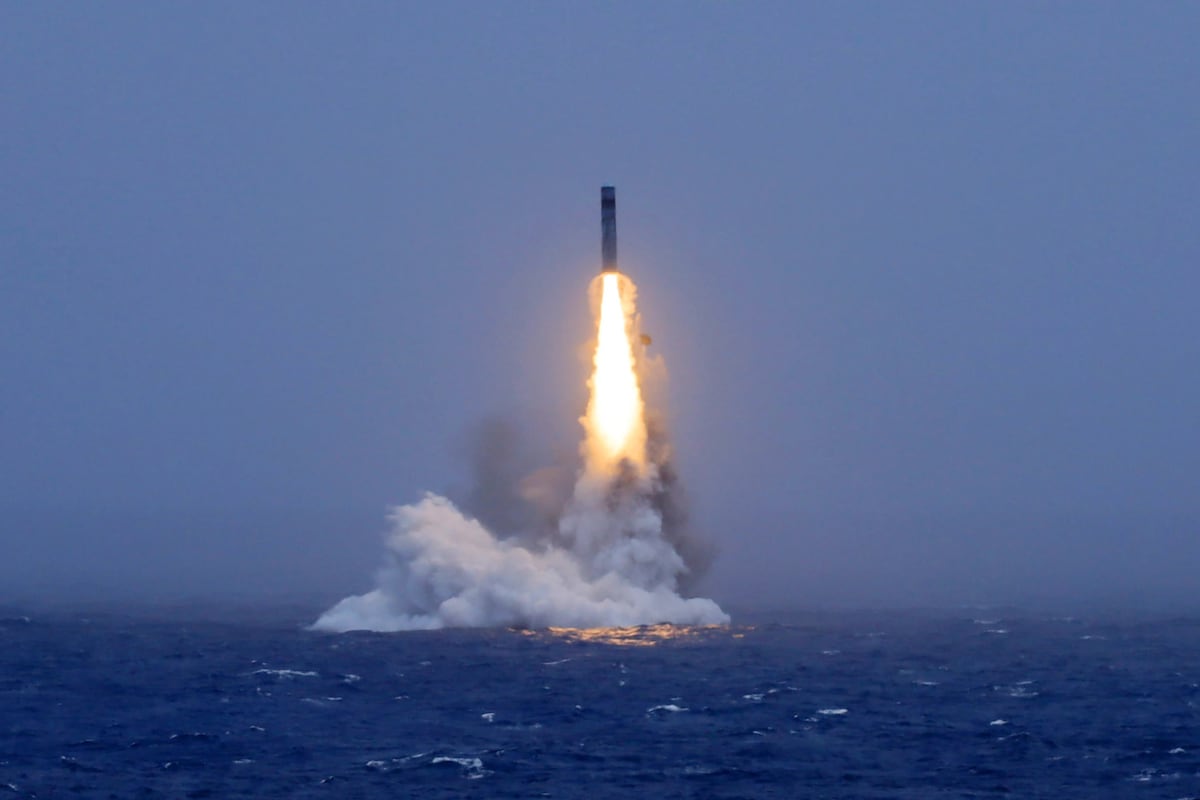
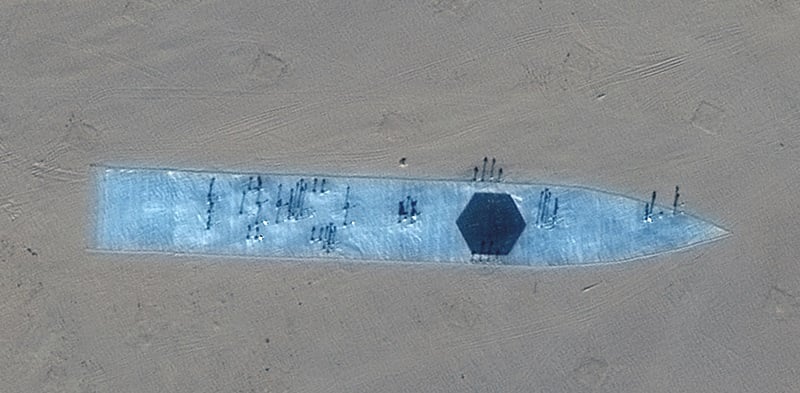
China has maintained a visible maritime presence east of Taiwan since May using China Coast Guard patrols, described domestically as routine law enforcement. On 4 July, Taiwan’s Mainland Affairs Council said Chinese vessels were violating international law. On 6 July, China test-fired a submarine-launched ballistic missile from the South China Sea into the Pacific, framed at home as annual training but protested by Australia, Japan, New Zealand, the United States and some South Pacific leaders. China’s force-development activity, including anti-ship ballistic missiles and target ranges replicating US warships and Taiwan’s government buildings, suggests preparation for sustained maritime coercion. The United States continues a policy of strategic ambiguity on Taiwan, shaping crisis signalling but not providing explicit commitments.
Change from previous assessment
Since the 14 July brief, we have incorporated new reporting that PRC coast guard patrols have been present east of Taiwan since May and were sustained into July, and we added the 6 July SLBM launch into the Pacific and subsequent protests as fresh drivers of tension. We have removed the prior reference to a monthly warship count, which is not corroborated in this run, and we did not carry forward the Japan-specific maritime friction item due to lack of supporting claims here. Confidence remains constrained by limited multi-source detail on patrol density and interaction behaviour.
Key judgments
- China is sustaining a maritime presence east of Taiwan through China Coast Guard patrols initiated in May 2026 and maintained into July under the rubric of routine law enforcement. (Confidence: medium · REPORTED)
- I&W: Taiwanese official daily releases log PRC coast guard presence east of Taiwan on a majority of days in the next two weeks. (0-14 days)
- I&W: No PRC coast guard patrols reported east of Taiwan for two consecutive weeks in public Taiwanese or PRC readouts. (0-14 days)
- Taipei is very likely to keep contesting the legality of PRC patrols, given its 4 July statement alleging Chinese vessels were violating international law. (Confidence: medium · ASSESSED)
- I&W: Further public statements or formal protests from Taiwan’s Mainland Affairs Council or related ministries challenging PRC patrols’ legality. (0-14 days)
- I&W: Notable reduction in Taiwanese public legal commentary on PRC patrols for a month or more. (1-3 months)
- China’s 6 July submarine-launched ballistic missile test into the Pacific, described domestically as annual training, likely served strategic signalling and heightened regional tension, as evidenced by protests from Australia, Japan, New Zealand, the United States and South Pacific leaders. (Confidence: medium · ASSESSED)
- I&W: Additional PRC ballistic-missile test windows announced for the western Pacific or new danger-area notices overlapping key sea lanes east of Taiwan. (1-3 months)
- I&W: Sustained absence of further PRC long-range missile testing into the Pacific following this protest cycle. (1-3 months)
- China is building capabilities and training for maritime confrontation against US and Taiwan targets, shown by anti-ship ballistic missile inventories and target ranges replicating US warships and Taiwan government buildings; this very likely supports continued coercive pressure around Taiwan. (Confidence: high · ASSESSED)
- I&W: New satellite imagery reveals additional US Navy ship mock-ups or expanded assault-training sets replicating Taiwan sites at PRC desert ranges. (1-3 months)
- I&W: Public reporting of PRC coastal ASBM unit activities tied to maritime exercises near Taiwan’s approaches. (1-3 months)
- With US policy towards Taiwan still framed as strategic ambiguity, Washington is likely to prioritise signalling and crisis management measures over new formal commitments in response to near-term PRC moves around Taiwan. (Confidence: medium · ASSESSED)
- I&W: Public US statements reiterate strategic ambiguity without announcing new treaty obligations to Taiwan. (0-14 days)
- I&W: A US move to an explicit defence commitment for Taiwan, replacing ambiguity. (1-3 months)
- China likely has the capacity to sustain and escalate pressure around Taiwan with limited warning, given the PLAN’s numerical size, rapid PLA modernisation, geographic proximity to Taiwan and the US requirement to project power across the Pacific. (Confidence: medium · ASSESSED)
- I&W: PRC announces or is observed conducting multi-week naval-air drills east of Taiwan that maintain persistent surface and air patrols. (1-3 months)
- I&W: A sustained observable drawdown of PRC maritime and air activity around Taiwan’s eastern approaches. (1-3 months)
Outlook & scenarios
Patrol normalisation without kinetic incidents (60%)
PRC coast guard patrols east of Taiwan persist as a standing pattern, framed as law enforcement. Taipei continues legal objections. No major PLA exercises beyond routine events and the July SLBM test; diplomatic protests continue and then taper. The risk of miscalculation remains but without a triggering event.
Show-of-force cycle intensifies (40%)
Beijing expands patrol tempos and layers in larger PLA Navy and air drills east of Taiwan, while sustaining missile-related activity windows in the western Pacific. Taipei steps up public reporting and protests. Foreign partners increase diplomatic signalling. Close encounters increase but remain controlled.
Unsafe encounter sparks a brief crisis (20%)
An unsafe interaction between PRC coast guard units and Taiwanese assets east of Taiwan leads to a stand-off and concentrated patrol surge. Regional actors issue accelerated protests and calls for restraint. The episode subsides within days but leaves higher baseline patrol tempos and sharper rhetoric.
Recommendations
- Maintain a daily fused tracker of PRC coast guard and naval activity east of Taiwan using Taiwanese official releases, AIS where available and commercial satellite imagery to quantify presence and patterns.
- Monitor PRC maritime and airspace danger-area notices and NOTAMs/NOTMARs for declared windows indicative of follow-on missile tests into the Pacific, and prepare an anticipatory calendar of likely activity periods.
- Set up a watch on Taiwan government communications, especially the Mainland Affairs Council, for legal statements and protest notes related to PRC patrols, and flag notable shifts in language within 24 hours.
- Task periodic satellite imagery review of PRC desert target ranges in Xinjiang and the Taklamakan to detect new or modified US warship mock-ups and Taiwan site replicas, linking developments to exercise timelines.
- Maintain and update an OSINT reference on PRC anti-ship ballistic missile systems and known coastal garrisons to support rapid assessments of coercive signalling near Taiwan’s approaches.
- Prepare ready-to-issue backgrounders on US strategic ambiguity towards Taiwan to brief stakeholders quickly during incident spikes, ensuring consistency with current public policy statements.
Confidence & uncertainty
Overall confidence is low because the strongest points rely on a limited set of public reports about PRC patrols east of Taiwan and a single SLBM test event, alongside think tank assessments on PLAN size and strategic posture. While multiple independent sources corroborate the SLBM launch, the protests and the PRC coast guard’s activity framing, independent quantitative detail on patrol density and unit-level behaviour remains thin in this cycle. Several contextual claims derive from analytical outlets rather than primary official reporting, and we lack multi-source confirmation for escalation dynamics beyond what is directly reported.
Alternative analysis (red cell)
Several key judgments rest on single-origin or open-source B2/B4 reporting and lack corroborating operational, doctrinal, or intent-level evidence. Given these source and inference limitations, alternative readings—such as episodic patrols rather than a sustained CCG campaign, routine missile testing provoking predictable diplomatic protests, and unverified capability inventories not yet demonstrating immediate coercive employment—are defensible. Collection should prioritise time-series maritime tracking, PLA operational orders, and multi-source verification of force posture to resolve these uncertainties.
Intelligence gaps
- [EEI 1.1 · UNCOVERED] Number, type, and precise locations (latitude/longitude or named sea areas) of PLAN surface combatants, amphibious ships, and auxiliaries operating within 200 nautical miles of Taiwan or transiting the Taiwan Strait over the past 72 hours. Recommended collection: maritime/AIS
- [EEI 1.2 · UNCOVERED] NOTAMs, maritime safety warnings, or official PRC civil/maritime notices that close or restrict airspace/sea lanes around Taiwan, and any concurrent cancellation of commercial ferry or airline services to/from Taiwanese ports/airports. Recommended collection: open-source/diplomatic
- [EEI 1.3 · UNCOVERED] Number and sortie patterns of PLA air assets (fighters, bombers, airborne early warning, aerial refuellers) crossing the median line or entering Taiwan ADIZ, including time-on-station and armament indications (e.g., weapons pylons loaded). Recommended collection: air/flight-radar
- [EEI 2.1 · UNCOVERED] Location and composition of any PLAN carrier strike groups or task forces within the Western Pacific (carrier identity, escort ships, embarked air wing size and aircraft types) and recent underway replenishment events. Recommended collection: satellite/imagery
- [EEI 2.2 · UNCOVERED] Presence, numbers, and readiness indicators of amphibious assault ships, large landing craft, and pre-positioned amphibious equipment at eastern PRC ports (Fujian, Zhejiang, Guangdong), including evidence of loading, embarkation or training ramps/vehicles staged for embarkation. Recommended collection: maritime/AIS
- [EEI 2.3 · UNCOVERED] Submarine activity: detections or reported transits of PLAN attack or ballistic submarines on routes between mainland bases and patrol areas around Taiwan, and indications of increased sonar/contact reports or anti-submarine warfare activity by regional navies. Recommended collection: undersea/acoustic
- [EEI 3.1 · UNCOVERED] Movements and positions of US and allied naval and air forces (carrier strike groups, amphibious ready groups, maritime patrol aircraft) toward the Taiwan region, including orders to sortie, transit times, and change in deployment status. Recommended collection: maritime/AIS
- [EEI 3.2 · UNCOVERED] Public and official diplomatic statements, military advisories, and changes in rules of engagement or defensive posture from the United States, Japan, Australia, and Taiwan, including emergency meetings, sanctions announcements, or military aid pledges. Recommended collection: diplomatic
- [EEI 3.3 · UNCOVERED] Commercial indicators of regional escalation: rapid increases in war-risk insurance premiums for Taiwan-related sea lanes, suspension of shipping lines or insurance-backed rerouting, and major port/terminal closures affecting logistic lifelines. Recommended collection: financial/insurance
Cited sources
[1] defensenews.com · First the coast guard, then an ICBM: China tests new, long-term ways to hold off rivals in Asia (B) · sha256:2cb8e61d2606 [2] maritime-executive.com · China's Newest Target-Practice "Ship" Looks Exactly Like a U.S. Destroyer (B) · sha256:f55f1c09cc0d [3] maritime-executive.com · U.S. Navy Outperforms in Mideast, But a Pacific War Would Test Endurance (C) · sha256:268cb1ab9616
Source content hashes were computed at collection time; the cited text is preserved unmodified for the life of this product.
Red cell review: PARTIAL DISSENT — KJ-1 downgraded HIGH→MEDIUM (estimative_mismatch)
TLP:CLEAR