TLP:CLEAR · Disclosure is not limited.
Indo-Pacific SITREP: PRC expands maritime presence east of Taiwan as allies protest
Time window: Last 7 days · Audience: General analyst · Type: Situation report · DTG: 2026-06-29 12:13Z · Overall confidence: MEDIUM
BLUF
China has very likely expanded and normalised maritime operations east of Taiwan in June 2026, including Coast Guard inspections of merchant shipping, radio challenges and a research survey, while transiting its newest aircraft carrier through the Taiwan Strait. Taipei raised readiness and allied capitals protested, but Beijing framed its patrols as lawful, pointing to a protracted grey-zone contest around the island’s east.
Executive summary
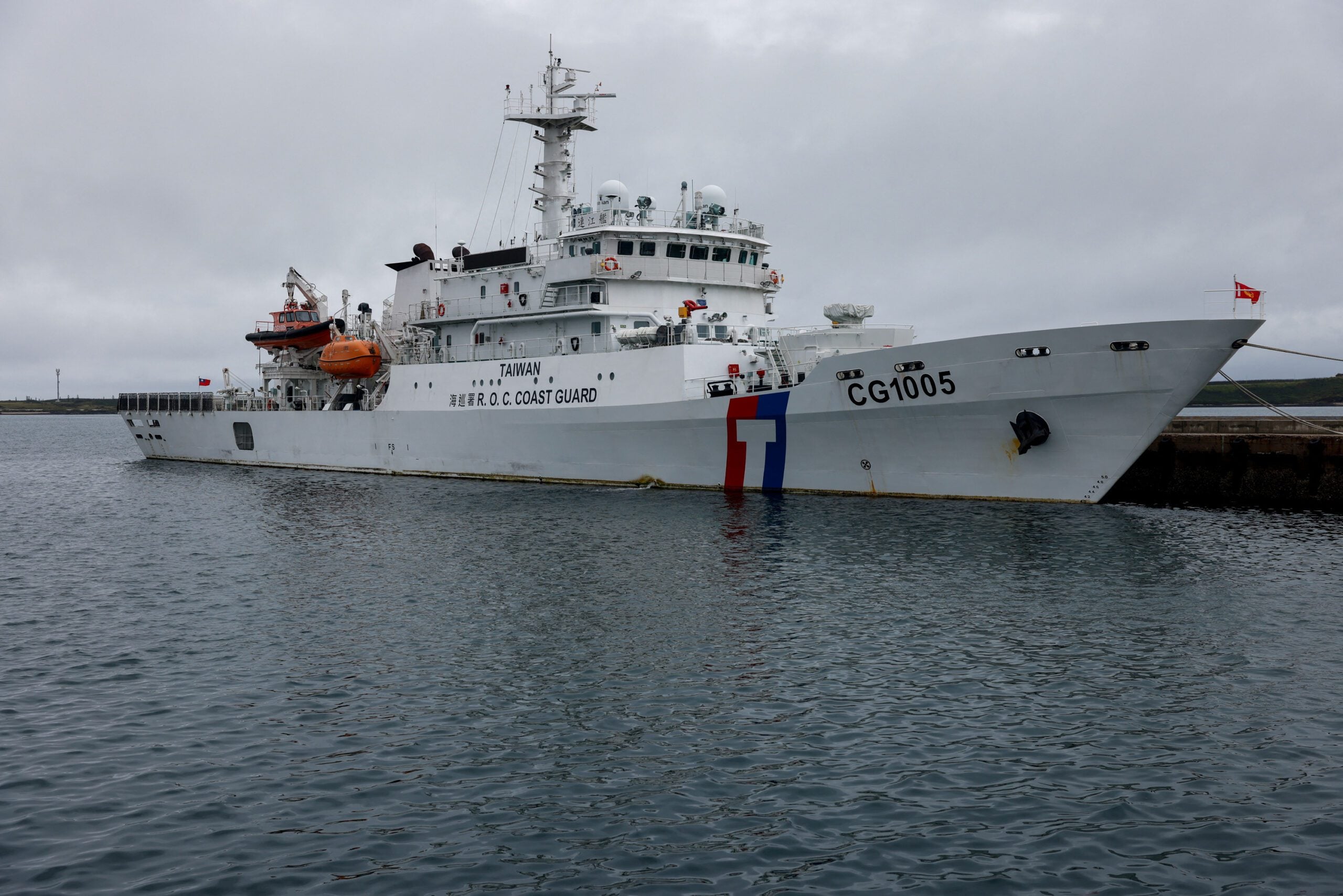
Beijing stepped up activity around Taiwan in late June: Chinese Coast Guard units inspected 198 vessels and were accused of harassing three merchant ships east of the island, Chinese Maritime Safety Agency ships issued radio challenges to traffic bound for Taiwan, and a PRC research vessel completed a survey east of Taiwan. A PRC report on 29 June said China expanded its maritime presence near Taiwan, and China’s newest aircraft carrier transited the Taiwan Strait on 22 June. The United States, the United Kingdom, France and Germany raised alarms, and Washington called China’s actions deeply destabilising, while Beijing asserted its patrols were lawful and Taipei rejected Chinese jurisdiction. Taiwan launched five days of Immediate Combat Readiness drills starting 22 June and continues a broader modernisation push backed by the United States. Regionally, Australia and Vanuatu signed an agreement that blocks foreign bases, drawing concern from China after previous Chinese naval port calls to Vanuatu. In parallel, Beijing imposed export controls on dozens of Japanese entities and Tokyo demanded revocation, amid Japan’s rising defence outlays and capability upgrades.
Key judgments
- China has very likely expanded its maritime presence east of Taiwan in June 2026, combining Coast Guard and Maritime Safety Agency patrols that inspected and challenged merchant traffic with a research survey east of the island, alongside a Taiwan Strait transit by China’s newest aircraft carrier. (Confidence: high · REPORTED)
- I&W: Fresh PRC notices or state media readouts of Coast Guard or MSA patrols east of Taiwan, including new vessel inspection counts beyond the previously cited 198. (0-14 days)
- I&W: Commercial AIS and VHF reports showing CCG or MSA units transiting the Bashi Channel and operating on persistent patterns east of Hualien and Taitung. (0-14 days)
- Beijing is likely using civilian law enforcement and scientific surveys to normalise jurisdictional claims and collect militarily useful data east of Taiwan, consistent with its extension of dashed-line claims east of the island and official assertions that patrols are lawful. (Confidence: medium · ASSESSED)
- I&W: Repeat deployments by PRC research vessels such as Xiang Yang Hong-class ships to survey waters east of Taiwan with publicly announced missions. (1-3 months)
- I&W: PRC agencies publish enforcement or hydrographic outputs covering waters east of Taiwan framed as routine administration. (1-3 months)
- Maritime risk to commercial shipping east of Taiwan has likely increased, evidenced by reported harassment of three merchant ships, large-scale inspections, and radio challenges, amid public warnings from Washington and European embassies and Taipei’s rejection of Beijing’s jurisdictional claims. (Confidence: medium · ASSESSED)
- I&W: New merchant mariner reports of boarding attempts, course alterations directed by PRC units, or additional radio challenges east of Taiwan. (0-14 days)
- I&W: A two-week interval with no reported PRC interactions with merchant shipping in the same waters. (0-14 days)
- Taiwan has very likely elevated readiness and is accelerating military modernisation in response, including Immediate Combat Readiness drills from 22 June aimed at rapid transition to wartime footing and a broader defence build-up backed by Washington. (Confidence: high · REPORTED)
- I&W: Announcements of follow-on Immediate Combat Readiness or similarly scoped joint drills by Taiwan’s armed forces. (1-3 months)
- I&W: Legislative or executive milestones advancing Taiwan’s target to raise defence spending toward 5 percent of GDP. (1-3 months)
- The People’s Liberation Army is likely reinforcing coercive signalling around Taiwan with high-end capabilities, as shown by the 22 June Taiwan Strait transit of China’s newest aircraft carrier and a same-day demonstration of hypersonic missile capabilities. (Confidence: medium · ASSESSED)
- I&W: Further PLA carrier group transits near Taiwan or the Bashi Channel with publicised air or missile drills. (1-3 months)
- I&W: Noticeable lull in PLA high-end platform activity around Taiwan following diplomatic engagements. (1-3 months)
- Regional partners are likely tightening constraints on potential Chinese military access in the South Pacific, exemplified by the Australia, Vanuatu agreement blocking foreign bases and provisions for consultation on critical infrastructure, which Beijing views with concern after previous Chinese naval port calls to Vanuatu. (Confidence: medium · ASSESSED)
- I&W: Ratification or implementation steps for the Nakamal Agreement in Port Vila that formalise the foreign-base prohibition. (1-3 months)
- I&W: Chinese navy port call requests to Vanuatu being declined or publicly deferred. (1-3 months)
- China, Japan friction is likely intensifying through economic and security channels, with Beijing imposing export controls on dozens of Japanese entities and Tokyo demanding revocation while continuing a sharp rise in defence spending and capability development. (Confidence: medium · ASSESSED)
- I&W: Expansion of China’s export-control blacklist or Japanese retaliatory measures tied to the controls. (1-3 months)
- I&W: New Japanese defence procurement or intelligence-structure reforms publicly announced. (1-3 months)
Outlook & scenarios
Sustained grey-zone pressure east of Taiwan without kinetic clashes (60%)
Chinese Coast Guard and MSA patrols continue to inspect and radio-challenge merchant traffic east of Taiwan and conduct periodic surveys, while PLA platforms signal presence. Taipei sustains elevated readiness and drills. Washington and European partners keep issuing statements, but there is no resolution of competing legal narratives. Commercial shipping experiences intermittent interference and rerouting but not systematic blockades.
Escalation to forcible boarding or detention triggers a military standoff (30%)
A PRC unit boards or detains a merchant vessel heading to Taiwan or collides with a Taiwanese cutter. Taiwan deploys naval and air assets to shadow or interdict, and the PLA increases sorties and maritime patrols. Allied forces raise presence in nearby waters. Shipping risk premiums rise and shipmasters re-route to avoid the east-of-Taiwan approaches.
Limited de-escalation after diplomatic signalling (20%)
Beijing scales back overt inspections and radio challenges east of Taiwan after achieving a signalling objective and amid international pushback, while retaining flexible options to surge activity. Taiwan maintains a watch posture but reduces the tempo of immediate-readiness drills. Shipping reports fewer incidents in the approaches east of the island.
Peripheral tightening in the South Pacific, with PRC pressure shifting back to Taiwan’s periphery (40%)
Implementation of the Australia, Vanuatu agreement constrains basing opportunities, prompting Beijing to lean more on maritime law-enforcement presence around Taiwan and the broader First Island Chain for signalling. PRC state media highlight the lawfulness of patrols as Tokyo, Beijing economic tensions persist.
Recommendations
- Prioritise collection on Chinese Coast Guard and MSA activity east of Taiwan: compile AIS tracks, VHF radio recordings and merchant master incident logs to validate inspection counts, radio-challenge patterns and any boarding attempts.
- Task imagery and maritime domain awareness for repeat detection of PRC research vessels, including Xiang Yang Hong-class hulls, operating east of Taiwan and along the Bashi Channel.
- Maintain an order-of-battle and activity tracker for PLA carrier group movements and missile-related demonstrations around Taiwan to correlate coercive signalling with law-enforcement patrol surges.
- Exploit diplomatic channels and open-source statements to map Beijing’s legal framing of patrols and Taipei’s rebuttals; prepare quick-turn briefs for policymakers when allied embassies in Taipei issue joint statements.
- Monitor Taiwan’s defence modernisation milestones and exercise schedule for indicators of sustained elevated readiness, and capture US public support signals tied to spending and training.
- Track implementation of the Australia, Vanuatu agreement: watch for ratification steps, infrastructure screening decisions and any Chinese navy port call requests or denials.
- Follow China, Japan economic friction: catalogue newly announced Chinese export-control designations and Japanese responses, and assess spillover risk to maritime supply chains servicing Taiwan.
Confidence & uncertainty
Overall confidence is medium. Several high-confidence reports corroborate expanded Chinese maritime activity near Taiwan, including Coast Guard inspections of 198 vessels, harassment of merchant ships, a PRC research survey east of Taiwan, and a Taiwan Strait carrier transit. Multiple independent diplomatic statements from the United States and European embassies support the picture of heightened concern, and Taiwan’s drills and defence push are well documented. Some elements rely on single-source or think tank assessments, such as the military implications of mapping and continuous patrol patterns, and there are timeline variances across claims. Beijing’s legal framing also introduces ambiguity about intent and end-states, keeping residual uncertainty.
Alternative analysis (red cell)
An alternative, defensible reading of the reporting is that the PRC activity east of Taiwan currently appears as a mix of routine civilian law‑enforcement and scientific missions with a few isolated, possibly escalatory enforcement incidents, rather than a coherent campaign to normalise jurisdiction or systematically gather militarily useful oceanographic data. Several incident reports cluster around a single reporting origin and some supporting items are medium/low grade, so attributing integrated intent or a sustained industry‑wide risk increase is not yet the most parsimonious explanation.
Cited sources
[1] cnr.cn · �⽻�����з��йز����ڸú���չ��ػ �����Ϸ��ɷ���_����� (B) · sha256:2458d2d0f0b0 [2] defensenews.com · US, UK, France, Germany raise alarm about Chinese patrols off eastern Taiwan (A) · sha256:eaea6db6b5ba [3] cnn.com · ‘Salami slicing’: How China is trying to increase control in the Pacific | CNN (A) · sha256:9920d55afe9e [4] understandingwar.org · China & Taiwan Update, June 26, 2026 (C) · sha256:411e4d6ce3d1 [5] jpost.com · UK, France, Germany issue joint statement of concern about Chinese activities off coast of Taiwan (B) · sha256:91319c5b954d [6] marinelink.com · US, UK, France, Germany Echo Alarm About Chinese Activities Off Eastern Taiwan (B) · sha256:5819998c1df6 [7] gcaptain.com · Facing China, One Taiwan Coast Guard Officer Draws Strength From The Gods (A) · sha256:ac2e0ae17609 [8] aljazeera.com · Australia and Vanuatu sign deal to block foreign military bases (A) · sha256:e8fd337254b9 [9] aljazeera.com · China slaps export controls on dozens of Japanese entities (A) · sha256:f34d9290efe4 [10] jpost.com · Israel must seize the opportunities created by Japan's strategic awakening - opinion (B) · sha256:af7ffbfbaa47
Source content hashes were computed at collection time; the cited text is preserved unmodified for the life of this product.
Red cell review: PARTIAL DISSENT
TLP:CLEAR