TLP:CLEAR · Disclosure is not limited.
Indo-Pacific SITREP: Taiwan hardens maritime posture amid grey-zone pressure; PRC expands offshore footprint
Time window: Last 1 day · Audience: General analyst · Type: Situation report · DTG: 2026-07-01 09:45Z · Overall confidence: MEDIUM
BLUF
Taipei is accelerating maritime surveillance and law‑enforcement enhancements while Beijing expands offshore activity in the South China Sea, raising a likely near‑term risk of maritime miscalculation. Taiwan’s new special defence budget and a court conviction over an undersea cable incident signal a firmer posture at sea.
Executive summary
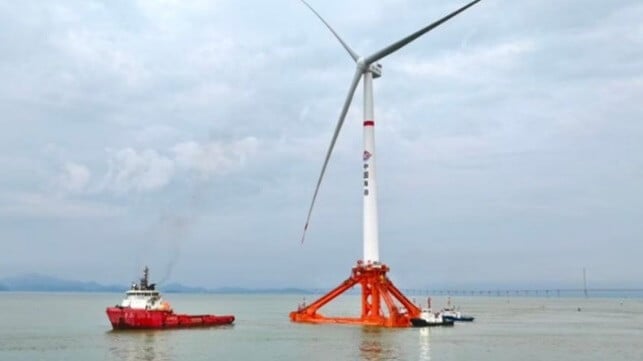
Taiwan’s Ocean Affairs Council reports stepped‑up maritime domain awareness and technology adoption, including unmanned systems and expanded law‑enforcement vessel capacity, in response to increasingly complex grey‑zone pressure. A Tainan court has sentenced a Chinese captain over the Hongtai 58 undersea‑cable case, which drew wide attention, pointing to tighter legal accountability. Taipei approved a special defence budget adding about TWN780 billion, positioning it to accelerate near‑term security enhancements. In parallel, China is growing its civilian maritime footprint in the South China Sea, including deploying a 16 MW floating wind platform near the Lufeng oilfield cluster and signalling further offshore build‑out under national energy targets. Taken together, these dynamics make a maritime incident around Taiwan likely over the next one to three months.
Change from previous assessment
This update shifts focus to Taiwan’s own measures and legal posture: new official statements on maritime domain awareness enhancements, a Tainan court conviction in the Hongtai 58 cable case, and approval of a TWN780 billion special defence budget. The prior brief highlighted allied exercise activity and Chinese visibility via overseas port calls, which are not newly evidenced here. We add an outlook on PRC offshore deployments in the South China Sea and raise the assessed likelihood of a near‑term maritime miscalculation around Taiwan based on Taipei’s stepped‑up enforcement signals. Initial assessment of this topic’s legal‑enforcement dimension.
Key judgments
- Taiwan is actively enhancing maritime domain awareness and law‑enforcement capability, including unmanned systems and additional patrol vessel capacity, in response to increasingly complex grey‑zone pressure. (Confidence: high · REPORTED)
- I&W: Public tender notices or delivery announcements for unmanned surface or aerial systems to Taiwan’s Ocean Affairs Council or Coast Guard (1-3 months)
- I&W: Official statements outlining expanded patrol schedules or new law‑enforcement vessel deployments (0-14 days)
- Taipei is tightening legal accountability for PRC‑related maritime incidents, likely deterring future undersea‑cable damage and signalling a firmer enforcement stance. (Confidence: medium · ASSESSED)
- I&W: Additional prosecutions or civil claims in Taiwan against foreign masters for subsea infrastructure damage (1-3 months)
- I&W: Appeals that overturn or reduce penalties in the Hongtai 58 case (1-3 months)
- Taiwan’s newly approved special defence budget, adding about TWN780 billion, is very likely to accelerate near‑term maritime surveillance and defence acquisitions. (Confidence: medium · ASSESSED)
- I&W: Contract awards or fast‑track procurements for maritime surveillance, patrol vessels or unmanned systems explicitly tied to the special budget (0-14 days)
- I&W: Legislative or Ministry of National Defense notices detailing initial drawdowns from the special budget (1-3 months)
- There is likely an elevated risk of maritime miscalculation in the Taiwan Strait over the next quarter as grey‑zone pressure persists and Taiwan steps up enforcement patrols. (Confidence: medium · ASSESSED)
- I&W: Taiwan Coast Guard reports of close approaches or unsafe manoeuvres involving PRC‑flagged vessels near Taiwan Strait shipping lanes (0-14 days)
- I&W: A sustained lull in Taiwan’s public reporting of grey‑zone incidents (1-3 months)
- China is expanding offshore energy infrastructure in the South China Sea, including a 16 MW floating wind platform near the Lufeng oilfield cluster, and is likely to sustain or increase such deployments, raising the tempo of Chinese state‑linked maritime activity in adjacent waters. (Confidence: medium · ASSESSED)
- I&W: Announcements of additional floating platforms or offshore projects in the South China Sea tied to national energy targets (1-3 months)
- I&W: Policy or industry statements signalling a slowdown or deferral in offshore wind build‑out (1-3 months)
Outlook & scenarios
Managed friction: stronger Taiwanese MDA without acute escalation (60%)
Taiwan continues to field unmanned systems and enhance patrol capacity while regularly publicising grey‑zone activity. Encounters remain tense but controlled, avoiding sharp kinetic incidents. Defence outlays begin flowing to maritime surveillance and enforcement priorities, reinforcing deterrence by presence.
Maritime incident triggers legal‑diplomatic standoff (40%)
A new underwater cable strike or collision near Taiwan prompts rapid investigation and prosecution by Taiwanese authorities, drawing Beijing’s protests and heightening public scrutiny. Shipping interests seek clarity while Taipei leans on recent legal precedent to signal costs for unsafe conduct.
Civilian offshore build‑out increases PRC presence in the South China Sea (50%)
Additional floating wind or energy platforms are deployed near existing clusters, increasing Chinese state‑linked hull activity and logistics traffic. The tempo of construction and service operations rises in step with national energy targets, complicating regional maritime picture even as activity remains nominally civilian.
Recommendations
- Maintain a standing indicator ledger for Taiwan’s maritime domain awareness build‑out: track OAC and Coast Guard tenders, delivery notices, and patrol expansion statements for early confirmation of capability growth.
- Task collection to log and time‑stamp Taiwan‑reported grey‑zone incidents at sea and correlate with commercial AIS and satellite imagery to map hotspots for potential miscalculation.
- Monitor Taiwan court dockets and Ministry of Justice releases for new prosecutions related to maritime safety or subsea infrastructure damage involving foreign vessels; prepare legal‑policy briefs on deterrent effects.
- Establish a watch on PRC offshore energy deployments in the South China Sea, including project locations, timelines, and supporting logistics, to assess growth in state‑linked maritime activity.
- Prepare shipping‑risk contingencies for the Taiwan Strait tied to concrete tripwires, such as a repeat cable incident or a spike in reported unsafe manoeuvres, to inform advisories to commercial operators.
Confidence & uncertainty
Overall confidence is medium. Several judgments rest on corroborated, official Taiwanese reporting on maritime domain awareness measures and grey‑zone pressure, and on multiple major‑media reports detailing PRC offshore deployments and energy targets. However, the assessed elements concerning deterrent effects, future procurement acceleration, and elevated miscalculation risk extrapolate beyond direct reporting. There is also a lack of current open‑source confirmation of an expanded PLAN presence around Taiwan in this cycle, which tempers confidence in broader escalation assessments.
Alternative analysis (red cell)
The claim set shows policy intentions, a single high‑profile legal case, and a demonstrator floating wind platform, but lacks independent, operational indicators of widescale capability changes or sustained deployment tempo. A cautious assessment is that Taipei is signaling intent and pursuing isolated legal accountability, while China has demonstrated a technological deployment and articulated ambitious energy targets; however, neither side has produced sufficient corroborated evidence of large‑scale shifts that would reliably alter deterrence dynamics or miscalculation risk in the immediate term.
Intelligence gaps
- [EEI 1.1 · UNCOVERED] Number, type, and precise locations (latitude/longitude or named sea areas) of PLAN surface combatants, amphibious ships, and auxiliaries operating within 200 nautical miles of Taiwan or transiting the Taiwan Strait over the past 72 hours. Recommended collection: maritime/AIS
- [EEI 1.2 · UNCOVERED] NOTAMs, maritime safety warnings, or official PRC civil/maritime notices that close or restrict airspace/sea lanes around Taiwan, and any concurrent cancellation of commercial ferry or airline services to/from Taiwanese ports/airports. Recommended collection: open-source/diplomatic
- [EEI 1.3 · UNCOVERED] Number and sortie patterns of PLA air assets (fighters, bombers, airborne early warning, aerial refuellers) crossing the median line or entering Taiwan ADIZ, including time-on-station and armament indications (e.g., weapons pylons loaded). Recommended collection: air/flight-radar
- [EEI 2.1 · UNCOVERED] Location and composition of any PLAN carrier strike groups or task forces within the Western Pacific (carrier identity, escort ships, embarked air wing size and aircraft types) and recent underway replenishment events. Recommended collection: satellite/imagery
- [EEI 2.2 · UNCOVERED] Presence, numbers, and readiness indicators of amphibious assault ships, large landing craft, and pre-positioned amphibious equipment at eastern PRC ports (Fujian, Zhejiang, Guangdong), including evidence of loading, embarkation or training ramps/vehicles staged for embarkation. Recommended collection: maritime/AIS
- [EEI 2.3 · UNCOVERED] Submarine activity: detections or reported transits of PLAN attack or ballistic submarines on routes between mainland bases and patrol areas around Taiwan, and indications of increased sonar/contact reports or anti-submarine warfare activity by regional navies. Recommended collection: undersea/acoustic
- [EEI 3.1 · UNCOVERED] Movements and positions of US and allied naval and air forces (carrier strike groups, amphibious ready groups, maritime patrol aircraft) toward the Taiwan region, including orders to sortie, transit times, and change in deployment status. Recommended collection: maritime/AIS
- [EEI 3.2 · UNCOVERED] Public and official diplomatic statements, military advisories, and changes in rules of engagement or defensive posture from the United States, Japan, Australia, and Taiwan, including emergency meetings, sanctions announcements, or military aid pledges. Recommended collection: diplomatic
- [EEI 3.3 · UNCOVERED] Commercial indicators of regional escalation: rapid increases in war-risk insurance premiums for Taiwan-related sea lanes, suspension of shipping lines or insurance-backed rerouting, and major port/terminal closures affecting logistic lifelines. Recommended collection: financial/insurance
Cited sources
[1] 海洋委員會 · [PDF] 發行人語 - 海洋委員會 (A) · sha256:60558ffdcc4f [2] Aviation Week · Budget Brief: New Special Budget For Taiwan, But With Caveats | Aviation Week (C) · sha256:778db2428e0f [3] maritime-executive.com · China Deploys First 16MW Floating Offshore Wind Tension-Leg Platform (B) · sha256:44e28d24b1f3 [4] theguardian.com · China is a clear winner from Trump’s war in Middle East, report concludes (B) · sha256:37d72de7510c
Source content hashes were computed at collection time; the cited text is preserved unmodified for the life of this product.
Red cell review: PARTIAL DISSENT
TLP:CLEAR