TLP:CLEAR · Disclosure is not limited.
Iran Blockade Pressure, Hormuz Attacks and Renewed Yemen Fighting
Time window: Last 1 day · Audience: General analyst · Type: Situation report · DTG: 2026-10-06 13:18Z · Overall confidence: HIGH
BLUF
US enforcement is sharply restricting Iranian oil movements, while attacks and IRGC warnings keep Strait of Hormuz shipping exposed; reported transits show the waterway is not demonstrably closed. Fighting in Yemen adds a second contested maritime front, but the supplied reporting does not establish new Iran-Israel strikes during this reporting window.
Executive summary
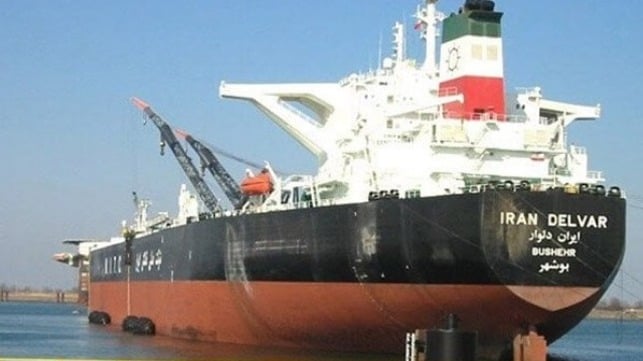
CENTCOM said US forces redirected their 130th commercial vessel on 5 October under the blockade of Iranian ports. UANI reported at least 50 Iranian oil tankers backed up near Iran and no tankers loading at Kharg Island that day, while Kpler estimated 15 million barrels of Iranian crude remained afloat at the start of October. UKMTO reported five shipping incidents in or near the Strait of Hormuz on 5 October, including four tanker attacks; earlier JMIC reporting documented four attacks between 2 and 3 October. Gulf oil continued to transit, although estimates of export recovery differ. In Yemen, the internationally recognised government announced Operation Yemen Dawn and claimed advances near Dhubab and Bab al-Mandeb; Houthi denials and conflicting reports leave control of the strait and the extent of government gains unresolved. The clearest new evidence in this snapshot concerns the blockade, maritime security and Yemen, not direct Iran-Israel exchanges.
Change from previous assessment
Since the 5 October brief, reporting adds a CENTCOM tally of 130 redirected commercial vessels, UANI's report of at least 50 Iranian oil tankers backed up near Iran, no tanker loading at Kharg Island on 5 October, and Kpler's estimate of 15 million barrels of Iranian crude still afloat at the start of October. UKMTO reported five shipping incidents on 5 October, adding to the earlier JMIC reports of tanker attacks. The Yemen assessment now includes Operation Yemen Dawn and competing claims over gains near Dhubab, Mokha and Bab al-Mandeb. Confidence remains medium on the assessment of shipping danger and Yemen's front line because export-recovery figures and territorial claims remain contested.
Key judgments
- The US blockade is likely to keep Iranian crude exports sharply constrained over the next 0-14 days, but the evidence does not establish that no Iranian oil remains at sea. CENTCOM said it redirected its 130th commercial vessel on 5 October under enforcement of a blockade resumed on 14 July. UANI reported at least 50 tankers carrying Iranian oil backed up near Iran, including 11 laden tankers east of Kharg Island and five farther south, and said it saw no tankers loading at Kharg on 5 October. Bloomberg vessel-tracking estimates showed no Iranian crude loadings in September, while Kpler estimated 15 million barrels of crude remained afloat at the start of October. Treasury Secretary Scott Bessent's statement that Iran would have no oil on the water this week is therefore not established by the tracking estimate. (Confidence: medium · ASSESSED)
- I&W: Confirm: CENTCOM reports additional commercial vessel redirections and UANI or vessel-tracking data continue to show no loading at Kharg Island. (0-14 days)
- I&W: Break: Kpler or Bloomberg records renewed Iranian crude loadings at Kharg Island or verified departures of Iranian crude tankers from the Gulf. (0-14 days)
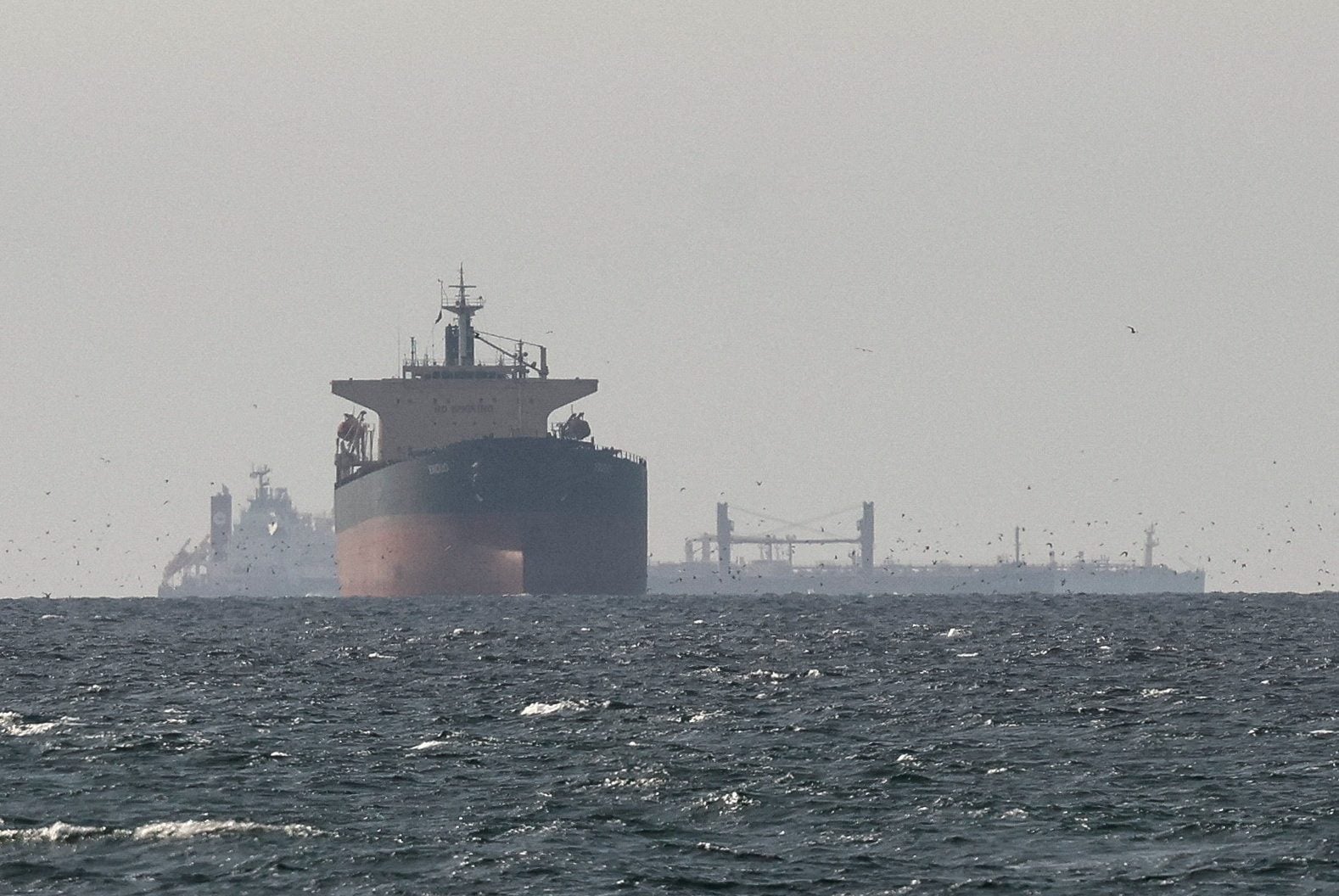
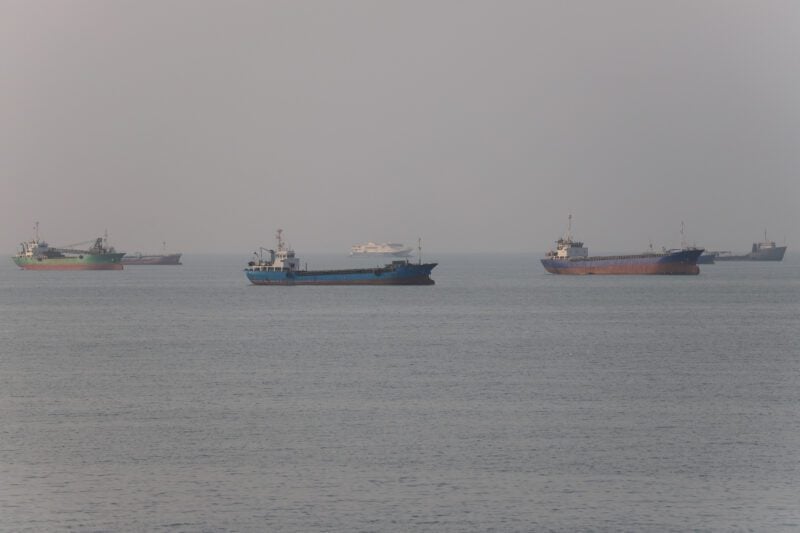
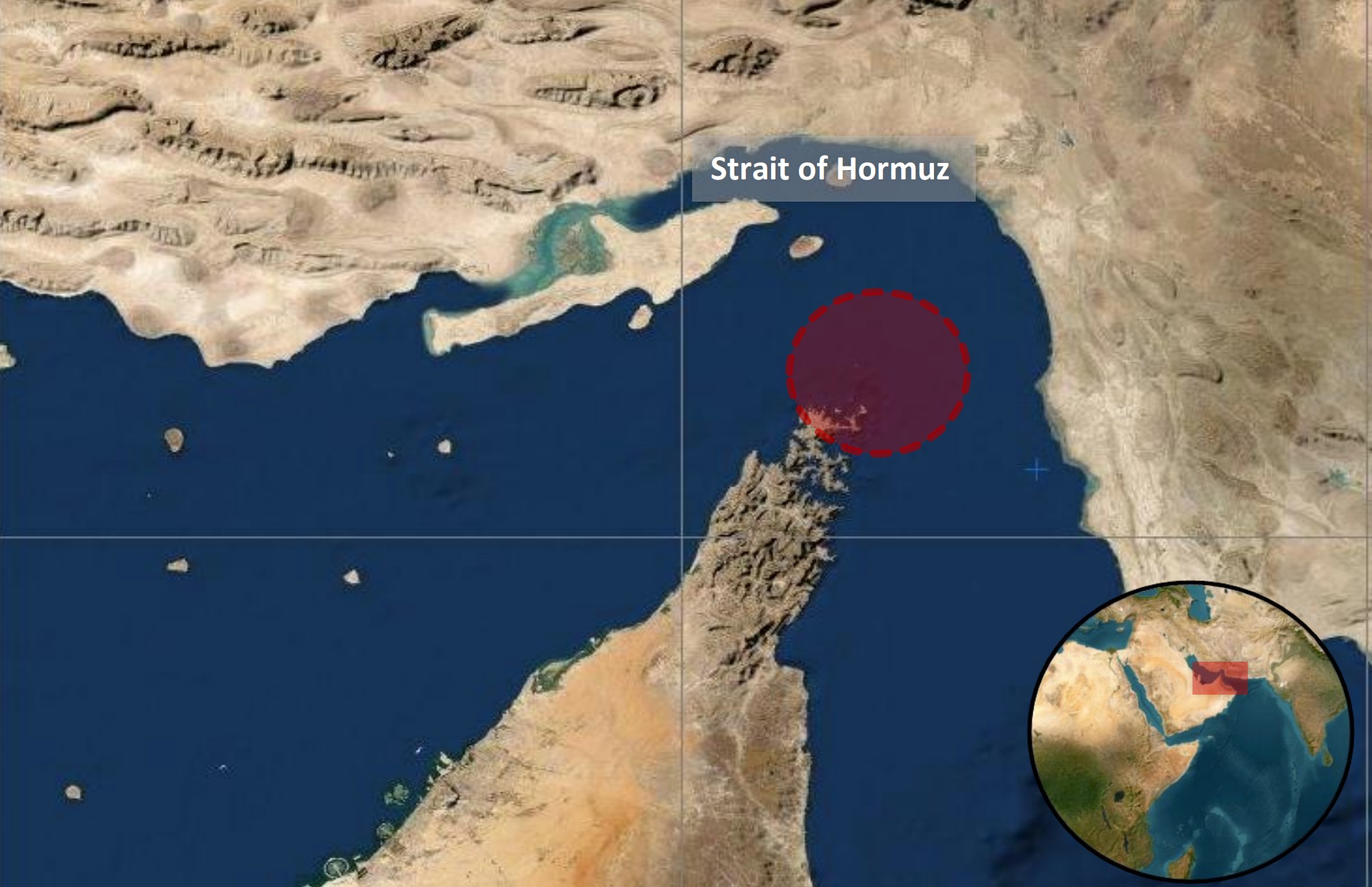
- Commercial shipping in the Strait of Hormuz is likely to remain exposed to attack over the next 0-14 days, but the available reporting does not show that transit has stopped. UKMTO reported five incidents involving commercial shipping in or near the strait on 5 October, including four tanker attacks; JMIC documented four tanker attacks between 2 and 3 October. A tanker struck by an unknown projectile on 5 October suffered an engine-room fire, with no casualties reported. Kpler recorded a seven-day average of 14.2 million barrels per day passing through Hormuz on 26 September, nearly 80 per cent of pre-war levels. Other reported recovery measures differ, including a 93.7 per cent figure for Persian Gulf exports on 29 September and an assessment that satellite-based counts showed net Gulf exports largely restored by the end of September. The identity of the attackers in the reported tanker strikes remains unconfirmed. (Confidence: medium · ASSESSED)
- I&W: Confirm: UKMTO reports another projectile strike on a tanker in the Strait of Hormuz, or reports an IRGC warning that causes a vessel to turn back. (0-14 days)
- I&W: Break: UKMTO reports no new incidents for 14 consecutive days and Kpler records continued crude transits through Hormuz. (0-14 days)
- Fighting around Yemen's Bab al-Mandeb approaches is likely to continue over the next 0-14 days, while control of the strait remains contested. Rashad al-Alimi announced Operation Yemen Dawn on 4 October to retake Houthi-held territory. Saudi-backed Yemeni forces reported advances around Dhubab and claimed to have secured Bab al-Mandeb; Saudi Arabia said it had attacked hundreds of targets in Yemen. The Houthis denied government gains. Reporting also conflicts over whether government forces captured Mokha city or reached only its outskirts, and Houthi advances near Taiz remain reported. The competing territorial claims come from parties to the fighting or unnamed sources, lowering confidence in the precise front line. (Confidence: medium · ASSESSED)
- I&W: Confirm: Reuters, BBC or another outlet reports verified fighting or a change of control at Dhubab, Mokha or Bab al-Mandeb. (0-14 days)
- I&W: Break: reporting confirms a halt to fighting around Dhubab and Bab al-Mandeb, or independently verifies that Houthi forces have retaken positions claimed by government forces. (0-14 days)
- Elevated oil transport costs are likely to persist over the next 1-3 months if Hormuz attacks and blockade enforcement continue. Poten & Partners reported that very large crude carrier rates for Middle East to Asia voyages recently exceeded $1.2 million per day, compared with roughly $30,000 per day in January; freight costs were reported to have risen from about 3 per cent to roughly 27 per cent of a delivered barrel's price. Energy Aspects estimated the global oil market shortfall at about 1.6 million barrels per day, down from roughly 4 million at the peak disruption in May. These figures point to continuing logistics pressure, although they do not establish the future direction of oil prices. (Confidence: medium · ASSESSED)
- I&W: Confirm: Poten & Partners continues to report VLCC rates near or above $1.2 million per day in its next two updates. (1-3 months)
- I&W: Break: Poten & Partners reports VLCC rates below half the reported $1.2 million peak for two consecutive weekly updates. (1-3 months)
Outlook & scenarios
Blockade pressure and hazardous transit continue (55%)
The US continues redirecting vessels bound for Iranian ports. Tankers carrying Gulf crude keep transiting Hormuz despite attacks and warnings, leaving exports exposed without a full halt. This is the most likely near-term course if the reported blockade and shipping activity persist.
Hormuz incidents drive a wider interruption (25%)
Further tanker strikes or IRGC orders to turn back reduce commercial transits through the Strait of Hormuz. The reported attack pattern and tanker diversions support this as a credible escalation scenario, but the current flow data do not show a complete shutdown.
Yemen fighting disrupts Bab al-Mandeb traffic (30%)
Operation Yemen Dawn leads to continued clashes around Dhubab, Mokha and Bab al-Mandeb. If fighting reaches shipping approaches, traffic through the southern Red Sea is likely to fall from the levels described as near-normal on 5 October. Control claims remain disputed.
Low-probability, high-impact direct maritime confrontation (8%)
An attack on a tanker with confirmed Iranian responsibility, followed by a US military response, produces a direct US-Iran exchange at sea. This is unlikely on the supplied evidence because recent projectile reports identify unknown attackers, but the consequences for Hormuz transit would be severe.
Recommendations
- Track UKMTO and JMIC incident notices alongside Kpler or Bloomberg vessel data. Separate confirmed tanker strikes, reported IRGC warnings and claims about attacker identity in daily reporting.
- Report CENTCOM's vessel-redirection tally separately from claims that the blockade is fully effective. Reconcile the 15 million barrels estimated afloat at the start of October with any new Iranian loadings or tanker departures before repeating claims that Iran has no oil at sea.
- Treat Bab al-Mandeb and Dhubab control as contested. Seek confirmation from reporting independent of the Yemeni government and the Houthis before assessing whether either side controls the strait or Mokha.
- For oil-market assessments, track VLCC rates, actual Hormuz transits and G7 reserve-release details separately. Do not infer a total supply shutdown from high freight costs or conflicting export-recovery percentages.
Confidence & uncertainty
Overall confidence is high for the core event picture because maritime incident reporting, CENTCOM statements and vessel-tracking estimates provide corroboration for blockade enforcement, tanker attacks and continued Gulf oil movements. Confidence is lower on responsibility for projectile strikes, the scale of export recovery and territorial control in Yemen, where reporting conflicts or relies on claims from parties to the fighting.
Alternative analysis (red cell)
Transit through Hormuz may have slowed or stopped after the attacks reported on 2-5 October, rather than merely remaining exposed. The latest cited flow measure is claim b5624c8e-2356-407f-a571-13abeb7b6051, dated 26 September, while claims ccdfade0-0db6-4ea2-8b00-f9a6de99f4af and 35e20363-8eb6-4d67-b98f-cc3e47e82657 document subsequent attacks. The available evidence therefore supports continuing risk but does not yet establish continued transit at the time of assessment.
Intelligence gaps
- [EEI 1.1 · UNCOVERED] Observed repositioning, sustained increases, or new forward basing of Iranian conventional or IRGC forces (armored units, missile batteries, aircraft, naval vessels) toward borders or regional launch points. Recommended collection: IMINT/satellite
- [EEI 1.3 · PARTIAL] Detection of increased missile/rocket/torpedo launch events attributable to Iran, Israel, or proxies (launch signatures, trajectories, impact points) indicating a sustained campaign rather than isolated strikes. Recommended collection: SIGINT/IMINT/air-defense radar
- [EEI 1.4 · UNCOVERED] Interdicted or observed shipments (air, sea, land manifests, seizures, satellite imagery of transfers) of advanced weapons or missile components from Iran toward proxy groups or forward staging points. Recommended collection: maritime/AIS
- [EEI 2.1 · PARTIAL] Satellite or on-the-ground imagery showing fires, damage, or operational shutdown at major oil export facilities, refineries, storage terminals, or key pipeline infrastructure in the Gulf and Red Sea. Recommended collection: IMINT/satellite
- [EEI 2.4 · PARTIAL] Rapid increases in war-risk insurance premiums for Middle East routes, shipping company advisories to avoid region, or major charter cancellations tied to the conflict. Recommended collection: financial/open-source
- [EEI 3.1 · PARTIAL] Movement/arrival of major foreign military assets into the region: US carrier strike groups, amphibious ready groups, strategic bomber flights, Russian/Chinese naval taskings, or allied expeditionary units (visible in AIS, NOTAMs, satellite imagery, official releases). Recommended collection: IMINT/satellite
- [EEI 3.3 · UNCOVERED] Embassy evacuations, large-scale personnel movements, issuance of government travel bans/advisories, or multinational security alerts affecting foreign nationals and diplomatic posture in the region. Recommended collection: diplomatic/open-source
- [EEI 3.4 · PARTIAL] High-level diplomatic/UN activity: scheduled or emergency Security Council meetings, published ceasefire proposals, or multilateral statements committing support/condemnation that precede changes in military posture. Recommended collection: open-source/diplomatic
Cited sources
[1] gCaptain · Five Hormuz Incidents Reported Monday as Tanker Attacks Mount (C) · 5 October 2026 · sha256:7d29fb9ec75b [2] gCaptain (republishing Bloomberg content) · US Blockade Bottles Up Dozens of Iranian Tankers, Nonprofit Says (C) · 6 October 2026 · sha256:5d235cdcec4f [3] The Maritime Executive · Iran’s Floating Oil Stocks Run Dry (C) · sha256:7e96d42235f8 [4] gCaptain · More Tankers Hit in Hormuz as IRGC Orders Ship to Turn Back (C) · 5 October 2026 · sha256:8314fbc59ea7 [5] gCaptain (republishing a Reuters column) · Opinion: Oil's New Problem Isn't Supply. It's Logistics (C) · 5 October 2026 · sha256:928c997559ab [6] TV7 Israel News · Saudi Arabia Rethinks Its Alliances — Is Israel Back in the Equation? (B) · sha256:7816efdb8916 [7] The Maritime Executive · UKMTO: Tanker's Engine Room On Fire After Latest Hormuz Attack (C) · sha256:4d2ac849ea98 [8] Bloomberg (republished by gCaptain) · Kuwait Oil Output at 75% of Prewar as Hormuz Transits Rise (A) · 5 October 2026 · sha256:5957bc21d3a0 [9] BBC · Yemeni military says it has retaken Mokha and 'secured' Red Sea waterway (A) · 5 October 2026 · sha256:ed6cabf000bf [10] Reuters (republished by gCaptain) · Saudi-Backed Forces Claim Control of Bab el-Mandeb Strait (A) · 5 October 2026 · sha256:13a171d6d7bc [11] The Jerusalem Post · Saudi Arabia, Pakistan, Turkey defense pact faces first test in Houthi offensive - analysis (B) · 6 October 2026 · sha256:e00d8adc8824 [12] open.kg · G7 Countries Lower Oil Prices Through Interventions from Strategic Reserves » News of Kyrgyzstan, Bishkek and Osh — latest events today (D) · 6 October 2026 · sha256:c4aa54206f02
Source content hashes were computed at collection time; the cited text is preserved unmodified for the life of this product.
Red cell review: PARTIAL DISSENT
TLP:CLEAR