TLP:CLEAR · Disclosure is not limited.
Iran Conflict: Hormuz Pressure, Fairford Threat and Yemen Spillover
Time window: Last 1 day · Audience: General analyst · Type: Situation report · DTG: 2026-10-07 13:44Z · Overall confidence: HIGH
BLUF
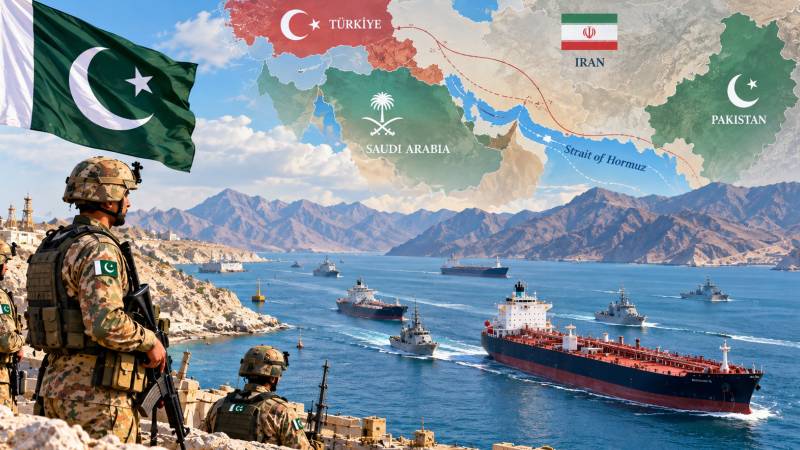
The Strait of Hormuz is very likely to remain severely constrained for routine commercial traffic over the next 14 days, although reports do not establish a complete physical closure. The reported Iranian threat that prompted the removal of 12 B-1 bombers from RAF Fairford does not establish a US decision to resume strikes. Houthi attacks on Aden and Saudi targets add a separate risk of regional escalation.
Executive summary
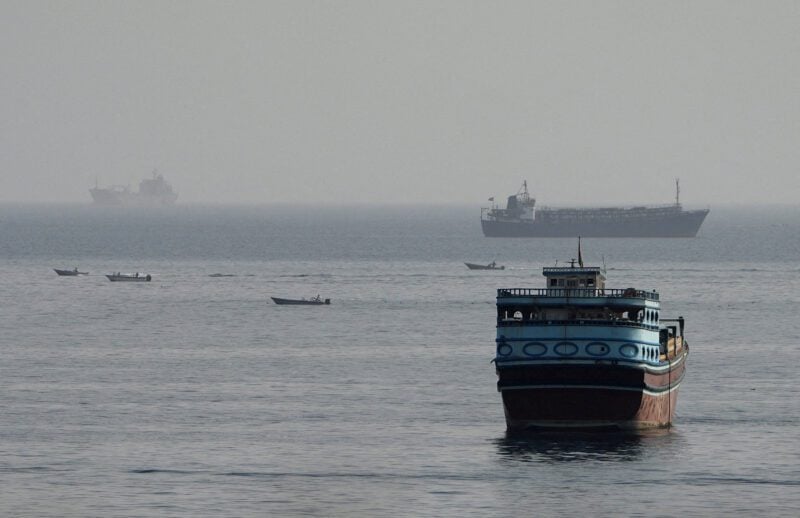
Reporting describes severe disruption in the Strait of Hormuz, including single-digit daily ship transits, recent projectile strikes and an IRGC warning about routes it considers illegal. Other reporting cites 13 million barrels per day moving through the strait, while September data show Gulf oil exports recovering from August, so monthly flows do not settle the current transit picture. India reported 12 crew injured aboard the Panama-flagged On Peace; separate reporting says three crew were killed aboard Settebello off Oman, but does not establish whether these were separate incidents. A US official attributed the removal of all 12 B-1 bombers from RAF Fairford to a credible Iranian threat; Iran denied involvement in the alleged plot. In Yemen, Houthi attacks on Aden and reported attacks on Saudi targets are coinciding with a Saudi-backed government counter-offensive near Bab al-Mandab. Qatar says US-Iran contacts continue, but statements from Tehran and Washington indicate substantial differences over the terms of a settlement.
Change from previous assessment
Since the 6 October brief, the assessment has shifted from describing Hormuz as hazardous without evidence of complete closure to judging routine commercial passage very likely to remain severely constrained. Confidence in complete closure remains limited because reporting on current transit volumes conflicts with September export recovery and Chris Wright's disputed 13 million barrels per day figure. New reporting attributes the RAF Fairford B-1 withdrawal to a credible Iranian threat, but does not establish Iranian state direction or a US decision to resume strikes. The picture of Yemen has also sharpened: the 7 October attack near Aden International Airport and reported Houthi attacks on Saudi targets add immediate spillover risk, while battlefield control near Dhubab and Mokha remains contested. Qatar's latest statement reports continuing US-Iran contacts, countered by dismissive remarks from Iran's president and incompatible public negotiating terms.
Key judgments
- Very likely, routine commercial passage through the Strait of Hormuz will remain severely constrained through 21 October, but public reporting does not establish a complete physical closure. Major-media reporting describes an Iranian closure and daily transits falling to single digits; UKMTO issued four attack warnings and a separate advisory, and an IRGC adviser said routes considered illegal would soon be blocked. Against this, US Energy Secretary Chris Wright cited 13 million barrels per day passing through the strait, a figure Iran disputed, and September data show a recovery in Gulf exports. Those monthly figures do not establish current daily transit levels. (Confidence: medium · ASSESSED)
- I&W: Confirm: UKMTO warnings continue and reported commercial transits remain in single digits on successive days. (0-14 days)
- I&W: Break: independently recorded commercial transits exceed 30 per day for seven consecutive days. (0-14 days)
- It is likely that the 5 October projectile strike on the Panama-flagged On Peace injured 12 seafarers; separate reporting says a projectile strike off Oman killed three crew aboard Settebello. The available reports do not establish whether these accounts concern separate incidents. India did not identify the attacker in the On Peace case. (Confidence: medium · REPORTED)
- I&W: Confirm: an Indian or Omani official statement, or a vessel investigation, identifies the vessels and casualty figures for both incidents. (0-14 days)
- I&W: Break: an official investigation identifies a different vessel or publishes casualty figures inconsistent with the reported accounts. (0-14 days)
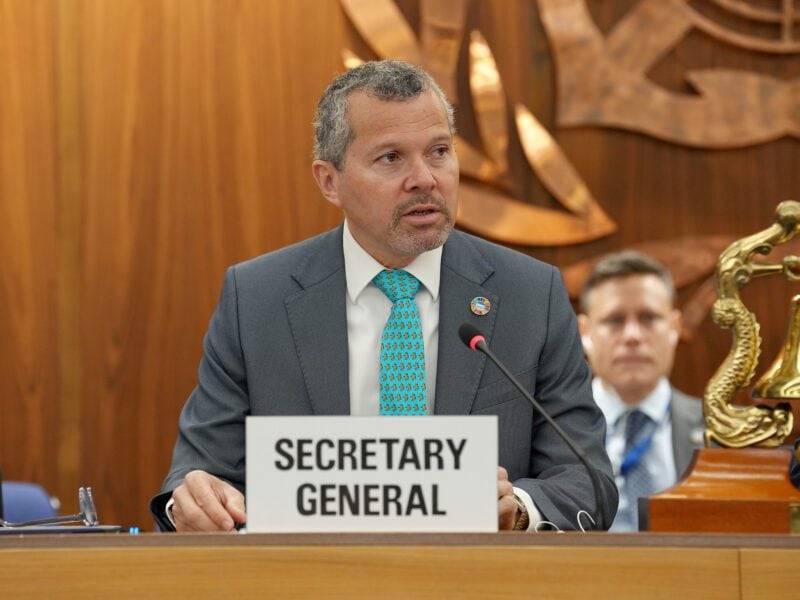
- It is unlikely that public reporting establishes Iranian responsibility for every recent tanker strike. India did not name an attacker for the On Peace strike, and UKMTO described an oil tanker hit on 5 October by an unknown projectile. A trade-publication report attributes 12 tanker and gas-carrier hits in the preceding seven days to Iran, but the supplied reporting does not corroborate that attribution incident by incident. The IMO reported 80 verified attacks and at least 22 seafarer deaths by September, without identifying the perpetrators of each attack. (Confidence: low · ASSESSED)
- I&W: Confirm: an official investigation or flag-state authority identifies the IRGC or another Iranian actor as responsible for a specific recent tanker strike. (0-14 days)
- I&W: Break: an official investigation attributes the On Peace or Settebello strike to a non-Iranian actor or rules out an Iranian link. (0-14 days)
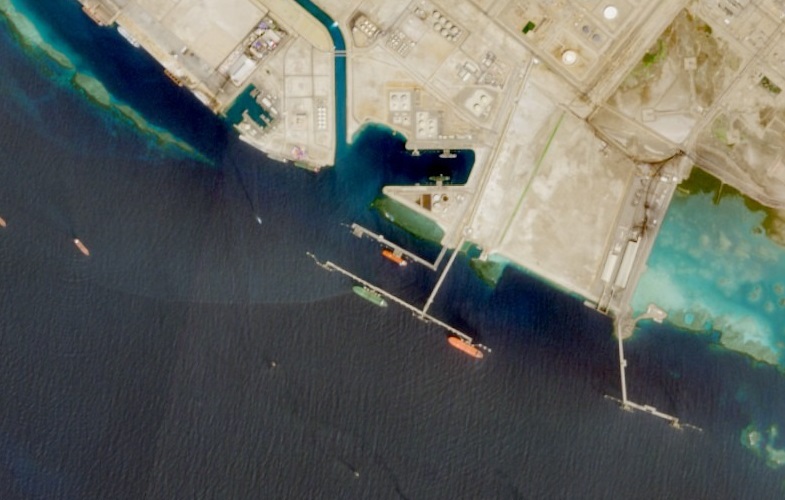
- Likely, the US Navy blockade has sharply reduced Iranian crude exports, but the available reporting does not support a claim that all Iranian oil movements have stopped. UANI reported no crude loadings at Iranian export terminals in September and estimated exports at 50,789 barrels per day that month; it also tracked ship-to-ship crude transfers off Malaysia and an estimated 10 million barrels in floating storage. A separate report that exports fell to zero conflicts with those figures. (Confidence: medium · ASSESSED)
- I&W: Confirm: satellite monitoring continues to show no Iranian terminal loadings and vessel tracking records crude exports at or below the September estimate. (1-3 months)
- I&W: Break: satellite imagery confirms renewed Iranian terminal loadings or vessel tracking verifies a tanker crossing the blockade line with Iranian crude. (1-3 months)
- Very likely, the removal of all 12 B-1 bombers from RAF Fairford on 5 October was driven by a threat warning; it is unlikely, by itself, to show that Washington has decided to resume strikes on Iran. A US official told NPR that the withdrawal followed a credible threat from Iran, possibly involving a drone. Iran denied involvement in the alleged plot, and UK authorities had arrested five men near the base. The supplied reporting does not establish Iranian state direction of the alleged plot. (Confidence: medium · ASSESSED)
- I&W: Confirm: UK or US authorities publicly describe the threat and provide evidence linking it to an Iranian actor. (0-14 days)
- I&W: Break: UK investigators publicly rule out an Iran-linked threat and the US military describes the B-1 withdrawal as a routine rotation. (0-14 days)
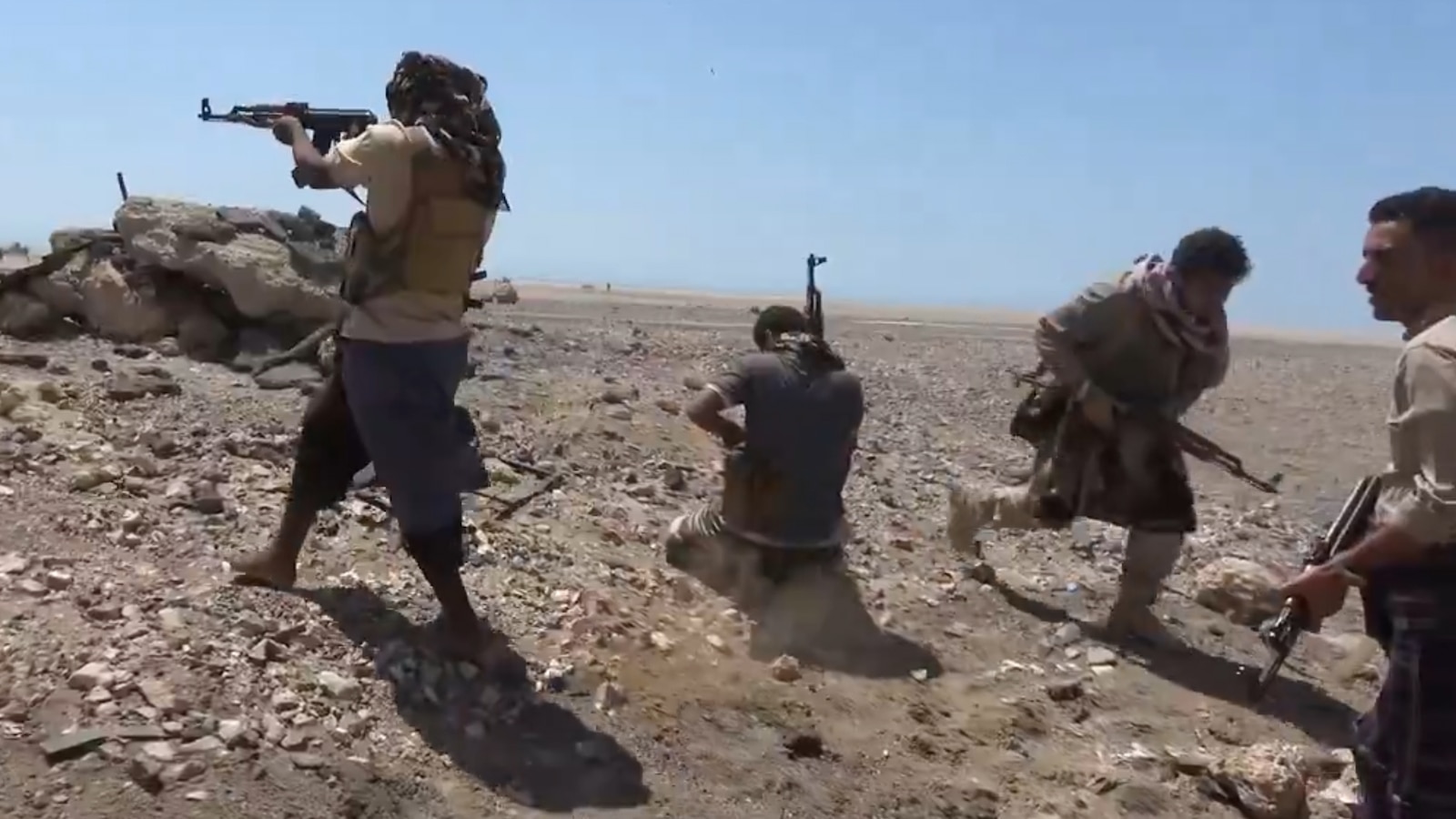
- Likely, Houthi attacks on Yemeni and Saudi targets will continue over the next 14 days as Yemeni government forces and the Saudi-led coalition counter-attack near Bab al-Mandab. Yemen's Transport Ministry said a missile landed near Aden International Airport on 7 October, prompting the diversion of a Cairo flight to Jeddah. Saudi Arabia acknowledged attacks on two airports, while Houthi claims of strikes on King Khalid International Airport in Riyadh were not immediately confirmed. Control around Dhubab and Mokha remains contested: coalition claims of gains conflict with reporting of continuing fighting and a premature government claim of reaching Mokha. (Confidence: medium · ASSESSED)
- I&W: Confirm: Yemen's Transport Ministry reports another attack on Aden International Airport, or Saudi authorities report a new Houthi attack or interception near a named airport or oil facility. (0-14 days)
- I&W: Break: Yemeni and Saudi authorities report no further attacks or interceptions for 14 days and independent reporting confirms a stable front around Dhubab and Mokha. (0-14 days)
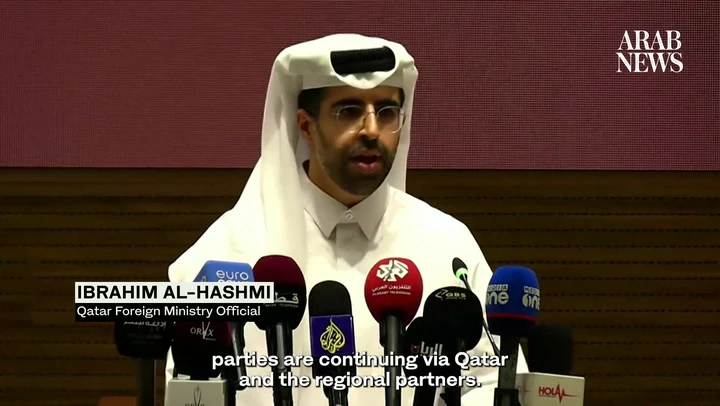
- There is a roughly even chance that US-Iran contacts described by Qatar continue over the next month; an agreement reopening the Strait of Hormuz is unlikely in that period. Qatari official Ibrahim Al-Hashmi said talks and message exchanges were continuing, while Iranian President Masoud Pezeshkian called talks meaningless. Mohammad Bagher Ghalibaf said full reopening depended on US concessions, including a ceasefire and lifting the blockade; Vice President JD Vance said a deal required Iran to reduce nuclear enrichment. Pakistan is also credited with earlier mediation, so the intermediary role is not settled in the reporting. (Confidence: medium · ASSESSED)
- I&W: Confirm: Qatar publicly reports a further US-Iran contact or exchange of messages within the next month. (0-30 days)
- I&W: Break: Qatar reports that the channel has been suspended, or either government publicly withdraws from the talks. (0-30 days)
Outlook & scenarios
Restricted shipping and stalled diplomacy (55%)
The most likely course is continued low commercial transit through the Strait of Hormuz, intermittent attacks on shipping and no agreement on the conditions for reopening. Qatar continues to relay messages, but Washington and Tehran maintain incompatible public demands.
Limited diplomatic easing (25%)
Qatar and its regional partners sustain contact between Washington and Tehran. A limited understanding on transit rules or the blockade reduces pressure on shipping, without resolving the dispute over nuclear enrichment or Iran's other demands.
Wider Yemen and Gulf escalation (15%)
Houthi attacks on Aden or Saudi infrastructure continue while the Saudi-backed counter-offensive advances near Bab al-Mandab. Further disruption to airports, oil facilities or shipping increases pressure on Saudi Arabia and its partners to expand their military response.
Low-probability, high-impact wildcard: direct US-Iran exchanges resume (5%)
A new Iranian strike on Al Udeid Air Base or another US base prompts Washington to resume full-scale military operations. Direct exchanges widen the conflict and intensify disruption to Gulf shipping and energy exports.
Recommendations
- Maintain a daily Strait of Hormuz tracker that records UKMTO warnings, observed vessel transits, reported attack locations and oil-flow estimates. Keep monthly export data separate from daily transit counts.
- Keep the On Peace and Settebello incidents as separate entries until vessel identity, location and casualty reporting establish whether they were distinct attacks. Do not assign responsibility for either incident without incident-specific corroboration.
- Treat Iranian state involvement in the RAF Fairford plot as unconfirmed. Track public statements or investigative findings from UK and US authorities before using the alleged plot to assess Iranian intent.
- Track Houthi claims separately from Saudi and Yemeni official confirmation. Record verified attacks on Aden International Airport, named Saudi airports and oil facilities, and distinguish claims of territorial control from independently reported front-line positions near Dhubab and Mokha.
- For US-Iran diplomacy, compare public statements against the specific terms reported by each side: Hormuz access, the US blockade, frozen assets and nuclear enrichment. Do not assign sole mediator status to Qatar or Pakistan on the current reporting.
Confidence & uncertainty
Overall confidence is high for the occurrence of the main reported developments. Major-media and wire-service reporting, official statements from India, Qatar and Yemen's Transport Ministry, IMO incident totals, and Kpler and Vortexa measurements support the broad picture. Confidence is lower on responsibility for individual tanker attacks, the current daily transit rate through Hormuz and control around Dhubab and Mokha; these uncertainties are reflected in the relevant judgments.
Alternative analysis (red cell)
The Fairford reporting establishes that a credible threat was cited as the reason for withdrawing the bombers, but it does not establish that the threat was genuinely Iranian or that it was the decisive cause of the move. The conflicting accounts represented by claims faca9092-7d85-4594-b1c0-1de83fc657fe and eb759798-aa0c-4470-a280-da065c31f292 leave open a broader force-protection or operational explanation. The removal therefore supports a precautionary response to a reported threat, not a very-likely assessment of the specific causal chain.
Intelligence gaps
- [EEI 1.1 · UNCOVERED] Movement, dispersal, or emplacement of Iranian conventional or IRGC heavy assets (ballistic missile launchers, Khoramshahr/Toofan-class missile transporters, ground-to-ground TELs, air defense batteries, amphibious units) from garrison areas toward forward bases or coastal launch sites. Recommended collection: satellite/IMINT
- [EEI 1.2 · PARTIAL] Authenticated Iranian military orders, NSC/IRGC operations directives, or senior leadership statements explicitly directing strikes against Israel or US forces or authorizing cross-border operations. Recommended collection: human/diplomatic
- [EEI 1.3 · PARTIAL] Changes in Israeli and US force posture indicating anticipation of direct large-scale conflict, elevated readiness levels, mobilization notices, pre-positioning of munitions, or public/private orders to prepare offensive strikes. Recommended collection: open-source/diplomatic
- [EEI 2.1 · UNCOVERED] Observable pre-launch preparations for missile/rocket/cruise missile strikes (fueling, warhead mating, launcher orientation, support vehicle congregation) and abnormal munitions handling at known launch sites. Recommended collection: satellite/IMINT
- [EEI 2.2 · UNCOVERED] Indications of proxy arms shipments and weapons transfers (truck convoys, small boat transfers, container movements from Iran to proxies, new stockpiles in Lebanon, Iraq, Yemen, Syria). Recommended collection: maritime/AIS
- [EEI 2.3 · UNCOVERED] Evidence of cyber attack planning or active exploitation campaigns targeting Israeli or US military/critical infrastructure (emergence of new command-and-control servers, spear-phishing campaigns against defense personnel, successful intrusions). Recommended collection: cyber
- [EEI 3.1 · PARTIAL] Movements and posture changes of US regional platforms (carrier strike groups, amphibious ready groups, B-52/B-1/B-2 or fighter deployments, missile defense assets repositioning) and associated armament loadouts. Recommended collection: satellite/IMINT
- [EEI 3.2 · PARTIAL] Official or leaked US government/diplomatic communications indicating thresholds for strikes, authorization for offensive operations, or limits on action (NSC/DoD statements, congressional notifications, diplomatic notes). Recommended collection: diplomatic/human
- [EEI 3.3 · UNCOVERED] Changes in US base force-protection measures and rules of engagement at regional facilities (base lockdowns, evacuation notices, flight restrictions, activation of Local Defense Forces or missile intercept systems). Recommended collection: open-source/local reporting
- [EEI 4.1 · UNCOVERED] Hezbollah-specific indicators: convoys and logistics movements toward Lebanon, Israel border, artillery/rocket emplacement in southern Lebanon, documented strikes-preparation activity, public mobilization orders or recruitment drives. Recommended collection: satellite/IMINT
- [EEI 4.2 · PARTIAL] Houthi-attributed maritime attack indicators: AIS anomalies/loss of contact for commercial vessels, reports of missile/drone strikes or near-miss incidents in Bab al-Mandeb/Red Sea, Houthi claims paired with imagery of weapons launches. Recommended collection: maritime/AIS
- [EEI 4.3 · UNCOVERED] Militia cross-border attack evidence from Iraq/Syria: recorded rocket/mortar launch events into Israel or strikes against US facilities, movement of armed convoys toward border areas, and intercepted communications coordinating cross-border operations. Recommended collection: signals/ELINT
Cited sources
[1] The Friday Times · The United States’ War Of Choice Against Iran And Its Costs (B) · 7 October 2026 · sha256:10d2e7fac7b1 [2] gCaptain · A Dozen Seafarers Injured in Strait of Hormuz Tanker Attack, India Says (C) · 6 October 2026 · sha256:629eca54ff54 [3] The Jerusalem Post · Live Updates: Latest from Israel, Iran, and the Middle East | The Jerusalem Post (A) · 7 October 2026 · sha256:0646b9d4e14f [4] Informed Comment (Juan Cole), republishing The Conversation · Yemen is spiralling into another Civil War that could swiftly engulf in the entire Region (D) · 7 October 2026 · sha256:299617e16c96 [5] Reuters (republished by gCaptain) · Gulf Oil Flows Rise to Average 81% of Pre-war Rate in September (A) · 6 October 2026 · sha256:6cde5a909a33 [6] Bloomberg (republished by gCaptain) · Qatar Brings Empty LNG Ships Into Gulf in Potential Export Boost (A) · 7 October 2026 · sha256:6899ab11e3b4 [7] gCaptain · IMO Chief Decries Rising Toll on Seafarers Caught in Conflict (C) · 6 October 2026 · sha256:206e12392858 [8] The Maritime Executive · Seafarers Now Command Huge Bonuses for Hormuz Transits (C) · sha256:e8f62546ef90 [9] The Maritime Executive · Saudi Bypass Pipeline Quickly Rebounded After Attack, Export Data Shows (C) · sha256:35f4b3aaa01d [10] gCaptain · Iran’s Offshore Oil Stockpile Nears Exhaustion as Blockade Chokes New Supply (C) · 6 October 2026 · sha256:2b0ab0634033 [11] NPR (republished by WXXI News) · U.S. moves long-range bombers from U.K. And, Israel allegedly warned before Oct. 7 (A) · 7 October 2026 · sha256:73d3d8088310 [12] The Jerusalem Post · Live Updates: Latest from Israel, Iran, and the Middle East | The Jerusalem Post (A) · 6 October 2026 · sha256:b0b0e136ab15 [13] Associated Press (via ABC News) · What to know as the fighting in Yemen escalates while US-Iran tensions remain high (A) · 6 October 2026 · sha256:8bad8b760c9e [14] Arab News (arabnews.jp) · Qatar says US, Iran still in talks to end war (A) · 7 October 2026 · sha256:01b600baaad7 [15] gCaptain (republishing Reuters) · Houthis Attack Aden Airport as Fighting Intensifies in Yemen (A) · 7 October 2026 · sha256:c4b134e799e6
Source content hashes were computed at collection time; the cited text is preserved unmodified for the life of this product.
Red cell review: PARTIAL DISSENT
TLP:CLEAR