TLP:CLEAR · Disclosure is not limited.
Iran Conflict: Retaliation Warnings, Strike Risk and Hormuz Disruption
Time window: Last 1 day · Audience: General analyst · Type: Situation report · DTG: 2026-10-31 13:41Z · Overall confidence: HIGH
BLUF
Iranian Supreme Leader Mojtaba Khamenei has ordered an immediate response to renewed attacks without geographic limits, while reports of US-Israeli strike coordination and regional deployments keep the chance of renewed strikes after 3 November at roughly even. Qatar-mediated contacts continue, but the Strait of Hormuz remains heavily disrupted and the terms of any diplomatic arrangement are unsettled.
Executive summary
On 31 October, Mojtaba Khamenei met senior Iranian military commanders, warned of retaliation without geographic limits and ordered an update to Iran's target list. Separate reports describe US-Israeli coordination on a possible offensive and two US carrier strike groups in the region, with a third on the way, but the reporting does not establish an approved strike order. Qatar has returned to Tehran for mediation; the contents of a letter from US Vice President JD Vance and Iran's stated negotiating conditions remain disputed. Hormuz traffic has risen week on week but remains about 70 per cent below pre-conflict levels. Reports of attacks on multiple tankers and the attribution of a drone incident near Qeshm remain contested.
Change from previous assessment
Since the 30 October brief, the assessment of strike risk remains at roughly even chance; new reporting of US-Israeli offensive coordination and carrier deployments adds context but still does not establish an approved strike order. Iran's 31 October directives now provide clearer public evidence of an intended geographically broad response, and reports of parliamentary NPT withdrawal proposals add a new policy risk. Qatar has returned to Tehran, but the Vance letter's purpose and Iran's negotiating terms remain disputed. The Louise 1 attack and updated UKMTO figures add detail to the established assessment of severe Hormuz disruption. Initial reports of an IRGC drone capture or Isfahan missile launch are not corroborated by the current claims.
Key judgments
- A renewed US or joint US-Israeli strike campaign against Iran after 3 November remains a roughly even chance over the next two weeks. Reports of US-Israeli coordination on a possible offensive and two carrier strike groups in the region, with a third on the way, raise concern; a separate report placing possible attacks from 4 November is based on social media. None of the supplied reporting establishes an approved strike order, and Donald Trump has said the war will be wrapped up soon. (Confidence: medium · ASSESSED)
- I&W: Confirmation: the White House or Pentagon publicly announces a strike order, or Gulf allies receive formal notification of planned attacks on Iran. (0-14 days)
- I&W: Break: US officials publicly rule out further strikes and the reported third carrier deployment is cancelled or redirected. (0-14 days)
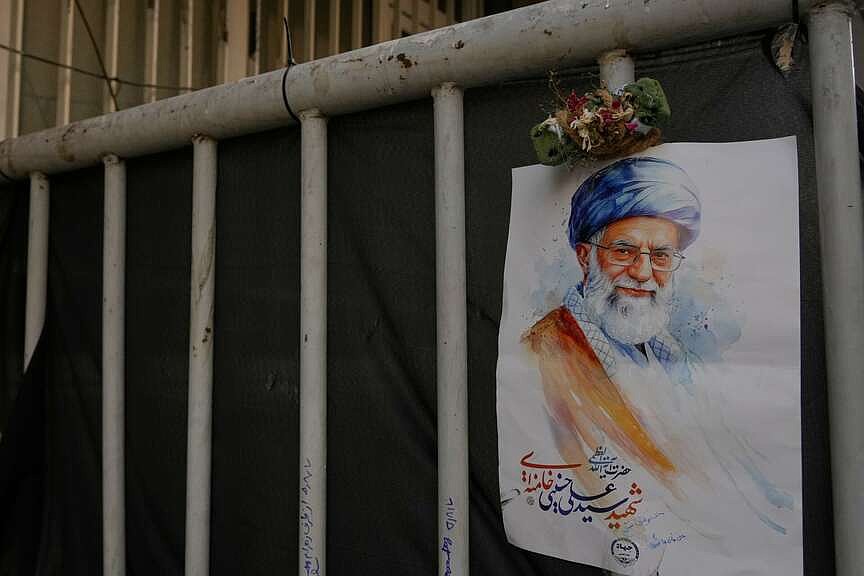
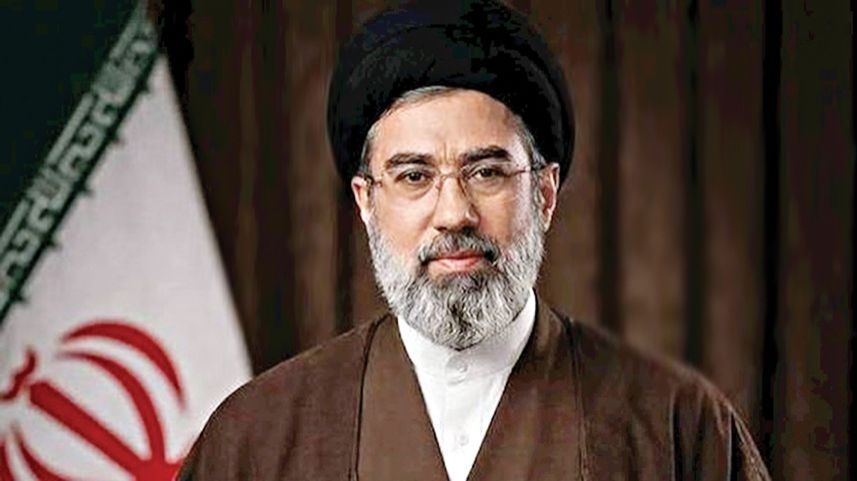
- Mojtaba Khamenei's 31 October directives are likely intended to deter renewed attacks while signalling that Iran's response could extend beyond its borders. He ordered an immediate and effective response without geographic limits, directed commanders to update the target list, and received readiness briefings covering the Strait of Hormuz, the Gulf of Oman and Iran's borders. These public directives do not establish that Iran has ordered an attack. Reports of increased weapons production conflict on whether the rise was several-fold or several orders of magnitude, so its scale is unconfirmed. (Confidence: medium · ASSESSED)
- I&W: Confirmation: Iranian commanders publicly identify new readiness measures or operational deployments beyond Iran, or the government announces implementation of the target-list directive. (0-30 days)
- I&W: Break: Mojtaba Khamenei or senior commanders publicly narrow the retaliation warning or announce a stand-down tied to negotiations. (0-30 days)
- Qatar-mediated contact between Iran and the US is likely to continue over the next two weeks, but a near-term agreement is unlikely on the supplied reporting. Qatari mediators have returned to Tehran, while Iran reportedly received a letter from JD Vance. Accounts conflict over whether the letter sought nuclear commitments and inspections or concerned medical supplies. Iran's reported conditions also differ: one account describes ending the US naval blockade, lifting sanctions and a guarantee against further attacks; another describes reopening Hormuz in exchange for a return to the June memorandum. (Confidence: medium · ASSESSED)
- I&W: Confirmation: Qatar announces another round of talks in Tehran or a formal exchange of proposals between Washington and Tehran. (0-14 days)
- I&W: Break: either government publicly suspends mediation or rejects further contact through Qatar. (0-14 days)
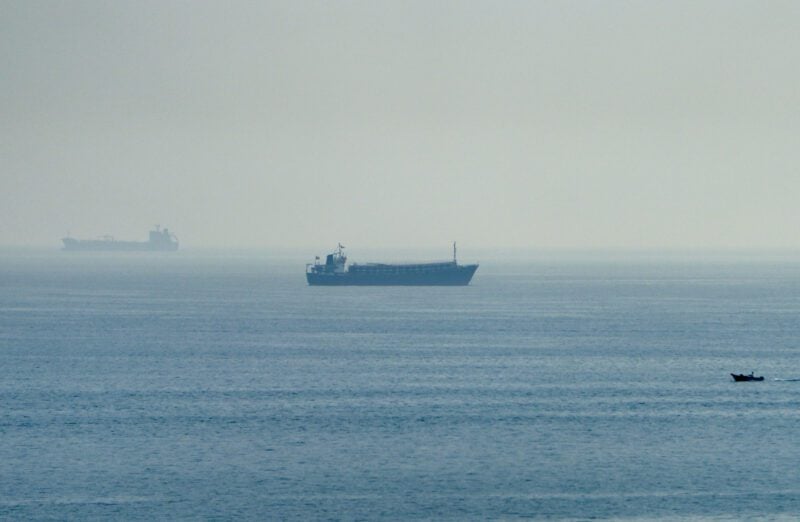
- Commercial traffic through the Strait of Hormuz is very likely to remain well below pre-conflict levels over the next two weeks, despite a week-on-week rise in transits. UKMTO reported 155 inbound and 122 outbound transits in its latest seven-day period, about 70 per cent below pre-conflict levels. UKMTO and maritime reporting describe an attack on the tanker Louise 1 near Oman's Khasab on 29 October; its crew was safe and the vessel resumed its voyage. Claims that several other tankers struck mines are inconsistent in their vessel counts, and Centcom's statement that the strait had been cleared of mines conflicts with Iranian claims of recent mine incidents. (Confidence: medium · ASSESSED)
- I&W: Confirmation: UKMTO's weekly inbound and outbound transit totals remain at least 50 per cent below pre-conflict levels, or UKMTO reports another attack on a named commercial vessel. (0-14 days)
- I&W: Break: UKMTO reports transit volumes returning to within 20 per cent of pre-conflict levels for two consecutive weekly periods. (1-2 months)
- Iranian parliamentary pressure for withdrawal from the Nuclear Non-Proliferation Treaty is likely to continue, but formal withdrawal is unlikely in the next month on current reporting. A committee member said 10 withdrawal proposals had been registered, and lawmakers including Mahmoud Nabavian have called for withdrawal or a change in nuclear doctrine. The supplied reporting establishes parliamentary advocacy, not a government decision or formal withdrawal process. (Confidence: low · ASSESSED)
- I&W: Confirmation: Iran's parliament schedules or adopts a withdrawal measure, or the government formally announces steps to leave the treaty. (0-1 month)
- I&W: Break: Iranian officials publicly reject withdrawal and parliament removes the proposals from consideration. (0-1 month)
- Responsibility for the reported 31 October drone attack on fishing boats south of Qeshm remains unresolved. Local authorities attributed the attack to a US drone, while another account described drones as enemy aircraft without naming an operator; the two fishermen reported missing were later found in good health. The attribution rests on conflicting reporting and lacks independent corroboration. (Confidence: low · REPORTED)
- I&W: Break: independently verified imagery, forensic findings or an official investigation identifies the operator of the drones. (0-14 days)
- I&W: Confirmation: further public accounts continue to disagree on attribution and no independent evidence identifies the operator. (0-14 days)
Outlook & scenarios
Managed confrontation with talks continuing (45%)
Iran sustains its public deterrence warnings while Qatar maintains contact with Tehran and Washington. Neither side initiates a new strike campaign. Hormuz traffic remains well below pre-conflict levels, with further incidents and vessel counts disputed.
Renewed strikes followed by Iranian retaliation (30%)
The US or Israel renews strikes on Iran after 3 November. Tehran follows through on its stated response policy, widening the risk to US and Israeli interests beyond Iran. Qatar's mediation loses momentum and shipping through Hormuz faces further disruption.
Negotiated maritime pause (15%)
Qatar sustains talks and the parties use Iran's reported proposal to reopen the Strait of Hormuz in exchange for a return to the June memorandum as a basis for a limited pause. The reported differences over sanctions, the naval blockade and nuclear terms remain obstacles to a broader agreement.
Low-probability, high-impact regional spillover (10%)
A renewed US or Israeli strike prompts Iranian action outside Iran, consistent with Mojtaba Khamenei's geographic-limit warning. A further attack on commercial shipping or US and Israeli assets broadens the conflict and further depresses Hormuz traffic.
Recommendations
- For the next 14 days, track official US and Israeli statements and observable carrier deployments separately from social-media claims about strike dates. Do not treat reported planning or deployments as evidence of an approved order.
- Maintain a daily Hormuz incident and transit log using UKMTO reports. Record named vessels, reported positions, incident types and crew outcomes separately from Iranian claims about mines or unauthorised routes.
- Seek confirmation from Qatar, Iran and the US on the next mediation round and the contents of the Vance letter. Keep the competing accounts of the letter and Iran's negotiating conditions distinct until confirmed.
- Track whether Iran's parliament schedules action on the 10 reported NPT withdrawal proposals. Distinguish lawmakers' calls from formal government steps.
- Do not attribute the Qeshm drone attack to the US or another actor without independent corroboration. Monitor for verified imagery, forensic findings or an official investigation.
Confidence & uncertainty
Overall confidence is high in the core event picture because UKMTO transit figures and the Louise 1 attack are supported by maritime reporting, while several major media outlets report Mojtaba Khamenei's directives and Qatar's return to Tehran. Those accounts of the directives largely draw on the same official statement, rather than independent observation. The number of tankers affected, the contents of the Vance letter, Iran's current negotiating terms and responsibility for the Qeshm drone attack remain uncertain; confidence in those specific details is lower.
Alternative analysis (red cell)
The directives may be better read as coercive retaliation signaling and operational preparation than as primarily deterrent messaging. Claims, and b7d6fcd4-87e5-41d2-a6ee-dfd4f3d9fafc describe an expansive target set and geographically broad readiness, while the production discrepancy between claims 6c8841b7-5c5f-4827-8595-935b51da5cc4 and 5129c0c3-023e-402f-928d-4c96bf30ee0c limits confidence in the scale of preparations. The supplied evidence therefore supports a credible retaliatory posture but does not establish the leadership's principal intent.
Intelligence gaps
- [EEI 1.1 · PARTIAL] Observed repositioning, sustained increases, or new forward basing of Iranian conventional or IRGC forces (armored units, missile batteries, aircraft, naval vessels) toward borders or regional launch points. Recommended collection: IMINT/satellite
- [EEI 1.2 · PARTIAL] Hezbollah or other Iran-aligned proxy forces conducting mass mobilization, visible rocket/artillery emplacements, cross-border firing incidents, or preparations for cross-border operations from Lebanon, Syria, Iraq or Yemen. Recommended collection: HUMINT/ground ISR
- [EEI 1.3 · PARTIAL] Detection of increased missile/rocket/torpedo launch events attributable to Iran, Israel, or proxies (launch signatures, trajectories, impact points) indicating a sustained campaign rather than isolated strikes. Recommended collection: SIGINT/IMINT/air-defense radar
- [EEI 1.4 · UNCOVERED] Interdicted or observed shipments (air, sea, land manifests, seizures, satellite imagery of transfers) of advanced weapons or missile components from Iran toward proxy groups or forward staging points. Recommended collection: maritime/AIS
- [EEI 2.1 · UNCOVERED] Satellite or on-the-ground imagery showing fires, damage, or operational shutdown at major oil export facilities, refineries, storage terminals, or key pipeline infrastructure in the Gulf and Red Sea. Recommended collection: IMINT/satellite
- [EEI 2.2 · PARTIAL] Commercial vessel incidents: AIS transponder shutdowns, distress signals, reported hull/engine damage, boardings, or confirmed attacks on tankers/merchant ships transiting the Strait of Hormuz, Bab al-Mandeb, or eastern Mediterranean. Recommended collection: maritime/AIS
- [EEI 2.4 · UNCOVERED] Rapid increases in war-risk insurance premiums for Middle East routes, shipping company advisories to avoid region, or major charter cancellations tied to the conflict. Recommended collection: financial/open-source
- [EEI 3.1 · PARTIAL] Movement/arrival of major foreign military assets into the region: US carrier strike groups, amphibious ready groups, strategic bomber flights, Russian/Chinese naval taskings, or allied expeditionary units (visible in AIS, NOTAMs, satellite imagery, official releases). Recommended collection: IMINT/satellite
- [EEI 3.2 · UNCOVERED] Official expedited arms transfers, basing/overflight agreements, or declarations of operational support (formal government announcements, defense ministry releases, logistics flight manifests). Recommended collection: open-source/diplomatic
- [EEI 3.3 · UNCOVERED] Embassy evacuations, large-scale personnel movements, issuance of government travel bans/advisories, or multinational security alerts affecting foreign nationals and diplomatic posture in the region. Recommended collection: diplomatic/open-source
Red cell review: PARTIAL DISSENT, KJ-5 downgraded MEDIUM→LOW (kj_single_origin)
TLP:CLEAR