TLP:CLEAR · Disclosure is not limited.
Iran Conflict: Strike Risk, Nuclear Verification and Gulf Shipping
Time window: Last 1 day · Audience: General analyst · Type: Situation report · DTG: 2026-11-20 09:18Z · Overall confidence: MEDIUM
BLUF
A US strike on Iran before 1 January 2027 is unlikely, but the chance of US action in January to March is roughly even. Iran's unresolved IAEA verification gap and attacks on shipping keep regional risks elevated; reporting on attacks against Bahrain and Kuwait is inconsistent.
Executive summary
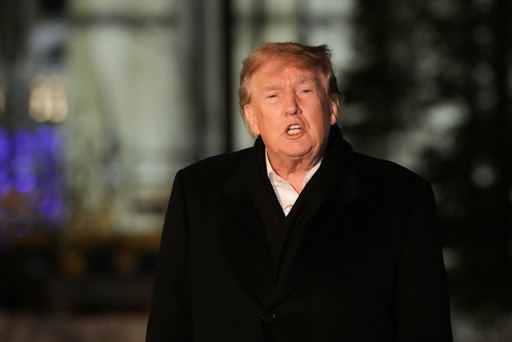
Reporting from 19 to 20 November presents mixed signals on US military action. President Donald Trump said he was not rushing a decision and would revisit it after the new year, while US military officials reportedly described forces ready to strike Iranian energy, drone and missile sites on short notice. Mossad chief Roman Gofman reportedly asked Washington to resume attacks. Separately, the IAEA safeguards picture remains unresolved, and maritime reporting records attacks on vessels and risks extending from the Strait of Hormuz to the Gulf of Oman. Reports of Iranian attacks on Bahrain and Kuwait do not agree on whether Kuwait was targeted.
Change from previous assessment
The prior assessment that a large US air campaign was unlikely over the next 14 days is retained. The post-New Year risk is now assessed as roughly even, based on new reporting about US force readiness, a third carrier strike force and Roman Gofman's reported request for renewed attacks; none establishes that Trump has authorised a strike. The shipping assessment is supported by new IMO figures and a MARAD alert describing risks on both sides of the conflict. The judgement that further attacks on Bahrain or Kuwait are likely is retained, but confidence is lowered from medium to low because the current reports disagree about whether Kuwait was attacked and lack official confirmation. A new judgement addresses the IAEA verification gap and reports of NPT withdrawal discussions.
Key judgments
- A renewed US strike on Iran before 1 January 2027 is unlikely, while a strike between January and March 2027 is a roughly even chance. Trump said he was not rushing a decision and would wait until after the new year. US military officials told The New York Times that Navy vessels, fighter jets and bombers were ready on short notice to strike Iranian energy, drone and missile sites; US Central Command also reported a third aircraft carrier strike force in its area. Mossad chief Roman Gofman reportedly asked Washington to resume attacks at Benjamin Netanyahu's direction. These reports indicate readiness and Israeli advocacy, not a US order. The baseline is contested: the White House said a 7 April ceasefire ended hostilities, while another account alleges the United States continued bombing. IRGC spokesman Hossein Mohebbi described US preparations as psychological operations, but that low-reliability social-media report does not independently disprove the readiness reporting. An Israeli military official assessed that the likelihood of Iran moving first had increased. The Senate rejected a war powers resolution by 51 to 48 on 19 November; reports say the incoming Democratic-led Congress will prioritise reviewing the war after it begins on 3 January. (Confidence: medium · ASSESSED)
- I&W: Confirmation of near-term restraint: Trump or the White House repeats that no Iran decision is due before 1 January. Break: the White House announces authorisation or US forces strike an Iranian site by 4 December. (0-14 days)
- I&W: Confirmation of post-New Year risk: the White House announces a decision to resume strikes or US forces strike Iranian energy, drone or missile sites. Break: Trump rules out strikes through March and US Central Command announces the third carrier strike force has left its area. (1-3 months)
- Iran's safeguards gap is likely to remain a nuclear and diplomatic flashpoint over the next three months. A joint statement by France, Germany, the UK and the US says Iran has not implemented modified Code 3.1 and continues to prevent IAEA verification of compliance with relevant UN Security Council resolutions. The IAEA has lost continuity of knowledge of Iran's previously verified high-enriched uranium stockpile for 18 months, lacks access to the declared enrichment plant in Isfahan, and cannot rule out diversion of declared nuclear material. The only reported in-field verification activity since February 2026 has been at Bushehr. Separate reporting says Iran's parliament is seriously discussing withdrawal from the NPT, and lawmaker Alireza Salimi said IAEA Director General Rafael Grossi should not be allowed into Iran. That reporting indicates political pressure, not a decision to withdraw. (Confidence: medium · ASSESSED)
- I&W: Confirmation: the IAEA reports continued lack of access to Isfahan or continued loss of continuity on the high-enriched uranium stockpile. Break: the IAEA verifies renewed access and restored knowledge of the stockpile. (1-3 months)
- I&W: Confirmation: Iran's parliament introduces or advances a formal NPT withdrawal measure, or Iran bars Grossi from entering the country. Break: parliament withdraws a formal measure and Iran sets a timetable for renewed IAEA inspections. (1-3 months)
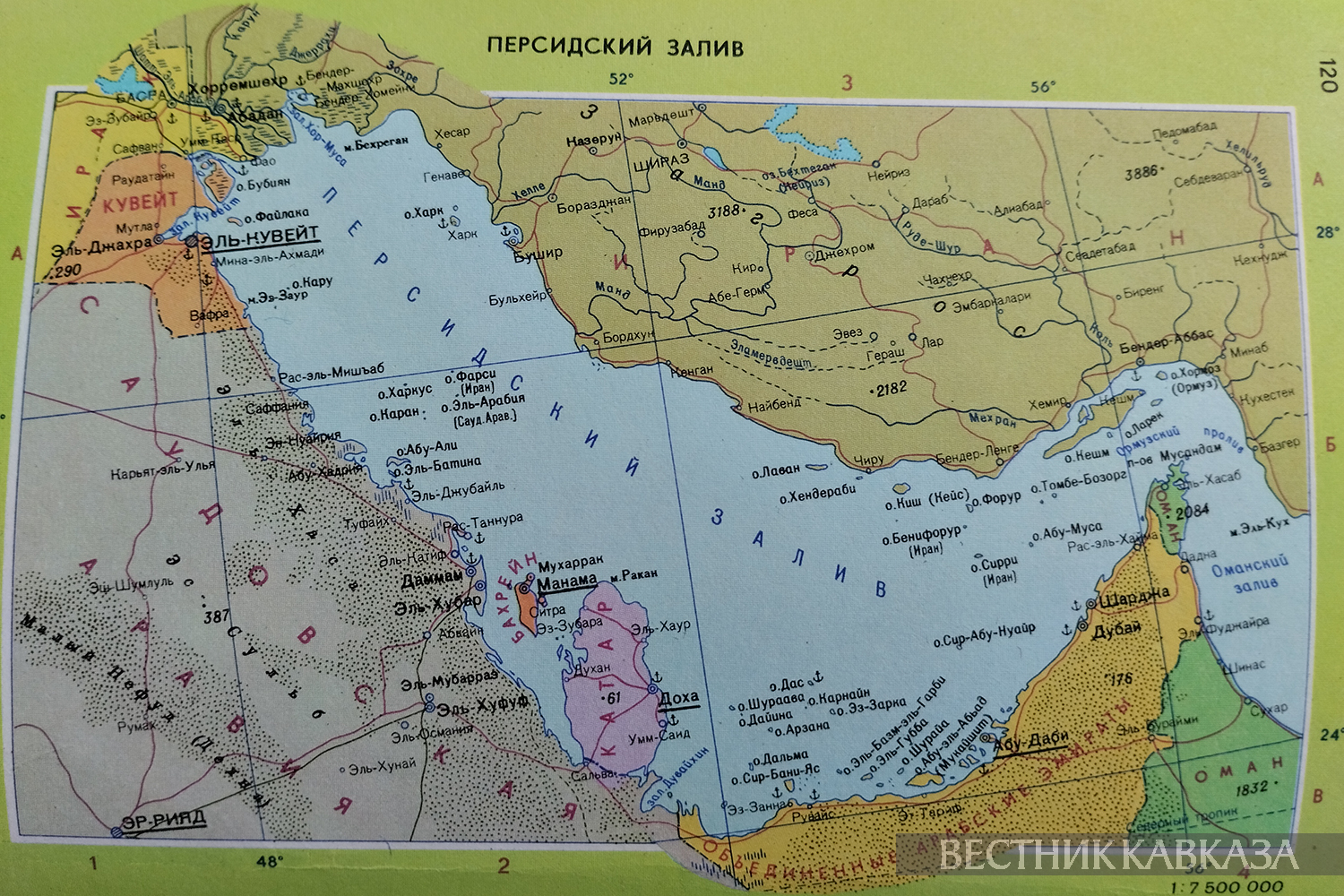
- Commercial shipping through the Strait of Hormuz and the Gulf of Oman is very likely to remain hazardous over the next 14 days, although the reporting does not establish that the Strait is closed. The International Maritime Organization recorded about 130 vessel attacks since the conflict began, with at least 25 seafarers killed; October was the worst month, with 35 vessels targeted. A US Maritime Administration alert says merchant ships face kinetic action from both sides and that the threat extends to Gulf anchorages and the Gulf of Oman. CENTCOM has claimed responsibility for disabling or destroying at least two dozen vessels, some identified as part of the IRGC shadow fleet. OPEC reported tanker insurance costs of $12.29 per barrel by the end of October, about 200 times the January level. (Confidence: medium · ASSESSED)
- I&W: Confirmation: the IMO records another vessel attack in the Strait of Hormuz or Gulf of Oman, or MARAD reports a further expansion of the threat to Gulf anchorages. Break: MARAD downgrades its alert and the IMO reports no new attacks during the period. (0-14 days)
- Further Iranian attacks on US-linked facilities in Bahrain or Kuwait are likely over the next 14 days, but confidence is low. Reporting says Iran launched two drone attacks against Bahrain and separately says Kuwait was attacked again; another account attributes strikes to Iran in both Bahrain and Kuwait. The accounts do not agree on whether Kuwait was targeted, and the available reporting does not provide official confirmation of the attacks. (Confidence: low · ASSESSED)
- I&W: Confirmation: Bahrain or Kuwait publicly attributes a new drone or missile interception at a named facility to Iran. Break: either government corrects or denies the reported Kuwait attack and reports no further Iranian-attributed incidents. (0-14 days)
Outlook & scenarios
Deferred US decision and continued pressure (55%)
Trump maintains his stated deferral until after 1 January, and no US strike occurs before then. US forces remain prepared, but no public order follows. IAEA access remains unresolved and shipping through the Strait of Hormuz and Gulf of Oman remains hazardous.
Limited US strikes after the New Year (30%)
After 1 January, Trump orders limited strikes on Iranian energy, drone or missile sites. Iran responds against US-linked facilities in Bahrain or Kuwait, or against commercial shipping, widening the confrontation. The Senate vote and the incoming Congress shape the political debate but do not by themselves establish whether an order will be issued.
Low-probability, high-impact first move and regional escalation (15%)
Iran initiates a strike, or an incident is misattributed, prompting US action and further attacks on Gulf facilities or commercial vessels. An Israeli military official assessed that the likelihood of Iran moving first had increased; IRGC spokesman Hossein Mohebbi described US preparations as psychological operations. Neither account independently establishes intent.
Recommendations
- Maintain separate warning lines for US action before 1 January and after the New Year. Treat reported readiness and the third carrier strike force as indicators of capability, not proof that Trump has ordered an attack.
- Keep Iran's NPT discussion distinct from a formal withdrawal decision. Track official IAEA reporting on access to Isfahan, verification at Bushehr and continuity of knowledge of the high-enriched uranium stockpile.
- Treat Bahrain and Kuwait attack attribution as provisional. Seek confirmation from the governments or US military before describing a new Iranian strike, and record which location each report identifies.
- Use IMO and MARAD updates to assess shipping exposure in the Strait of Hormuz, Gulf of Oman and Gulf anchorages. Distinguish attacks attributed to Iran from CENTCOM blockade enforcement, and do not describe the Strait as closed without supporting reporting.
- Add 3 January 2027, when the new Congress is reported to begin, to the political monitoring calendar. Track public statements and war powers actions separately from military orders.
Confidence & uncertainty
Overall confidence is medium. The IAEA safeguards concerns and Senate vote are supported by official or major-media reporting, while the maritime assessment draws on figures attributed to the IMO and OPEC and a MARAD alert reported by a major outlet. The timing of any US strike remains uncertain: readiness reporting includes anonymous officials, and the White House account of the ceasefire conflicts with a separate claim of continued US bombing. Reports of attacks on Bahrain and Kuwait are less well corroborated and disagree on the locations involved.
Alternative analysis (red cell)
The available reporting does not establish a reliable pattern of Iranian attacks on US-linked facilities in Bahrain or Kuwait. One account limits the reported attacks to Bahrain (e665bd07-b047-49b9-b4ab-8b9955545205), while other claims extend them to Kuwait and are explicitly inconsistent in the contradiction ledger. Accordingly, the next-14-day risk is best treated as indeterminate pending official confirmation and independent attribution.
Intelligence gaps
- [EEI 1.1 · UNCOVERED] Observed repositioning, sustained increases, or new forward basing of Iranian conventional or IRGC forces (armored units, missile batteries, aircraft, naval vessels) toward borders or regional launch points. Recommended collection: IMINT/satellite
- [EEI 1.2 · PARTIAL] Hezbollah or other Iran-aligned proxy forces conducting mass mobilization, visible rocket/artillery emplacements, cross-border firing incidents, or preparations for cross-border operations from Lebanon, Syria, Iraq or Yemen. Recommended collection: HUMINT/ground ISR
- [EEI 1.3 · PARTIAL] Detection of increased missile/rocket/torpedo launch events attributable to Iran, Israel, or proxies (launch signatures, trajectories, impact points) indicating a sustained campaign rather than isolated strikes. Recommended collection: SIGINT/IMINT/air-defense radar
- [EEI 1.4 · UNCOVERED] Interdicted or observed shipments (air, sea, land manifests, seizures, satellite imagery of transfers) of advanced weapons or missile components from Iran toward proxy groups or forward staging points. Recommended collection: maritime/AIS
- [EEI 2.1 · PARTIAL] Satellite or on-the-ground imagery showing fires, damage, or operational shutdown at major oil export facilities, refineries, storage terminals, or key pipeline infrastructure in the Gulf and Red Sea. Recommended collection: IMINT/satellite
- [EEI 2.3 · UNCOVERED] Significant and sustained reductions or rerouting of tanker transits through the Strait of Hormuz (ship traffic counts, pilot reports, port call cancellations) and announcements of closure or restricted navigation zones (NOTAMs, maritime advisories). Recommended collection: maritime/NOTAMs
- [EEI 3.2 · PARTIAL] Official expedited arms transfers, basing/overflight agreements, or declarations of operational support (formal government announcements, defense ministry releases, logistics flight manifests). Recommended collection: open-source/diplomatic
- [EEI 3.3 · UNCOVERED] Embassy evacuations, large-scale personnel movements, issuance of government travel bans/advisories, or multinational security alerts affecting foreign nationals and diplomatic posture in the region. Recommended collection: diplomatic/open-source
Red cell review: PARTIAL DISSENT
TLP:CLEAR