TLP:CLEAR · Disclosure is not limited.
Iran Conflict: US-Iran Exchange Raises Regional Escalation Risk
Time window: Last 1 day · Audience: General analyst · Type: Situation report · DTG: 2026-08-31 16:40Z · Overall confidence: HIGH
BLUF
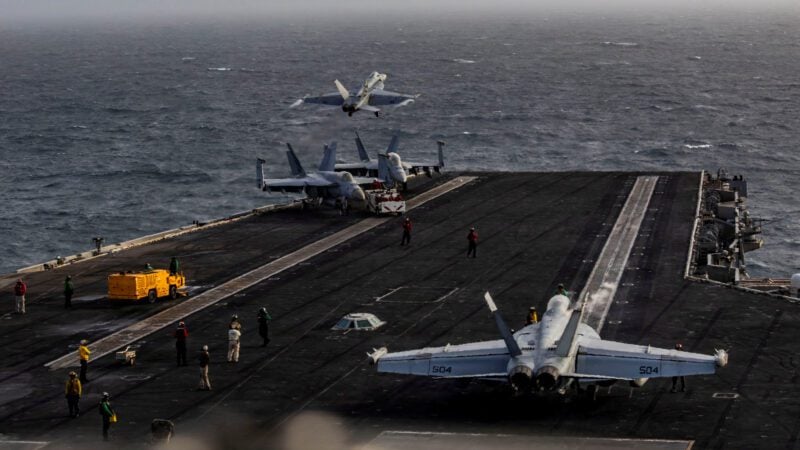
The 30 August US strike on two Iranian launchers on Larak Island and Iran's retaliatory missile and drone attack on US bases in Jordan have ended the recent lull. Jordan's interception of eight missiles and the UAE's interception of an Iranian drone show that the conflict is placing additional states under direct pressure, while shipping through the Strait of Hormuz remains severely constrained.
Executive summary
US and Iranian forces exchanged strikes on 30 August after a lull of about one month. The Islamic Revolutionary Guard Corps attacked US bases in Jordan, while Jordanian forces intercepted eight missiles. The UAE reported intercepting an Iranian drone over its territorial waters, prompting condemnations from Qatar, Egypt, Kuwait and the GCC. Commercial traffic through the Strait of Hormuz remains low, with visible commodity vessel transits falling to five per day over the weekend, although the extent of any physical closure remains unresolved because some vessels have switched off their automatic identification systems and the US military says it cleared mines from shipping routes. Washington is maintaining sanctions pressure, while Iranian leaders combine threats of retaliation with conditional statements supporting diplomacy.
Change from previous assessment
Compared with the 30 August brief, the assessment now records a confirmed US strike on two Iranian launchers on Larak Island followed by an IRGC missile-and-drone attack on US bases in Jordan. The Jordanian interception of eight missiles and the UAE's interception of an Iranian drone raise the regional spillover assessment from general pressure across several theatres to direct pressure on Jordan and the UAE. Confidence in severe Hormuz disruption has increased because new Kpler and shipping reports show visible commodity traffic at five vessels per day, although the question of a complete physical closure remains unresolved. The sanctions assessment has shifted from likely persistence over 1-3 months to very likely near-term implementation, with a second bank targeted this week. Diplomatic activity remains present, but conditional Iranian openness to talks is now assessed against renewed strikes, sanctions and hostile messaging. This is an updated assessment, not an initial assessment.
Key judgments
- US-Iran hostilities are likely to continue through reciprocal strikes over the next 0-14 days, with Iran's Islamic Revolutionary Guard Corps retaining both the demonstrated ability and stated intent to attack US positions and regional targets. Reporting records US strikes on two Iranian launchers on Larak Island on 30 August, an IRGC missile-and-drone attack on US air bases in Jordan, and Jordanian interception of eight missiles. The IRGC has threatened a decisive response, while President Masoud Pezeshkian says Iran does not seek war but will respond to aggression. The exact timing of the Jordan attack remains unresolved because reports date it to 30 or 31 August. (Confidence: medium · ASSESSED)
- I&W: A further US strike on an Iranian launcher or a further IRGC missile or drone launch against US forces in Jordan or the UAE would confirm continued reciprocal escalation. (0-14 days)
- I&W: A jointly acknowledged US-Iran halt followed by seven consecutive days without a reported launch, strike or air-defence interception in Jordan or the UAE would break this judgement. (0-14 days)
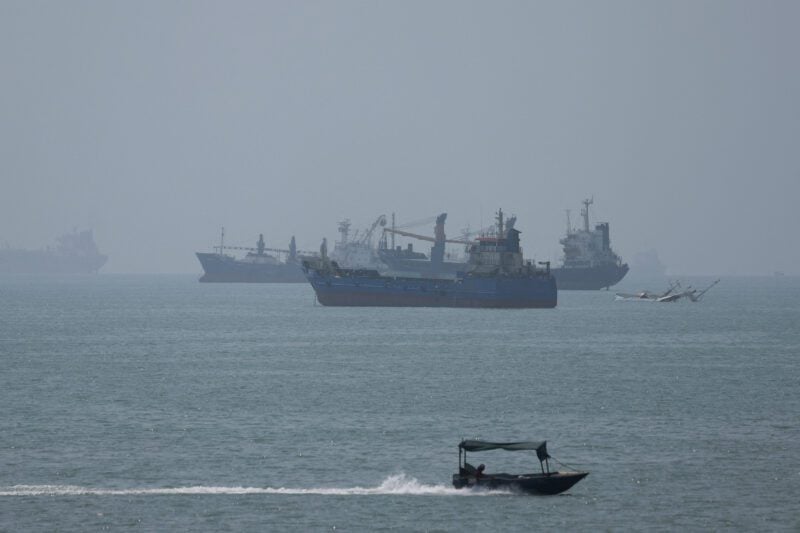
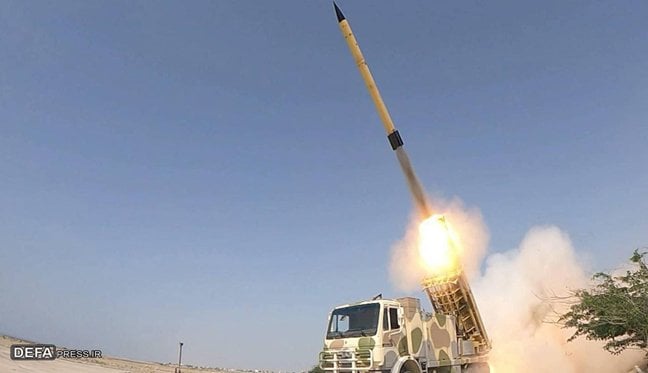
- Commercial movement through the Strait of Hormuz is likely to remain severely disrupted over the next 0-14 days, but a complete physical closure is unlikely to be established from the available reporting. Kpler recorded visible commodity transits of five vessels per day over the weekend, with traffic limited largely to small vessels, while 14 vessels passed on Friday, including a very large crude carrier carrying 2 million barrels of Qatari oil with its transponder switched off. War-risk insurance rates surged, major operators rerouted vessels, and the UK Maritime Trade Operations reported a tanker struck by an unknown projectile, the third attack in the strait within a week. The US military says it cleared mines from shipping routes, while reporting describes Iranian Fajr-5 systems that can deploy sea mines and notes that some vessels are not visible because their automatic identification systems are disabled. (Confidence: medium · ASSESSED)
- I&W: Daily Kpler counts remaining at or below five visible commodity vessels, combined with another UKMTO vessel incident or continued operator rerouting, would confirm sustained disruption. (0-14 days)
- I&W: A sustained return of very large crude carriers, including Qatari crude shipments, alongside reduced war-risk insurance rates and an end to precautionary rerouting would break this judgement. (0-14 days)
- Regional spillover involving Jordan and the UAE is likely to persist over the next 0-14 days, while Qatar, Egypt, Kuwait and the GCC continue to frame the reported attacks as threats to state sovereignty. Jordanian forces intercepted eight missiles that entered the kingdom's airspace, and UAE air-defence systems intercepted an Iranian drone over UAE territorial waters. Qatar condemned attacks targeting the UAE and Jordan, Egypt warned that continued strikes would widen the confrontation, Kuwait backed UAE security measures, and GCC Secretary-General Jasem Mohamed Albudaiwi described the UAE incident as Iranian aggression. (Confidence: medium · ASSESSED)
- I&W: Another reported Iranian-origin missile or drone launch against Jordanian or Emirati territory, followed by an interception or impact, would confirm continued regional spillover. (0-14 days)
- I&W: Seven consecutive days without a reported missile or drone incident involving Jordan or the UAE, accompanied by public statements from Qatar, Egypt, Kuwait and the GCC that focus on de-escalation rather than condemnation, would break this judgement. (0-14 days)
- A broad US-Iran de-escalation is unlikely over the next 0-14 days, although diplomatic messaging and conditional contact are likely to continue. Iranian Foreign Minister Abbas Araghchi said Iran remains open to diplomacy if Washington abandons its pressure campaign, and President Masoud Pezeshkian said Tehran does not seek war. Against this, the United States is increasing pressure to secure the reopening of the Strait of Hormuz, Treasury Secretary Scott Bessent announced Operation Economic Outcast and planned sanctions on a second bank, and the EU supports continued pressure on Iran. Iranian Supreme Leader Mojtaba Khamenei has called the United States and Israel enemies, leaving conciliatory statements outweighed by active military and economic pressure. (Confidence: medium · ASSESSED)
- I&W: Treasury imposition of the announced second-bank sanctions, followed by another Iranian military response and no declared ceasefire, would confirm that pressure and retaliation remain dominant. (0-14 days)
- I&W: Iran and the United States publicly announce talks tied to a verified suspension of strikes and an implementation pause on new sanctions would break this judgement. (0-14 days)
- Energy-market stress is very likely to persist over the next 0-14 days and likely over 1-3 months, although the direction of daily oil-price movements is roughly even chance. Brent crude has risen above USD 90 per barrel and is reported to be around 25 per cent above the conflict's starting level, while WTI futures rose 2.02 per cent on 31 August. Low visible tanker traffic, elevated war-risk insurance, rerouting by major operators and US commercial crude inventories near multi-year lows reinforce the stress assessment. The price-direction assessment remains less certain because separate reporting describes diplomatic progress producing downside volatility in WTI futures. (Confidence: medium · ASSESSED)
- I&W: Brent remaining above USD 90 per barrel, WTI continuing to rise, and visible Hormuz traffic remaining at or below five commodity vessels per day would confirm persistent near-term stress. (0-14 days)
- I&W: Brent falling below its pre-strike level while large crude carriers resume regular Hormuz passages and war-risk insurance rates decline would break this judgement. (1-3 months)
Outlook & scenarios
Contained reciprocal strikes and restricted Hormuz traffic (55%)
The United States and Iran trade further limited strikes, with Jordanian and Emirati air defences intercepting additional projectiles but no sustained attack campaign against either state. US and Iranian pressure remains concentrated on Larak Island, US positions and maritime access. Visible commercial traffic through the Strait of Hormuz remains low, and oil prices stay elevated.
Regional widening through Jordan, the UAE and commercial shipping (25%)
Further IRGC missile or drone attacks target US forces or territory in Jordan and the UAE. Jordanian and Emirati interceptions increase, while another tanker incident or renewed mine deployment further restricts the Strait of Hormuz. Qatar, Egypt, Kuwait and the GCC adopt more forceful political and security responses.
Conditional diplomatic and maritime pause (15%)
Iran's conditional openness to diplomacy produces a US-Iran contact channel and a temporary halt in strikes. The United States maintains pressure while testing concessions linked to Hormuz access. Large commercial vessels gradually resume passages, and the oil-market risk premium falls.
Direct Hormuz escalation, low probability and high impact (5%)
A renewed IRGC effort to deploy Fajr-5 sea mines follows the US strike on Larak Island. The United States conducts further action against Iranian minelaying forces, a tanker is struck, and visible commercial traffic through the Strait of Hormuz approaches a near halt. Oil prices rise sharply and diplomatic channels lose practical effect.
Recommendations
- Maintain a single, time-normalised incident timeline for 30 and 31 August. Reconcile the Jordan missile attack's reporting date before counting separate attacks, and distinguish the better-supported account of US strikes on launchers from the less-supported account of missiles being intercepted in flight.
- Prioritise daily monitoring of Larak Island, the Strait of Hormuz, US bases in Jordan and UAE territorial waters. Cross-check CENTCOM, IRGC, Jordanian military and UAE Ministry of Defence statements against Kpler vessel data and UKMTO incident reporting.
- Report the Strait of Hormuz as severely disrupted rather than conclusively closed. Separate visible vessel counts from estimated total traffic because some vessels have switched off their automatic identification systems.
- Track implementation of the announced US sanctions on a second bank and any subsequent EU measures. Assess each action against Iranian military activity, statements from Abbas Araghchi and Masoud Pezeshkian, and any change in commercial shipping behaviour.
- Prepare separate briefing lines for operational escalation and diplomatic signalling. Treat Iranian statements that Tehran does not seek war or remains open to diplomacy as conditional positions, not as evidence of an active de-escalation.
- Use Brent above USD 90 per barrel, WTI performance, war-risk insurance rates, tanker rerouting and the return of very large crude carriers as the principal near-term economic indicators. Flag the conflicting reports on WTI direction rather than presenting a single daily price trend as decisive.
Confidence & uncertainty
Overall confidence is high because the central developments are supported by multiple independent sources, including wire reporting, major media, trade publications, official US, Jordanian and UAE statements, Kpler shipping data and UKMTO reporting. The US strike on Larak Island, Iran's response in Jordan, the Jordanian interceptions, severe shipping disruption and renewed sanctions pressure are corroborated across source types. The main uncertainties concern the exact date of the Jordan attack, the characterisation of the Larak strike, the amount of Hormuz traffic hidden by disabled transponders, the extent of physical mine clearance and the conflicting reports on short-term oil-price direction. These uncertainties lower confidence in some individual forward-looking judgements but do not alter the headline assessment.
Intelligence gaps
- [EEI 1.1 · PARTIAL] Detection and characterization of ballistic/cruise missile or rocket launches originating from Iranian territory or from Iran-controlled positions in Iraq/Syria (time, launch coordinates, missile type, flight trajectory/impact area). Recommended collection: satellite/imagery
- [EEI 1.2 · UNCOVERED] Movements and posture changes of Iran-backed proxy forces (Hezbollah units in Lebanon, militias in Syria/Iraq): concentrations of personnel, transport of rocket/artillery launchers, visible logistics build-up within operational range of Israel. Recommended collection: human/intel
- [EEI 1.3 · UNCOVERED] Israeli defensive and offensive posture changes: reservist call-ups, mobilization orders, sorties/airstrikes attributed to Israel, and domestic activation of missile-defense systems (locations and activation times). Recommended collection: open-source/media
- [EEI 2.1 · UNCOVERED] Movements and tasking changes of external military assets: carrier strike groups, amphibious ready groups, expeditionary air wings, or ballistic-missile defense units into the Eastern Mediterranean, Persian Gulf, or Red Sea (vessel/aircraft IDs, routing, on-station times). Recommended collection: maritime/AIS
- [EEI 2.2 · PARTIAL] Formal diplomatic/military actions: evacuation orders or embassy closures, public troop posture statements, bilateral/multilateral defense commitments announced, requests for overflight or basing rights in regional states. Recommended collection: diplomatic
- [EEI 2.3 · UNCOVERED] Changes to force protection or alert levels at foreign bases in the region (e.g., US bases in Kuwait, Qatar, UAE; Russian bases in Syria): activation of additional air defenses, curfews, or reinforcement shipments (personnel/equipment manifests). Recommended collection: signals/intel
- [EEI 3.2 · PARTIAL] Changes in crude oil and refined product flows from key terminals (reported tanker loading delays, terminal closures, throughput volumes at Kharg, Mina al-Ahmadi, Ras Tanura, and major Gulf ports compared to baseline). Recommended collection: commercial/ports
Cited sources
[1] gCaptain (republishing Reuters reporting under license) · Vessels Crossing Strait Of Hormuz Drop To 5 Per Day (B) · Sun Aug 30 2026 23:42:52 GMT+0000 (Coordinated Universal Time) · sha256:fc3284ee1442 [2] Bloomberg (republished by gCaptain) · US and Iran Exchange Attacks for First Time in About a Month (A) · Mon Aug 31 2026 07:48:20 GMT+0000 (Coordinated Universal Time) · sha256:fea2cd8c43a6 [3] JNS (Jewish News Syndicate) · US, Iranian regime trade strikes after weeks-long lull (B) · Sun Aug 30 2026 23:01:35 GMT+0000 (Coordinated Universal Time) · sha256:9f7446598c75 [4] BitcoinWorld · Iran's IRGC Vows Decisive Response To Any Further Hostile Military Aggression (E) · Mon Aug 31 2026 05:40:11 GMT+0000 (Coordinated Universal Time) · sha256:45ef2bcc7a20 [5] Gulf News · US-Iran war: What UAE residents need to know tonight, August 31 (A) · Mon Aug 31 2026 13:25:07 GMT+0000 (Coordinated Universal Time) · sha256:f7cc056c96ec [6] TradingKey · WTI Futures (USOIL-F) Is up 2.02% on Aug 31: What You Need to Watch (B) · Mon Aug 31 2026 04:15:15 GMT+0000 (Coordinated Universal Time) · sha256:72731fda7895 [7] The Maritime Executive · US Pre-empts Iranian Rocket Deployment of Sea Mines in Strait of Hormuz (C) · sha256:933efdd159bc [8] Devdiscourse (syndicated wire feed) · EU says it will continue to work with US and G7 to keep up pressure on Iran (B) · sha256:ab043a7f7cdd [9] teleSUR English · Critical Warnings from Iran Leader US Israel Enemies Message - teleSUR English (B) · sha256:ce9e4c43ec76
Source content hashes were computed at collection time; the cited text is preserved unmodified for the life of this product.
TLP:CLEAR