TLP:CLEAR · Disclosure is not limited.
Iran, Israel and Regional Stability: Hormuz Access Remains Conditional
Time window: Last 1 day · Audience: General analyst · Type: Situation report · DTG: 2026-08-26 14:38Z · Overall confidence: MEDIUM
BLUF
Iran and Oman have reportedly agreed a temporary route through the Strait of Hormuz, but Iranian officials still describe the waterway as not fully open and subject vessels to Iranian permission and surveillance. US-Israeli-Iranian military activity, shipping disruption and regional spillover are likely to continue despite the new diplomatic channel.
Executive summary
The 26 August 2026 reporting points to limited deconfliction rather than a settlement. Iran and Oman have agreed or proposed a temporary maritime route, while the United States has declared that its Navy cleared mines and the Joint Maritime Information Center continues to warn of drifting or uncharted mines. An unidentified projectile disabled an oil tanker near Oman's Ash Shishah. Pakistan is pressing to restore the US-Iran peace framework, but the record does not show agreement on a comprehensive settlement. US sanctions pressure on Iran is widening, with Iraqi banks exposed and Turkey vulnerable through its Iranian gas and trade links. UN reporting continues to describe severe humanitarian conditions in Gaza, while Israeli operations in Lebanon and Houthi attacks near Saudi Arabia sustain regional spillover.
Change from previous assessment
Since the 25 August brief, the assessment has shifted from a fragile possibility of an Iran-Oman navigation arrangement to a medium-confidence prospect of a limited temporary route. The reported 26 August 2026 tanker incident and JMIC warning on continuing mine danger reinforce the judgement that full reopening has not occurred, despite the US declaration that mines were cleared. The new brief adds a more explicit distinction between restricted transit and normal navigation, raises the immediate importance of maritime incident monitoring, and retains the prior judgements on continued military activity, sanctions pressure, regional spillover, fragile mediation and severe conditions in Gaza.
Key judgments
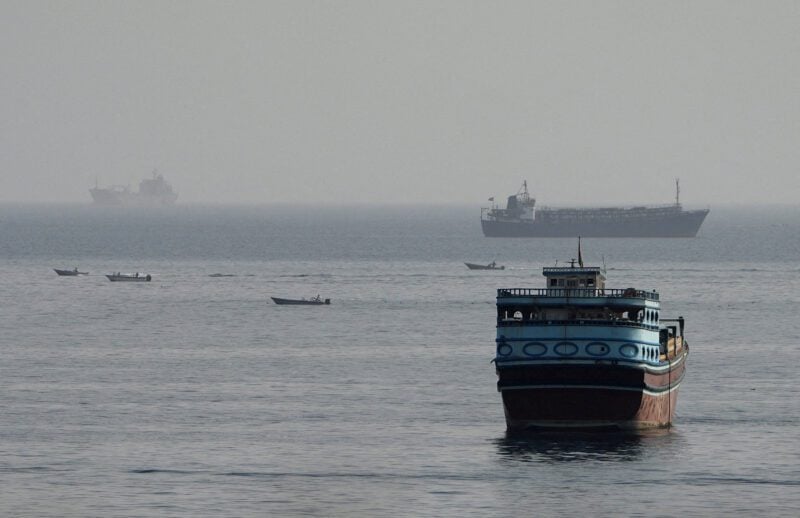
- A limited, conditional transit arrangement through the Strait of Hormuz is likely to emerge over the next 14 days, but full reopening is unlikely. Iran and Oman have reportedly agreed a temporary route, with ships entering through Iranian waters and exiting through Omani waters. Iranian officials simultaneously state that the Strait is not open and that vessels require Iranian surveillance and permission. The route agreement is supported by major-media reporting, but its scope and implementation remain contested. (Confidence: medium · ASSESSED)
- I&W: Confirmation: at least one commercial vessel completes the Iran-Oman route under the announced arrangements without detention, forced diversion or a reported security incident. (0-14 days)
- I&W: Break: Iran suspends the route or maintains a permission regime that prevents commercial vessels from using it, while JMIC reports an active hazard that stops transit. (0-14 days)
- US, Israeli and Iranian military activity is very likely to remain at a tense and intermittent level over the next 14 days rather than give way to a comprehensive settlement. The conflict began with US-Israeli strikes on Iran on 28 February 2026, Iran has responded with missile and drone strikes against Israel, US bases and Arab countries, and Washington has reportedly signalled that it does not expect to launch new strikes for the time being. The assessment is weakened by inconsistent dates and chronology across the reporting. (Confidence: medium · ASSESSED)
- I&W: Confirmation: Iran conducts another missile or drone strike against Israel, a US base or an Arab country, or the US or Israel conducts another strike on Iran. (0-14 days)
- I&W: Break: the US and Iran announce and implement a mutually accepted cessation covering military activity and access through the Strait of Hormuz. (0-14 days)
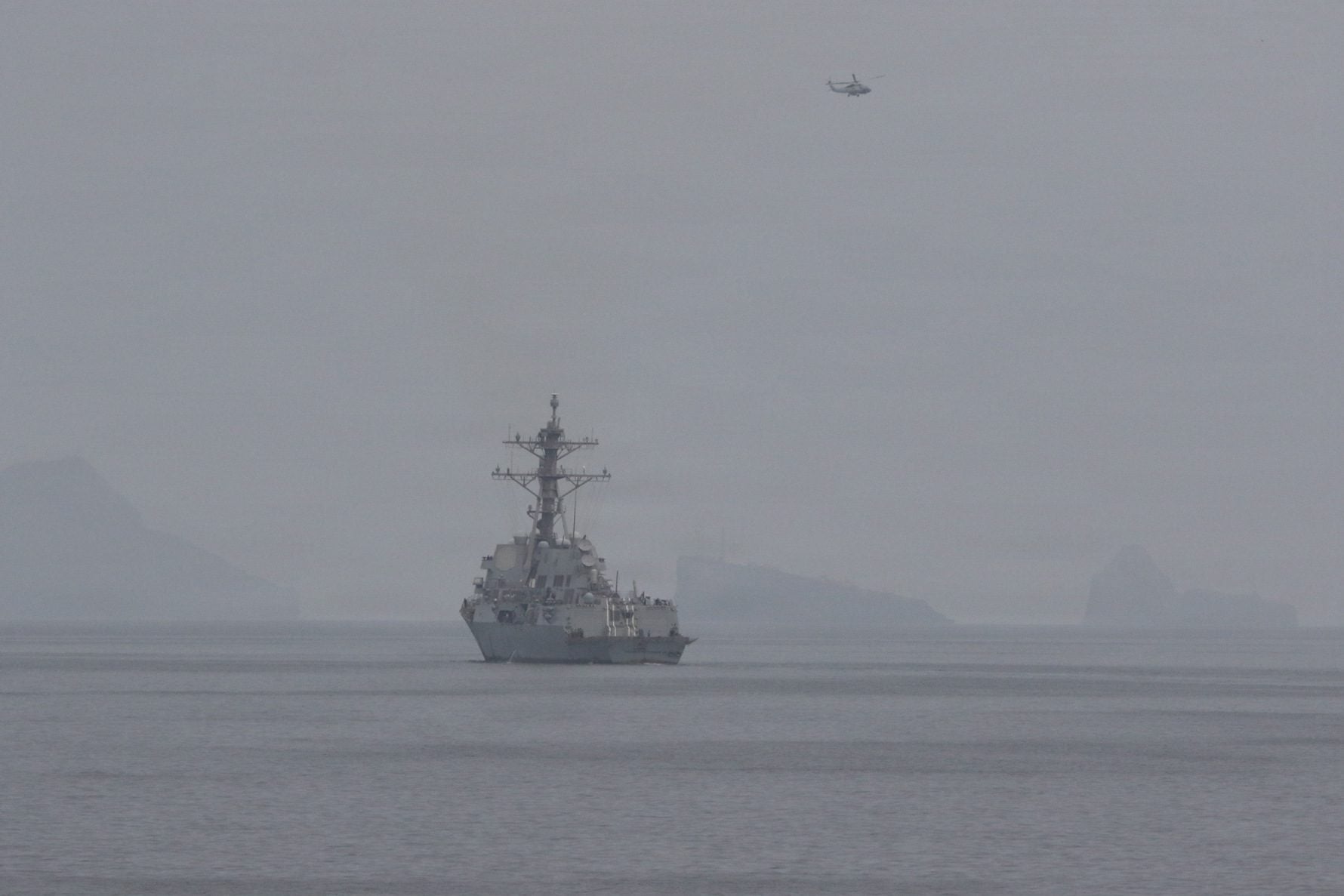
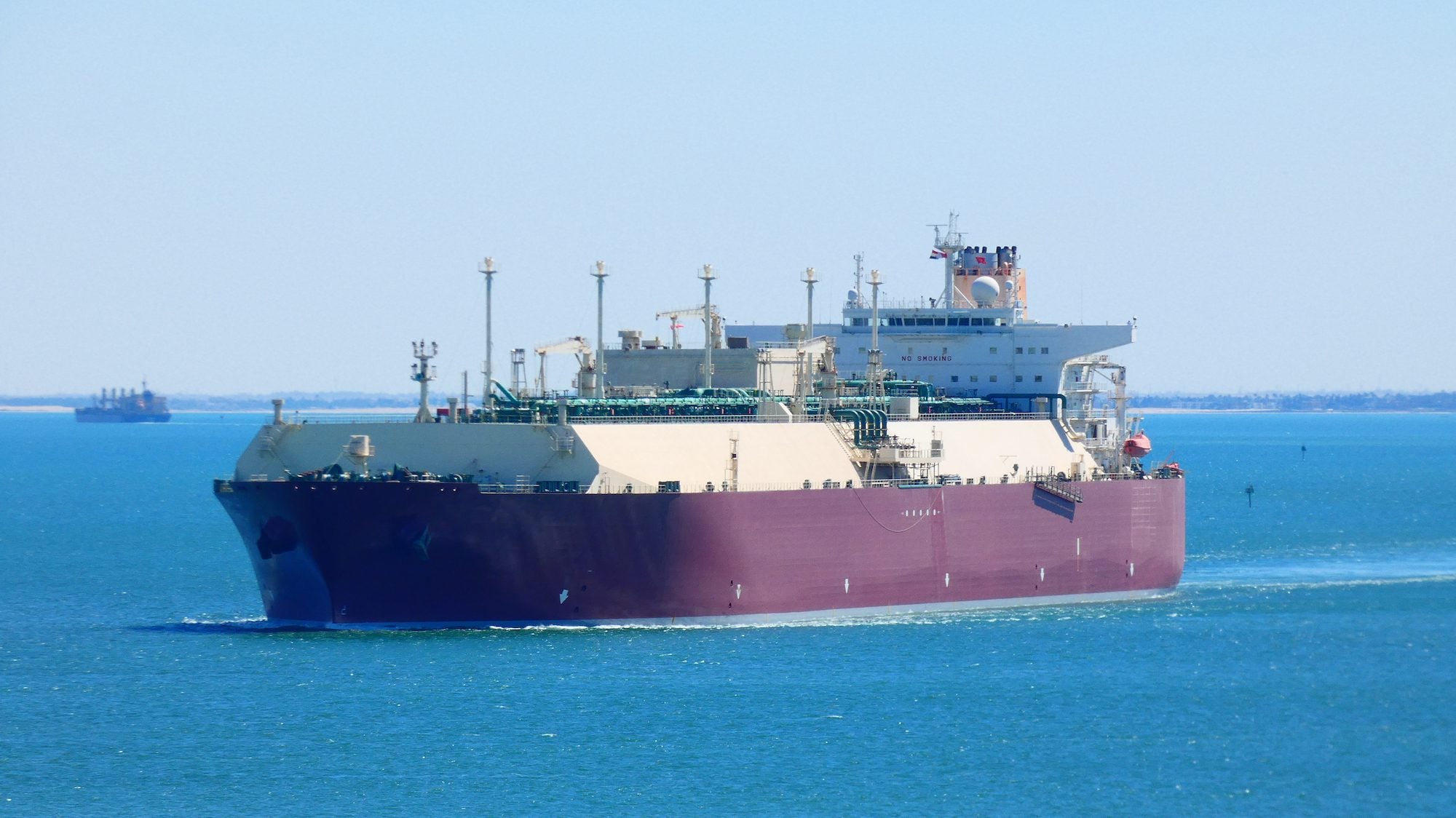
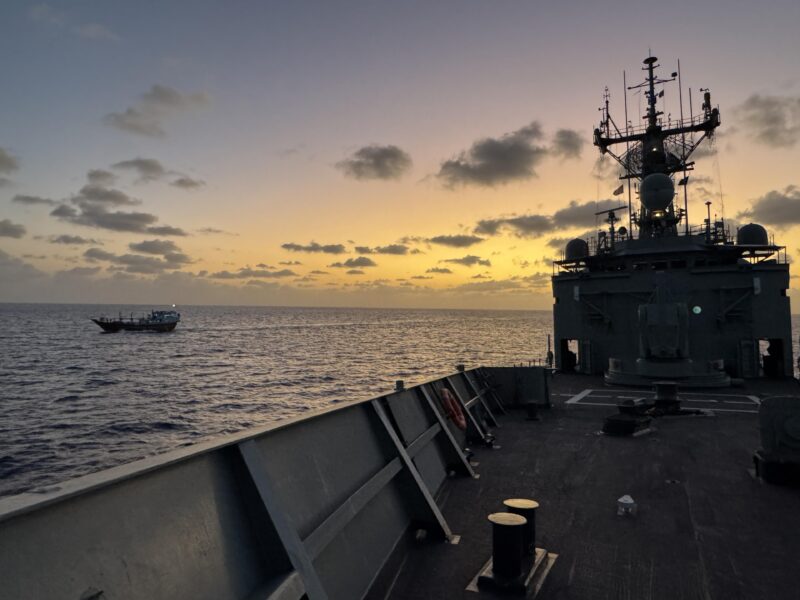
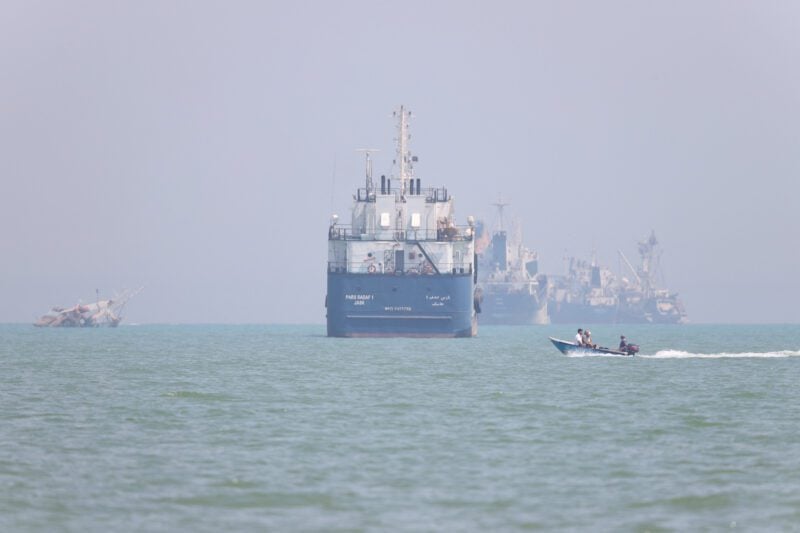
- Severe but incomplete disruption to commercial shipping through the Strait of Hormuz is very likely to persist over the next 14 days. Commercial traffic has been heavily disrupted, Iran continues to assert authority over vessel movements, and an unidentified projectile disabled an oil tanker near Oman's Ash Shishah on 26 August 2026. The US declaration that all mines were cleared conflicts with JMIC warnings that drifting or uncharted mines remain a risk, lowering confidence in any rapid return to normal navigation. (Confidence: medium · ASSESSED)
- I&W: Confirmation: UKMTO or JMIC records another projectile, mine or vessel incident in or near the Strait, or Iran stops or diverts a commercial vessel. (0-14 days)
- I&W: Break: JMIC deactivates mine-danger areas, Iran ends the requirement for prior permission and commercial traffic resumes on a sustained basis through the main navigation routes. (0-14 days)
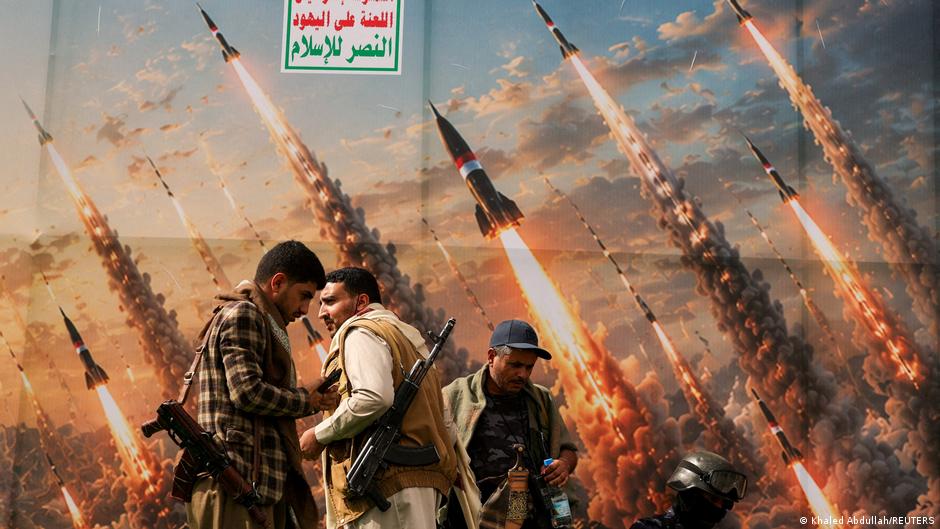
- Regional spillover involving Lebanon, Yemen, Jordan and the Gulf of Aden is likely to persist over the next 1 to 3 months. UNIFIL reported 86 Israeli airspace violations and 265 projectiles launched by Israeli forces in Lebanon on 20 August. Yemen's Iran-backed Houthi militia attacked another crude oil tanker off Saudi Arabia, while the Joint Maritime Information Center rates the Gulf of Aden threat as substantial and Jordan has intercepted Iranian projectiles. Confidence is medium because the Lebanon reporting is multilateral, whereas Houthi attribution and some Yemen reporting rely on less corroborated sources. (Confidence: medium · ASSESSED)
- I&W: Confirmation: UNIFIL records further Israeli airspace violations, airstrikes or projectile launches in Lebanon. (1-3 months)
- I&W: Confirmation: maritime authorities report another attack on a tanker or vessel in the Red Sea or Gulf of Aden, or Jordan reports another interception of Iranian projectiles. (0-3 months)
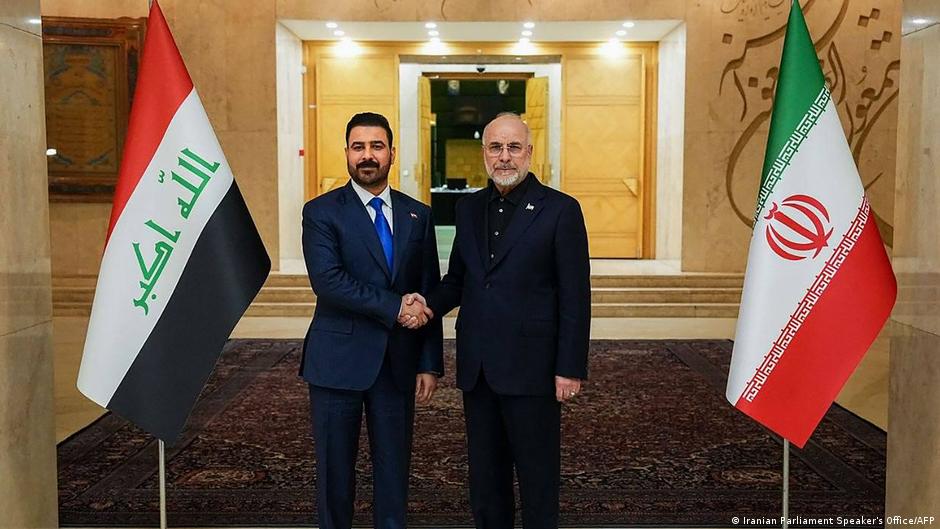
- US economic pressure on Iran is very likely to widen over the next 1 to 3 months and to increase pressure on Iraqi banks and Turkish energy ties. The reporting describes new sanctions, threatened exclusion from the dollar-based financial system and sanctions on Iraqi banks accused of dealing with Tehran. Turkey is exposed through approximately 13 per cent of its natural gas imports from Iran and bilateral trade of about $3.1 billion in the first half of the year. Confidence is medium because the record contains conflicting spellings for the Treasury Secretary's name and inconsistent dates for similar sanctions announcements. (Confidence: medium · ASSESSED)
- I&W: Confirmation: the US Treasury designates additional Iraqi banks, shippers or companies, or formally excludes firms trading with Iran from the US financial system. (1-3 months)
- I&W: Break: Turkey or Iraq publicly maintains existing gas and trade flows with Iran without new compliance restrictions or financial disruption. (1-3 months)
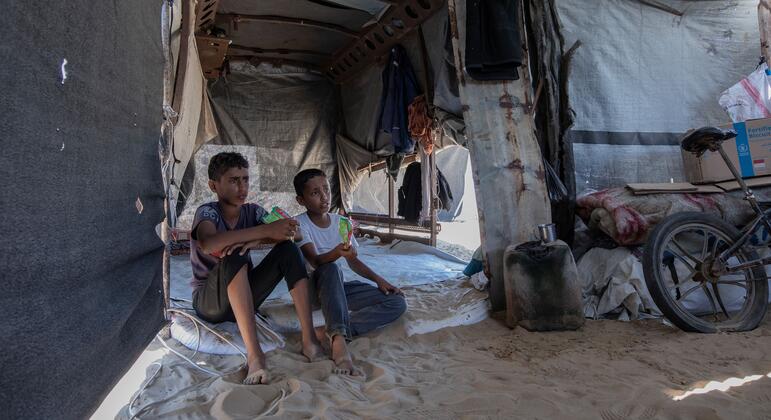
- Humanitarian conditions in Gaza are very likely to remain severe over the next 1 to 3 months. UN agencies and partners report that 94 per cent of Gaza's 2.1 million residents need shelter, more than four out of five families face critical or catastrophic living conditions, Israeli restrictions impede essential aid deliveries and services, and UN partners estimate that $562 million is needed to improve living conditions. Confidence is high because the core indicators are supported by multilateral reporting, although the measures describe different aspects of humanitarian need. (Confidence: high · REPORTED)
- I&W: Confirmation: UN agencies continue to report that more than 90 per cent of Gaza's residents need shelter or that more than four out of five families face critical or catastrophic conditions. (1-3 months)
- I&W: Break: UN agencies report shelter needs below 80 per cent alongside a documented easing of restrictions on aid deliveries and services. (1-3 months)
- Pakistan's mediation is likely to sustain a channel for limited deconfliction, but a comprehensive US-Iran agreement is unlikely over the next 14 days. Pakistan's Foreign Minister Ishaq Dar has called adherence to the Islamabad framework critical, Field Marshal Asim Munir visited Tehran, and Pakistani officials describe progress focused on preventing escalation and reopening the Strait. The judgement remains low confidence because the reporting is largely statement-based and contains 2023 and 2026 date inconsistencies. (Confidence: low · ASSESSED)
- I&W: Confirmation: Pakistan announces a follow-on step accepted by both Washington and Tehran that links the peace framework to implementation of the temporary Hormuz route. (0-14 days)
- I&W: Break: the US or Iran publicly rejects the Islamabad framework, or new direct strikes resume while the mediation channel remains inactive. (0-14 days)
Outlook & scenarios
Conditional Hormuz transit and a tense pause (45%)
Over the next 14 days, Iran and Oman operationalise a restricted route for a limited number of commercial vessels. Iran retains surveillance and permission arrangements, the US avoids new strikes, and shipping remains well below pre-conflict levels. Pakistan's diplomatic channel continues without producing a comprehensive settlement.
Announced route, continued disruption (30%)
The temporary route remains politically announced but is not used consistently. Mine warnings, Iranian control measures and further maritime incidents deter operators. US sanctions widen, and intermittent military activity continues between the US, Israel and Iran.
Renewed direct escalation (18%)
A new US or Israeli strike on Iran, or an Iranian missile or drone strike against Israel, a US base or an Arab country, ends the current pause. Shipping disruption deepens, while Israeli activity in Lebanon and Houthi attacks near Saudi Arabia add pressure on regional partners.
Wildcard: multi-theatre attack on energy infrastructure (7%)
A low-probability, high-impact incident involving the Strait, energy infrastructure or a US interest triggers responses across several theatres. Iran, the Houthis, Iraqi factions, Israel and regional governments become involved, producing a sharp deterioration in shipping access and diplomatic prospects.
Recommendations
- Treat the Strait of Hormuz as conditionally accessible, not open. Maintain separate status lines for the Iran-Oman route, Iranian permission requirements, mine-danger areas and actual commercial vessel movements.
- Reconcile US Navy declarations with JMIC and UKMTO reporting before assessing mine clearance or safe navigation. Flag any vessel inspection, detention, diversion or new projectile incident within 24 hours.
- Prioritise a 0 to 14 day warning list covering new US or Israeli strikes on Iran, Iranian missile or drone strikes, further Israeli projectiles in Lebanon and further Houthi attacks on commercial shipping.
- Track the US sanctions campaign through named Treasury designations, Iraqi bank restrictions and effects on Turkish gas imports and Iran-Turkey trade. Treat claims using inconsistent official names or dates as requiring verification.
- Maintain a Gaza humanitarian baseline using shelter needs, family living conditions, aid restrictions and funding requirements. Report any change against the existing 94 per cent shelter and more than four in five critical-condition indicators.
- Repair the chronology before using the record for longer-term modelling. In particular, separate claims dated 2023 from those dated 2026 concerning the 28 February war, the tanker incident, Abu al-Duhur and the Hormuz negotiations.
Confidence & uncertainty
Overall confidence is medium. The assessment benefits from multiple independent reports, including high-reliability multilateral reporting on Gaza and Lebanon, major-media reporting on the Hormuz route, maritime incidents, diplomacy and sanctions, and trade reporting on shipping and energy effects. Confidence is reduced by conflicting 2023 and 2026 dates, disagreement over whether the Strait is open or merely subject to a restricted route, the unverified scope of mine clearance and lower-confidence reporting on some Yemen, Syria and sanctions details.
Intelligence gaps
- [EEI 1.1 · PARTIAL] Detection and characterization of ballistic/cruise missile or rocket launches originating from Iranian territory or from Iran-controlled positions in Iraq/Syria (time, launch coordinates, missile type, flight trajectory/impact area). Recommended collection: satellite/imagery
- [EEI 1.2 · UNCOVERED] Movements and posture changes of Iran-backed proxy forces (Hezbollah units in Lebanon, militias in Syria/Iraq): concentrations of personnel, transport of rocket/artillery launchers, visible logistics build-up within operational range of Israel. Recommended collection: human/intel
- [EEI 1.3 · PARTIAL] Israeli defensive and offensive posture changes: reservist call-ups, mobilization orders, sorties/airstrikes attributed to Israel, and domestic activation of missile-defense systems (locations and activation times). Recommended collection: open-source/media
- [EEI 1.4 · UNCOVERED] Evidence of pre-positioning or arming of naval mines, fast attack craft, or anti-ship missile systems in the Gulf of Oman, northern Arabian Sea, or off the Lebanese/Syrian coasts that could be used to interdict Israeli or allied shipping. Recommended collection: maritime/AIS
- [EEI 2.1 · UNCOVERED] Movements and tasking changes of external military assets: carrier strike groups, amphibious ready groups, expeditionary air wings, or ballistic-missile defense units into the Eastern Mediterranean, Persian Gulf, or Red Sea (vessel/aircraft IDs, routing, on-station times). Recommended collection: maritime/AIS
- [EEI 2.3 · UNCOVERED] Changes to force protection or alert levels at foreign bases in the region (e.g., US bases in Kuwait, Qatar, UAE; Russian bases in Syria): activation of additional air defenses, curfews, or reinforcement shipments (personnel/equipment manifests). Recommended collection: signals/intel
- [EEI 3.1 · PARTIAL] Incidents against commercial vessels: attacks, seizures, mine strikes, or forced rerouting of tankers and bulk carriers in the Strait of Hormuz, Bab al-Mandeb, Red Sea, or eastern Mediterranean (vessel names/IMO, location, damage/impairment). Recommended collection: maritime/AIS
- [EEI 3.2 · PARTIAL] Changes in crude oil and refined product flows from key terminals (reported tanker loading delays, terminal closures, throughput volumes at Kharg, Mina al-Ahmadi, Ras Tanura, and major Gulf ports compared to baseline). Recommended collection: commercial/ports
- [EEI 3.3 · PARTIAL] Market and insurance indicators: sudden spikes in war-risk or hull insurance premiums for Middle East routes, large moves in regional FX/stock indices, and notable changes in commodity futures (oil, freight rates) tied to regional risk perceptions. Recommended collection: financial/transactional
Cited sources
[1] aljazeera.com · Iran, Oman agree on temporary Hormuz route: What we know (A) · sha256:dd1af7147d24 [2] arabnews.com · Pakistani FM says adherence to US-Iran peace framework ‘critical’ for regional stability (B) · sha256:17100d29bc48 [3] arabnews.com · Iran says recent Pakistan, Oman talks focused on ‘regional solutions’ for Strait of Hormuz (B) · sha256:c212201ecb33 [4] tribune.com.pk · US cannot achieve its goals through economic pressure Iranian president (B) · sha256:4080eccee8b5 [5] Wikipedia · Reactions to the 2026 Iran war (B) · sha256:32d813375717 [6] gcaptain.com · Iran and Oman Plan for Temporary Hormuz Corridor as Impasse With US Persists (A) · sha256:c738d8d7272c [7] anewz.tv · Oil prices fall as Iran vows retaliation to U.S. sanctions (B) · sha256:757ff8706fb0 [8] tv7israelnews.com · Shifting Sands in the Middle East | Jerusalem Studio (B) · sha256:427aefcbacd4 [9] gcaptain.com · Iran and Oman Unveil Framework for Future Management of Strait of Hormuz (B) · sha256:f55b650298c7 [10] gcaptain.com · Trump Says U.S. Navy Has Cleared All Mines From Strait of Hormuz (B) · sha256:345c6b4c0f71 [11] gcaptain.com · Panama Canal Auction Hits New Record at $5.3 Million (B) · sha256:97ae1ff371e8 [12] United Nations · Middle East: 94 per cent need shelter in Gaza, Israel ramps up demolitions in Lebanon (A) · sha256:aa5d2b0f402c [13] DW · Houthi strikes threaten to pull Yemen into Middle East war (A) · sha256:f20f53bf0aa2 [14] gcaptain.com · IMO Sounds Alarm as Somali Pirates Hold More Than 90 Seafarers (B) · sha256:6b2483656525 [15] ORF Middle East · The Iran Conflict Makes Jordan More Valuable and More Vulnerable - ORF Middle East (C) · sha256:114a3ac922c9 [16] Deutsche Welle · واشنطن تهدد بعزل من يتاجر مع إيران. والعراق في دائرة الخطر (A) · sha256:9304e54749aa [17] nabd.com · أجندة MBN | الدولار يدخل ميدان الحرب على إيران. تتجه الولايات المتحدة إلى تشديد الخناق.. (B) · sha256:f45162ca526a [18] gcaptain.com · Turkey Braces For Potential Gas Squeeze as U.S. Targets Iran Trade (B) · sha256:07f582c6de8d [19] gcaptain.com · Iran Vows to Resist Widened U.S. Sanctions, Says Washington Seeks Talks (B) · sha256:2a06cd4d4293
Source content hashes were computed at collection time; the cited text is preserved unmodified for the life of this product.
TLP:CLEAR