TLP:CLEAR · Disclosure is not limited.
Iran, Israel: Combat Persists in Lebanon, Hormuz Disrupted but Not Shut, Talks Unsettled
Time window: Last 1 day · Audience: General analyst · Type: Situation report · DTG: 2026-06-22 09:12Z · Overall confidence: MEDIUM
BLUF
IDF, Hezbollah fighting is continuing in southern Lebanon despite diplomatic claims and Israel’s easing of northern restrictions. Iran’s proclaimed re-closure of Hormuz is producing partial, uneven disruption rather than a full shutdown, while the US, Iran track in Switzerland remains fluid and contested.
Executive summary
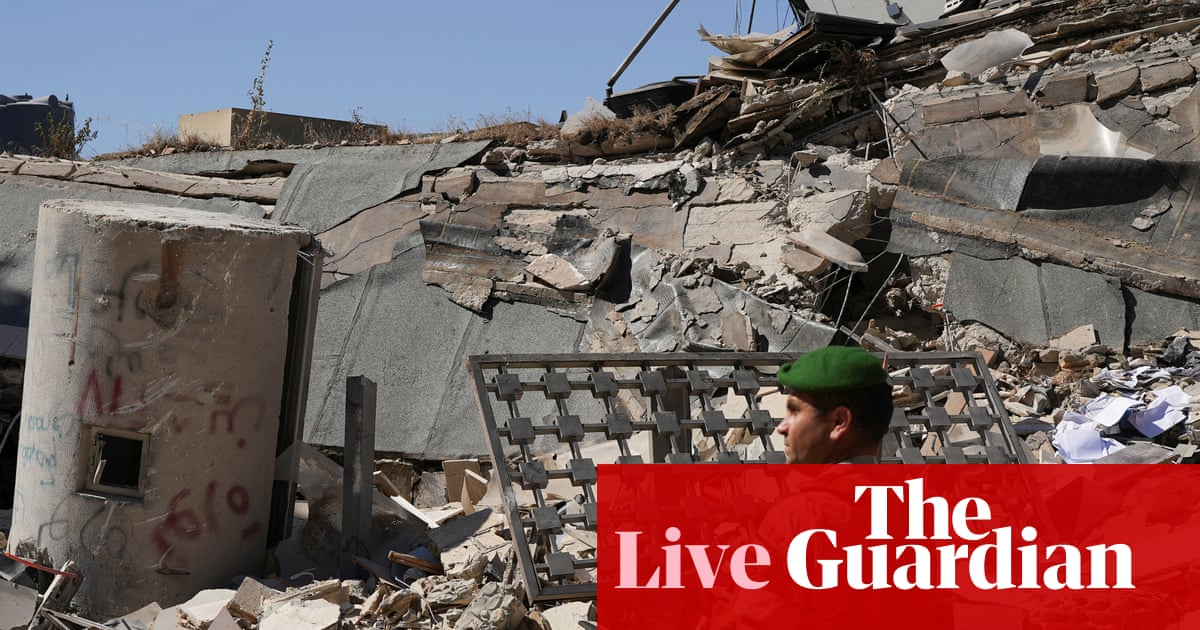
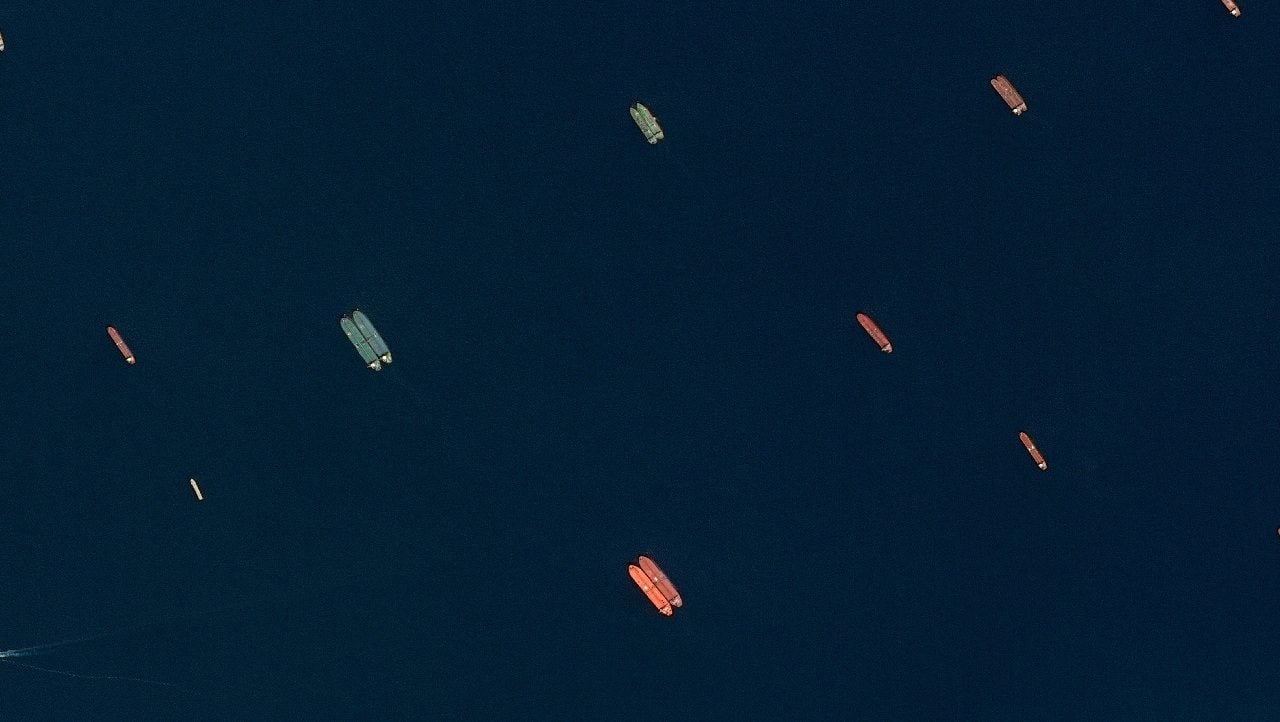
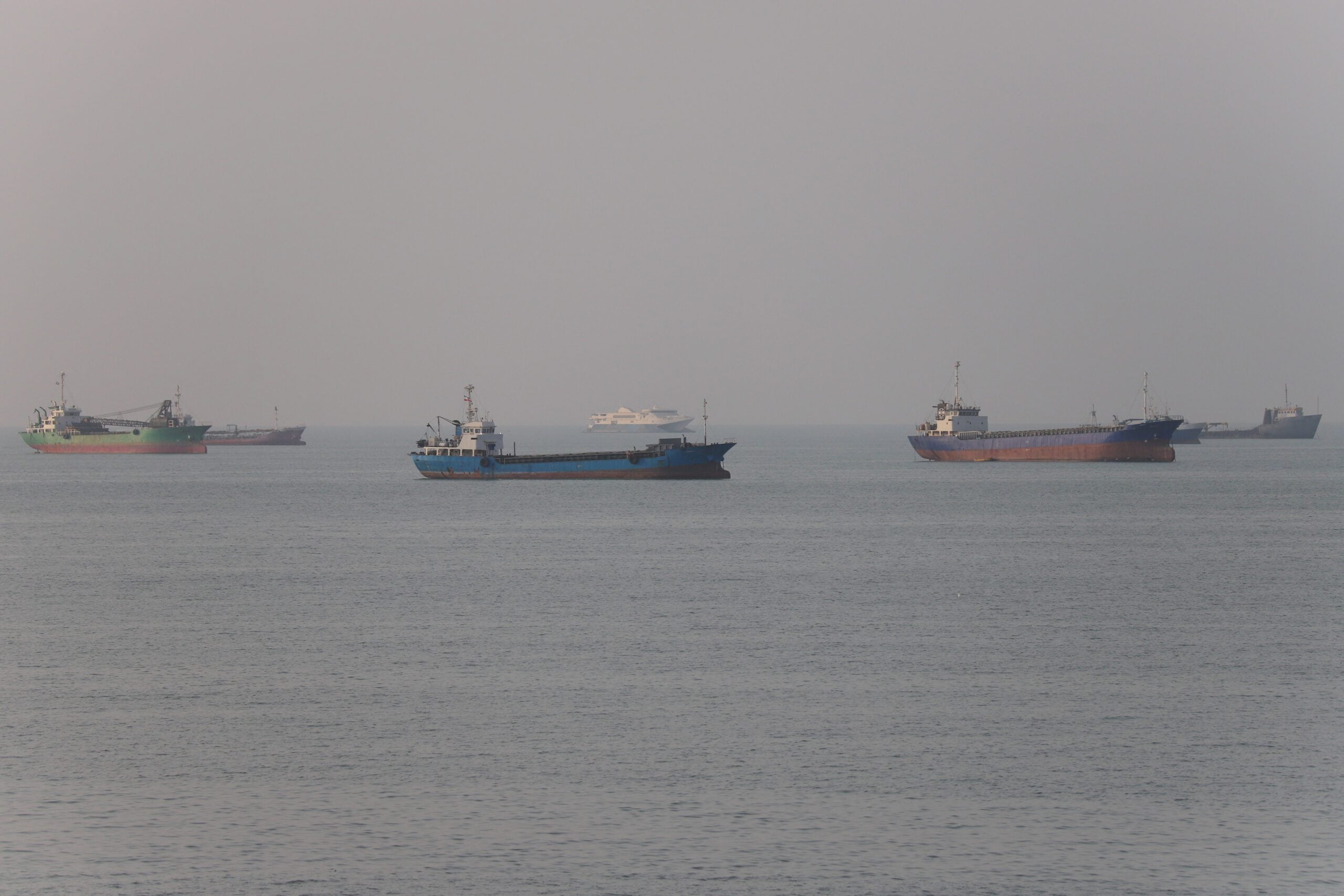
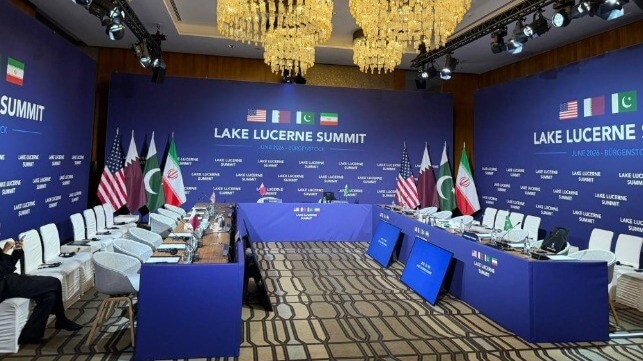
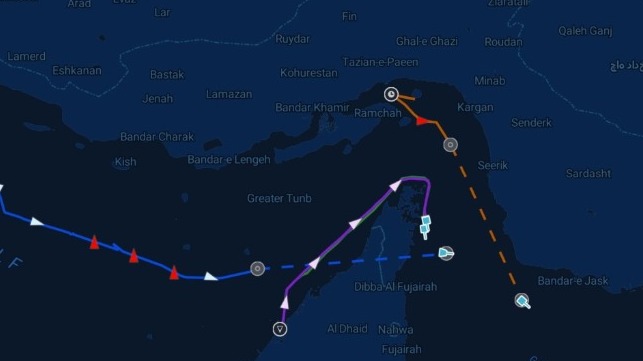
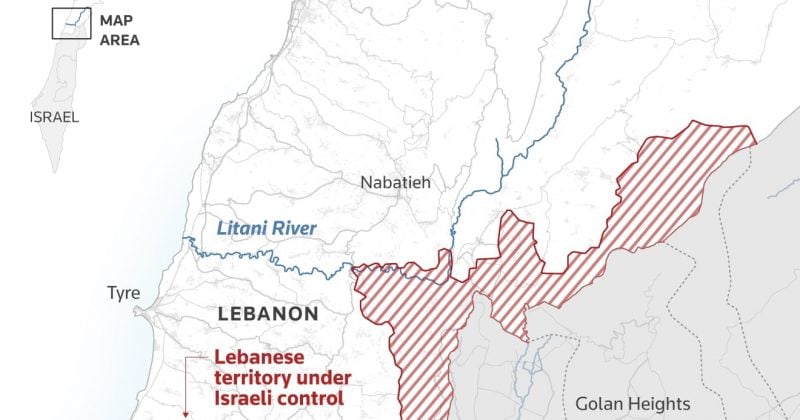
Over the weekend Israeli strikes in southern Lebanon reportedly killed at least 16 people, Lebanon’s civil defence transported 16 dead and 12 wounded, and a Hezbollah strike near Tebnit killed four IDF soldiers. Israel says it will not withdraw forces from southern Lebanon ahead of negotiations and the prime minister has said forces will remain as long as necessary, even as Israel lifted all war‑related restrictions on its northern border areas on 22 June. In Gaza, the IDF reported killing two Hamas operatives in Gaza City, and humanitarian reporting highlights prolonged shortages of optical medical supplies and eyewear. Iran announced a renewed closure of the Strait of Hormuz and some reporting shows traffic plunging, yet USCENTCOM and maritime tracking point to continued flows via the Omani side, including 17 million barrels on Saturday and multiple laden supertankers in transit. Insurers at Lloyd’s and Chubb launched a 400 million dollar marine war‑risk consortium for Hormuz passages, and a US official forecast gradual vessel increases under US‑managed routing. US, Iran talks began in Switzerland with intermediaries and were described as making progress, but the Iranian delegation reportedly left after 18 hours, while separate claims of an MoU and an agreement to end fighting sit uneasily with Israel’s continued operations against Hezbollah.
Change from previous assessment
Since the prior brief, Israel has lifted all war‑related restrictions in its northern border areas, while concurrently signalling that forces will not withdraw from southern Lebanon. Weekend combat included at least 16 killed in southern Lebanon and a Hezbollah strike that killed four IDF soldiers. Iran announced a renewed closure of Hormuz, yet USCENTCOM and maritime tracking reported continued flows via the Omani route. Insurers launched a 400 million dollar war‑risk consortium for Hormuz passages. US, Iran talks opened in Switzerland with reports of progress, but the Iranian delegation reportedly left after 18 hours and Israel continued strikes against Hezbollah. Initial assessment of this topic’s new developments within the 21-22 June window.
Key judgments
- Active hostilities between the IDF and Hezbollah are very likely to persist in southern Lebanon this week despite ceasefire language, given Israel’s stated refusal to withdraw, recent lethal exchanges, and leadership signalling of an open‑ended presence. (Confidence: medium · ASSESSED)
- I&W: IDF publicly announces transfer of a captured Hezbollah underground compound to the Lebanese Armed Forces (0-14 days)
- I&W: Publicly reported 72 hours with no cross‑border fatalities and no declared IDF operations in southern Lebanon (0-14 days)
- Iran’s declared re‑closure of the Strait of Hormuz is likely producing intermittent and partial disruption rather than a full shutdown, as multiple reports show millions of barrels of oil and laden tankers transiting via the Omani lane while other reporting notes a sharp traffic fall. (Confidence: medium · ASSESSED)
- I&W: Daily AIS and agent reports show 15 or more laden crude or product tankers using the Omani lane (0-14 days)
- I&W: IRGC announces or is reported to conduct interdictions on the Omani side with enforcement Notices to Mariners (0-14 days)
- The US, Iran diplomatic channel in Switzerland is active yet unsettled, and it is unlikely to deliver an immediate cessation of fighting on the Lebanon front this week, given conflicting reports of an MoU, proclamations of progress, and the Iranian delegation’s early departure, alongside Israel’s continued strikes and refusal to pull back. (Confidence: low · ASSESSED)
- I&W: Public release of MoU text with verifiable Lebanon implementation steps acknowledged by Israeli and Lebanese actors (1-3 months)
- I&W: Reporting that the Iranian delegation pauses or withdraws again with no interim communiqués while Israeli strikes continue daily in Lebanon (0-14 days)
- Israel’s lifting of all war‑related restrictions in its northern border areas does not signal normalisation, as local economic activity and population returns remain depressed. (Confidence: medium · ASSESSED)
- I&W: Municipal reporting shows fewer than half of pre‑war businesses in Kiryat Shmona reopen by end‑July (1-3 months)
- I&W: Home Front Command publicly reinstates shelter or movement restrictions in northern communities (0-14 days)
- Gaza’s health system faces a severe and prolonged shortage of optical materials, almost certainly leaving many residents without adequate vision care. (Confidence: high · REPORTED)
- I&W: No announced consignments of eyewear or lenses enter Gaza through any crossing (1-3 months)
- I&W: Aid agencies or authorities announce and document delivery of optical supplies into Gaza and local clinics report restocking (0-14 days)
- Commercial actors are treating Hormuz as a high but insurable risk corridor, with specialised cover and expectations of managed traffic increases under US guidance. (Confidence: medium · ASSESSED)
- I&W: War‑risk underwriters report active uptake or increased pricing for Hormuz transits (0-14 days)
- I&W: Major insurers suspend or refuse war‑risk cover for Hormuz passages (0-14 days)
- Netanyahu’s public embrace of a pre‑emptive security doctrine and commentary that he is steering Israel’s agenda toward Iran very likely points to continued preventive and retaliatory strikes against Iran‑linked targets. (Confidence: medium · ASSESSED)
- I&W: Israel publicly claims additional strikes on IRGC or Hezbollah senior assets within Lebanon or Syria (0-14 days)
- I&W: Israeli cabinet statements place explicit temporal or geographic limits on cross‑border operations (0-14 days)
Outlook & scenarios
Static confrontation in Lebanon, partial Hormuz disruption persists (60%)
IDF remains in southern Lebanon with ongoing exchanges against Hezbollah. Israel keeps northern restrictions lifted, but returns and business reopenings lag. Iran continues episodic closure declarations; traffic flows via the Omani lane continue at reduced but steady levels. War‑risk insurance remains available and priced for elevated risk. US, Iran talks continue without binding enforcement on the Lebanon front.
Fragile de‑escalation through interim understandings (35%)
The diplomatic track yields a published framework or communiqués. Hezbollah’s fire drops markedly, Israel reduces strike tempo but keeps forces forward pending arrangements. Maritime traffic normalises along the Omani route, and war‑risk pricing eases. Political resistance in Israel tempers the depth of concessions, keeping the settlement fragile.
Sharp escalation and enforced Hormuz shutdown (25%)
IRGC enforces interdictions, including detentions on the Omani side, driving traffic to a minimum. Oil flows fall sharply, insurers suspend cover, and convoying or rerouting becomes necessary. Hezbollah intensifies attacks, IDF escalates strikes, and civilian harm rises. The diplomatic track stalls.
Recommendations
- Build a daily Hormuz movement ledger by cross‑checking USCENTCOM volume updates with AIS tracks and commercial analytics, flagging divergences and noting use of the Omani lane.
- Task Arabic‑ and Farsi‑language monitoring for IRGC maritime directives and Joint Military Information Centre notices; capture any changes to transit guidance.
- Track Israeli Home Front Command bulletins and municipal communiqués in the north for any reinstated restrictions and indicators of population return or business reopening.
- Maintain a running log of IDF and Hezbollah claims of strikes and casualties in southern Lebanon, corroborated with local civil defence reporting.
- Engage war‑risk underwriters and brokers to assess cover availability, pricing, and exclusions for Hormuz transits; capture any suspension triggers they cite.
- Follow the Switzerland talks closely: archive official readouts, any MoU texts or annexes, and synchronise with observed changes in Lebanon strike tempo.
- Catalogue Gaza medical supply reporting with emphasis on optical materials, noting any announced shipments or crossing access changes.
Confidence & uncertainty
Overall confidence is medium. Multiple high‑confidence reports corroborate continued fighting in southern Lebanon and Israel’s stance on troop presence. Reporting on Hormuz is credible but contradictory, with simultaneous claims of closure and evidence of substantial transits via the Omani lane. The diplomatic picture is also conflicted, with claims of an MoU and progress alongside an early Iranian departure and ongoing Israeli operations. These inconsistencies constrain confidence below high, though the volume and quality of sources support more than low confidence.
Alternative analysis (red cell)
The evidence set contains credible indicators of both sustained kinetic risk (leadership rhetoric and recent lethal incidents) and concurrent diplomatic signals that could reduce hostilities (reported MoU/framework claims and signs of operational pause). Given the documented contradictions—ceasefire/MoU reports versus ongoing strikes, and closure claims versus tanker transits—an alternative, defensible estimate is that outcomes this week could bifurcate: either localized engagements persist amid signaling, or a validated, rapidly implemented diplomatic step produces a measurable near-term reduction in clashes and maritime disruption. Determining which path materializes hinges on authenticating the MoU text/implementation and observing near-term operational changes on the ground and at sea.
Intelligence gaps
- [EEI 1.1 · PARTIAL] Number, type, launch times, and trajectories of ballistic missiles, cruise missiles, armed UAV strikes, and combat-air sorties launched by Iranian or Israeli forces toward the other's territory or forward bases within a 72-hour window. Recommended collection: signals/intel
- [EEI 1.2 · PARTIAL] Observable changes in Israeli and Iranian force posture: mobilization or reserve call-up orders, unit road/rail movements, dispersal or sortie rates of air squadrons, redeployment of air-defense batteries, and activation of civil-defense alerts or sirens in major population centers. Recommended collection: open-source/media
- [EEI 1.3 · PARTIAL] Indications of strike authorization or targeting preparations in Iranian or Israeli command chains: authenticated public orders by senior commanders, detected increases in encrypted communications consistent with targeting, or visible movement of strike munitions to launch/storage sites. Recommended collection: signals/intel
- [EEI 2.2 · UNCOVERED] Reported attacks by Iranian-backed militias in Iraq and Syria: rocket/IED strikes on bases hosting US/coalition or Israeli personnel, documented militia unit movements toward borders, and captured movement or transfer of weapons systems to forward militia positions. Recommended collection: human
- [EEI 2.3 · PARTIAL] Maritime harassment or attacks by proxies (e.g., Houthis): incidents of missile/rocket strikes against commercial vessels, small-boat swarm attacks, discovery or detonation of naval mines, and corresponding AIS anomalies in the Red Sea, Gulf of Aden, or southern Arabian Gulf. Recommended collection: maritime/AIS
- [EEI 3.1 · UNCOVERED] Movements and arrival dates of foreign military assets into the region: carrier strike groups, amphibious ships, surface combatants, strategic airlift/tanker deployments, and air/sea patrol patterns by US, European, Russian, or regional militaries. Recommended collection: imagery/satellite
Cited sources
[1] The Jerusalem Post · Live Updates: Latest from Israel, Iran, and Middle East | The Jerusalem Post (A) · sha256:445b139aeb1d [2] The Guardian · Middle East live: US-Iran peace talks underway as strait of Hormuz remains closed (A) · sha256:9dc372cd3c96 [3] jpost.com · Israel’s security cannot hinge on unfinished US-Iran diplomacy - editorial (A) · sha256:0aeb17953899 [4] gcaptain.com · Hormuz Transit Security Is ‘Hour to Hour’ (B) · sha256:4a322a6244d2 [5] gcaptain.com · Oil Keeps Flowing Through Hormuz Despite Iran Saying It’s Shut (B) · sha256:8d8089594578 [6] maritime-executive.com · Strait of Hormuz Traffic Plummets After Renewed Iranian Blockade Threats (B) · sha256:e5c635a08b8c [7] gcaptain.com · Shipping Slows After Iran Says It Has Again Shut The Strait of Hormuz (B) · sha256:2faa85b643a7 [8] maritime-executive.com · Op-Ed: In the Strait of Hormuz, Free Transit Is No More (B) · sha256:c63c27bc7e35 [9] jpost.com · Israel’s long-term challenge requires strategy beyond military power in Iran rivalry - opinion (B) · sha256:e82249d36ed6 [10] cryptobriefing.com · Israel lifts war-related restrictions on northern border areas (B) · sha256:7bb24cb45734 [11] jpost.com · Northern Israelis fear Trump’s Lebanon ceasefire will trap them in 'a living hell' (B) · sha256:1bf3a7dce08b [12] aljazeera.net · سلعة نادرة. 3 سنوات على منع إدخال النظارات الطبية إلى غزة (A) · sha256:0a4eaee6ac03 [13] haaretz.com · A strong leader for a weakened Israel (B) · sha256:78d67c517c44 [14] haaretz.com · Netanyahu: IDF operations in Iran 'changed Israel's security doctrine' (A) · sha256:15e165ae6d75
Source content hashes were computed at collection time; the cited text is preserved unmodified for the life of this product.
Red cell review: PARTIAL DISSENT
TLP:CLEAR