TLP:CLEAR · Disclosure is not limited.
Iran-Israel Conflict: Bahrain Strikes and Hormuz Shipping Risks
Time window: Last 1 day · Audience: General analyst · Type: Situation report · DTG: 2026-11-17 08:14Z · Overall confidence: HIGH
BLUF
Iranian drone activity against Bahrain is very likely to have occurred between 15 and 17 November, but the IRGC’s claim that it struck a US radar at Sheikh Isa Air Base remains unverified. Two tanker attacks reported in the Strait of Hormuz and about 227 commercial vessels stationary at nearby anchorages point to continuing maritime disruption.
Executive summary
Bahrain reported intercepting Iranian drone attacks, while the IRGC claimed attacks on US radar sites at Riffa and Sheikh Isa air bases. The date and outcome of the latest episode remain contested, and there is no confirmation that either radar was damaged. UKMTO reported two tanker attacks in the Strait of Hormuz on 16 November; it has not attributed responsibility, while Iranian naval accounts say tankers struck mines. JMIC reported about 227 commercial vessels stationary at anchorages east of the strait. The US has three aircraft carriers in CENTCOM’s area, while reporting presents mixed signals from Donald Trump on renewed strikes. Separate claims of Iranian plans to attack senior US officials are indirect and conflict over the alleged threat’s severity.
Change from previous assessment
Since the 16 November brief, reporting adds Bahrain’s 17 November danger alert and a new IRGC claim that it targeted the US radar at Sheikh Isa Air Base. The earlier assessment of Iranian drone activity on 15 November remains, but the reported interception and IRGC strike claims now cover separate dates and sites, with no confirmed radar damage. Hormuz disruption is more clearly quantified: UKMTO reported two tanker attacks on 16 November, and JMIC reported about 227 vessels stationary at anchorages east of the strait. The current reporting also introduces allegations of Iranian contingency planning against senior US officials; confidence in that reporting is low because the accounts are indirect and differ on the alleged threat’s severity.
Key judgments
- Iranian drone activity against Bahrain is very likely to have occurred between 15 and 17 November, but whether the IRGC struck a US radar remains unconfirmed. The IRGC claimed that six drones targeted a US air-defence radar at Riffa Air Base on 15 November, and separately claimed a radar attack at Sheikh Isa Air Base on 16 or 17 November. Bahrain reported intercepting attacks, issued a danger alert in Manama on 17 November, and said air defences were active. Bahrain’s reported interception date and the IRGC’s stated date for the Sheikh Isa attack differ, and no damage to either radar is confirmed. (Confidence: medium · REPORTED)
- I&W: A Bahrain or US official damage assessment, or verifiable imagery identifying a drone impact at Riffa or Sheikh Isa, would confirm a successful strike. (0-14 days)
- I&W: Bahrain or the US confirms that incoming drones were intercepted and both radar sites remained undamaged, breaking the claim of a successful radar strike. (0-14 days)
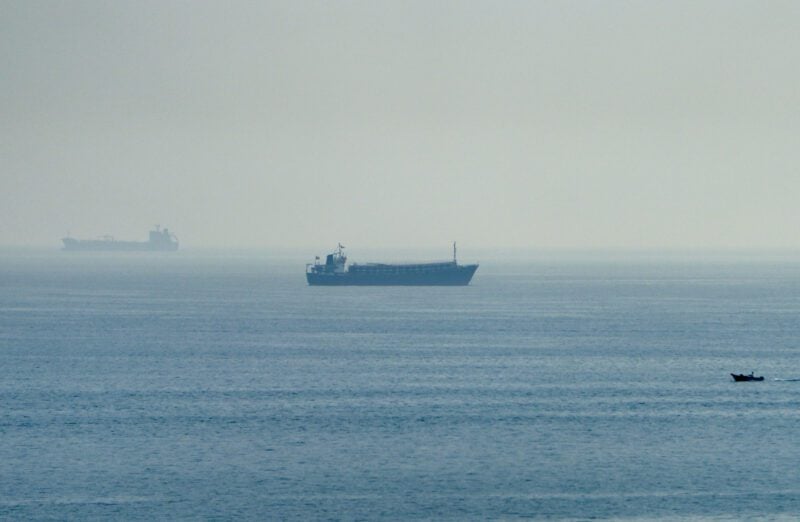
- Commercial shipping through the Strait of Hormuz is likely to remain constrained and hazardous over the next 14 days. UKMTO reported two tanker attacks on 16 November, including an engine-room fire and a disabled vessel near Khasab, Oman. JMIC reported about 227 commercial vessels stationary at Fujairah, Khor Fakkan, Sohar and Musandam, and recorded 83 US-facilitated transits from 12 to 14 November while non-facilitated traffic remained at single-digit to low-double-digit levels per day. UKMTO has not attributed the attacks; Iranian claims that tankers hit mines remain unverified. (Confidence: medium · ASSESSED)
- I&W: A JMIC update reports a backlog near 227 vessels and non-facilitated traffic at single-digit to low-double-digit levels per day, confirming continued disruption. (0-14 days)
- I&W: JMIC reports fewer than 100 vessels stationary at the named anchorages and UKMTO reports no new tanker attacks, breaking the assessment of sustained disruption. (0-14 days)
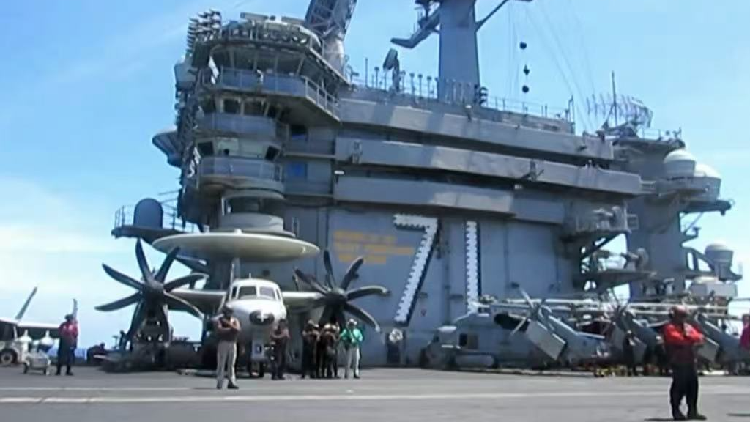
- The US naval deployment is very likely to expand Washington’s military options, but a renewed large-scale US strike on Iran is unlikely in the next 14 days. The USS Theodore Roosevelt has joined the USS George H.W. Bush and USS George Washington, bringing the reported carrier presence in CENTCOM’s area to three; the reported Arabian Sea force also includes 13 destroyers, two cruisers and one littoral combat ship. Donald Trump is reported to be considering renewed strikes, while other reporting says he wants the war to end and hopes strikes will not be necessary. Benjamin Netanyahu has reportedly pressed Trump for another wave of strikes. These conflicting signals do not establish a decision to attack. (Confidence: medium · ASSESSED)
- I&W: The White House announces authorisation for renewed strikes, or CENTCOM confirms US strike missions against Iran, breaking the assessment that a strike is unlikely. (0-14 days)
- I&W: Trump publicly rules out renewed strikes and US officials confirm that no strike order has been issued, supporting the assessment. (0-14 days)
- Iran is unlikely to have made a decision to attack senior US officials in the near term, although reporting about contingency planning warrants monitoring. The available accounts are indirect summaries of CNN reporting based on unnamed US officials. They describe possible plans but also say there is no indication of an imminent attack or a decision to carry one out. Other summaries give a more severe dirty-bomb or chemical-attack framing, and report disagreement within the White House over the intelligence’s reliability. The specific nature and credibility of the alleged plans remain uncorroborated. (Confidence: low · ASSESSED)
- I&W: A subsequent US intelligence statement or briefing reiterates that no decision or imminent attack has been identified, supporting the assessment. (0-30 days)
- I&W: The FBI, Justice Department or a named US intelligence agency publicly confirms an operational plot, a linked operative or materials for an attack, breaking the assessment. (0-30 days)
- Humanitarian pressures in Gaza and Lebanon are likely to remain acute over the next month. The UN reported that aid-truck offloads into Gaza fell about 42 percent after Israel suspended the Egyptian corridor; Gaza’s Health Ministry reported at least 37 people killed by Israeli attacks in the past week and a winter hypothermia death of a nine-month-old baby. In Lebanon, a joint FAO, WFP and Ministry of Agriculture report found more than one million people facing crisis levels of acute food insecurity. These figures describe distinct impacts and do not establish a new escalation between Iran and Israel. (Confidence: medium · ASSESSED)
- I&W: The UN reports Gaza aid offloads remain about 42 percent below the earlier level, confirming continued pressure on aid access. (0-30 days)
- I&W: A new FAO, WFP or Lebanese Ministry of Agriculture assessment reports fewer than one million people in Lebanon facing crisis-level food insecurity, breaking the stated scale of pressure. (0-30 days)
Outlook & scenarios
Continued limited attacks and maritime disruption (55%)
The most likely near-term course is continued Iranian drone activity around Bahrain, interception claims by Bahrain, and ongoing tanker risk in the Strait of Hormuz, without independently confirmed damage to the Sheikh Isa or Riffa radar sites. US carrier forces remain deployed, but Washington does not resume large-scale strikes during the next 14 days.
Renewed direct escalation (25%)
A further Iranian attack on US facilities in Bahrain, or renewed US strikes on Iran, would widen the direct confrontation and add to the risk to shipping. Trump is reported to be weighing strikes, Netanyahu has pressed for another wave, and the US carrier presence provides military options; the reporting does not establish that either government has decided to act.
A pause in direct military action (15%)
Trump’s reported preference to end the war and avoid strikes is followed by a reduction in direct attacks, even if US-Iran diplomatic efforts remain stalled. Maritime traffic begins to recover, but the recent tanker incidents and the reported backlog mean a prompt return to normal shipping is not assured.
Wildcard: alleged Iran-linked plot becomes operational (5%)
Low-probability, high-impact wildcard. The indirect reports of Iranian contingency planning develop into an operational attempt against senior US officials. The current reporting says there is no indication of an imminent attack or a decision to carry one out, and the more severe dirty-bomb or chemical-attack descriptions are not independently corroborated.
Recommendations
- Maintain separate incident timelines for the 15 November IRGC claim concerning Riffa Air Base and the 16-17 November Bahrain and IRGC accounts concerning Sheikh Isa Air Base. Do not report radar damage as established without Bahrain or US confirmation.
- Track UKMTO incident notices alongside JMIC vessel counts and transit figures. Keep Iranian claims of mine strikes separate from UKMTO reporting, which has not attributed responsibility or established cause.
- In assessments of US strike risk, distinguish the three-carrier deployment and reported consideration of strikes from evidence of an authorisation or execution order. Update the judgement if the White House or CENTCOM confirms a policy decision.
- Describe the alleged plots against senior US officials as uncorroborated reporting based on indirect summaries. Do not present the dirty-bomb or chemical-attack framing as established; seek the original reporting or an attributable US government statement.
- Monitor UN Gaza aid-offload figures and the next FAO, WFP and Lebanese Ministry of Agriculture food-security update to assess whether humanitarian pressure is worsening or easing.
Confidence & uncertainty
Overall confidence is high in the broad situation picture because reporting on Bahrain’s alerts and interceptions is accompanied by separate UKMTO incident reporting and JMIC shipping data, while UN agencies and partner institutions provide humanitarian indicators. This headline confidence does not extend to disputed details: the Bahrain attack dates and radar damage are unresolved, responsibility and cause for the tanker incidents are unconfirmed, and the alleged plots against US officials rely on indirect accounts with conflicting descriptions.
Intelligence gaps
- [EEI 1.1 · UNCOVERED] Observed repositioning, sustained increases, or new forward basing of Iranian conventional or IRGC forces (armored units, missile batteries, aircraft, naval vessels) toward borders or regional launch points. Recommended collection: IMINT/satellite
- [EEI 1.2 · UNCOVERED] Hezbollah or other Iran-aligned proxy forces conducting mass mobilization, visible rocket/artillery emplacements, cross-border firing incidents, or preparations for cross-border operations from Lebanon, Syria, Iraq or Yemen. Recommended collection: HUMINT/ground ISR
- [EEI 1.4 · UNCOVERED] Interdicted or observed shipments (air, sea, land manifests, seizures, satellite imagery of transfers) of advanced weapons or missile components from Iran toward proxy groups or forward staging points. Recommended collection: maritime/AIS
- [EEI 2.1 · PARTIAL] Satellite or on-the-ground imagery showing fires, damage, or operational shutdown at major oil export facilities, refineries, storage terminals, or key pipeline infrastructure in the Gulf and Red Sea. Recommended collection: IMINT/satellite
- [EEI 2.4 · UNCOVERED] Rapid increases in war-risk insurance premiums for Middle East routes, shipping company advisories to avoid region, or major charter cancellations tied to the conflict. Recommended collection: financial/open-source
- [EEI 3.2 · UNCOVERED] Official expedited arms transfers, basing/overflight agreements, or declarations of operational support (formal government announcements, defense ministry releases, logistics flight manifests). Recommended collection: open-source/diplomatic
- [EEI 3.3 · PARTIAL] Embassy evacuations, large-scale personnel movements, issuance of government travel bans/advisories, or multinational security alerts affecting foreign nationals and diplomatic posture in the region. Recommended collection: diplomatic/open-source
- [EEI 3.4 · UNCOVERED] High-level diplomatic/UN activity: scheduled or emergency Security Council meetings, published ceasefire proposals, or multilateral statements committing support/condemnation that precede changes in military posture. Recommended collection: open-source/diplomatic
Red cell review: CONCUR WITH COMMENT
TLP:CLEAR