TLP:CLEAR · Disclosure is not limited.
Iran-Israel Conflict Escalates Following Khamenei Funeral and Renewed US Strikes
Time window: Last 1 day · Audience: General analyst · Type: Situation report · DTG: 2026-07-10 14:51Z · Overall confidence: MEDIUM
BLUF
The United States conducted additional strikes against 90 Iranian targets on 10 July while Iran responded by attacking US military facilities in Jordan, Bahrain, and Kuwait, causing casualties and significant shipping disruption through the Strait of Hormuz. Diplomatic channels remain open with planned negotiations scheduled to resume after Khamenei's funeral, though the ceasefire formally declared over by President Trump continues to face active military engagement. Commercial shipping through the Strait of Hormuz remains severely constrained as insurance costs surge to six million dollars for transiting oil tankers.
Executive summary
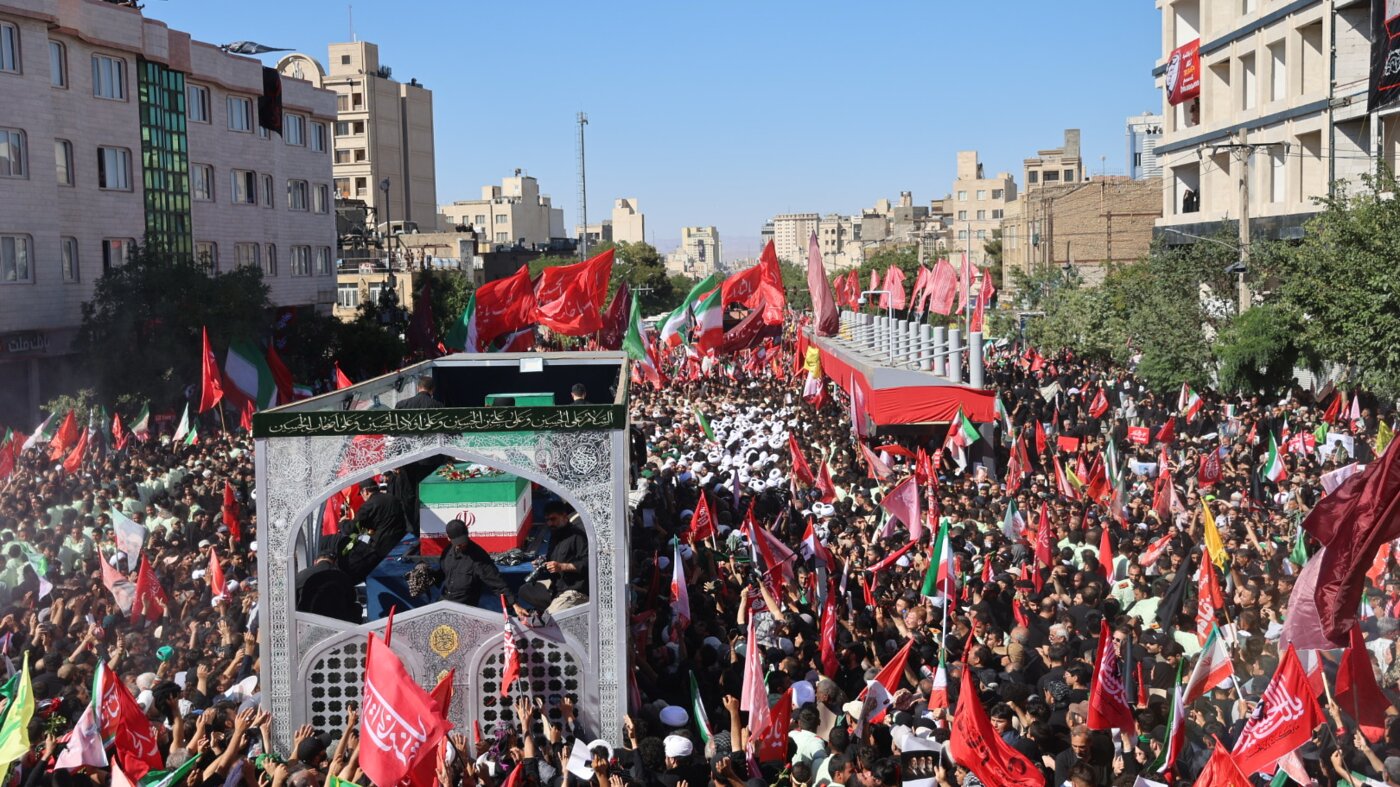
Iranian Supreme Leader Ayatollah Ali Khamenei was buried in Mashhad on 10 July following his death, with negotiations for a final deal scheduled to resume afterward. The United States conducted a third consecutive day of strikes, hitting 90 targets across Iran including sites in Bushehr province housing a Russian-built nuclear power plant, while Iran retaliated by launching missiles and drones at US military facilities in Jordan, Bahrain, and Kuwait, with Kuwait reporting one casualty from falling debris. Diplomatic coordination continues between US and Israeli leadership while Gulf Cooperation Council members condemn Iranian attacks on commercial shipping. Commercial shipping through the Strait of Hormuz continues to decline significantly, with insurance costs for oil tankers reaching up to six million dollars, while Oman maintains its position against imposing transit fees on vessels.
Change from previous assessment
This brief reflects the third consecutive day of military exchanges following the initial US strikes on 8-9 July covered in the prior report. New developments include the burial of Supreme Leader Khamenei in Mashhad, confirmed Iranian missile strikes against a US base in Jordan, Kuwait's detailed account of intercepted missiles and drones causing one injury, and Iran's Health Ministry updated casualty figures. Previous assessments of minimal shipping through the Strait of Hormuz have been confirmed with additional detail on insurance costs reaching six million dollars per vessel. Confidence in the assessment of Iranian casualty figures remains medium due to reliance on Iranian government sources.
Key judgments
- The United States conducted strikes against approximately 90 Iranian targets including military infrastructure, radar installations, and a railway bridge connecting Tehran and Mashhad on 10 July. (Confidence: high · REPORTED)
- I&W: Confirmation from US Central Command of additional strikes targeting Iranian naval assets in Khuzestan province (0-14 days)
- I&W: Iranian state media reporting new damage at Bushehr nuclear facility (1-3 months)
- Iran conducted coordinated attacks against US military facilities in Jordan, Bahrain, and Kuwait on 10 July, including ballistic missiles, cruise missiles, and drones that Kuwait intercepted causing one injury from falling debris. (Confidence: high · REPORTED)
- I&W: Additional casualties reported by Jordanian or Kuwaiti military authorities (0-14 days)
- I&W: Evidence of Iranian missile strikes hitting Israeli territory (1-3 months)
- Diplomatic channels remain open despite active military engagement with planned negotiations scheduled to resume after Khamenei's funeral on 10 July, though the US-Iran ceasefire has been formally terminated by President Trump. (Confidence: medium · REPORTED)
- I&W: Public confirmation of US-Iranian technical discussions on Hormuz shipping arrangements (0-14 days)
- I&W: Cancellation of scheduled negotiation dates between US and Iranian officials (1-3 months)
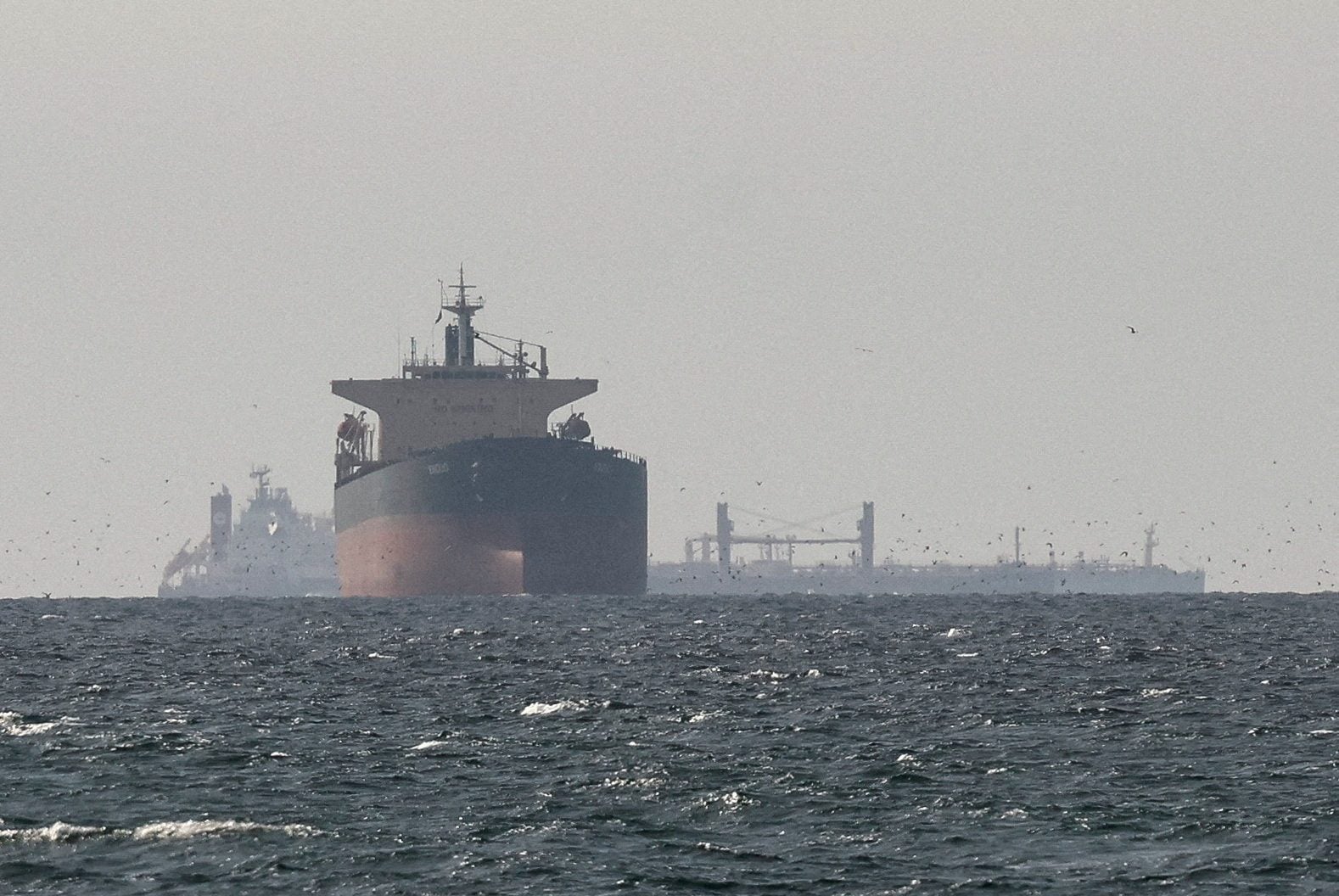
- Commercial shipping through the Strait of Hormuz remains severely constrained with visible traffic at near standstill levels, causing insurance costs for oil tankers to reach six million dollars per vessel while some operators report vessels switching off AIS transponders. (Confidence: high · REPORTED)
- I&W: Maritime insurer data showing insurance rates exceeding seven million dollars per vessel (0-14 days)
- I&W: Resumption of more than thirty daily vessel transits through the Strait (1-3 months)
- Iranian government statistics report at least 14 fatalities and 78 wounded from US strikes, primarily Revolutionary Guard Corps personnel in Khuzestan province, Bandar Abbas, and Bushehr. (Confidence: medium · REPORTED)
- I&W: Independent verification of casualty figures from non-Iranian medical facilities (0-14 days)
- I&W: Iranian government acknowledging higher casualty figures (1-3 months)
Outlook & scenarios
Escalated Direct Conflict (35%)
Iran targets Israeli territory directly in the next fortnight, prompting Israeli military response and potential US-led coalition action against Iranian strategic infrastructure. Iran intensifies attacks on commercial shipping in the Strait of Hormuz, causing global oil prices to rise above one hundred dollars per barrel as shipping through the Strait drops below five vessels daily. GCC states formally align with US military operations against Iran.
Diplomatic De-escalation (40%)
Technical negotiations following Khamenei's funeral establish new framework for de-escalation, including Iranian assurance against targeting Israeli territory and US commitment to reduce strikes. Shipping through the Strait of Hormuz gradually recovers to twenty vessels daily as insurance costs stabilise around three million dollars per vessel. Oman brokers agreement for secure passage through alternative Omani coastal route.
Protracted Limited Conflict (20%)
Military exchanges continue at current intensity with Iran focusing attacks on US facilities in Gulf states while avoiding direct strikes against Israel. Commercial shipping through the Strait remains severely constrained at single-digit levels with insurers maintaining six million dollar premiums. GCC states maintain formal neutrality while quietly supporting US counter-strike operations against Iranian missile capabilities.
Regional Expansion (5%)
Iran successfully draws Russia into supporting attacks against US naval assets, prompting expanded NATO involvement in Gulf security operations. Iranian proxy forces increase attacks against GCC oil infrastructure, causing sustained disruption to global energy markets. Gulf states formally request US permanent military presence to protect critical infrastructure.
Recommendations
- Monitor Iranian missile capabilities targeting US facilities in Jordan, particularly at King Abdullah Air Base, for evidence of expanded strike range capabilities
- Track maritime insurance rate fluctuations for commercial vessels transiting between Fujairah and Gulf ports as indicator of regional stability
- Verify casualty reports from Iranian health facilities through cross-referencing with local media coverage of funerals in Khuzestan province
- Assess Oman's diplomatic position regarding the Strait of Hormuz given their unequivocal statement on free passage navigation and opposition to transit fees
- Monitor US Central Command public statements for confirmation of additional strikes targeting Iranian naval infrastructure in Khuzestan province
Confidence & uncertainty
Overall confidence is assessed as medium due to strong corroboration from multiple major media sources reporting military exchanges on 10 July, including consistent accounts of US strikes against 90 Iranian targets and Iranian retaliatory attacks against US facilities in Jordan, Bahrain and Kuwait. Confidence is lowered by single-source reporting on casualty figures from Iranian government channels and conflicting dates regarding the timing of certain strikes between 8-10 July. Contradictions exist regarding the exact level of shipping activity through the Strait of Hormuz, with some sources indicating near-standstill conditions while others report limited traffic, requiring additional verification.
Intelligence gaps
- [EEI 1.1 · UNCOVERED] Movement, dispersal, or emplacement of Iranian conventional or IRGC heavy assets (ballistic missile launchers, Khoramshahr/Toofan-class missile transporters, ground-to-ground TELs, air defense batteries, amphibious units) from garrison areas toward forward bases or coastal launch sites. Recommended collection: satellite/IMINT
- [EEI 1.2 · UNCOVERED] Authenticated Iranian military orders, NSC/IRGC operations directives, or senior leadership statements explicitly directing strikes against Israel or U.S. forces or authorizing cross-border operations. Recommended collection: human/diplomatic
- [EEI 1.3 · PARTIAL] Changes in Israeli and U.S. force posture indicating anticipation of direct large-scale conflict—elevated readiness levels, mobilization notices, pre-positioning of munitions, or public/private orders to prepare offensive strikes. Recommended collection: open-source/diplomatic
- [EEI 2.1 · UNCOVERED] Observable pre-launch preparations for missile/rocket/cruise missile strikes (fueling, warhead mating, launcher orientation, support vehicle congregation) and abnormal munitions handling at known launch sites. Recommended collection: satellite/IMINT
- [EEI 2.2 · UNCOVERED] Indications of proxy arms shipments and weapons transfers (truck convoys, small boat transfers, container movements from Iran to proxies, new stockpiles in Lebanon, Iraq, Yemen, Syria). Recommended collection: maritime/AIS
- [EEI 2.3 · UNCOVERED] Evidence of cyber attack planning or active exploitation campaigns targeting Israeli or U.S. military/critical infrastructure (emergence of new command-and-control servers, spear-phishing campaigns against defense personnel, successful intrusions). Recommended collection: cyber
- [EEI 3.1 · UNCOVERED] Movements and posture changes of U.S. regional platforms (carrier strike groups, amphibious ready groups, B-52/B-1/B-2 or fighter deployments, missile defense assets repositioning) and associated armament loadouts. Recommended collection: satellite/IMINT
- [EEI 3.3 · UNCOVERED] Changes in U.S. base force-protection measures and rules of engagement at regional facilities (base lockdowns, evacuation notices, flight restrictions, activation of Local Defense Forces or missile intercept systems). Recommended collection: open-source/local reporting
- [EEI 4.1 · UNCOVERED] Hezbollah-specific indicators: convoys and logistics movements toward Lebanon–Israel border, artillery/rocket emplacement in southern Lebanon, documented strikes-preparation activity, public mobilization orders or recruitment drives. Recommended collection: satellite/IMINT
- [EEI 4.2 · UNCOVERED] Houthi-attributed maritime attack indicators: AIS anomalies/loss of contact for commercial vessels, reports of missile/drone strikes or near-miss incidents in Bab al-Mandeb/Red Sea, Houthi claims paired with imagery of weapons launches. Recommended collection: maritime/AIS
- [EEI 4.3 · UNCOVERED] Militia cross-border attack evidence from Iraq/Syria: recorded rocket/mortar launch events into Israel or strikes against U.S. facilities, movement of armed convoys toward border areas, and intercepted communications coordinating cross-border operations. Recommended collection: signals/ELINT
Cited sources
[1] wkms.org · U.S. and Iran exchange intensifying fire across Mideast, threatening ceasefire deal (A) · sha256:c66a99211b36 [2] The Jerusalem Post · Israel not expected to get involved in new round of US-Iran fighting, officials tell 'Post' (B) · sha256:120fc757b051 [3] nypost.com · Exclusive | Israel ready for more war on Iran should Trump ask for backup, sources tell The Post (B) · sha256:ff9819546f52 [4] gcaptain.com · UAE’s Oil Output Surged to Record High in June, IEA Says (A) · sha256:1175802f246c [5] aljazeera.com · US military denies involvement after explosions heard in Iran (A) · sha256:2dd92f7be386 [6] UALR Public Radio · U.S. and Iran exchange intensifying fire across Mideast, threatening ceasefire deal (A) · sha256:ed61d83f57af [7] npr.org · U.S. and Iran exchange intensifying fire across Mideast, threatening ceasefire deal (A) · sha256:29a32e92c50d [8] aljazeera.com · Death, silence, and survival inside New Jersey State Prison (B) · sha256:89af426a144e [9] Jerusalem Post · Push for diplomacy continues even as strikes in Iran, Hormuz intensify, US official says (B) · sha256:fd87a232a333 [10] gcaptain.com · INTERTANKO: Hormuz Tanker Transits Via Southern Route Fall to Single Digits After Renewed Fighting (C) · sha256:caa60cd7dc03 [11] gcaptain.com · Hormuz War-Risk Cover Climbs as Shipowners Pull Back (B) · sha256:0c13f8271499 [12] gcaptain.com · Oil Tanker Traffic Through Hormuz at Near Standstill as Attacks Strain MoU (A) · sha256:6fa103c869d8
Source content hashes were computed at collection time; the cited text is preserved unmodified for the life of this product.
TLP:CLEAR