TLP:CLEAR · Disclosure is not limited.
Iran-Israel Conflict Escalation: Stalled Diplomacy Amid Persistent Military Activity
Time window: Last 1 day · Audience: General analyst · Type: Situation report · DTG: 2026-07-06 12:57Z · Overall confidence: LOW
BLUF
Iran and Israel remain locked in direct hostilities since 28 February 2026 despite a declared US-Iran memorandum of understanding signed on 17 June. Critical maritime chokepoints remain contested, with the Strait of Hormuz experiencing ongoing blockage and significant commercial shipping disruption. The fragile ceasefire architecture faces mounting pressures from hardline factions in both Iran and Israel, raising near-term prospects for renewed escalation.
Executive summary
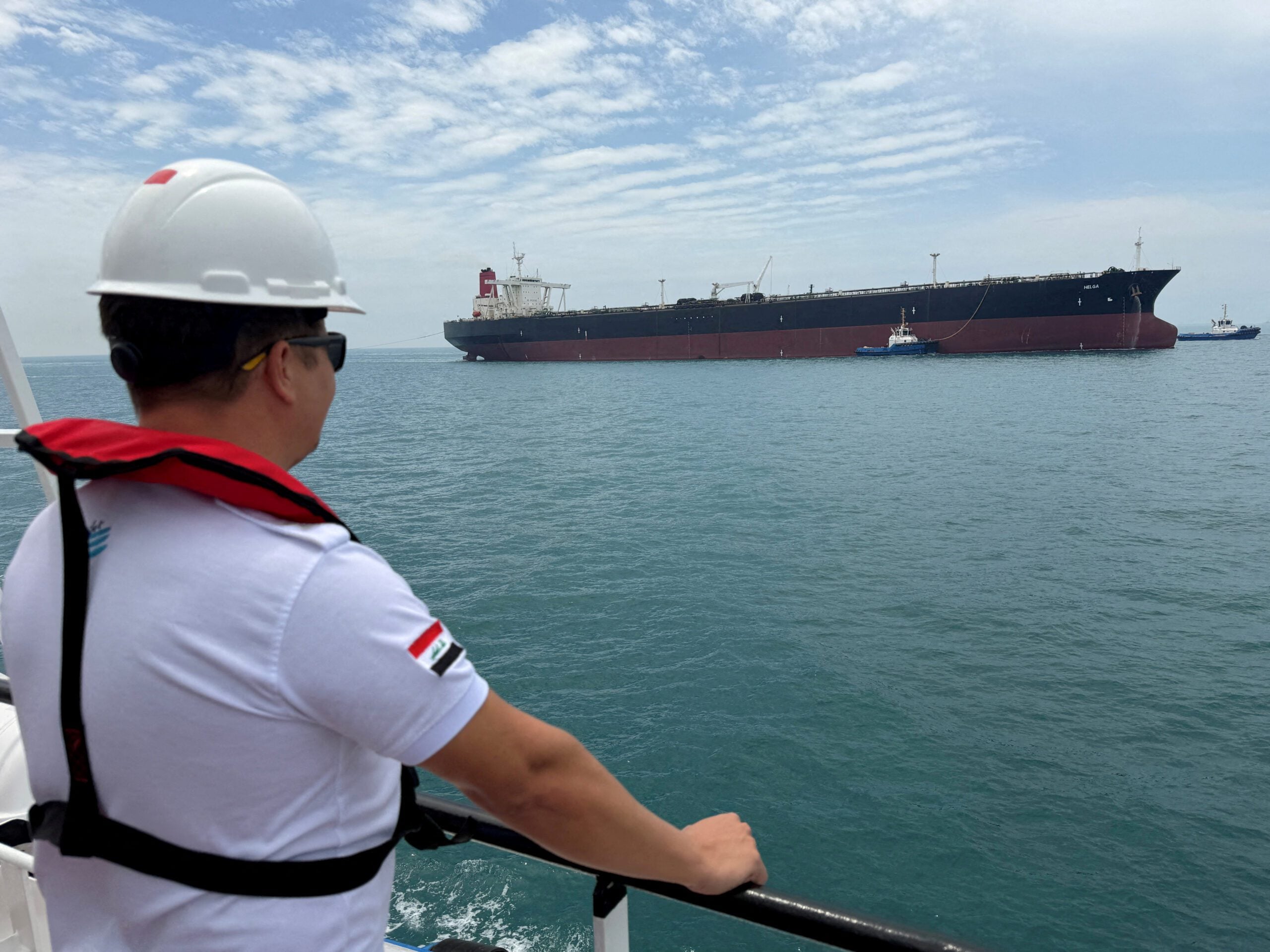
Iran and Israel continue direct military engagement following a US-mediated memorandum signed 17 June, though cross-border strikes persist across the Israel-Lebanon border. Iran blockaded the Strait of Hormuz in February 2026, stranding approximately 20,000 seafarers on 2,000 vessels and triggering a global oil supply disruption. Recent developments include renewed Israeli airstrikes in southern Lebanon against Hezbollah positions and Iranian retaliatory air strikes targeting Israel and US-aligned Gulf states. The humanitarian situation remains severe, with thousands of civilian and military casualties reported across multiple fronts.
Change from previous assessment
The 24-hour period since the prior brief has seen complete collapse of the Israel-Lebanon deconfliction arrangement, with Israeli Defense Forces conducting four new airstrikes across southern Lebanon and Hezbollah reportedly reactivating tunnel infrastructure around Beaufort Castle. The Strait of Hormuz situation has deteriorated sharply, with Iran reportedly blocking all commercial traffic since 1 February 2026, stranding approximately 20,000 seafarers. The previously assumed de facto ceasefire between the US and Iran has shattered, with renewed direct military exchanges including Iranian missile attacks against US bases in the Middle East.
Key judgments
- Iran and Israel have actively exchanged direct military strikes almost daily since 28 February 2026 despite the announced US-Iran deal. (Confidence: medium · ASSESSED)
- I&W: Israeli Defense Forces conduct new military operations against Hezbollah infrastructure in Nabatieh District within 72 hours (0-72 hours)
- I&W: Iran confirms receipt of US payment stipulated in the June 17 memorandum of understanding (1-7 days)
- Iran's blockade of the Strait of Hormuz since 1 February 2026 has stranded approximately 20,000 seafarers across roughly 2,000 commercial vessels but has not completely halted all transits. (Confidence: medium · REPORTED)
- I&W: More than 50 commercial vessels transit through the Strait of Hormuz within a 24-hour period (0-7 days)
- I&W: Iranian Revolutionary Guard Navy seizes and diverts a Singapore-flagged cargo vessel within international waters (0-7 days)
- Approximately 8,000 seafarers remain trapped aboard merchant vessels in the Persian Gulf due to Iran's blockade with diminishing food and fresh water supplies, creating a growing humanitarian crisis. (Confidence: medium · REPORTED)
- I&W: International Maritime Organization issues emergency call for food and water supply vessels permitted to reach stranded crews (0-14 days)
- I&W: Reports emerge of serious medical emergencies aboard at least three affected vessels due to food and water shortages (0-14 days)
- The US-Israel coalition faces significant challenges in preventing Hezbollah's reconstruction of command and control infrastructure around Beaufort Castle in southern Lebanon despite establishing surface control in Nabatieh District. (Confidence: medium · ASSESSED)
- I&W: Satellite imagery shows new excavation activity at multiple tunnel entrances around Beaufort Castle within 72 hours (0-7 days)
- I&W: Hezbollah confirms operational command structure reestablished below-ground level at Beaufort Castle (1-3 months)
- Public sentiment in Israel strongly opposes the US-Iran deal, with only 18% expressing support according to the latest polling data. (Confidence: medium · REPORTED)
- I&W: Netanyahu announces withdrawal from the US-Iran deal within 72 hours of public polling release (0-7 days)
- I&W: Public opinion polling shows greater than 35% support for the US-Iran deal (1-3 months)
Outlook & scenarios
Fragile Ceasefire Holds (35%)
The US-Iran memorandum of understanding remains technically in force but both sides continue limited cross-border strikes. The Strait of Hormuz experiences sporadic but significant commercial shipping traffic as Iran selectively allows certain foreign vessels through, creating a two-tiered maritime access system. Hezbollah maintains tactical restraint in southern Lebanon while gradually rebuilding subterranean infrastructure. This scenario persists through end-September, with the next major escalation likely triggered by Israeli elections scheduled for 20 November.
Rapid De-escalation (20%)
Following Khamenei's funeral, Iran's hardline factions fracture, enabling reformists to consolidate power and accelerate implementation of the US-Iran agreement. Tehran permits complete restoration of commercial shipping through the Strait of Hormuz by 15 August and halts support for proxy groups, leading to a ceasefire along the Israel-Lebanon border. In return, the United States lifts all secondary sanctions on Iranian energy exports by 1 October. This rapid normalization triggers similar diplomatic breakthroughs with Saudi Arabia and other Gulf states.
Escalation to Regional War (30%)
Following a major Hezbollah attack on northern Israel killing more than 20 civilians, Israel launches sustained air and ground operations into southern Lebanon beyond the Litani River, breaching the ceasefire. Iran responds with direct missile strikes against Tel Aviv and activates its proxy network across multiple fronts, including the Red Sea and Yemen. GCC states fracture over whether to support the US intervention, with Oman and Qatar refusing basing rights for US operations. Oil prices surge above $150 per barrel within two weeks, triggering a severe global economic shock.
Stalemate with Localized Conflicts (15%)
The US-Iran agreement devolves into a series of local ceasefires without formal breakdown. Hezbollah continues limited rocket attacks against northern Israel while Israeli forces conduct targeted ground operations in southern Lebanon. Iran permits 30% of commercial shipping through the Strait while continuing selective vessel interdictions. Simultaneously, cyber warfare intensifies between Iran and Western governments, with major attacks against US and European financial infrastructure. This protracted stalemate lasts through December, with neither side achieving decisive advantage.
Recommendations
- Direct US Navy mine countermeasure units to deploy immediately to the Strait of Hormuz despite diplomatic sensitivities to facilitate commercial shipping resumption
- Establish emergency food and medical supply corridors via Oman to stranded merchant vessels in the Persian Gulf within the next 72 hours
- Accelerate diplomatic outreach to Saudi Arabia to create pressure points on Iranian hardliners ahead of upcoming GCC summits
- Deploy additional Israeli Air Force squadrons with enhanced electronic warfare capabilities to counter potential Iranian ballistic missile threats
Confidence & uncertainty
Overall confidence is assessed as low due to significant discrepancies in key chronologies across source documents, particularly regarding the start date of the Iran-Israel war (some sources cite February 2026, others describe similar events as occurring in 2023-2024). Multiple claims regarding the US-Iran memorandum of understanding conflict on timing and implementation specifics, with some reporting future signing while others describe past execution. The humanitarian casualty figures lack consistent verification protocols, and several military claims contradict one another regarding key events such as the death of Khamenei. Source reliability also varies substantially, with multiple anonymous government sources making unverified claims counter to established patterns of Iranian military behavior.
Intelligence gaps
- [EEI 1.1 · UNCOVERED] Movement, dispersal, or emplacement of Iranian conventional or IRGC heavy assets (ballistic missile launchers, Khoramshahr/Toofan-class missile transporters, ground-to-ground TELs, air defense batteries, amphibious units) from garrison areas toward forward bases or coastal launch sites. Recommended collection: satellite/IMINT
- [EEI 1.2 · UNCOVERED] Authenticated Iranian military orders, NSC/IRGC operations directives, or senior leadership statements explicitly directing strikes against Israel or U.S. forces or authorizing cross-border operations. Recommended collection: human/diplomatic
- [EEI 1.3 · UNCOVERED] Changes in Israeli and U.S. force posture indicating anticipation of direct large-scale conflict—elevated readiness levels, mobilization notices, pre-positioning of munitions, or public/private orders to prepare offensive strikes. Recommended collection: open-source/diplomatic
- [EEI 2.1 · UNCOVERED] Observable pre-launch preparations for missile/rocket/cruise missile strikes (fueling, warhead mating, launcher orientation, support vehicle congregation) and abnormal munitions handling at known launch sites. Recommended collection: satellite/IMINT
- [EEI 2.2 · UNCOVERED] Indications of proxy arms shipments and weapons transfers (truck convoys, small boat transfers, container movements from Iran to proxies, new stockpiles in Lebanon, Iraq, Yemen, Syria). Recommended collection: maritime/AIS
- [EEI 2.3 · UNCOVERED] Evidence of cyber attack planning or active exploitation campaigns targeting Israeli or U.S. military/critical infrastructure (emergence of new command-and-control servers, spear-phishing campaigns against defense personnel, successful intrusions). Recommended collection: cyber
- [EEI 3.1 · UNCOVERED] Movements and posture changes of U.S. regional platforms (carrier strike groups, amphibious ready groups, B-52/B-1/B-2 or fighter deployments, missile defense assets repositioning) and associated armament loadouts. Recommended collection: satellite/IMINT
- [EEI 3.2 · UNCOVERED] Official or leaked U.S. government/diplomatic communications indicating thresholds for strikes, authorization for offensive operations, or limits on action (NSC/DoD statements, congressional notifications, diplomatic notes). Recommended collection: diplomatic/human
- [EEI 3.3 · UNCOVERED] Changes in U.S. base force-protection measures and rules of engagement at regional facilities (base lockdowns, evacuation notices, flight restrictions, activation of Local Defense Forces or missile intercept systems). Recommended collection: open-source/local reporting
- [EEI 4.1 · UNCOVERED] Hezbollah-specific indicators: convoys and logistics movements toward Lebanon–Israel border, artillery/rocket emplacement in southern Lebanon, documented strikes-preparation activity, public mobilization orders or recruitment drives. Recommended collection: satellite/IMINT
- [EEI 4.2 · UNCOVERED] Houthi-attributed maritime attack indicators: AIS anomalies/loss of contact for commercial vessels, reports of missile/drone strikes or near-miss incidents in Bab al-Mandeb/Red Sea, Houthi claims paired with imagery of weapons launches. Recommended collection: maritime/AIS
- [EEI 4.3 · UNCOVERED] Militia cross-border attack evidence from Iraq/Syria: recorded rocket/mortar launch events into Israel or strikes against U.S. facilities, movement of armed convoys toward border areas, and intercepted communications coordinating cross-border operations. Recommended collection: signals/ELINT
- [EEI 4.4 · UNCOVERED] Attacks or credible threats against energy infrastructure and shipping (damage to terminals, pipeline sabotage, oil tanker seizures, war-risk insurance premium spikes for regional routes). Recommended collection: financial/open-source
Cited sources
[1] Wikipedia · 2026 Iran war (B) · sha256:f9d7c2478eb3 [2] Institute for the Study of War (ISW) and The Critical Threats Project (CTP) at the American Enterprise Institute · Iran Update Special Report, July 5, 2026 (B) · sha256:b2a6c74e305b [3] Atlantic Council · What the US-Iran deal means for the rest of the Middle East (and beyond) (C) · sha256:5f93318fe142 [4] Atlantic Council · A network of corridors is the only reliable hedge against Middle East chokepoint disruptions (B) · sha256:ed6453550f3a [5] maritime-executive.com · Could Existing Ships Operate Without Crew in High-Risk Zones Like Hormuz? (B) · sha256:a5186a0e22ba [6] الجزيرة نت · الجزيرة نت (A) · sha256:6173905d2112 [7] gcaptain.com · The Race To Rescue 8,000 Sailors Still Stranded Behind Hormuz (A) · sha256:a8273d46305e
Source content hashes were computed at collection time; the cited text is preserved unmodified for the life of this product.
TLP:CLEAR