TLP:CLEAR · Disclosure is not limited.
Iran-Israel Conflict Expands Through Maritime and Yemen Fronts
Time window: Last 1 day · Audience: General analyst · Type: Situation report · DTG: 2026-09-11 19:57Z · Overall confidence: HIGH
BLUF
The conflict is very likely to remain active and widen through the Iran-US maritime theatre, Yemen and southern Lebanon over the next 0-14 days. Houthi gains at Mocha, Perim and Dhubab are the clearest new development, while Strait of Hormuz traffic remains severely reduced but not fully closed. Energy and tanker freight pressure is very likely to persist.
Executive summary
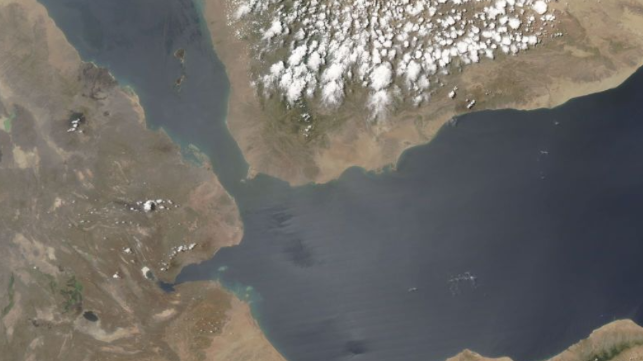
US-Israeli attacks on Iran remain embedded in a wider regional conflict. Iran reports attacks on shipping near the Strait of Hormuz, although Iranian claims of damage to US naval vessels are directly disputed by US Central Command and Marco Rubio. Iran-aligned Houthis have taken Mocha and reached Perim and Dhubab, increasing pressure on the Bab el-Mandeb and Saudi energy infrastructure. Hormuz traffic remains far below its pre-conflict level, but differing counts reflect inconsistent data coverage. Diplomatic activity in Oman and India offers limited channels for maritime deconfliction, not a broad ceasefire.
Change from previous assessment
Since the 9 September brief, the assessment has shifted from general geographic widening to specific Houthi gains at Mocha, Perim and Dhubab, with higher confidence that the Yemen front now affects both the Red Sea and Bab el-Mandeb. Evidence of severe Hormuz disruption and energy pressure has strengthened, including seven reported daily transits, oil above $100 a barrel, US diesel above $6 a gallon and record VLCC rates. Confidence in the exact Hormuz traffic baseline is lower because current UKMTO, Kpler and AIS figures use different counting methods. The ceasefire assessment remains unlikely, but the Oman shipping talks are a new limited diplomatic channel.
Key judgments
- Very likely, the conflict will remain active and widen across the Iran-US maritime theatre and Yemen during the next 0-14 days. The United States and Israel have launched attacks on Iran, Iran reports attacks on 10 ships after the United States sank five Iranian tankers, and Iran-aligned Houthis have taken Mocha and reached Perim. Iran's Ebrahim Azizi has warned that Hezbollah, Hamas and the Iraqi Resistance will respond. This is an assessed judgement. The outcome of the reported maritime attacks remains contested by Iranian statements, US Central Command and US Secretary of State Marco Rubio. (Confidence: medium · ASSESSED)
- I&W: Confirm: the IRGC or US Central Command reports another named exchange involving a US warship, drone vessel or tanker, or Yemeni government sources confirm further Houthi movement beyond Perim and Dhubab. (0-14 days)
- I&W: Break: Iran, Israel and the United States announce and sustain a halt in attacks across the maritime and regional fronts. (0-14 days)
- Very likely, the Houthis will retain Mocha and positions at Perim and Dhubab through the next 0-14 days, but reports that they control Yemen's entire Red Sea coast or both sides of Bab el-Mandeb should be treated as unconfirmed. Four Yemeni government sources support the Perim advance, while separate reporting supports Houthi control of Mocha and Dhubab. The maximal territorial claims conflict with this narrower evidence. This is an assessed judgement with medium confidence because retention of the positions is an inference and the extent of Houthi control remains disputed. (Confidence: medium · ASSESSED)
- I&W: Confirm: Yemeni government sources, commercial imagery or maritime reporting continue to place Houthi forces at Perim, Dhubab and Mocha, with no reported government recapture. (0-14 days)
- I&W: Break: Saudi-backed Yemeni government forces retake Mocha, Dhubab or Perim and demonstrate sustained control of those locations. (0-30 days)
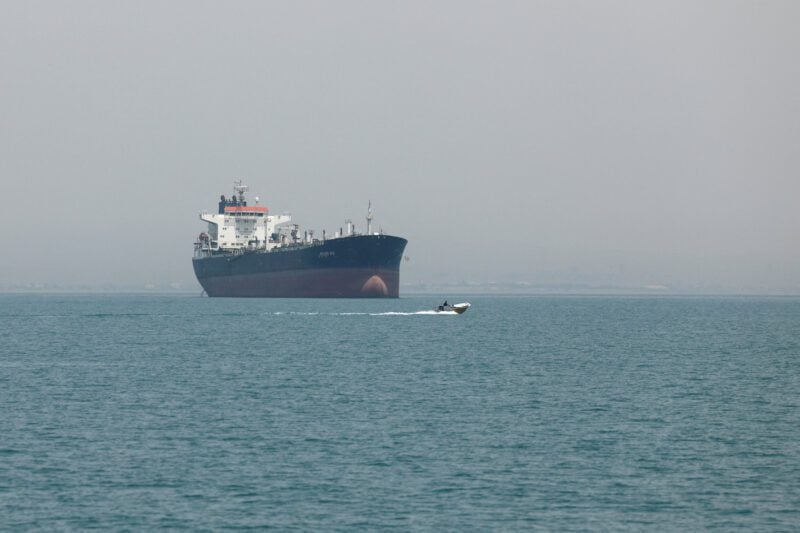
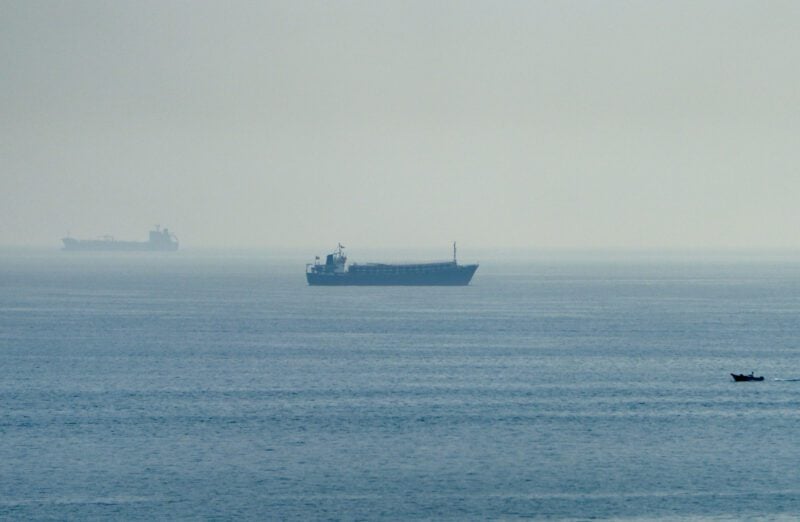
- Very likely, commercial shipping through the Strait of Hormuz will remain severely constrained over the next 0-14 days, while a complete closure is unlikely. Thursday traffic fell to seven vessels from 11 the previous day. UKMTO reports overall movement at roughly 20% of the pre-conflict norm, and identifies the southern Omani route as the highest-risk corridor, with 19 of 32 projectile incidents since 6 July. UKMTO also recorded 108 outbound and 102 inbound transits over seven days and reported about 20 US-facilitated vessels per day against six AIS-derived transits. The scale is therefore contested by counting method. This is an assessed judgement with medium confidence. (Confidence: medium · ASSESSED)
- I&W: Confirm: seven-day Hormuz traffic remains near 20% of the pre-conflict norm, while JMIC continues to rate the threat level as SEVERE and UKMTO records projectile incidents on the southern Omani route. (0-14 days)
- I&W: Break: UKMTO and Kpler record sustained traffic above half of the pre-conflict level for two consecutive seven-day periods, with repeated LNG cargo movements. (1-3 months)
- Likely, Houthi control of Perim, Mocha and adjacent Red Sea positions will sustain pressure on Saudi and Gulf trade routes and energy infrastructure over the next 0-30 days, but a full closure of Red Sea traffic is unlikely. The Houthis declared a maritime blockade of Saudi Arabia on 20 July, Saudi Arabia's East-West oil pipeline was reportedly struck and temporarily shut, and reporting states that control of Perim and the adjacent coast gives the Houthis an option to close Red Sea traffic. Houthi statements that non-Saudi shipping is safe are not corroborated by the reported attacks and territorial gains. This is an assessed judgement with medium confidence because the projected maritime effect rests partly on trade-publication analysis. (Confidence: medium · ASSESSED)
- I&W: Confirm: another attack affects Saudi shipping, the East-West oil pipeline or a named Saudi energy facility, or Bab el-Mandeb traffic falls materially below its current 26-vessel daily report. (0-30 days)
- I&W: Break: Saudi-backed Yemeni forces regain Perim or Mocha and Bab el-Mandeb traffic returns to sustained pre-conflict levels. (1-3 months)
- Very likely, energy and tanker freight pressure will persist for 1-3 months, with the IEA forecasting that normal Middle East flows will be delayed into 2027. On 11 September, average US diesel prices exceeded $6 a gallon, oil was set to close above $100 a barrel, VLCC rates reached Worldscale 450, roughly $11.50 a barrel, and Iranian crude exports remained at zero. Gulf crude exports nevertheless averaged more than 10 million barrels per day, indicating partial rather than total supply loss. This is an assessed judgement with high confidence because market indicators from the IEA, TankerTrackers.com, the Baltic Exchange and wire reporting converge. The relative contribution of Bab el-Mandeb attacks and US-Iran fighting remains unresolved. (Confidence: high · ASSESSED)
- I&W: Confirm: oil remains above $100 a barrel while VLCC rates remain near Worldscale 450 and Iranian crude exports remain at zero. (0-30 days)
- I&W: Break: oil falls below $100 a barrel and tanker rates show a sustained decline from Worldscale 450 alongside renewed Iranian crude exports. (1-3 months)
- Likely, Israel will maintain its forward military posture in southern Lebanon and Hezbollah will remain armed over the next 0-14 days, adding pressure to the Iran-linked regional conflict. The IDF reports an approximately 10 km security zone in southern Lebanon, Israel has conducted airstrikes there, Hezbollah continues to refuse disarmament, and Naim Qassem said Hezbollah would continue to act. This is an assessed judgement with medium confidence because operational details and arsenal estimates come largely from Jerusalem Post reporting, while the inference extends beyond the direct statements. (Confidence: medium · ASSESSED)
- I&W: Confirm: the IDF reports continued patrols, raids or airstrikes in southern Lebanon while Hezbollah maintains its refusal to disarm or announces further action. (0-14 days)
- I&W: Break: Israel announces a withdrawal from the approximately 10 km security zone and Hezbollah begins a verified disarmament process. (0-30 days)
- Unlikely, a broad US-Iran ceasefire will be reached over the next 0-14 days, although limited maritime talks in Oman are likely to proceed. The US Navy reportedly plans to keep two carrier strike groups near Iran until at least the end of 2026. Iran, Iraq and Gulf Arab states are scheduled to resume discussions on safe commercial shipping routes in Oman on Monday, while Iran's Ministry of Foreign Affairs has called for negotiations on Yemen. Iran's Ebrahim Azizi has warned of allied responses, and Iran continues to call for the destruction of Israel and 'Death to America'. This is an assessed judgement with medium confidence because the Oman talks are a concrete diplomatic opening, but no broad halt in fighting is reported. (Confidence: medium · ASSESSED)
- I&W: Confirm: Iran, Iraq and Gulf Arab states hold the Oman meeting without announcing a halt to US-Iran or Iran-Israel military activity, while US carrier strike groups remain near Iran. (0-14 days)
- I&W: Break: Oman produces a jointly announced shipping arrangement followed by a sustained halt in attacks by Iran, Israel and the United States. (0-14 days)
Outlook & scenarios
Sustained multi-front attrition (55%)
This is the most likely path. Iran maintains maritime pressure near Hormuz, the United States sustains blockade and escort activity, and the Houthis consolidate Mocha, Perim and Dhubab. Hormuz traffic remains severely reduced, while Saudi and Gulf energy routes face continuing disruption and tanker rates remain elevated.
Limited maritime containment (25%)
The Oman meeting produces a limited arrangement for commercial shipping. US- and UAE-facilitated transits increase, and some LNG and crude movements resume. The arrangement lowers immediate shipping risk but does not produce a broad ceasefire or reverse Houthi territorial gains.
Houthi closure of the Red Sea approach (15%)
Low probability, high impact. The Houthis retain Perim and adjacent coastline, then impose a sustained blockade on Red Sea traffic. Saudi crude exports rely more heavily on the route north through the Suez Canal, and Riyadh renews requests for US intelligence, targeting or military support.
Israel-facing front opens (10%)
Low probability, high impact wildcard. Hezbollah begins sustained attacks from southern Lebanon while Israel expands operations beyond the current security zone. A direct Iranian strike on Israel follows. The direct-strike element rests on thin reporting, but the combination would place the Iran-Israel conflict on a more overt regional footing.
Recommendations
- Build a daily two-source Hormuz traffic baseline that separates Kpler commodity-vessel counts, UKMTO totals, AIS-derived movements and facilitated transits. Do not combine the seven-vessel daily count with the 210 weekly UKMTO total without reconciling scope.
- Require two independent confirmations before adopting maximal claims that the Houthis control Yemen's entire Red Sea coast or both sides of Bab el-Mandeb. Prioritise reporting on Perim, Dhubab, Mocha, Hanish and Ras Menhali.
- Maintain a named watchlist for Iranian and Iranian-linked activity involving Naval Support Activity Bahrain, the US Fifth Fleet headquarters, Al-Azraq base, Ali Al-Salem Air Base, US warships, drone vessels and the two carrier strike groups. Separate confirmed damage from Iranian claims and US denials.
- Track the Oman meeting on Monday for a jointly announced shipping mechanism. Compare any arrangement with actual vessel movements through Hormuz and Bab el-Mandeb rather than treating diplomatic statements as evidence of restored access.
- Monitor the BRICS summit in New Delhi on 12-13 September for statements by Narendra Modi, Masoud Pezeshkian, Vladimir Putin and Xi Jinping on maritime security, Iran and regional de-escalation. Treat attendance and dialogue as diplomatic activity, not evidence of a ceasefire.
- Maintain an energy-pressure dashboard covering oil above $100 a barrel, US diesel above $6 a gallon, VLCC rates near Worldscale 450, Saudi crude supply near 6 million barrels per day and Iranian crude exports at zero. Flag any simultaneous reversal of these indicators as evidence of improving access.
Confidence & uncertainty
Overall confidence is high for the reported situation because Reuters and other wire services, major media, UKMTO, Kpler, the IEA, TankerTrackers.com and the Baltic Exchange provide converging evidence of Houthi territorial gains, reduced Hormuz traffic, elevated energy costs and continuing military activity. The main uncertainties concern the extent of Houthi control along Yemen's coastline, the denominator used in competing Hormuz traffic counts, and Iranian claims of damage to US naval vessels. These uncertainties lower confidence in several forward-looking judgements without changing the high-confidence assessment of an active and widening regional conflict.
Intelligence gaps
- [EEI 1.1 · PARTIAL] Detection and characterization of ballistic/cruise missile or rocket launches originating from Iranian territory or from Iran-controlled positions in Iraq/Syria (time, launch coordinates, missile type, flight trajectory/impact area). Recommended collection: satellite/imagery
- [EEI 1.2 · PARTIAL] Movements and posture changes of Iran-backed proxy forces (Hezbollah units in Lebanon, militias in Syria/Iraq): concentrations of personnel, transport of rocket/artillery launchers, visible logistics build-up within operational range of Israel. Recommended collection: human/intel
- [EEI 1.3 · PARTIAL] Israeli defensive and offensive posture changes: reservist call-ups, mobilization orders, sorties/airstrikes attributed to Israel, and domestic activation of missile-defense systems (locations and activation times). Recommended collection: open-source/media
- [EEI 1.4 · UNCOVERED] Evidence of pre-positioning or arming of naval mines, fast attack craft, or anti-ship missile systems in the Gulf of Oman, northern Arabian Sea, or off the Lebanese/Syrian coasts that could be used to interdict Israeli or allied shipping. Recommended collection: maritime/AIS
- [EEI 2.3 · PARTIAL] Changes to force protection or alert levels at foreign bases in the region (e.g., US bases in Kuwait, Qatar, UAE; Russian bases in Syria): activation of additional air defenses, curfews, or reinforcement shipments (personnel/equipment manifests). Recommended collection: signals/intel
- [EEI 3.3 · PARTIAL] Market and insurance indicators: sudden spikes in war-risk or hull insurance premiums for Middle East routes, large moves in regional FX/stock indices, and notable changes in commodity futures (oil, freight rates) tied to regional risk perceptions. Recommended collection: financial/transactional
TLP:CLEAR