TLP:CLEAR · Disclosure is not limited.
Iran-Israel Conflict: Hormuz and Red Sea Spillover
Time window: Last 1 day · Audience: General analyst · Type: Situation report · DTG: 2026-09-10 20:08Z · Overall confidence: HIGH
BLUF
Likely US-Iran exchanges and Houthi attacks on Saudi targets will continue over the next 0-14 days. Very likely disruption at the Strait of Hormuz and Bab el-Mandeb will sustain energy and shipping pressure, while the Houthi seizure of Mocha increases the risk of further fighting along Yemen's western coast.
Executive summary
Military activity remains concentrated around the US-Iran confrontation, the Strait of Hormuz, southern Saudi Arabia and western Yemen. The United States has reportedly struck Iranian tankers, Iran has claimed attacks on shipping and US-linked bases, and Hormuz traffic fell to seven vessels on 9 September. In Yemen, Houthi forces seized Mocha, advanced along the Red Sea coast and continued attacks on Saudi energy and civilian targets. Brent crude reached USD 105 per barrel, UK wholesale gas exceeded 200 pence per therm and tanker freight rates reached records. Israeli statements on control near Mount Hermon have prompted Syrian warnings of further escalation.
Change from previous assessment
Since the 9 September brief, the assessment now gives greater weight to the Houthi seizure of Mocha and the movement's advance towards Bab el-Mandeb. The Houthi outlook has been raised from likely continued pressure to very likely retention of Mocha and further coastal pressure, although Hanish control remains contested. The Hormuz assessment is unchanged on severe disruption, but new data showing seven transits, no LNG departures and an estimated 10 million barrels per day moving through shuttling expose a sharper contradiction between physical disruption and claims of effective closure. The brief adds a specific judgment on the Mount Hermon flashpoint and records fresh market deterioration, including Brent at USD 105 per barrel and UK gas above 200 pence per therm.
Key judgments
- Likely US-Iran military exchanges will continue over the next 0-14 days. The United States reportedly struck Iranian oil tankers near Kharg Island and Jask on 5 and 8 September, while Iran said it attacked 10 ships near the Strait of Hormuz on 9 September and launched retaliatory strikes against US bases in Jordan and Gulf countries. Confidence is medium because the pattern is reported by wire, trade and major-media sources, but some operational details rely on a think-tank account or party claims. (Confidence: medium · ASSESSED)
- I&W: Confirming tripwire: a new US strike on an Iranian tanker or a new Iranian attack on shipping or a US base is independently reported. (0-14 days)
- I&W: Breaking tripwire: both Washington and Tehran publicly confirm a halt to attacks and no further strikes on tankers, shipping or bases are reported. (0-14 days)
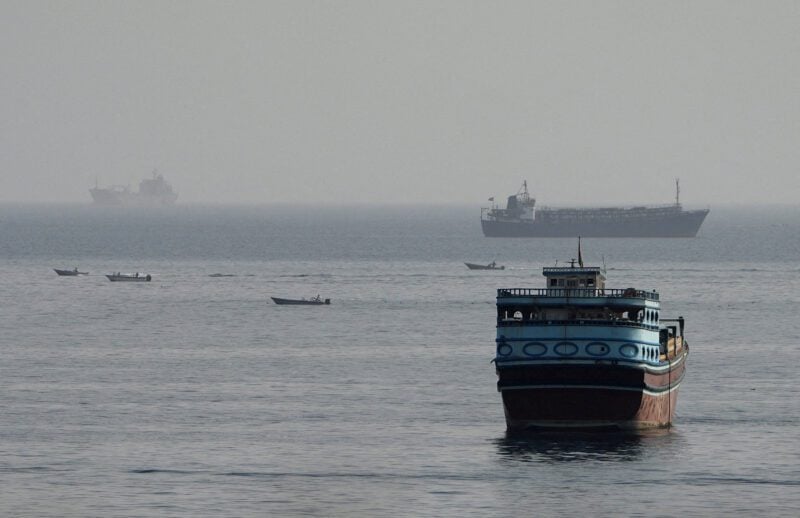
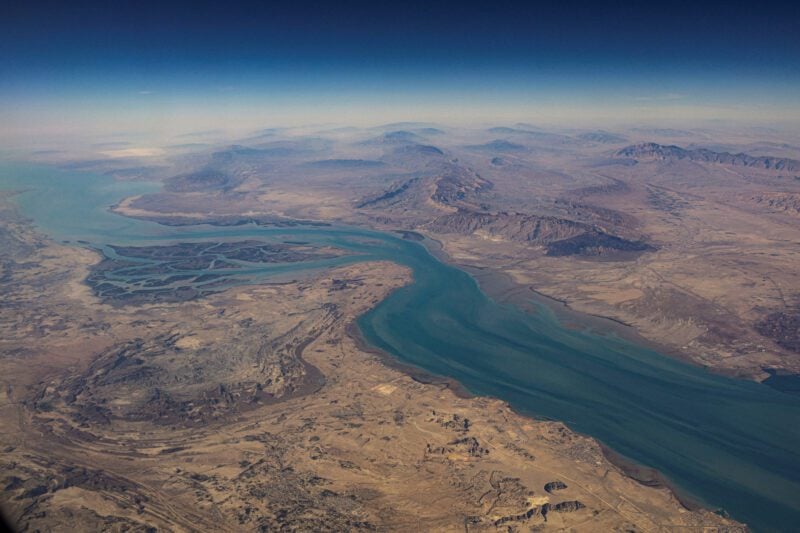
- Very likely the Strait of Hormuz will remain severely disrupted over the next 0-14 days, but a complete closure is unlikely. Preliminary tracking recorded seven transits on 9 September, four outbound and three inbound, while Vitol assessed that a shuttling system was still moving about 10 million barrels per day. Separate reporting described an effective closure and no liquefied natural gas tanker departures. Confidence is medium because the severity of disruption is well corroborated, but the reported flow estimate and closure characterisation remain materially inconsistent. (Confidence: medium · ASSESSED)
- I&W: Confirming tripwire: daily tracking remains in single digits, LNG tanker departures remain absent and shipowners continue using shuttling transfers. (0-14 days)
- I&W: Breaking tripwire: transits return to or exceed the reported 10-day average of 14 vessels and LNG tankers resume regular departures. (0-14 days)
- Very likely Houthi forces will retain Mocha and continue pressure along Yemen's western Red Sea coast towards Bab el-Mandeb over the next 0-14 days. Multiple reports describe the seizure of Mocha, the withdrawal and regrouping of Tarek Saleh's National Resistance Forces, Houthi advances past Al Khawkhah and Al Hays, and pressure around Dhubab, Ras Menhali and the Hanish islands. Confidence is medium because Mocha's capture is corroborated across wire and major-media reporting, while the extent of Houthi control around Hanish and the movement's precise objective remain contested. (Confidence: medium · ASSESSED)
- I&W: Confirming tripwire: verified Houthi positions appear at or beyond Dhubab, Ras Menhali or the Hanish islands, or the National Resistance Forces withdraw from another west-coast position. (0-14 days)
- I&W: Breaking tripwire: Internationally Recognised Government or National Resistance Forces re-enter Mocha and halt the Houthi advance towards Bab el-Mandeb. (0-14 days)
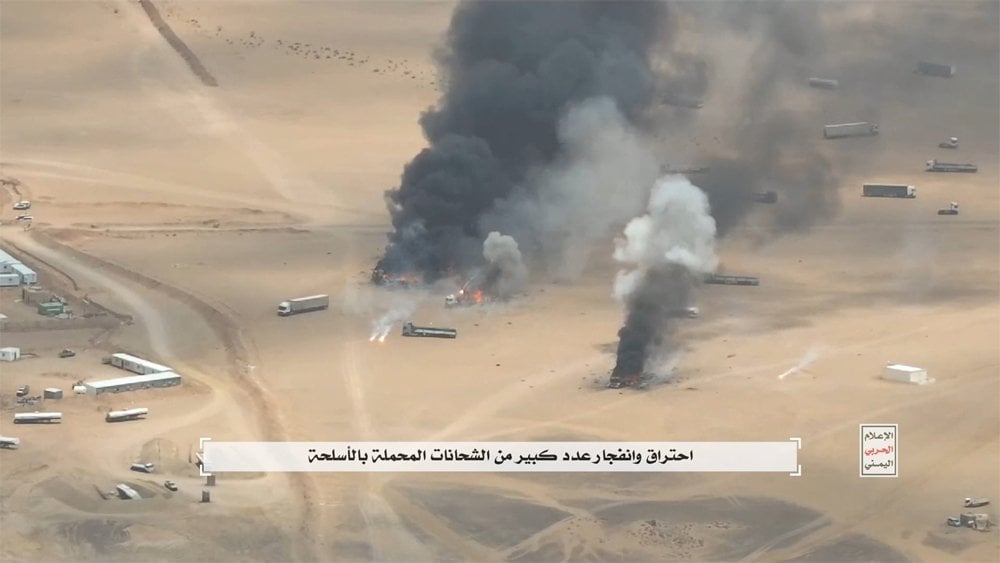
- Likely Houthi attacks on Saudi energy facilities and populated areas will continue over the next 0-14 days. Saudi authorities reported repeated alerts in Khamis Mushait, fires and partial production suspensions at southern energy facilities, an attack on Saudi Aramco's Jazan refinery and at least 73 injuries. Iran's operational direction of these attacks remains unresolved: Pakistan reported Tehran's denial of control over the Houthis, while a low-reliability report attributed the escalation to Iranian direction. Confidence is medium because the attacks are supported by Saudi, wire and major-media reporting, but the timing of some incidents and the Iran-Houthi command relationship remain disputed. (Confidence: medium · ASSESSED)
- I&W: Confirming tripwire: Saudi Civil Defense reports another alert in Khamis Mushait or Saudi authorities report a new fire, production suspension or confirmed impact at Jazan or another southern energy facility. (0-14 days)
- I&W: Breaking tripwire: Houthi operations stop for 14 consecutive days and Saudi authorities report no new attacks, fires or injuries. (0-14 days)
- Very likely energy-price and tanker-freight pressure will persist over the next 1-3 months. Brent crude reached USD 105 per barrel and was reported more than 40 per cent above its level at the start of the war. UK wholesale gas exceeded 200 pence per therm, US retail diesel reached a record and VLCC earnings approached USD 800,000 per day on the Middle East to China route. Kpler forecasts VLCC earnings above USD 100,000 per day into next year, while Morgan Stanley forecasts a 20 to 30 per cent rise in two-year leasing rates. Confidence is high because current market effects are corroborated by wire, major-media and trade reporting, although the duration of the pressure depends on military and shipping developments. (Confidence: high · ASSESSED)
- I&W: Confirming tripwire: Brent remains above USD 100 per barrel and reported VLCC earnings remain above USD 100,000 per day in successive market updates. (1-3 months)
- I&W: Breaking tripwire: Brent falls below USD 100 per barrel and VLCC earnings fall below USD 100,000 per day in successive updates alongside a sustained rise in Hormuz traffic. (1-3 months)
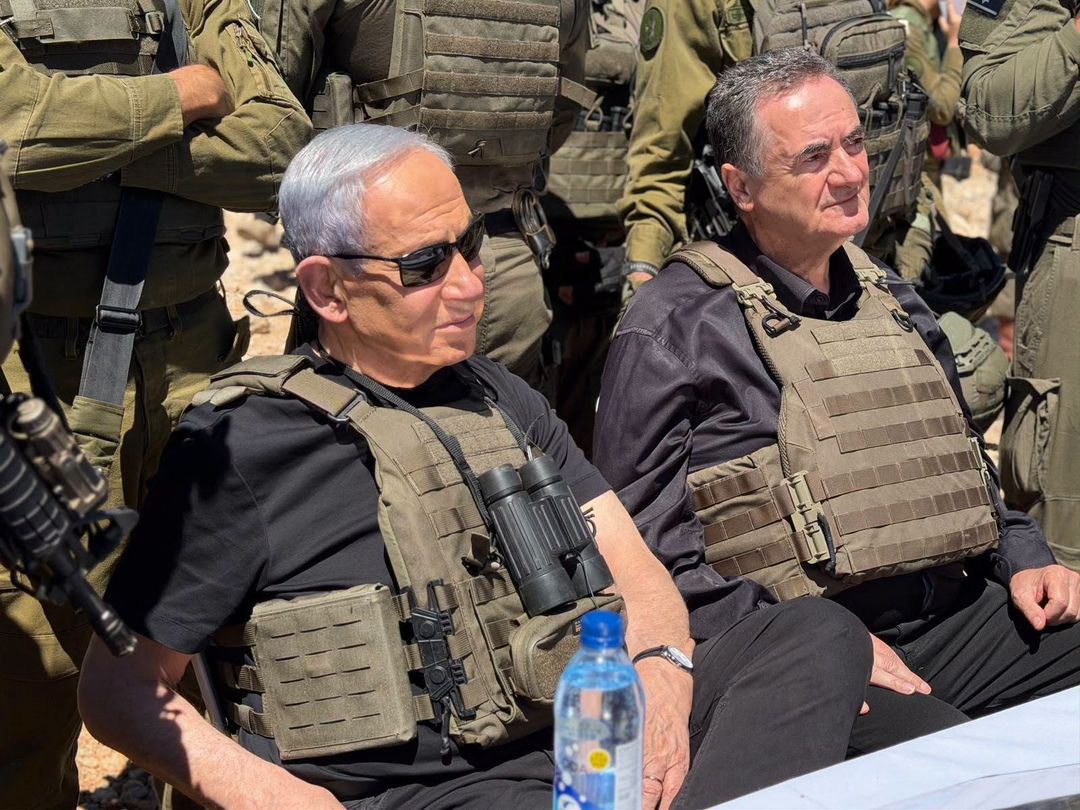
- Likely Israeli military control near Mount Hermon will remain a regional flashpoint over the next 1-3 months. Benjamin Netanyahu claimed Israel had established absolute control towards the Yarmouk River, while Israel Katz said Israeli forces would not withdraw. Syria described the visit as an illegal entry and warned that continued Israeli incursions and attacks threatened regional security. Confidence is medium because the statements and reported Israeli presence are corroborated by major-media reporting, but further military confrontation is an analytic inference rather than a directly reported outcome. (Confidence: medium · ASSESSED)
- I&W: Confirming tripwire: Israel announces or demonstrates additional positions, incursions or attacks inside Syrian territory near Mount Hermon or towards the Yarmouk River. (0-14 days)
- I&W: Breaking tripwire: Israel announces a withdrawal from the area and Syria confirms a return to the 1974 disengagement arrangement. (1-3 months)
Outlook & scenarios
Continued multi-theatre attrition (50%)
US-Iran exchanges continue without a formal regional settlement, while Houthi forces hold Mocha, pressure Bab el-Mandeb and strike Saudi targets. Hormuz traffic remains depressed, but shuttling transfers preserve some oil flows. Energy prices and tanker freight rates remain elevated.
Wider regional expansion (25%)
Houthi forces extend their positions towards Hanish, Ras Menhali and the Bab el-Mandeb approaches. Iranian attacks on shipping or US-linked facilities continue, while Israeli forces maintain or expand positions near Mount Hermon. Damage or precautionary shutdowns affecting Leviathan, Tamar or Karish add pressure to regional energy markets.
Limited operational pause (15%)
US and Iran halt attacks on tankers, bases and commercial shipping for a limited period. Houthi attacks on Saudi Arabia and fighting around Mocha decline, allowing Hormuz and Bab el-Mandeb traffic to rise from current depressed levels. Market pressure eases without resolving the underlying disputes.
High-impact maritime breakdown (10%)
Houthi forces consolidate additional positions around the Hanish islands and the Bab el-Mandeb approaches while Hormuz traffic falls to zero. Saudi energy facilities, Israeli offshore gas fields and commercial shipping face simultaneous disruption, producing a sharp regional humanitarian and economic shock.
Recommendations
- Maintain a daily Hormuz dashboard separating physical vessel transits, inbound and outbound counts, LNG departures, suspected transponder-off movements and estimated oil flows through the shuttling system.
- Establish a Yemen coastal geospatial watch covering Mocha, Dhubab, Ras Menhali, Hanish, Zuqair, Lesser Hanish, Greater Hanish and the approaches to Perim Island and Bab el-Mandeb. Seek independent confirmation before treating any reported island foothold as control.
- Keep Iran's role in Houthi attacks as an unresolved attribution issue. Require corroboration beyond official statements or low-reliability reporting before assessing operational direction from Tehran.
- Track Saudi Civil Defense alerts, fires, production suspensions and casualty reports in Khamis Mushait, Jazan and other southern Saudi energy locations. Separate the 8 September facility reporting from the 10 September Khamis Mushait alerts until timing is reconciled.
- Model 1-3 month exposure using separate Hormuz scenarios: severe disruption with continued shuttling flows, and effective closure with no LNG departures. Include Brent above USD 100 per barrel, UK gas above 200 pence per therm and VLCC earnings above USD 100,000 per day as stress markers.
- Monitor Israeli force activity around Mount Hermon and towards the Yarmouk River, Syrian diplomatic responses and any reference to the 1974 disengagement arrangement. Track operational status at the Leviathan, Tamar and Karish fields for signs of precautionary shutdowns.
- Prioritise humanitarian reporting from Mocha, Lahij, Aden, Taiz and al-Hodeidah, including the movement of civilians and the reported displacement of more than 20,000 people. Incorporate ICRC access and aid activity into the regional escalation picture.
Confidence & uncertainty
Overall confidence is high because the principal developments are corroborated by multiple high-reliability wire, major-media and trade sources, including the fall of Mocha, the sharp decline in Hormuz transits, attacks on Saudi facilities and the market response. Confidence is lower on the precise scale of Hormuz oil flows, the status of the Hanish islands, Iranian direction of Houthi operations and the operational outcome of some US-Iran attacks. Those uncertainties affect severity and attribution, not the assessment that regional military and economic pressure has intensified.
Intelligence gaps
- [EEI 1.1 · UNCOVERED] Unusual long-range missile/rocket transporter-launcher (TEL) movements, storage activation, or assembly activity at known IRGC missile sites or forward staging areas. Recommended collection: satellite/imagery
- [EEI 1.3 · PARTIAL] Large-scale transfers, deliveries, or convoy movements of armed UAVs/drones, guided munitions, or spare parts from Iran into Lebanon (Hezbollah), Iraq, Syria, or Gaza. Recommended collection: air/aviation track and HUMINT
- [EEI 1.4 · UNCOVERED] Sustained changes in Israeli air-defense usage (SAM launches, radar activations), wide-area alerts, or NOTAMs indicating elevated imminent strike response. Recommended collection: air/aviation/NOTAMs and signals
- [EEI 2.1 · PARTIAL] Concentration, repositioning, or sortie patterns of Iranian naval/IRGC patrol boats and fast-attack craft near shipping chokepoints or commercial lanes. Recommended collection: maritime/AIS and satellite/imagery
- [EEI 2.3 · PARTIAL] Insurance market indicators: sudden spikes in war-risk or hull insurance premiums for routes through the Red Sea, Suez corridor, or Persian Gulf, and major carriers announcing route changes. Recommended collection: financial/market and commercial shipping notices
- [EEI 2.4 · PARTIAL] Port closures, naval escorts requested by commercial operators, or formal rerouting advisories issued by major shippers (e.g., Maersk, Hapag-Lloyd) for regional transits. Recommended collection: commercial/OSINT
- [EEI 3.1 · PARTIAL] Deployment of foreign military assets to the region (carrier strike groups, amphibious ships, combat aircraft deployments, or additional bases activated) from the US, UK, France, Russia, or GCC states. Recommended collection: maritime/AIS and air/aviation and satellite/imagery
- [EEI 3.3 · PARTIAL] Confirmed arms transfers, expedited weapons shipments, or transfer authorizations to Israel, Iran, or their proxies (aircraft parts, munitions, air defenses). Recommended collection: customs/INTEL and HUMINT
- [EEI 3.4 · UNCOVERED] Issuance of travel warnings, embassy evacuations or reductions, and closure of diplomatic missions by major capitals indicating escalation risk or shifted threat assessments. Recommended collection: OSINT/diplomatic
Red cell review: CONCUR WITH COMMENT
TLP:CLEAR