TLP:CLEAR · Disclosure is not limited.
Iran-Israel Conflict: Hormuz and Saudi Arabia Face Rising Pressure
Time window: Last 1 day · Audience: General analyst · Type: Situation report · DTG: 2026-10-13 12:40Z · Overall confidence: HIGH
BLUF
Commercial shipping through the Strait of Hormuz is likely to remain at high risk: trade reporting records six vessel strikes on 11 October, while JMIC reports severe threat conditions and sharply reduced traffic. The Houthis are likely to continue attacks on Saudi targets, but reported casualty totals and incident dates conflict; the supplied reporting does not establish a new Israeli decision to strike Iran.
Executive summary
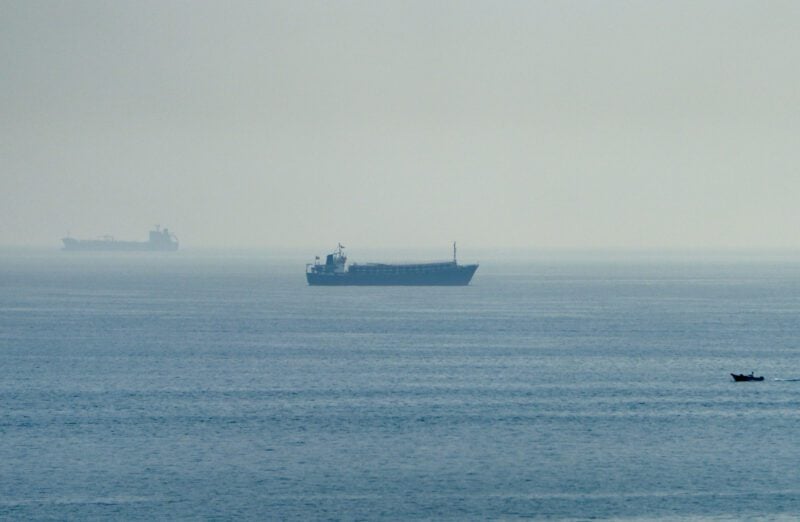
The immediate pressure points are maritime attacks around the Strait of Hormuz and Houthi attacks on Saudi Arabia. UKMTO-related reporting records six vessel strikes on 11 October, although JMIC counted three confirmed attacks over a different time window; transit traffic was reported at about 29 vessels a day, against a historical average of 138. The Iranian Navy claimed it targeted a giant tanker, but responsibility for the six reported strikes remains unresolved. Saudi authorities extended the closure of King Khalid International Airport in Riyadh through the evening of 17 October. Reports of Houthi attacks include conflicting dates and casualty totals. The IMF forecast on 13 October that Middle East and Central Asia GDP would contract by 0.3 per cent in 2026, citing prolonged disruption to Hormuz shipping. Reports concerning a possible Israeli strike on Iran are thin and conflict with claims that a US-Israeli war is already under way.
Change from previous assessment
Since the 12 October brief, reporting adds six vessel strikes around the Strait of Hormuz on 11 October, JMIC and NCAGS figures showing about 29 daily transits against a historical average of roughly 138, and an IMF forecast of regional contraction. Reporting also describes an extended King Khalid International Airport closure and a Saudi-backed Yemeni government counteroffensive near Bab el-Mandeb. The assessment of maritime and Houthi attack risk is reinforced, while attribution and Riyadh casualty figures remain unresolved. The assessment that a new Israeli strike is unlikely remains low confidence: reports of Netanyahu's hesitation and an alleged Washington request to Israel add detail but do not establish an operational decision, and the supplied conflict timeline remains contradictory.
Key judgments
- Commercial vessels are likely to face continued attack risk in the Strait of Hormuz over the next 0-14 days. UKMTO-related trade reporting records six attacks on 11 October, while JMIC recorded three confirmed attacks over the preceding 72 hours and maintained its threat classification at SEVERE. JMIC-reported traffic was about 29 vessel transits a day, compared with a historical average of roughly 138. The different attack counts appear to reflect different reporting windows or thresholds, and do not establish that all reported incidents were separate. (Confidence: medium · ASSESSED)
- I&W: JMIC reports fewer than 50 daily transits in a new 72-hour period and UKMTO-related reporting records another attack on a merchant vessel. (0-14 days)
- I&W: JMIC reports more than 100 daily transits for seven consecutive days and UKMTO reports no new vessel attacks in that period. (0-14 days)
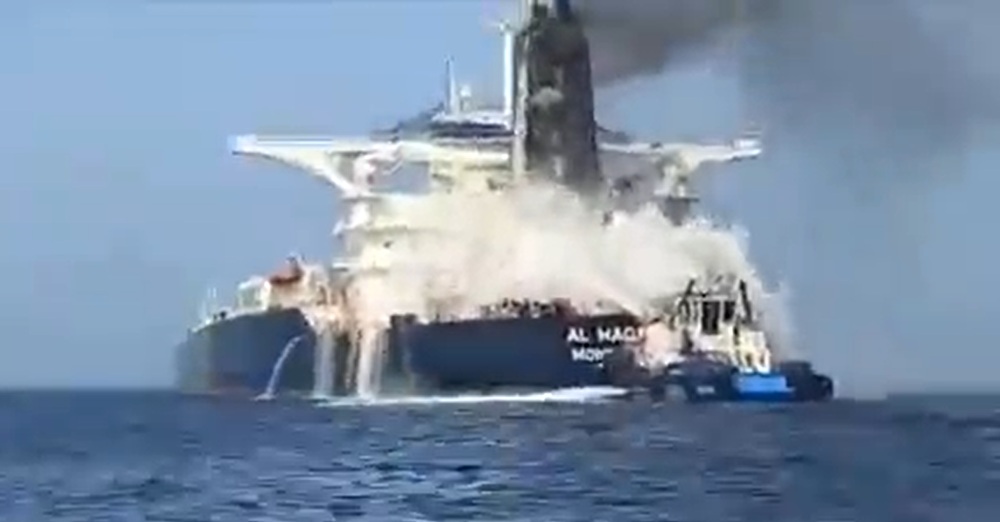
- Responsibility for the six reported vessel strikes on 11 October remains unresolved. The Iranian Navy claimed it targeted a giant oil tanker, and the IRGC Navy released footage purporting to show an attack on the UAE-owned tanker Al Maqam; the footage is unverified, and the available reporting does not establish whether either account relates to the six strikes. UKMTO-related reports describe unidentified attackers. The official Iranian claim and the conflicting incident reporting support only a medium-confidence assessment of attribution. (Confidence: medium · ASSESSED)
- I&W: An Iranian Navy or IRGC Navy statement names a vessel and date that match an independently reported UKMTO incident. (0-14 days)
- I&W: A UKMTO or JMIC update identifies a different attacker for one or more of the six reported strikes. (0-14 days)
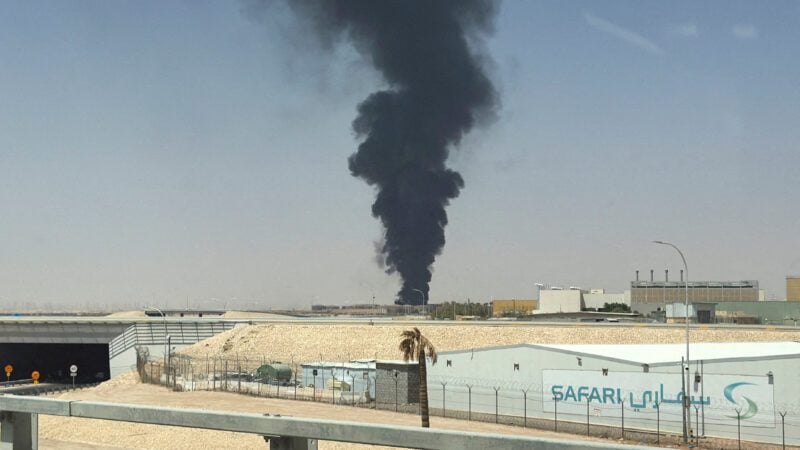
- The Houthis are likely to continue attacks on Saudi targets over the next 0-14 days. Houthi statements claim repeated ballistic missile attacks on King Khalid International Airport, while wire reporting attributes deadly attacks in Riyadh to the group and Saudi authorities have extended the airport closure through the evening of 17 October. The reporting does not provide a settled casualty total: accounts differ on whether the 10 October attack killed 12 or 13 people, and one account dates a 13-fatality attack to 3 October. The dates and totals should not be combined without further verification. (Confidence: medium · ASSESSED)
- I&W: The Houthis claim another missile attack on King Khalid International Airport or Saudi coalition forces announce a new missile or drone threat to Saudi Arabia. (0-14 days)
- I&W: Saudi authorities reopen King Khalid International Airport by 17 October and issue no new airport closure notice or threat warning through 24 October. (0-14 days)
- The conflict is already reflected in a sharply weaker 2026 economic outlook for Middle East and Central Asia. The IMF forecast contraction of 0.3 per cent, down from its April forecast of 1.9 per cent growth, and cited prolonged disruption to Strait of Hormuz shipping. Its country forecasts include contractions of 16.7 per cent for Kuwait, 16 per cent for Iraq, 15.6 per cent for Qatar, 11.3 per cent for Bahrain, 7.6 per cent for Iran and 3.3 per cent for Saudi Arabia. These are forecasts, not final measures of realised output. (Confidence: medium · REPORTED)
- I&W: A subsequent IMF outlook retains or deepens the 0.3 per cent regional contraction forecast while JMIC-reported Hormuz transits remain below 50 a day. (1-3 months)
- I&W: A subsequent IMF outlook revises the regional forecast to growth above zero as JMIC-reported Hormuz transits exceed 100 a day for seven consecutive days. (1-3 months)
- A new Israeli strike on Iran within the next 0-14 days is unlikely on the supplied reporting, but this assessment rests on thin and conflicting accounts. Israel's Channel 13 reportedly described Benjamin Netanyahu as hesitant over a final decision; a separate local-media report said Washington asked Israel to attack Iran alone and IDF Chief of Staff Eyal Zamir refused. These reports do not establish an operational decision. The claim that a US-Israeli war against Iran began in February conflicts with other supplied claims about a future or undecided attack, leaving the conflict timeline unclear. (Confidence: low · ASSESSED)
- I&W: The Israeli government or IDF publicly announces authorisation of, or an operation against, an Iranian target. (0-14 days)
- I&W: No Israeli strike on Iran is reported during the 14-day period, and no Israeli authority announces an operation or strike authorisation. (0-14 days)
Outlook & scenarios
Continued maritime pressure, no direct US-Israeli expansion (45%)
This is the most likely near-term path. Attacks and warnings continue around Hormuz, traffic remains well below the historical average, and tanker voyages and freight costs remain under pressure. Iran's reported tanker claim does not resolve responsibility for the six strikes on 11 October. Saudi airport disruption persists while the Houthis continue attacks or claims of attacks.
Limited deconfliction through Saudi-Iranian contact (25%)
Saudi Foreign Minister Prince Faisal bin Farhan and Iranian Foreign Minister Abbas Araghchi maintain contact, and Iran's stated offer to facilitate Riyadh-Houthi dialogue produces limited diplomatic engagement. This scenario reduces the pace of attacks but does not quickly restore Hormuz traffic or settle the competing accounts of the vessel strikes.
Wider Yemen conflict and increased US exposure (25%)
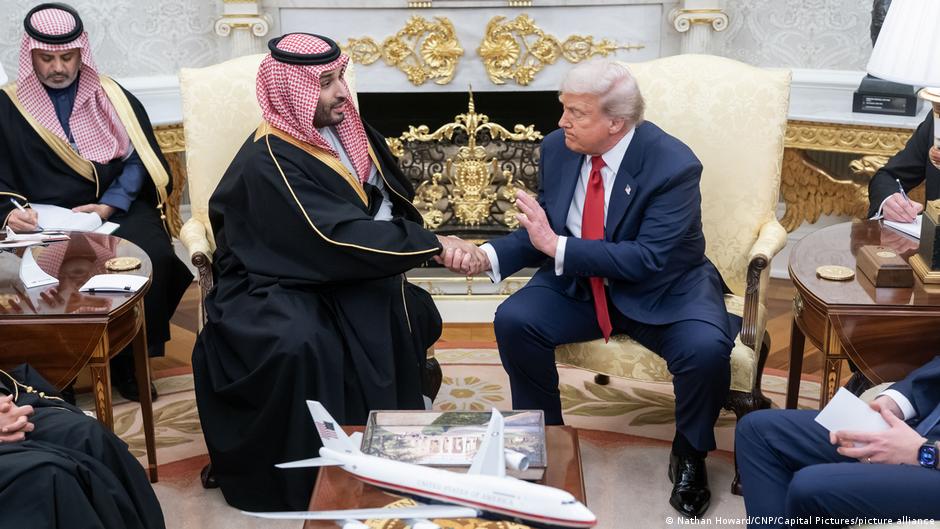
The Saudi-backed Yemeni government counteroffensive near Bab el-Mandeb intensifies fighting with the Houthis. Further Houthi attacks on Saudi targets increase pressure on Washington to join strikes; the Houthis have warned that US intervention would draw retaliation against US interests. Direct US participation would widen the conflict beyond the existing maritime and Saudi pressure points.
Wildcard: Israeli strike triggers a broader Iran confrontation (5%)
Despite reports of hesitation, Israel launches a new strike on Iran. Iran responds through attacks on US military positions or further disruption to Hormuz shipping. This is a low-probability, high-impact scenario; the supplied reporting does not confirm an Israeli operational decision, and its account of the conflict timeline is inconsistent.
Recommendations
- Maintain a single incident ledger for Hormuz attacks, recording UKMTO warning number, date, location, vessel, reported damage, casualties and attribution. Keep UKMTO-reported incidents, JMIC-confirmed attacks and Iranian claims in separate fields until the counts are reconciled.
- Track JMIC and NCAGS daily transit figures against the reported level of about 29 vessels a day and historical average of roughly 138. Flag a sustained rise above 100 daily transits or a further fall below 50 for reassessment of shipping and economic exposure.
- Verify the King Khalid International Airport closure and reopening against Saudi aviation notices. Reconcile the dates and casualty figures for the Riyadh attacks before using totals in assessments, and monitor FAA warnings and Saudi coalition announcements for new threats.
- Keep Israeli action against Iran separate from US action in reporting. Seek confirmation from Israeli or US official statements before treating claims of a strike decision or an ongoing war as established.
- Review the IMF's country forecasts alongside Hormuz transit levels and tanker traffic to Fujairah. Prioritise Kuwait, Iraq, Qatar, Bahrain, Iran and Saudi Arabia in updates because the supplied forecast assigns them the largest contractions.
Confidence & uncertainty
Overall confidence is high for the core event picture because UKMTO-related reporting, JMIC advisories and transit data, wire-service reporting on Saudi attacks, and the IMF forecast provide corroboration across distinct reporting streams. Confidence is lower for attribution of the Hormuz strikes, the precise Riyadh casualty totals and dates, and the timing or likelihood of a new Israeli strike. The reported conflict chronology is internally inconsistent, so the high headline confidence applies to the corroborated events and observed disruption, not to those unresolved details.
Alternative analysis (red cell)
The available reporting does not establish a directional probability for a new Israeli strike within 14 days. Netanyahu's reported hesitation and the alleged refusal by Zamir (f337e904-62ee-42f7-a51b-06733a5f300d; f0e39dc7-b9d0-4cb1-9e17-0c57154d1478) are too thin to support 'unlikely,' while the conflicting claims about an already-active war and a future US decision (6fd7df7c-82b9-408d-9af4-be1f2af9a345; 3eb0ec6c-efa1-4c8b-b682-692ed7b99987) make the baseline itself uncertain. The most defensible reading is that the probability is indeterminate on the supplied evidence.
Intelligence gaps
- [EEI 1.1 · UNCOVERED] Number, type, launch times, and trajectories of ballistic missiles, cruise missiles, armed UAV strikes, and combat-air sorties launched by Iranian or Israeli forces toward the other's territory or forward bases within a 72-hour window. Recommended collection: signals/intel
- [EEI 1.2 · UNCOVERED] Observable changes in Israeli and Iranian force posture: mobilization or reserve call-up orders, unit road/rail movements, dispersal or sortie rates of air squadrons, redeployment of air-defense batteries, and activation of civil-defense alerts or sirens in major population centers. Recommended collection: open-source/media
- [EEI 1.3 · PARTIAL] Indications of strike authorization or targeting preparations in Iranian or Israeli command chains: authenticated public orders by senior commanders, detected increases in encrypted communications consistent with targeting, or visible movement of strike munitions to launch/storage sites. Recommended collection: signals/intel
- [EEI 2.1 · PARTIAL] Counts, launch locations (coordinates), weapons types, and assessed damage from rocket/missile/drone strikes originating from Lebanon into northern Israel attributed to Hezbollah or allied groups. Recommended collection: open-source/media
- [EEI 2.2 · UNCOVERED] Reported attacks by Iranian-backed militias in Iraq and Syria: rocket/IED strikes on bases hosting US/coalition or Israeli personnel, documented militia unit movements toward borders, and captured movement or transfer of weapons systems to forward militia positions. Recommended collection: human
- [EEI 2.3 · UNCOVERED] Maritime harassment or attacks by proxies (e.g., Houthis): incidents of missile/rocket strikes against commercial vessels, small-boat swarm attacks, discovery or detonation of naval mines, and corresponding AIS anomalies in the Red Sea, Gulf of Aden, or southern Arabian Gulf. Recommended collection: maritime/AIS
- [EEI 3.1 · PARTIAL] Movements and arrival dates of foreign military assets into the region: carrier strike groups, amphibious ships, surface combatants, strategic airlift/tanker deployments, and air/sea patrol patterns by US, European, Russian, or regional militaries. Recommended collection: imagery/satellite
Cited sources
[1] The Maritime Executive · UKMTO Reports Six Strikes in One Day on Tankers in the Mideast (C) · sha256:d9f8f55e1ec7 [2] gCaptain · Six Ships Struck in Single Day as Hormuz Attacks Accelerate (C) · 12 October 2026 · sha256:36b2ee2a6581 [3] Al-Araby Al-Jadeed (alaraby.co.uk) · اعتداءات الحوثيين تعطّل مطار الرياض (B) · sha256:382037669f6d [4] Wikipedia (ar.wikipedia.org) · بوابة:أحداث جارية/7 أكتوبر 2026 - ويكيبيديا (C) · sha256:d13131d23267 [5] Bloomberg (republished by gCaptain) · Deadly Attacks on Saudi Arabia Risk Wider War That Draws In US (A) · 12 October 2026 · sha256:d563b24b395b [6] amp.dw.com · هل يتدخل ترامب لتوفير مظلة حماية فعالة للسعودية ضد هجمات الحوثيين؟ (F) · 12 October 2026 · sha256:2edad0f03826 [7] Al Jazeera · Middle East and Central Asia’s economy to shrink in 2026 amid war, IMF says (A) · 13 October 2026 · sha256:f59c293eb300 [8] alzaytouna.net (الزيتونة) · العدد (D) · sha256:b74a102ff576
Source content hashes were computed at collection time; the cited text is preserved unmodified for the life of this product.
Red cell review: PARTIAL DISSENT
TLP:CLEAR