TLP:CLEAR · Disclosure is not limited.
Iran-Israel Conflict: Hormuz and Yemen Spillover Raise Regional Risks
Time window: Last 1 day · Audience: General analyst · Type: Situation report · DTG: 2026-10-12 15:39Z · Overall confidence: MEDIUM
BLUF
Near-term regional risk is concentrated in continued disruption to shipping through the Strait of Hormuz and Saudi-Houthi exchanges that now include reported strikes on Riyadh airport and Aramco facilities in Yanbu. Iran’s conditional proposal to reopen Hormuz has not restored passage. A US attack on Iran before 3 November is unlikely, but reporting of US preparations conflicts with President Donald Trump’s stated pledge.
Executive summary
Reporting on 11 and 12 October describes Iran offering a seven-condition plan to reopen the Strait of Hormuz within seven days, while Mohsen Rezaei called the US response insufficient and said some conditions had been accepted but others remained unclear. The reported exchange has not produced a confirmed reopening. Separately, a major-media account says two strikes on King Khalid International Airport in Riyadh killed 14 people and wounded more than 300; the attackers have not been independently identified. Other reporting describes Houthi attacks on Saudi energy and aviation infrastructure, Saudi airstrikes in western and northern Yemen, and conflicting claims about control near Bab al-Mandeb. Trump’s reported pledge not to attack Iran before 3 November conflicts with local-media reporting of Pentagon preparations for a possible attack, without a start date.
Change from previous assessment
Since the 11 October brief, the latest major-media account reports two strikes on King Khalid International Airport across Saturday and Sunday, with 14 killed and more than 300 wounded, revising the earlier reported toll of 12 killed and 309 wounded. The new reporting also describes attacks on Aramco facilities in Yanbu and Saudi retaliatory airstrikes in Yemen. Iran’s seven-condition Hormuz proposal and the reported US reply through Qatari intermediaries add a clearer diplomatic track, but Rezaei’s statements leave its status unresolved. The US strike assessment is now framed around Trump’s reported pledge not to attack before 3 November, set against conflicting reporting of Pentagon preparations; confidence in any near-term strike forecast remains low.
Key judgments
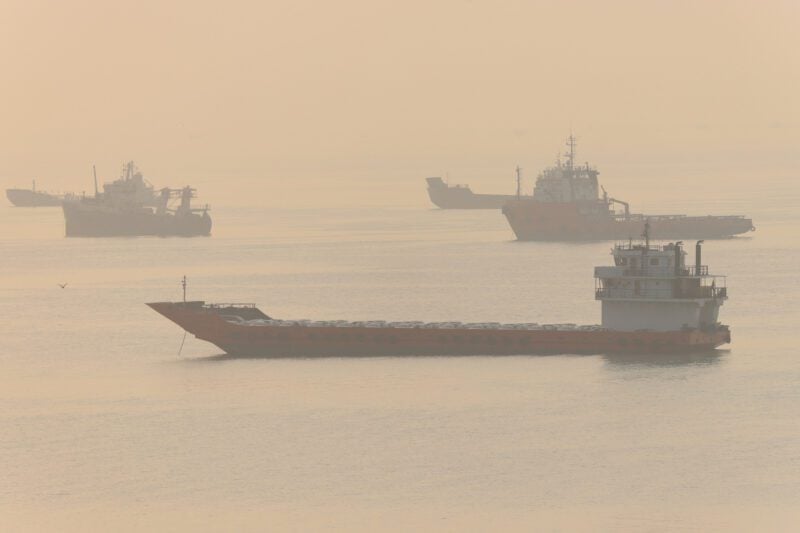
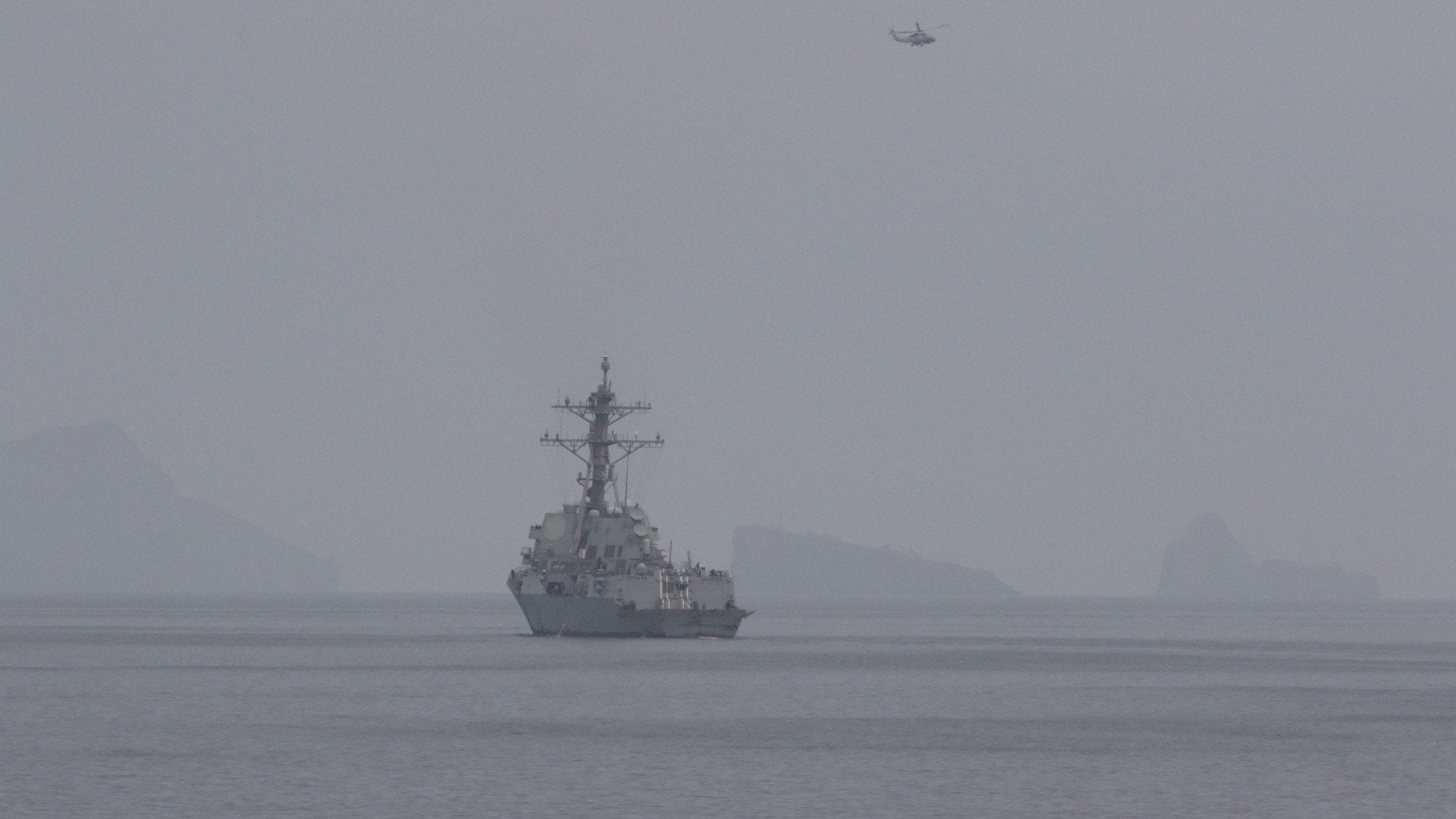
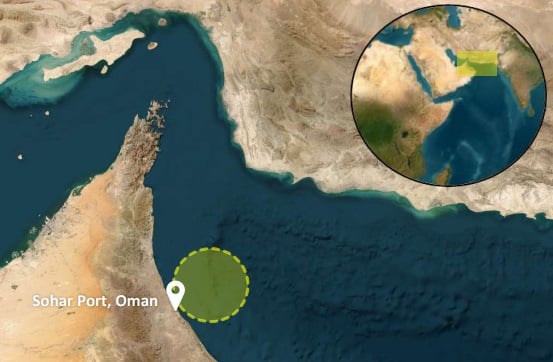
- Commercial shipping through the Strait of Hormuz is likely to remain severely disrupted over the next 14 days. Iran’s seven-condition offer does not establish that passage has reopened; reporting says traffic fell by more than 95% after Iran declared the strait closed, and the British Navy reportedly recorded damage to at least ten ships in the area during the preceding week. The IRGC Navy said a Shuttle-type tanker carrying 750,000 barrels of crude hit a mine on 11 October, but the US government says all mines had been cleared, and reports differ over the location and cause of tanker incidents. Major-media and trade reporting support the broader disruption, while the mine claim and incident details remain disputed. (Confidence: medium · ASSESSED)
- I&W: Confirms: UKMTO reports another attack on a vessel in the Strait of Hormuz or Gulf of Oman. (0-14 days)
- I&W: Breaks: Iran and the United States announce an agreed transit arrangement, followed by commercial vessel traffic returning close to pre-conflict levels for seven consecutive days. (0-14 days)
- Saudi-Houthi violence is likely to continue over the next 14 days, with further Houthi attacks on Saudi targets and Saudi airstrikes in Yemen. A major-media report says two strikes on King Khalid International Airport on Saturday and Sunday killed 14 people and wounded more than 300, including nationals of Bangladesh, Pakistan and Palestine; the perpetrators of those strikes remain unidentified. Separate reporting describes Houthi attacks on Saudi aviation and energy infrastructure, a strike on Aramco facilities in Yanbu, and Saudi retaliation in western and northern Yemen. Control claims near Bab al-Mandeb conflict: Houthi captures of positions on Perim Island, the Hanish archipelago and Mokha are reported alongside advances by Saudi-backed government forces. The casualty report is from major media; battlefield claims are less independently verified. (Confidence: medium · ASSESSED)
- I&W: Confirms: A new Houthi missile or drone attack on a Saudi airport or energy site, or another Saudi airstrike in western or northern Yemen, is reported. (0-14 days)
- I&W: Breaks: Saudi Arabia and the Houthis announce a halt to attacks and no new cross-border attack or Saudi airstrike is reported for seven consecutive days. (0-14 days)
- A negotiated reopening of the Strait of Hormuz within 14 days is unlikely. Iran’s proposal sets seven conditions for restoring passage; Rezaei described the US response as insufficient and said negotiations would not proceed until the conditions were met. Other reporting says the United States replied through Qatari intermediaries and that Iran viewed some conditions as accepted, leaving the negotiating status unclear. These details rely largely on accounts of Iranian statements, with no confirmed agreement or operational reopening reported. (Confidence: low · ASSESSED)
- I&W: Confirms: Iranian officials reiterate that Hormuz will remain closed to the United States until the seven conditions are met, with no announced transit schedule. (0-14 days)
- I&W: Breaks: Washington and Tehran announce acceptance of specified conditions and publish a timetable for restoring commercial passage. (0-14 days)
- A US attack on Iran before 3 November is unlikely, but the reported Pentagon preparations do not establish an attack decision. Trump reportedly said the United States would not attack Iran before the midterm elections; separate local-media reporting says the Pentagon directed US Central Command to complete preparations for an attack without setting a start date. Reporting that Israeli security agencies are reluctant to strike before the election rests on social-media sourcing, while another report describes US-Israel communications about a unilateral Israeli strike. The conflicting accounts are thinly corroborated, so confidence is low. (Confidence: low · ASSESSED)
- I&W: Confirms: Trump or the White House reiterates that US forces will not attack Iran before 3 November, and no US strike order is publicly announced. (0-14 days)
- I&W: Breaks: US forces conduct a publicly acknowledged strike on Iranian territory before 3 November. (0-14 days)
- Regional export disruption is likely to sustain energy-market pressure over the next one to three months, although Saudi pipeline routes provide some mitigation. Saudi Arabia’s East-West pipeline carried 5.8 million barrels a day on 6 October; the repurposed gas pipeline is projected to carry 1.2 million barrels a day within seven to eight weeks. Reported exports from Iraq, Kuwait and Qatar fell by 82%, 81% and 80%, respectively. Saudi plans for 10 million barrels a day of pipeline capacity are a two-to-three-year objective, not near-term relief. Wire-service reporting supports the Saudi pipeline figures; the country-level export comparisons rely on trade-publication reporting. (Confidence: medium · ASSESSED)
- I&W: Confirms: Saudi reporting does not show the repurposed pipeline reaching 1.2 million barrels a day within the stated seven-to-eight-week period, while Gulf diesel exports remain near the September level of 670,000 barrels a day. (1-3 months)
- I&W: Breaks: Saudi Arabia reports the repurposed line carrying 1.2 million barrels a day and Gulf diesel exports recover towards the 2025 level of 1.4 million barrels a day. (1-3 months)
Outlook & scenarios
Continued pressure without agreement (58%)
This is the likely near-term course. Iran maintains its conditional proposal without agreeing to a transit schedule, shipping remains disrupted around Hormuz, and Houthi attacks on Saudi targets continue alongside Saudi airstrikes in Yemen. Competing claims about the Bab al-Mandeb front remain unresolved.
Conditional maritime de-escalation (30%)
This outcome is unlikely but plausible. Qatari intermediaries carry further messages between Washington and Tehran, the two sides accept enough of Iran’s seven conditions to publish a transit timetable, and commercial passage through Hormuz begins to recover. Iran’s offer to facilitate Saudi-Houthi talks contributes to a pause in attacks.
Direct-strike rupture (12%)
A renewed US or Israeli strike on Iran before 3 November is very unlikely, but it is the high-impact wildcard. If a strike occurs, direct Iran-Israel conflict risk rises and the existing pressure on Hormuz and Saudi targets intensifies.
Recommendations
- In the next daily update, separate confirmed events from attributed claims for the 10-11 October tanker incidents. Record reported coordinates, vessel identity, flag, cargo and source, and keep the mine, projectile and location accounts distinct until reconciled.
- Report the King Khalid International Airport toll as 14 killed and more than 300 wounded according to the latest major-media account. Do not assign responsibility for those strikes to the Houthis without additional attribution or corroboration.
- Track Iran’s seven conditions, the reported US response through Qatari intermediaries and any public acceptance by either side. Measure reopening against observed commercial transits rather than the announcement of a proposal.
- Keep Trump’s reported pledge, the account of Pentagon preparations and reporting about Israeli deliberations as separate lines of reporting. Do not treat contingency preparations as evidence of a decision to strike.
- For energy-risk updates, distinguish current pipeline throughput from planned capacity. Track the 1.2 million barrels-a-day target for the repurposed Saudi pipeline separately from the longer-term 10 million barrels-a-day ambition.
Confidence & uncertainty
Major-media, wire-service and trade-publication reporting supports the broad picture of Hormuz disruption, Saudi-Houthi violence and Saudi efforts to expand pipeline capacity. Confidence is lower on specific tanker causes and locations, responsibility for the Riyadh airport strikes, and battlefield control near Bab al-Mandeb. Reporting on a US attack decision is also contradictory and relies in part on thinly corroborated accounts.
Alternative analysis (red cell)
A negotiated reopening of the Strait of Hormuz within 14 days remains uncertain but may be more plausible than the judgment suggests. Claims 0b7c6873-ec0b-4e95-882a-092e4c36a456 and 82140792-6bc6-4676-a695-bc5e6560515d indicate active mediation, and c71d471c-0881-49fa-89c3-c1386e7bfc41 reports partial acceptance of Iran's conditions. The contradictory Rezaei accounts in, and a46766b7-f51e-4a47-b6e4-a41da2158740 make the negotiating position unclear rather than decisively stalled.
Intelligence gaps
- [EEI 1.1 · UNCOVERED] Observed repositioning, sustained increases, or new forward basing of Iranian conventional or IRGC forces (armored units, missile batteries, aircraft, naval vessels) toward borders or regional launch points. Recommended collection: IMINT/satellite
- [EEI 1.4 · UNCOVERED] Interdicted or observed shipments (air, sea, land manifests, seizures, satellite imagery of transfers) of advanced weapons or missile components from Iran toward proxy groups or forward staging points. Recommended collection: maritime/AIS
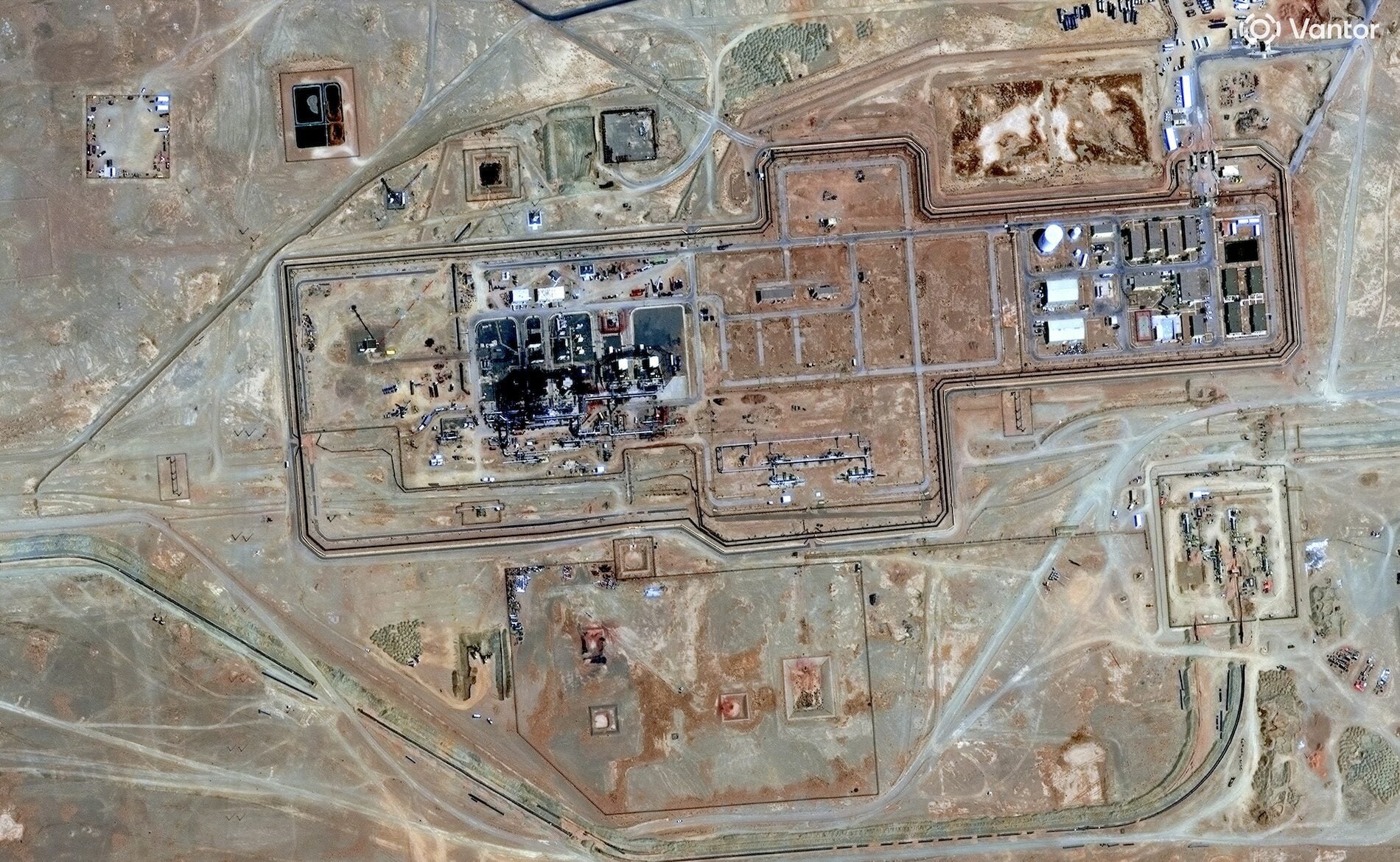
- [EEI 2.1 · PARTIAL] Satellite or on-the-ground imagery showing fires, damage, or operational shutdown at major oil export facilities, refineries, storage terminals, or key pipeline infrastructure in the Gulf and Red Sea. Recommended collection: IMINT/satellite
- [EEI 2.4 · UNCOVERED] Rapid increases in war-risk insurance premiums for Middle East routes, shipping company advisories to avoid region, or major charter cancellations tied to the conflict. Recommended collection: financial/open-source
- [EEI 3.1 · UNCOVERED] Movement/arrival of major foreign military assets into the region: US carrier strike groups, amphibious ready groups, strategic bomber flights, Russian/Chinese naval taskings, or allied expeditionary units (visible in AIS, NOTAMs, satellite imagery, official releases). Recommended collection: IMINT/satellite
- [EEI 3.2 · PARTIAL] Official expedited arms transfers, basing/overflight agreements, or declarations of operational support (formal government announcements, defense ministry releases, logistics flight manifests). Recommended collection: open-source/diplomatic
- [EEI 3.3 · UNCOVERED] Embassy evacuations, large-scale personnel movements, issuance of government travel bans/advisories, or multinational security alerts affecting foreign nationals and diplomatic posture in the region. Recommended collection: diplomatic/open-source
Cited sources
[1] Verify-Sy (منصة تأكد) · وفاة سورية في الهجوم على مطار الملك خالد بالرياض (C) · 12 October 2026 · sha256:5cb51bc7dc14 [2] gCaptain · Iran Says US Response To Its Proposal To Reopen Hormuz Was 'Insufficient' (B) · 11 October 2026 · sha256:d6e9b7e6343b [3] The Maritime Executive (article courtesy of Poten & Partners) · The Continuously Shifting Control of the Strait of Hormuz (C) · sha256:48a8ed5ab675 [4] akkanet.net · تقرير: طهران قادرة على إنتاج الصواريخ والطائرات المسيّرة وتجديد مخزونها العسكري بسرعة – عكا نت (D) · 11 October 2026 · sha256:4d9c1dce4f2c [5] CNN Arabic · إيران: مضيق هرمز تحت سيطرتنا واشتعال النيران بناقلة نفطية ثالثة | CNN Arabic | CNN (A) · 12 October 2026 · sha256:4cac1230e5f3 [6] maritime-executive.com · Two Seafarers Missing in Drone Attack on Product Tanker off Oman (F) · sha256:96cedc4ea135 [7] Al Jazeera · Iran-Saudi talks on Yemen’s Houthis: What’s in it for Tehran? (A) · 12 October 2026 · sha256:4e2752bacc3f [8] Bloomberg (republished by gCaptain) · Saudi Eyes 10 Million Barrels a Day of Oil Pipe Capacity (A) · 12 October 2026 · sha256:0fd80354559a [9] jcfa.org · The Red Sea Frontier: Berbera and the New Saudi Strategy for Somaliland and Somalia (C) · 12 October 2026 · sha256:2b5fc015a03c [10] قناة الحدث Al Hadath · مصادر إسرائيلية: اتصالات مستمرة بين إسرائيل وأميركا لتوجيه ضربة إسرائيلية منفردة لإيران. والأجهزة الأمنية الإسرائيلية تتحفط على توجيه ضربة لإيران قبل الانتخابات | قناة الحدث Al Hadath (E) · sha256:c43e4b954210 [11] BBC · Which war is having the biggest impact on diesel prices - Iran or Ukraine? (A) · 12 October 2026 · sha256:ac2180624335
Source content hashes were computed at collection time; the cited text is preserved unmodified for the life of this product.
Red cell review: PARTIAL DISSENT
TLP:CLEAR