TLP:CLEAR · Disclosure is not limited.
Iran-Israel conflict: Hormuz diplomacy amid continued regional escalation
Time window: Last 1 day · Audience: General analyst · Type: Situation report · DTG: 2026-08-26 13:39Z · Overall confidence: MEDIUM
BLUF
Iran and Israel remain in an active cycle of missile strikes and retaliation, while Iran has also targeted US assets and Gulf allies. Iran-Oman navigation talks and Pakistani mediation offer limited off-ramps, but the Strait of Hormuz is not fully reopened and US sanctions pressure remains active. Regional spillover is visible across Red Sea shipping, Gulf energy flows and partner-state security.
Executive summary
Reporting indicates that the Iran-Israel conflict remains active and has imposed costs on Israel, Iran and US personnel. The United States is combining expanded sanctions with a stated near-term pause in new strikes, while Iran continues to assert authority over the Strait of Hormuz. Iran and Oman have outlined a temporary navigation corridor and joint mine-clearing work, but Iranian officials have stressed that this does not constitute a full reopening and maritime warnings still identify active mine danger areas. Pakistan is pressing for renewed US-Iran talks, although the initial 60-day period reportedly expired without a formal extension. The evidence base remains internally inconsistent on strike chronology, mine clearance and some casualty figures.
Change from previous assessment
Since 25 August 2026, this brief adds a better-supported assessment of an active Iran-Israel missile exchange and records US force movements, including the diversion of USS George Washington and the departure of two US Air Force refuelling aircraft from Bezmer on 26 August. It lowers confidence in any immediate full reopening of the Strait of Hormuz because Iran and Oman have outlined a temporary route while Kazem Gharibabadi says the arrangement is not a full reopening and maritime warnings still identify active mine danger areas. It retains the prior assessment that sanctions and coercive pressure will continue, but adds a narrower judgement that Pakistan-mediated diplomacy is likely to persist without a formal settlement. Reporting on strike chronology, Ali Khamenei's status, casualty totals and mine clearance remains unresolved.
Key judgments
- Iran and Israel are very likely to sustain an active cycle of missile strikes and retaliation over the next 14 days. Reporting describes Iranian attacks that killed 25 people in Israel and four in the occupied West Bank, Iranian retaliation against Israel, US bases and Gulf allies, and an ongoing Iran-Israel missile cycle. Confidence is medium because several major-media claims support the active exchange, but the wider chronology contains contradictory dates. (Confidence: medium · ASSESSED)
- I&W: Confirm: additional Iranian missile strikes cause reported deaths or major damage in Israel or the occupied West Bank, or Israel conducts further strikes against targets in Iran. (0-14 days)
- I&W: Break: Iran and Israel issue a formal ceasefire statement and no further bilateral strikes are reported during the following 14 days. (0-14 days)
- The United States is very likely to maintain sanctions-led pressure on Iran while refraining from new strikes in the near term. Washington has announced sanctions against Iran, imposed measures on nearly 60 Iran-linked entities, threatened penalties for countries doing business with Tehran, and described the campaign as an economic D-day. Marco Rubio has separately stated that new US strikes are not expected for now. Confidence is medium because the sanctions reporting is broad, but the dates of several measures and the no-new-strikes assessment are not consistently corroborated. (Confidence: medium · ASSESSED)
- I&W: Confirm: the US Treasury announces additional Iran-related designations or secondary sanctions against foreign banks and companies. (0-14 days)
- I&W: Break: US forces conduct a new strike against Iran, or Washington publicly suspends the current sanctions campaign. (0-14 days)
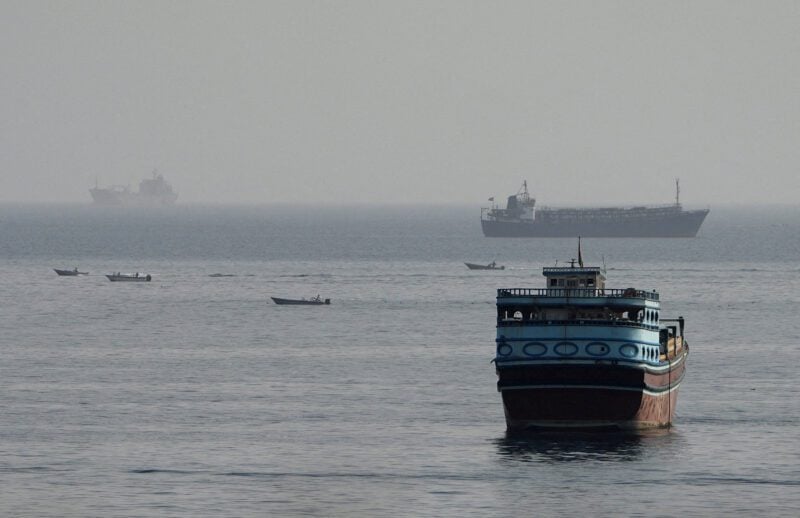
- Commercial navigation through the Strait of Hormuz is likely to improve only partially over the next 14 days, while full reopening is unlikely. Iran and Oman have proposed a temporary joint navigation corridor and mine-clearing project, but Kazem Gharibabadi has stated that the arrangement does not amount to an immediate full reopening. Iran continues to assert authority over vessel movements, and the Joint Maritime Information Center reports that mine danger areas remain active. Confidence is medium because the diplomatic framework is reported by several sources, but implementation and mine-clearance details remain unconfirmed. (Confidence: medium · ASSESSED)
- I&W: Confirm: Iran and Oman publish operating rules or route details and named commercial vessels complete transit through the temporary corridor. (0-14 days)
- I&W: Break: the Joint Maritime Information Center continues to identify active mine danger areas without verified corridor transits, or Iranian forces fire on a vessel attempting passage. (0-14 days)
- Pakistan-mediated engagement and Iran-Oman talks are likely to continue, but a formal US-Iran de-escalation arrangement is unlikely within the next 14 days. Pakistan has proposed a new 60-day timeline, Field Marshal Asim Munir has travelled to Tehran with new proposals, and Iranian, Pakistani and Omani officials describe regional solutions focused on Hormuz. The initial 60-day period reportedly expired without a formal extension. Confidence is medium because several sources report continuing contacts, while practical outcomes and the status of the framework remain unclear. (Confidence: medium · ASSESSED)
- I&W: Confirm: Pakistan announces a renewed US-Iran negotiating schedule with named participants, dates and implementation terms. (0-14 days)
- I&W: Break: Washington and Tehran sign a formal de-escalation document, or Pakistan announces that its mediation effort has ended. (0-14 days)
- Regional spillover is likely to persist through the Red Sea, the Gulf of Aden, Gulf states and Bulgaria. The Houthis have attacked Israel and commercial vessels linked to Israel in the Red Sea, while Tehran has targeted US assets in Arab states aligned with Washington and warned Bulgaria against allowing its territory to support US and Israeli operations. Two oil-tanker incidents near Oman remain unresolved in attribution and date. Confidence is low because some Houthi and tanker reporting is old or inconsistently dated, and the tanker attacks are attributed to unidentified actors. (Confidence: low · ASSESSED)
- I&W: Confirm: the Houthis attack a named Israel-linked commercial vessel in the Red Sea, or Iran strikes a US facility or Gulf ally. (0-14 days)
- I&W: Break: the Houthis announce and observe a maritime halt while no further Iranian attacks on US or Gulf-linked targets are reported. (0-14 days)
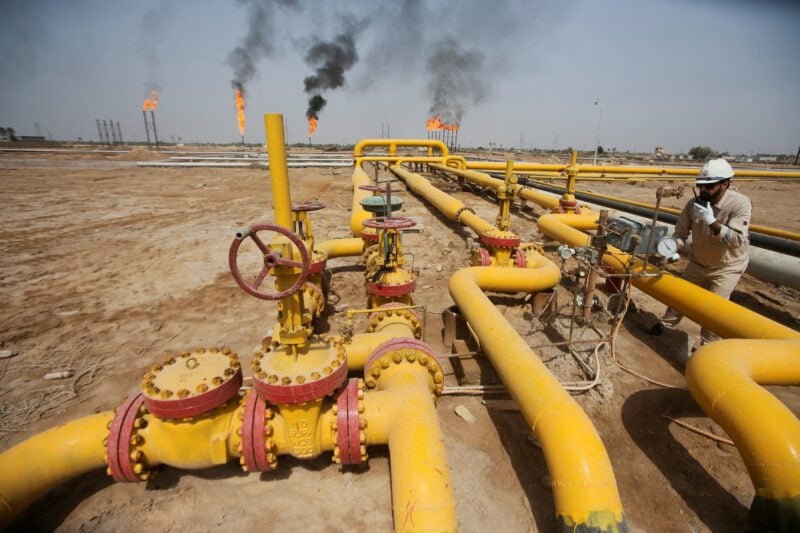
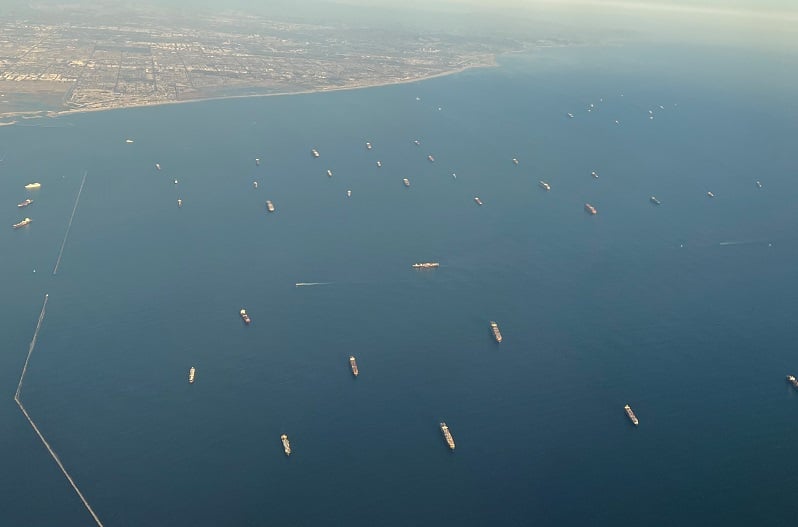
- Energy and shipping disruption is very likely to remain a pressure point over the next 1-3 months. Reporting says commercial traffic through Hormuz is heavily disrupted, energy shipments to Asia have fallen, and freight rates are 156 per cent higher since the war began. Japan is seeking alternative supplies and plans to support pipelines bypassing Hormuz, while Turkey sourced about 13 per cent of its natural gas imports from Iran last year. Confidence is medium because the disruption indicators are corroborated by major-media and trade-publication reporting, but the dates and baselines are uneven. (Confidence: medium · ASSESSED)
- I&W: Confirm: freight rates remain at least 156 per cent above the pre-war level, while Japanese officials continue work on the pipeline-bypass strategy. (1-3 months)
- I&W: Break: commercial traffic through Hormuz returns to routine levels and Japan stops seeking alternative supplies or bypass infrastructure. (1-3 months)
- The humanitarian burden is very likely to remain severe over the next month. Reporting attributes more than 3,500 deaths to the conflict in Iran, records 18 deaths and 756 injuries among American personnel, and describes severe air pollution in Tehran after airstrikes. Confidence is medium because the casualty reporting is direct but the total is not independently reconciled with broader claims that thousands have been killed. (Confidence: medium · ASSESSED)
- I&W: Confirm: new strikes produce additional reported civilian or military deaths in Iran, Israel or the occupied West Bank, or further severe air pollution in Tehran. (0-14 days)
- I&W: Break: Iran and Israel announce a formal ceasefire and no new conflict-related casualties are reported during the following 14 days. (0-14 days)
Outlook & scenarios
Partial maritime opening and contained coercion (55%)
Iran and Oman implement a limited navigation corridor and begin practical mine-clearance work. Pakistan keeps the US-Iran channel open. The United States prioritises sanctions over new strikes, while Iran and Israel continue exchanges at a lower tempo. Hormuz shipping improves but does not return to normal.
Prolonged pressure and disrupted shipping (65%)
US sanctions expand, Iran continues to assert control over vessel movements, and the Iran-Oman arrangement remains incomplete. Houthi pressure on Israel-linked shipping continues in the Red Sea. Energy shipments to Asia and commercial traffic through Hormuz remain below prior levels.
Wildcard: regional expansion through a new strike (25%)
An Iranian strike on a US facility or Gulf ally, a new US strike on Iran, or an Israeli-Turkish incident involving military activity in Syria expands the conflict. This is unlikely but high impact. Hormuz navigation deteriorates, commercial shipping faces further attacks, and diplomatic contacts lose momentum.
Recommendations
- Maintain a daily Strait of Hormuz status board recording Iranian and Omani route notices, corridor operating rules, verified commercial transits, mine-clearance locations and Joint Maritime Information Center warnings.
- Keep a separate chronology for Iranian, Israeli and US military actions. Do not treat uncorroborated reporting on Ali Khamenei's status, strike dates or complete mine clearance as settled.
- Track US Treasury announcements for new Iran-linked designations and foreign entities affected by secondary sanctions. Pair this with monitoring of Iranian statements identifying countries or companies for retaliation.
- Set immediate escalation alerts for a new US strike on Iran, an Iranian attack on a US facility or Gulf ally, a Houthi attack on a named commercial vessel, or Israeli military activity involving Turkish forces in Syria.
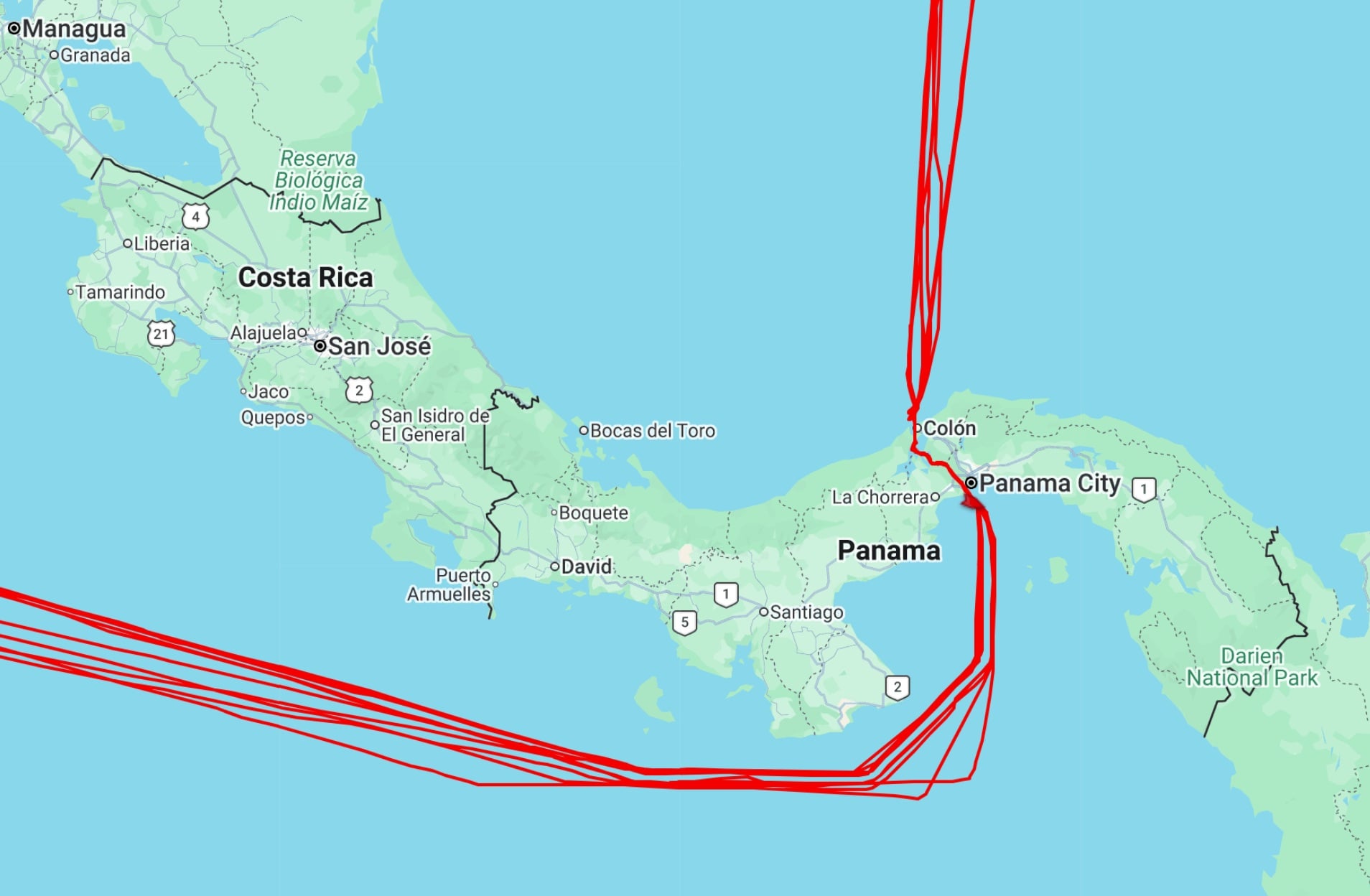
- Update the energy and shipping exposure picture for Japan, Turkey and South Korea. Track Japanese pipeline planning, Turkish gas flows, LPG pricing measures, freight rates and verified transits through Hormuz and the Panama Canal.
- Maintain a humanitarian tracker that reconciles reported deaths and injuries in Iran, Israel, the occupied West Bank and among American personnel, alongside air-pollution reporting from Tehran.
Confidence & uncertainty
Overall confidence is medium. Multiple major-media reports, official statements and trade-publication indicators corroborate the core pattern of continuing Iran-Israel hostilities, US sanctions pressure, Hormuz disruption and regional maritime effects. Confidence is reduced by inconsistent dates across the reporting set, single-source or low-confidence claims, unresolved attribution for tanker attacks, and the contradiction between US statements that mines have been cleared and maritime warnings that mine danger areas remain active. Casualty totals and the practical status of diplomatic arrangements also remain unsettled.
Intelligence gaps
- [EEI 1.1 · PARTIAL] Number, type, launch times, and trajectories of ballistic missiles, cruise missiles, armed UAV strikes, and combat-air sorties launched by Iranian or Israeli forces toward the other's territory or forward bases within a 72-hour window. Recommended collection: signals/intel
- [EEI 1.2 · UNCOVERED] Observable changes in Israeli and Iranian force posture: mobilization or reserve call-up orders, unit road/rail movements, dispersal or sortie rates of air squadrons, redeployment of air-defense batteries, and activation of civil-defense alerts or sirens in major population centers. Recommended collection: open-source/media
- [EEI 1.3 · PARTIAL] Indications of strike authorization or targeting preparations in Iranian or Israeli command chains: authenticated public orders by senior commanders, detected increases in encrypted communications consistent with targeting, or visible movement of strike munitions to launch/storage sites. Recommended collection: signals/intel
- [EEI 2.1 · UNCOVERED] Counts, launch locations (coordinates), weapons types, and assessed damage from rocket/missile/drone strikes originating from Lebanon into northern Israel attributed to Hezbollah or allied groups. Recommended collection: open-source/media
- [EEI 2.2 · UNCOVERED] Reported attacks by Iranian-backed militias in Iraq and Syria: rocket/IED strikes on bases hosting US/coalition or Israeli personnel, documented militia unit movements toward borders, and captured movement or transfer of weapons systems to forward militia positions. Recommended collection: human
- [EEI 2.3 · PARTIAL] Maritime harassment or attacks by proxies (e.g., Houthis): incidents of missile/rocket strikes against commercial vessels, small-boat swarm attacks, discovery or detonation of naval mines, and corresponding AIS anomalies in the Red Sea, Gulf of Aden, or southern Arabian Gulf. Recommended collection: maritime/AIS
- [EEI 3.1 · PARTIAL] Movements and arrival dates of foreign military assets into the region: carrier strike groups, amphibious ships, surface combatants, strategic airlift/tanker deployments, and air/sea patrol patterns by US, European, Russian, or regional militaries. Recommended collection: imagery/satellite
- [EEI 3.3 · PARTIAL] Immediate commercial and market indicators: rerouting of commercial tankers and container vessels (e.g., avoidance of Bab el-Mandeb or Strait of Hormuz), sudden spikes in war-risk insurance premiums for regional sea lanes, temporary port closures, and near-term price moves in regional benchmark crude tied to incidents. Recommended collection: financial/market
Cited sources
[1] News18 Urdu · Iran’s New Missile Wave & Israel’s Massive Retaliation | Middle East Tensions Escalate | N18G (B) · sha256:778b0347c0c0 [2] Deutsche Welle · إسرائيل بعد حرب إيران. ماذا كسب نتانياهو؟ (A) · sha256:971e3c08ad39 [3] BBC · Trump says all mines cleared from Strait of Hormuz (A) · sha256:fb35899213cb [4] en.yenisafak.com · Egypt calls for US-Iran memorandum implementation (B) · sha256:97ef12bdfe81 [5] Yenisafak · Pakistan proposes 60-day timeline for US-Iran talks (B) · sha256:96afefe156b8 [6] fox59.com · Iran and Oman hold talks on managing the Strait of Hormuz and other news from around the Middle East (B) · sha256:bb1ad2cc5ae9 [7] BBC · What are the US sanctions on Iran and who else will be affected? (A) · sha256:23a1829fe1f7 [8] gcaptain.com · Iran and Oman Plan for Temporary Hormuz Corridor as Impasse With US Persists (A) · sha256:31573e9ba807 [9] anewz.tv · Oil prices fall as Iran vows retaliation to U.S. sanctions (B) · sha256:757ff8706fb0 [10] scmp.com · US starts returning staff to some Middle East missions after war evacuations (B) · sha256:9a79845086de [11] gcaptain.com · Iran and Oman Unveil Framework for Future Management of Strait of Hormuz (B) · sha256:f55b650298c7 [12] arabnews.com · Pakistani FM says adherence to US-Iran peace framework ‘critical’ for regional stability (B) · sha256:17100d29bc48 [13] arabnews.com · Iran says recent Pakistan, Oman talks focused on ‘regional solutions’ for Strait of Hormuz (B) · sha256:c212201ecb33 [14] gcaptain.com · Trump Says U.S. Navy Has Cleared All Mines From Strait of Hormuz (B) · sha256:345c6b4c0f71 [15] gcaptain.com · Iran Vows to Resist Widened U.S. Sanctions, Says Washington Seeks Talks (B) · sha256:2a06cd4d4293 [16] news.az · 14 Houthis killed in strikes near Hodeidah, Yemen government forces say | News.az (B) · sha256:b3457305fee9 [17] Al Jazeera · The Bulgarian village that fears becoming an Iranian target (A) · sha256:86ffe7c0a0b3 [18] maritime-executive.com · Korean LPG Carrier Sets Record With $5.3M Panama Canal Slot Auction (C) · sha256:c7ef37336fe8 [19] maritime-executive.com · Port Congestion Sets New Record at 4.3M TEU in Stranded Volume (C) · sha256:138e0500e7e7 [20] gcaptain.com · Turkey Braces For Potential Gas Squeeze as U.S. Targets Iran Trade (B) · sha256:1871ec03db70 [21] gcaptain.com · Japan Energy Plan Seeks to Back Pipelines Bypassing Hormuz (A) · sha256:45adfc2d869b
Source content hashes were computed at collection time; the cited text is preserved unmodified for the life of this product.
Red cell review: CONCUR WITH COMMENT
TLP:CLEAR