TLP:CLEAR · Disclosure is not limited.
Iran-Israel Conflict: Hormuz Pressure and Regional Spillover
Time window: Last 1 day · Audience: General analyst · Type: Situation report · DTG: 2026-08-29 14:45Z · Overall confidence: LOW
BLUF
The Iran-Israel conflict is likely to remain regionally destabilising over the next 14 days, with US economic and maritime pressure, reported IRGC attacks on US military assets and Israel, and continuing Israeli-Hezbollah exchanges in southern Lebanon. The Strait of Hormuz is unlikely to return to normal commercial traffic quickly, although the operational picture remains uncertain because the reporting contains major date and attribution conflicts.
Executive summary
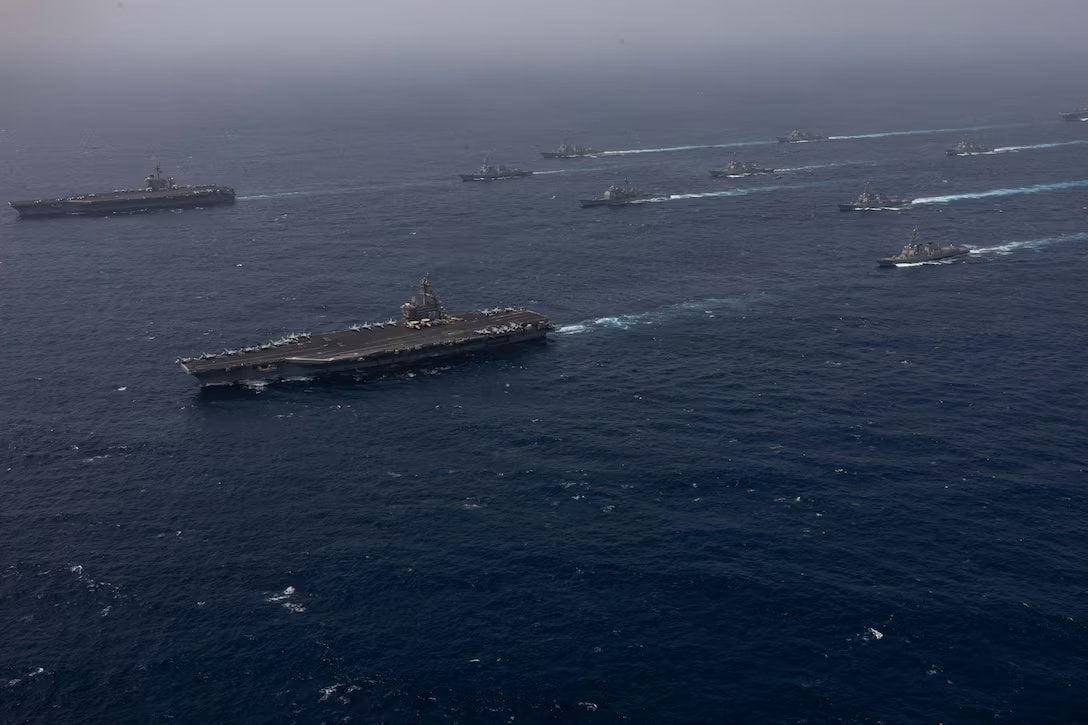
Reporting between 24 and 29 August 2026 describes sustained US pressure on Iran, including economic-isolation sanctions announced on 24 August and Operation Economic Outcast announced on 25 August. US military reporting says Iran's influence over the Strait of Hormuz has weakened and that Washington aims to reduce the IRGC's offensive capability along the Hormuz littoral. Iran is reported to have launched missiles and drones at US military bases in the Middle East and targets in Israel. Shipping remains heavily disrupted, with reports of fewer than 10 daily commercial transits and up to 400 ships carrying about 6,000 seafarers unable to depart safely. In southern Lebanon, Israeli strikes, fires and a buffer zone are reported alongside Hezbollah's continued presence and refusal to surrender its weapons. Pakistan's Field Marshal Syed Asim Munir has visited Tehran as part of reported efforts to preserve communication, but Iran continues to set conditions for reopening Hormuz. Overall confidence is low because the material includes mixed source reliability, single-source reporting and high-severity contradictions over whether key events occurred in 2023 or 2026.
Change from previous assessment
Since the 28 August brief, the core assessment of sustained US pressure, partial Hormuz access and continued Israeli military pressure remains unchanged. The assessment now places greater weight on reported traffic below 10 vessels per day, the International Maritime Organization report of up to 400 stranded ships carrying about 6,000 seafarers, and US Central Command reports of vessel redirections and boardings. The Lebanon judgement has been sharpened to include the reported buffer zone and fires at Aita al-Jabal and Haddatha, while a separate low-confidence judgement has been added on Pakistan's mediation channel and Iran's conditions for reopening Hormuz. Confidence remains low because the new reporting does not resolve the existing chronology and attribution conflicts.
Key judgments
- The US-Iran confrontation is likely to remain militarily active and coercive over the next 14 days. The US is reported to be sustaining maritime pressure on Iran, announcing economic-isolation sanctions on 24 August and Operation Economic Outcast on 25 August, while aiming to wear down IRGC offensive capability along the Hormuz littoral. Iran is reported to have launched missiles and drones at US military bases in the Middle East and targets in Israel, alongside escalating missile attacks. This is an assessed judgement based on multiple reports, but the supplied reporting contains major conflicts over the chronology and attribution of the opening strikes, which lowers confidence. (Confidence: medium · ASSESSED)
- I&W: A further US sanctions or maritime-enforcement announcement against Iranian ships or ports, paired with an IRGC missile or drone strike on a US military site or Israel, would confirm the assessment. (0-14 days)
- I&W: A sustained, publicly announced halt in US maritime enforcement and Iranian missile or drone activity for 14 days would break the assessment. (0-14 days)
- The Strait of Hormuz is unlikely to return to normal commercial traffic over the next 14 days. Donald Trump has claimed that US forces helped 24 tankers transit the Strait, but Iran's IRGC Navy rejects the claim that the waterway is open, while shipping reports describe fewer than 10 daily commercial transits against a reported pre-conflict average of 130 to 140. The International Maritime Organization also reports that up to 400 ships carrying about 6,000 seafarers remain unable to depart safely. This is an assessed judgement based on several medium-confidence reports that describe a contested operational picture. (Confidence: medium · ASSESSED)
- I&W: Daily commodity-vessel transits remain below 10 to 15 and US Central Command reports additional redirections, boardings or disabled commercial vessels. (0-14 days)
- I&W: Verified daily traffic returns to the reported 130 to 140 vessel average and Iran's IRGC Navy confirms unrestricted commercial navigation. (0-14 days)
- The Israel-Hezbollah front is likely to remain active in southern Lebanon over the next 14 days, with Israeli forces maintaining pressure at named locations and Hezbollah remaining armed and entrenched. Israeli aircraft strikes are reported around Wadi al-Hujeir and Al-Mansouri, Israeli forces are reported to have set fires in Aita al-Jabal and Haddatha, and Israeli forces are reported to have established a buffer zone in southern Lebanese territory. Hezbollah is reported to have fired rockets into northern Israel and to be refusing to surrender its weapons. This is an assessed judgement. Confidence is medium because the reporting is drawn from multiple sources, but several operational details rely on Israeli or Lebanese attributions and the sequence of some Lebanese strike casualties is disputed. (Confidence: medium · ASSESSED)
- I&W: Israeli aircraft or artillery activity, fires or new ground-control measures are reported at Wadi al-Hujeir, Al-Mansouri, Aita al-Jabal or Haddatha, while Hezbollah launches rockets into northern Israel. (0-14 days)
- I&W: A verified cessation of Israeli strikes and Hezbollah rocket fire is sustained while the Lebanese Army begins dismantling Hezbollah military infrastructure in southern Lebanon. (0-14 days to 1-3 months)
- Regional economic and humanitarian disruption is likely to persist over the next 1 to 3 months, with elevated shipping costs and continued pressure on energy flows. Reported ship-hire costs have reached about 220,000 dollars per day from Oman to China, 647,000 dollars per day for ships carrying cargoes from Saudi Arabia to China on 25 August, and nearly 650,000 dollars per day on a benchmark oil-tanker route on 28 August. The disruption is compounded by reports of up to 400 ships and 6,000 seafarers unable to leave the Persian Gulf safely and a US Strategic Petroleum Reserve level of 290 million barrels. This is an assessed judgement based on multiple medium-confidence reports, with no direct evidence in the supplied material establishing how long the disruption will last. (Confidence: medium · ASSESSED)
- I&W: The International Maritime Organization continues to report hundreds of ships or thousands of seafarers unable to depart, while ship-hire costs remain near 220,000 dollars per day from Oman to China or 647,000 dollars per day from Saudi Arabia to China. (1-3 months)
- I&W: Daily Hormuz traffic returns to 130 to 140 vessels and ship-hire costs fall towards the reported 131,000 dollars per day level for the Oman-to-China route. (1-3 months)
- Pakistan's mediation channel has a roughly even chance of producing a temporary US-Iran communication or navigation arrangement over the next 14 days, but is unlikely to resolve the parties' core demands. Field Marshal Syed Asim Munir visited Tehran on 24 August, Pakistan is reported to be seeking open communication between Iran and the United States, and Iran is reported to be preparing conditions that include an end to the war and removal of the US blockade and sanctions. This judgement rests on medium-confidence diplomatic reporting with limited evidence of substantive negotiations and inconsistent dates for earlier arrangements, so confidence is low. (Confidence: low · ASSESSED)
- I&W: Pakistan, Iran and the United States issue a written proposal for a navigation corridor or direct talks that specifies sanctions, maritime enforcement and verification arrangements. (0-14 days)
- I&W: Iran repeats its reopening conditions while the US expands sanctions or maritime enforcement without a corresponding diplomatic meeting or written proposal. (0-14 days)
Outlook & scenarios
Continued constrained confrontation (55%)
The US maintains sanctions and maritime enforcement against Iran, while the IRGC sustains missile, drone and infrastructure pressure against US military assets in Gulf countries and Israel. Israeli forces and Hezbollah continue exchanges at the southern Lebanon front. Hormuz remains usable only for limited traffic, with shipping costs and vessel backlogs staying elevated.
Temporary maritime deconfliction (35%)
Pakistan's diplomatic channel, including Field Marshal Syed Asim Munir's engagement with Tehran, contributes to a temporary US-Iran arrangement. Iran accepts limited navigation under conditions linked to the war, blockade and sanctions. Commercial traffic rises from current low levels but remains below the reported 130 to 140 vessel daily average.
Regional widening (20%)
Iran-affiliated Iraqi factions conduct attacks against sites in Saudi Arabia, while Iran increases pressure on US military infrastructure in Gulf countries. Israeli forces and Hezbollah intensify activity in southern Lebanon. The result is further disruption to Hormuz shipping, higher tanker rates and additional pressure on regional governments.
Wildcard: attack on a Gulf host state (10%)
Iran implements its warning that states permitting US aircraft or missiles to operate against Iran will be treated as enemies. A strike on a Gulf-state facility supporting US operations triggers direct regional involvement, emergency maritime restrictions and a sharp rise in commercial shipping risk.
Recommendations
- For the next 14 days, use a restricted-Hormuz planning assumption. Maintain a daily table of commodity-vessel transits, US Central Command redirections, boardings, disabled vessels and statements from Iran's IRGC Navy. Do not treat Donald Trump's report of 24 assisted tankers or mine-clearance claims as proof of normal access.
- Separate 2023-dated reporting from 2026-dated reporting in all analytic databases. Quarantine claims placing the opening US-Israel strikes and Ali Khamenei's death in both years until the chronology is resolved.
- Maintain a named-place watchlist for Wadi al-Hujeir, Al-Mansouri, Aita al-Jabal and Haddatha. Record Israeli aircraft, artillery, fires and ground-control measures alongside Hezbollah rocket activity into northern Israel and Lebanese Army action against Hezbollah infrastructure.
- Track Field Marshal Syed Asim Munir's channel with Tehran, Iran's stated reopening conditions and any US-Iran or Qatar-linked written proposal. Require a matching improvement in vessel traffic before assessing that a diplomatic arrangement has restored navigation.
- Treat reports of imminent attacks by Iraqi factions loyal to Iran against Saudi Arabia as a warning requiring corroboration, not as an established event. Seek confirmation from Saudi defence authorities, US Central Command and independent shipping or imagery data before elevating the assessment.
- Use separate confidence labels for reported facts, actor attributions and analytic inferences in future updates. Give particular scrutiny to casualty figures, strike sequences and claims based on local media or single-source reporting.
Confidence & uncertainty
Overall confidence is low. The 41 usable sources include several reliable major-media and official-government items, but much of the current operational picture relies on medium-confidence reporting, actor statements or single-source accounts. The material contains high-severity date conflicts over the opening strikes and Ali Khamenei's reported death, competing accounts of US and Israeli roles, and unresolved disagreement over whether the Strait of Hormuz is open. The duration and regional consequences of the current disruption therefore remain uncertain.
Intelligence gaps
- [EEI 1.1 · PARTIAL] Number, type, launch times, and trajectories of ballistic missiles, cruise missiles, armed UAV strikes, and combat-air sorties launched by Iranian or Israeli forces toward the other's territory or forward bases within a 72-hour window. Recommended collection: signals/intel
- [EEI 1.2 · UNCOVERED] Observable changes in Israeli and Iranian force posture: mobilization or reserve call-up orders, unit road/rail movements, dispersal or sortie rates of air squadrons, redeployment of air-defense batteries, and activation of civil-defense alerts or sirens in major population centers. Recommended collection: open-source/media
- [EEI 1.3 · PARTIAL] Indications of strike authorization or targeting preparations in Iranian or Israeli command chains: authenticated public orders by senior commanders, detected increases in encrypted communications consistent with targeting, or visible movement of strike munitions to launch/storage sites. Recommended collection: signals/intel
- [EEI 2.1 · PARTIAL] Counts, launch locations (coordinates), weapons types, and assessed damage from rocket/missile/drone strikes originating from Lebanon into northern Israel attributed to Hezbollah or allied groups. Recommended collection: open-source/media
- [EEI 2.2 · PARTIAL] Reported attacks by Iranian-backed militias in Iraq and Syria: rocket/IED strikes on bases hosting US/coalition or Israeli personnel, documented militia unit movements toward borders, and captured movement or transfer of weapons systems to forward militia positions. Recommended collection: human
- [EEI 2.3 · PARTIAL] Maritime harassment or attacks by proxies (e.g., Houthis): incidents of missile/rocket strikes against commercial vessels, small-boat swarm attacks, discovery or detonation of naval mines, and corresponding AIS anomalies in the Red Sea, Gulf of Aden, or southern Arabian Gulf. Recommended collection: maritime/AIS
- [EEI 3.1 · UNCOVERED] Movements and arrival dates of foreign military assets into the region: carrier strike groups, amphibious ships, surface combatants, strategic airlift/tanker deployments, and air/sea patrol patterns by US, European, Russian, or regional militaries. Recommended collection: imagery/satellite
- [EEI 3.3 · PARTIAL] Immediate commercial and market indicators: rerouting of commercial tankers and container vessels (e.g., avoidance of Bab el-Mandeb or Strait of Hormuz), sudden spikes in war-risk insurance premiums for regional sea lanes, temporary port closures, and near-term price moves in regional benchmark crude tied to incidents. Recommended collection: financial/market
Cited sources
[1] TV7 Israel News · Redefining the Middle East: The Secret Pact Threatening US Hegemony? (B) · sha256:d98774d5b0ce [2] arabic.news.cn · مقالة خاصة: ستة أشهر على الحرب الأمريكية الإسرائيلية على إيران. كيف هزت تداعياتها العالم؟ (B) · sha256:002b4eb8dba3 [3] سكاي نيوز عربية · التصعيد بين أميركا وإيران. آخر الأخبار (B) · sha256:db02515f83de [4] maritime-executive.com · Maritime Security: A War Gone Wrong (B) · sha256:9d18b88cf558 [5] The Eastleigh Voice · US-Israel-Iran war: Key events of the past six months | The Eastleigh Voice (D) · sha256:785d5d594307 [6] caspianpost.com · US-Israel War on Iran, Six Months Down the Line: In Numbers (B) · sha256:7fdba17444bd [7] youtube.com · NETANYAHU UNDER PRESSURE AS IRAN'S MISSILE BARRAGE LEAVES ISRAEL ON THE BRINK | PROF JEFFREY SACHS (B) · sha256:67c1caef51ec [8] maritime-executive.com · IMO: 400 Ships and 6,000 Seafarers Are Still Unable to Depart Persian Gulf (B) · sha256:3bd74a41bdbe [9] sundayguardianlive.com · US-Israel-Iran War Latest Live News: Iran’s IRGC Navy Rejects Trump’s Strait Of Hormuz Claim as ‘Obvious Lie’, Says Waterway Remains Closed Without Tehran’s Permission (B) · sha256:8cb66d1b7bee [10] businessupturn.com · Israeli airstrikes hit southern Lebanon as tensions remain high near border (B) · sha256:bf3b862421e9 [11] algemeiner.com · Israel-Lebanon Deal Under Strain as Hezbollah Disarmament Falls Short (B) · sha256:00e203e96111 [12] gcaptain.com · Gulf Oil Tankers Near $650,000 a Day as Iran War Disrupts Flows (A) · sha256:3b5a8d387177 [13] thefridaytimes.com · From Security Talks To Strategic Mediation: The Munir Mission In Tehran (B) · sha256:45c626991be4 [14] anewz.tv · Trump keeps all options open for Iran (B) · sha256:df97f383fbab
Source content hashes were computed at collection time; the cited text is preserved unmodified for the life of this product.
Red cell review: CONCUR WITH COMMENT
TLP:CLEAR