TLP:CLEAR · Disclosure is not limited.
Iran Israel Conflict: Hormuz Pressure and Regional Spillover Persist
Time window: Last 1 day · Audience: General analyst · Type: Situation report · DTG: 2026-08-28 14:09Z · Overall confidence: MEDIUM
BLUF
The IDF is likely to sustain military pressure in the West Bank and southern Lebanon, while Iran and Oman pursue a limited Hormuz navigation framework that has not restored normal traffic. US economic pressure on Iran is likely to continue, but competing reports on mine clearance and Patriot inventories leave the operational picture unsettled.
Executive summary
Reporting for 27 and 28 August 2026 indicates that regional tensions remain active. The IDF announced expanded forces in the West Bank and conducted strikes in southern Lebanon after attributing an explosive drone attack to Hezbollah. Iran and Oman continue work on a Hormuz navigation framework, while US commanders report mine clearance and the Joint Maritime Information Center continues to warn of mine risks and below-normal traffic. Washington is maintaining economic pressure on Iran, including a reported blockade that has halted Iranian oil exports. Pakistan and Kuwait have also signed a new defence agreement. Exact maritime conditions, Patriot inventories, and the chronology of several reports remain uncertain.
Change from previous assessment
Since the 26 August brief, the assessment now incorporates the 27 August IDF announcement expanding forces in the West Bank, the reported southern Lebanon strikes, the Pakistan Kuwait defence agreement, and new reporting on Patriot transfers and depletion. The Hormuz assessment remains partial reopening, but confidence in the operational picture has not increased because claims that the Strait is open or mine-free conflict with continuing mine warnings and below-normal traffic. The judgement that US economic pressure will continue is unchanged. No prior judgement has been retired.
Key judgments
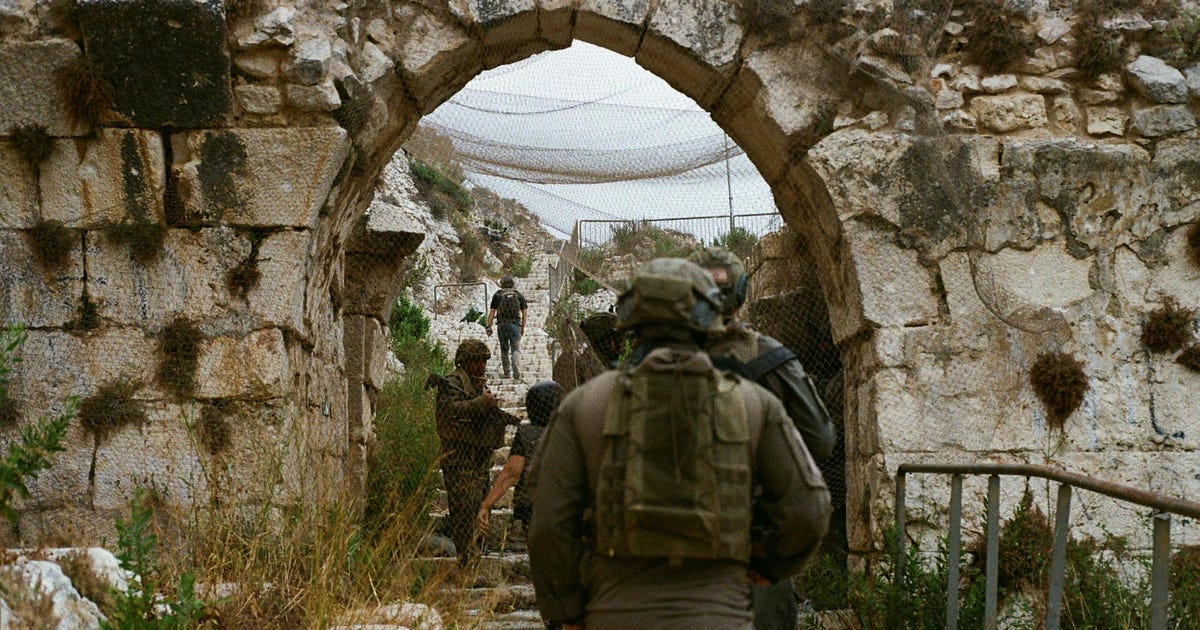
- The IDF is likely to sustain military pressure in the West Bank and southern Lebanon over the next 14 days. On 27 August 2026, Lt.-Gen. Eyal Zamir announced an expansion of Israeli forces in the West Bank, while the IDF reported strikes in southern Lebanon that killed one woman and wounded six people after an alleged Hezbollah explosive drone attack. This is an assessed judgment. Confidence is medium because the force expansion and strikes are reported by major media, but Hezbollah's role and the sequence of events remain based largely on IDF attribution. (Confidence: medium · ASSESSED)
- I&W: CONFIRM: The IDF reports another strike in southern Lebanon or further deployment of the Golani Brigade and Paratroopers Brigade to the West Bank. (0-14 days)
- I&W: BREAK: The IDF announces withdrawal of the expanded West Bank force and reports no further Hezbollah-linked drone activity or strikes in southern Lebanon. (0-14 days)
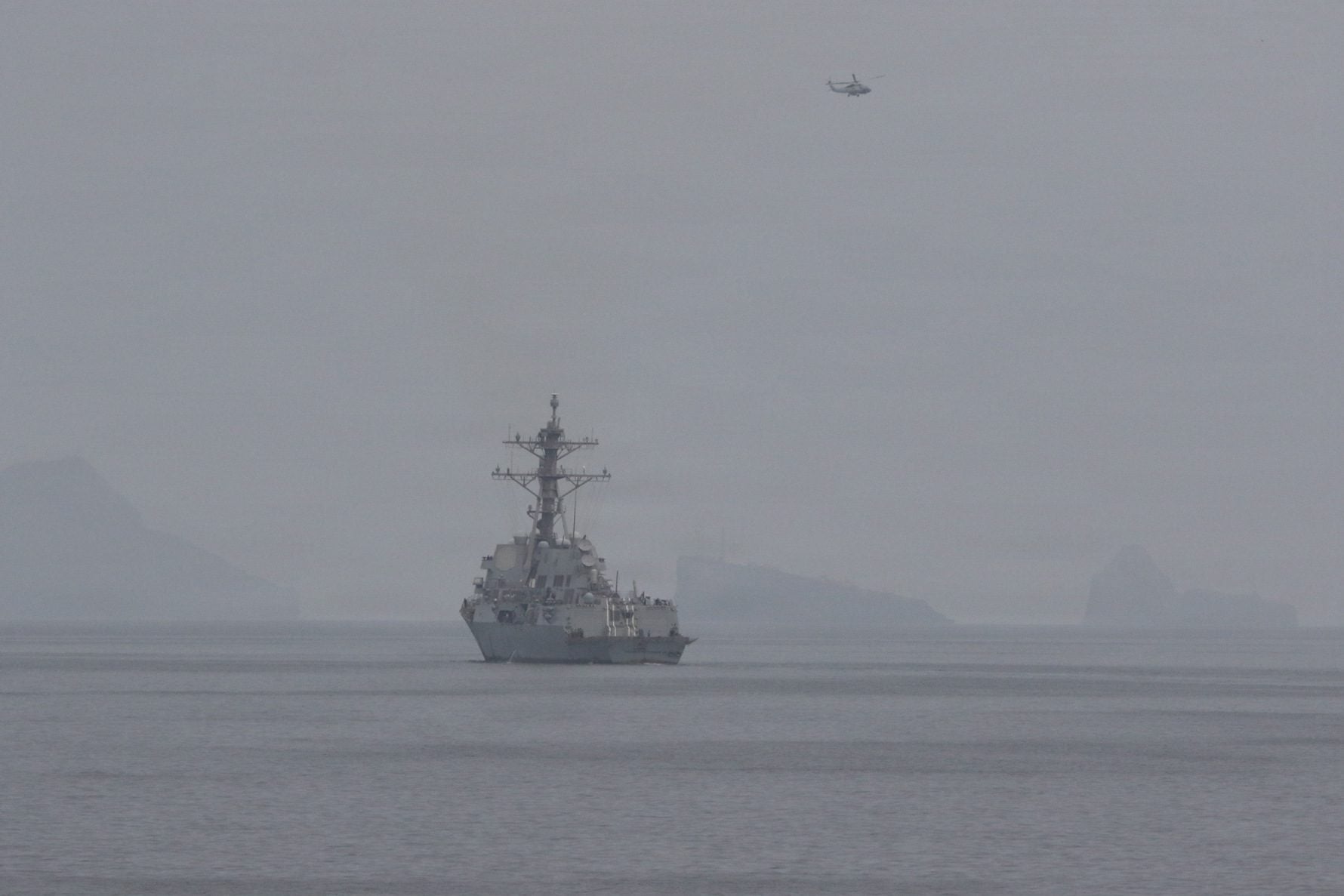
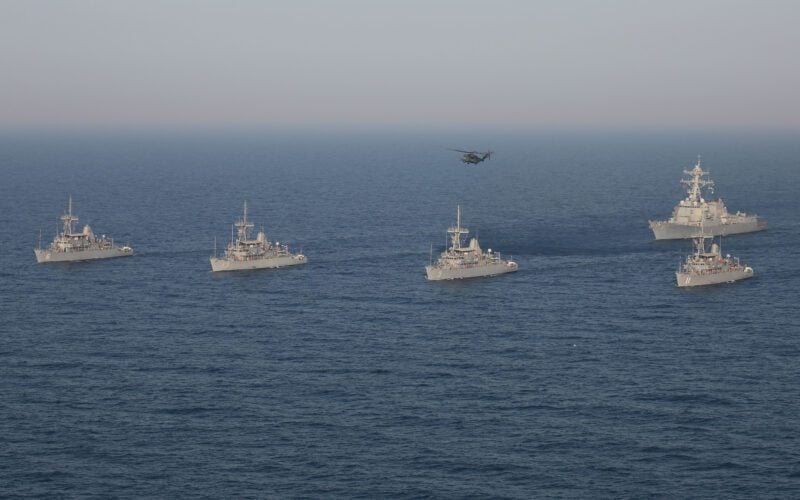
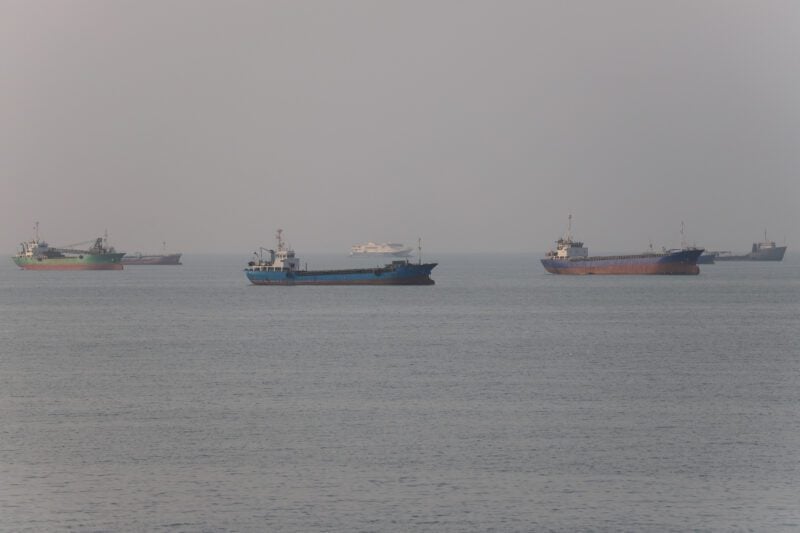
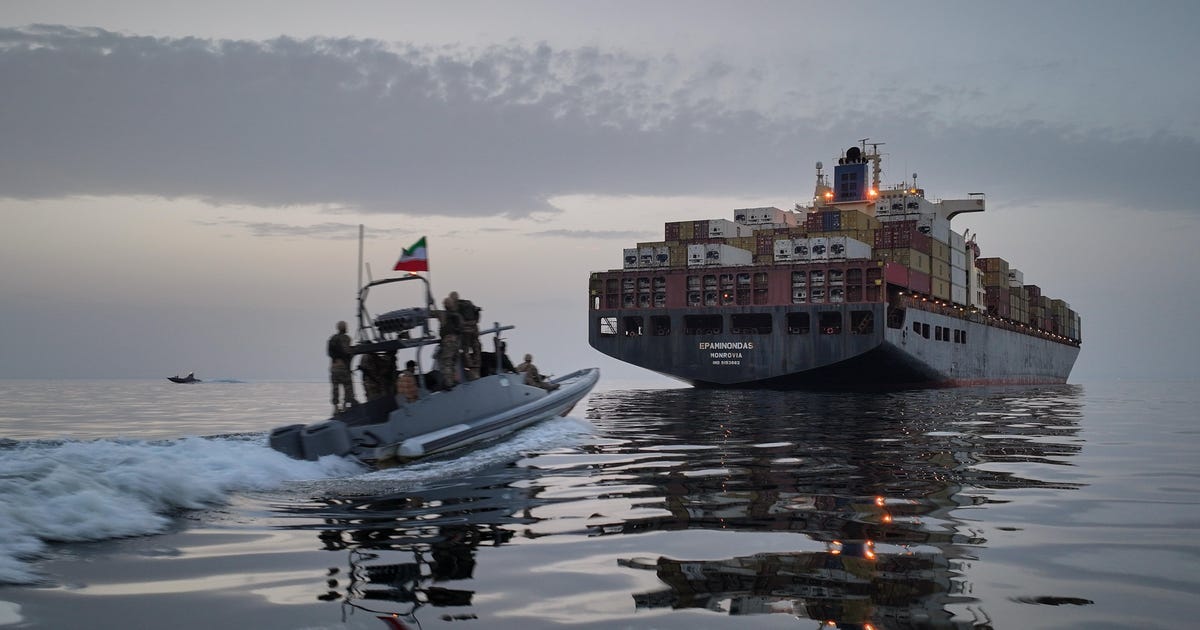
- The Strait of Hormuz is likely to remain only partially reopened over the next 14 days, with traffic below normal despite claims that the waterway is open. Iran and Oman are advancing a framework that includes a temporary navigation corridor and revenue sharing. US commanders report that Iranian mines have been cleared, but the Joint Maritime Information Center continues to warn of drifting or uncharted mines, and traffic remains far below normal. Confidence is medium because the framework and mine-clearance claims have several sources, while the operational status is directly contested by below-normal traffic reports and conflicting dates. (Confidence: medium · ASSESSED)
- I&W: CONFIRM: The Joint Maritime Information Center retains its mine warning or another vessel is struck while transiting the Strait. (0-14 days)
- I&W: BREAK: The Joint Maritime Information Center reports normal traffic, removes the mine warning, and commercial shipping volumes remain at normal levels for seven consecutive days. (0-14 days)
- The US is likely to sustain economic pressure on Iran over the next 14 days while maintaining military signalling. The Trump administration has said it will prioritise economic pressure, Treasury Secretary Scott Bessent has unveiled Operation Economic Outcast, and President Donald Trump has claimed that a blockade is preventing Iranian oil from reaching the market. Iranian oil exports are reported at zero, while David Barnea has stated that sanctions are necessary but insufficient alone. Confidence is medium because the economic campaign is reported by several sources, but claims about its effectiveness and the likelihood of further military action remain contested. (Confidence: medium · ASSESSED)
- I&W: CONFIRM: The US Treasury announces another Iran sanctions package or additional curbs under Operation Economic Outcast. (0-14 days)
- I&W: BREAK: The White House suspends the blockade or sanctions campaign, or announces new direct strikes against Iran as the primary policy. (0-14 days)
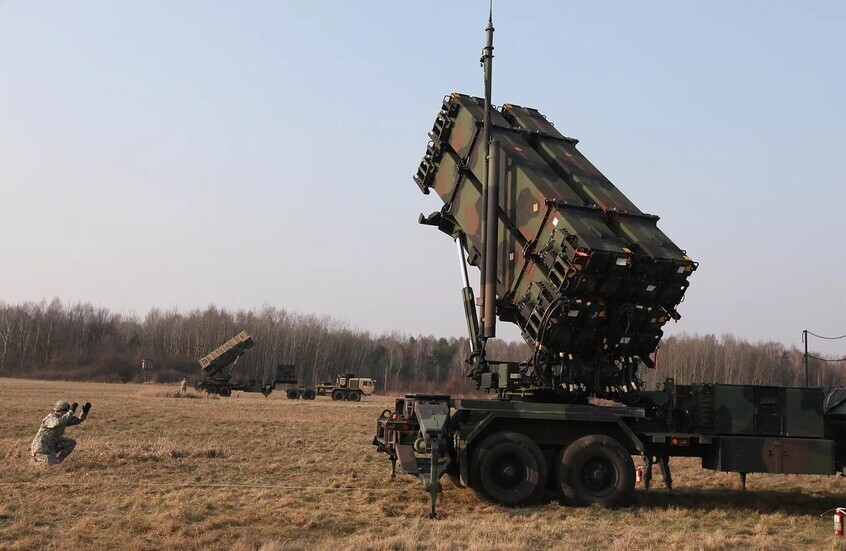
- The US military is likely to continue reallocating air-defence resources from Europe towards the Middle East over the next 1-3 months, while the scale of European readiness pressure remains unresolved. Reporting describes Patriot transfers from Europe, a 65 per cent consumption rate amounting to roughly 1,500 of 2,330 interceptors, and concern about shortages affecting Europe and Ukraine. US Army Col. Martin O'Donnell has rejected the characterisation that European stocks are beyond critical. Confidence is medium because the transfers and expenditure figures have multiple reports, but the readiness assessment contains a direct contradiction and several low-confidence claims. (Confidence: medium · ASSESSED)
- I&W: CONFIRM: The US announces another Patriot transfer from Europe, or Ukrainian officials report a further reduction in available interceptors. (0-30 days)
- I&W: BREAK: The Pentagon confirms no further diversion from Europe and reports replenishment of European stocks before the first German production facility begins operations. (1-3 months)
- Pakistan is likely to deepen its defence role with Gulf partners over the next 1-3 months, with Kuwait the clearest immediate case. Pakistan and Kuwait signed a defence agreement on 27 August 2026, and Pakistan's armed forces are reported to be taking responsibility for training, defence capacity building, and border management. Pakistan's wider defence engagement with Gulf states is becoming more concrete, although the reported Saudi and Turkish arrangements rely partly on lower-confidence reporting. Confidence is medium because the Kuwait agreement is supported by high-confidence major-media claims, while the wider regional pattern is less firmly corroborated. (Confidence: medium · ASSESSED)
- I&W: CONFIRM: Pakistan's armed forces begin training Kuwaiti personnel or provide formal assistance with Kuwaiti border management. (1-3 months)
- I&W: BREAK: Pakistan or Kuwait publicly limits the agreement to existing cooperation and reports no implementation activity. (1-3 months)
- Israeli domestic politics are likely to narrow the government's room for diplomatic adjustment before the 27 October election, while a major security crisis would generate pressure to postpone the vote. Naftali Bennett is criticising Benjamin Netanyahu's handling of war and peace, reporting portrays the election as a judgement on the 7 October security failure, and one assessment states that Netanyahu benefits politically from continued war. This judgment rests largely on political commentary and candidate claims, with unresolved tension between election pressure and possible postponement. Confidence is low. (Confidence: low · ASSESSED)
- I&W: CONFIRM: Bennett and other challengers make the 7 October security failure and Netanyahu's war policy central to campaign statements. (0-2 months)
- I&W: BREAK: Israeli electoral authorities confirm the 27 October timetable while the government and major parties publicly prioritise a diplomatic course over additional military action. (0-2 months)
Outlook & scenarios
Managed partial reopening and contained front-line pressure (45%)
Iran and Oman continue the temporary navigation framework, limited vessel movement increases, and the IDF maintains expanded West Bank deployments without a wider Lebanon campaign. This is the most likely near-term path because diplomatic contacts and limited maritime activity coexist with continuing mine warnings and below-normal traffic.
Renewed maritime and cross-border escalation (30%)
Iran maintains restrictions on Hormuz, another vessel incident reinforces the mine and security risk, and Hezbollah-linked drone activity prompts further IDF strikes in southern Lebanon. Traffic remains below normal and commercial operators continue to avoid the Strait.
Deeper economic pressure and regional defence realignment (20%)
Washington expands sanctions and blockade pressure without launching a new direct strike campaign. Pakistan implements the Kuwait defence agreement, while Gulf states pursue additional defence and infrastructure arrangements to reduce exposure to the conflict and Hormuz disruption.
Low-probability, high-impact Iranian regime destabilisation (5%)
A combination of Israeli and US operations, economic pressure, and protests inside Iran produces abrupt regime destabilisation. This would disrupt the Iran Oman navigation framework, intensify uncertainty over Iranian military control, and create pressure for rapid regional military decisions.
Recommendations
- Treat the Strait of Hormuz as partially operational in current reporting until the Joint Maritime Information Center confirms normal traffic and removes its mine warning. Reconcile the claim that 24 vessels passed through with verified commercial traffic over a rolling seven-day period.
- Maintain a daily watch on IDF force movements in the West Bank, especially deployments involving the Golani Brigade and Paratroopers Brigade, and record any further Hezbollah-linked drone incident or Israeli strike in southern Lebanon.
- Separate confirmed US economic measures from political statements about their effect. Track new Treasury sanctions, changes to the reported oil blockade, and any White House decision that shifts from economic pressure to direct military action.
- Create a dedicated Patriot inventory watch covering transfers from Europe, Ukrainian requests, European readiness statements, and the opening of the NATO production facility in Germany. Report the 65 per cent depletion figure separately from the conflicting assessment that European stocks are not beyond critical.
- Track implementation of the Pakistan Kuwait defence agreement, including training activity, border-management assistance, and formal budget or force commitments. Treat wider Saudi and Turkish defence arrangements as lower-confidence until independently corroborated.
- Monitor Israeli political statements and administrative decisions ahead of 27 October. Flag any public proposal to postpone the election, any further security crisis near election preparations, or a clear shift by major candidates towards diplomatic adjustment.
Confidence & uncertainty
Overall confidence is medium. Multiple high-reliability military and major-media reports corroborate the IDF force expansion, southern Lebanon strikes, Hormuz diplomacy, US economic pressure, and the Pakistan Kuwait agreement. Confidence is limited by direct contradictions over Hormuz traffic and mine clearance, conflicting assessments of Patriot inventories, and several claims carrying low confidence or mismatched dates. The Israeli political assessment relies more heavily on commentary than on independently verifiable behaviour.
Intelligence gaps
- [EEI 1.1 · PARTIAL] Number, type, launch times, and trajectories of ballistic missiles, cruise missiles, armed UAV strikes, and combat-air sorties launched by Iranian or Israeli forces toward the other's territory or forward bases within a 72-hour window. Recommended collection: signals/intel
- [EEI 1.2 · PARTIAL] Observable changes in Israeli and Iranian force posture: mobilization or reserve call-up orders, unit road/rail movements, dispersal or sortie rates of air squadrons, redeployment of air-defense batteries, and activation of civil-defense alerts or sirens in major population centers. Recommended collection: open-source/media
- [EEI 1.3 · PARTIAL] Indications of strike authorization or targeting preparations in Iranian or Israeli command chains: authenticated public orders by senior commanders, detected increases in encrypted communications consistent with targeting, or visible movement of strike munitions to launch/storage sites. Recommended collection: signals/intel
- [EEI 2.1 · UNCOVERED] Counts, launch locations (coordinates), weapons types, and assessed damage from rocket/missile/drone strikes originating from Lebanon into northern Israel attributed to Hezbollah or allied groups. Recommended collection: open-source/media
- [EEI 2.2 · UNCOVERED] Reported attacks by Iranian-backed militias in Iraq and Syria: rocket/IED strikes on bases hosting US/coalition or Israeli personnel, documented militia unit movements toward borders, and captured movement or transfer of weapons systems to forward militia positions. Recommended collection: human
- [EEI 2.3 · PARTIAL] Maritime harassment or attacks by proxies (e.g., Houthis): incidents of missile/rocket strikes against commercial vessels, small-boat swarm attacks, discovery or detonation of naval mines, and corresponding AIS anomalies in the Red Sea, Gulf of Aden, or southern Arabian Gulf. Recommended collection: maritime/AIS
- [EEI 3.1 · UNCOVERED] Movements and arrival dates of foreign military assets into the region: carrier strike groups, amphibious ships, surface combatants, strategic airlift/tanker deployments, and air/sea patrol patterns by US, European, Russian, or regional militaries. Recommended collection: imagery/satellite
- [EEI 3.3 · PARTIAL] Immediate commercial and market indicators: rerouting of commercial tankers and container vessels (e.g., avoidance of Bab el-Mandeb or Strait of Hormuz), sudden spikes in war-risk insurance premiums for regional sea lanes, temporary port closures, and near-term price moves in regional benchmark crude tied to incidents. Recommended collection: financial/market
Cited sources
[1] jpost.com · IDF chief doubles West Bank forces, blasts Finance Ministry amid 'politicized' budget clash (B) · sha256:ba95e46c0eab [2] haaretz.com · IDF strikes in Lebanon kill one, wound six, including child, woman (A) · sha256:4850d7883ff8 [3] jpost.com · Israel elections: Netanyahu needs a war to win - opinion (B) · sha256:8893f7726148 [4] gcaptain.com · U.S. Military Says It Has Cleared Iran’s Mines From Strait of Hormuz Shipping Lanes (A) · sha256:dce3299a6e04 [5] gcaptain.com · US Commander Declares Hormuz Shipping Lanes Are Mine-Free (A) · sha256:207180f7dc2e [6] gcaptain.com · Tanker Hit in Strait of Hormuz as Trump Declares ‘Mission Accomplished’ in Iran (B) · sha256:b19947dba5b6 [7] Associated Press · Trump used to say he saw a quick end to his Iran war, but 6 months later he claims he's in no hurry (A) · sha256:3af59b62bdca [8] gcaptain.com · Hormuz Oil Flows Rising as Gulf Giants’ Ramp Up Accelerates (B) · sha256:8af12d4eb729 [9] jpost.com · Iran regime will fall through mix of operations, economic pressure, ex-Mossad chief Barnea says (B) · sha256:58369a7d8cb6 [10] haaretz.com · Regime change in Iran? Why it could actually work this time (B) · sha256:1805835e0134 [11] RT · أ ب: استنزاف صواريخ باتريوت في حرب إيران يترك الناتو عرضة للكمات متتالية في حال حدوث مواجهة مع روسيا (B) · sha256:4e4452be3cb8 [12] Los Angeles Times · Officials say U.S. Patriot missile stocks in Europe 'beyond critical' - Los Angeles Times (A) · sha256:8d9bc5268e70 [13] Al Jazeera · With Kuwait deal, Pakistan expands defence umbrella across Middle East (A) · sha256:88451274bcd4 [14] Council on Foreign Relations · The Iran War at Six Months: A Region—and Its Relationship With the U.S.—Transformed (B) · sha256:8dcadd4cfe73 [15] Associated Press · Six months on, the Iran war has changed the Middle East, but not in the way its architects had hoped (A) · sha256:16c2a3a55048 [16] jpost.com · Exploring Bennett's security policy vision, belief that he can convince Egypt to fix Gaza standoff (B) · sha256:f907789b61e8
Source content hashes were computed at collection time; the cited text is preserved unmodified for the life of this product.
TLP:CLEAR