TLP:CLEAR · Disclosure is not limited.
Iran-Israel Conflict: Hormuz Restriction and Regional Spillover
Time window: Last 1 day · Audience: General analyst · Type: Situation report · DTG: 2026-08-29 17:07Z · Overall confidence: MEDIUM
BLUF
The conflict is very likely to remain active across Israel, Iran, Iraqi Kurdistan, Lebanon and Gulf maritime routes over the next 14 days. The Strait of Hormuz is very likely to remain functionally restricted despite limited transit, while the return of US diplomats indicates risk management rather than a durable settlement.
Executive summary
Iranian missile and drone activity, Israeli strikes against Hezbollah, attacks on tankers and 70 reported maritime incidents indicate sustained pressure across several theatres. Daily commodity traffic through the Strait of Hormuz has fallen to seven vessels, while up to 400 ships carrying about 6,000 seafarers remain unable to depart safely. On 29 August, the United States began returning diplomats and families to Middle East embassies and eased some staff restrictions. Iran's Intelligence Ministry also announced the arrest of 30 alleged protest-network leaders. The supplied record contains substantial date conflicts between 2023 and 2026 reporting, so operational tempo and some historical claims require caution.
Change from previous assessment
Since the 28 August brief, the core assessment is unchanged: military activity is likely to remain distributed, Hormuz is very likely to remain functionally restricted, and economic disruption is likely to persist. New reporting on 29 August shows US diplomats and families returning to Middle East embassies and some restrictions easing, which supports a new judgment on controlled diplomatic risk management but does not indicate a settlement. The US logistics judgment is raised from low to medium confidence because official reporting now specifies Empire State VII's activation around 1 September and its approximately 170-day mission. A low-confidence judgment on munitions constraints is retained because the new record does not independently resolve the earlier stock-level uncertainty.
Key judgments
- Very likely military activity will remain geographically distributed across Iran-Israel exchanges and adjacent theatres during the next 14 days. Iran is reported to have used missile and drone strikes against Israel, US bases and Arab countries, conducted hundreds of missile and drone attacks into Iraqi Kurdistan, and attacked tankers in the Omani channel. Israel is intensifying its strike campaign against Hezbollah in Lebanon, while the International Maritime Organization has recorded 70 confirmed incidents in the Persian Gulf. Confidence is medium because several major-media reports and the IMO figure support the pattern, but the supplied chronology mixes 2023 and 2026 reporting and does not establish the tempo on 29 August 2026. (Confidence: medium · ASSESSED)
- I&W: A new Iranian missile or drone strike is attributed to Israel, a US base or an Arab country, or an additional Iranian attack on a tanker in the Omani channel is reported. (0-14 days)
- I&W: The record shows no Iranian missile or drone strike against those targets and no Israeli strike against Hezbollah in Lebanon for 14 consecutive days. (0-14 days)
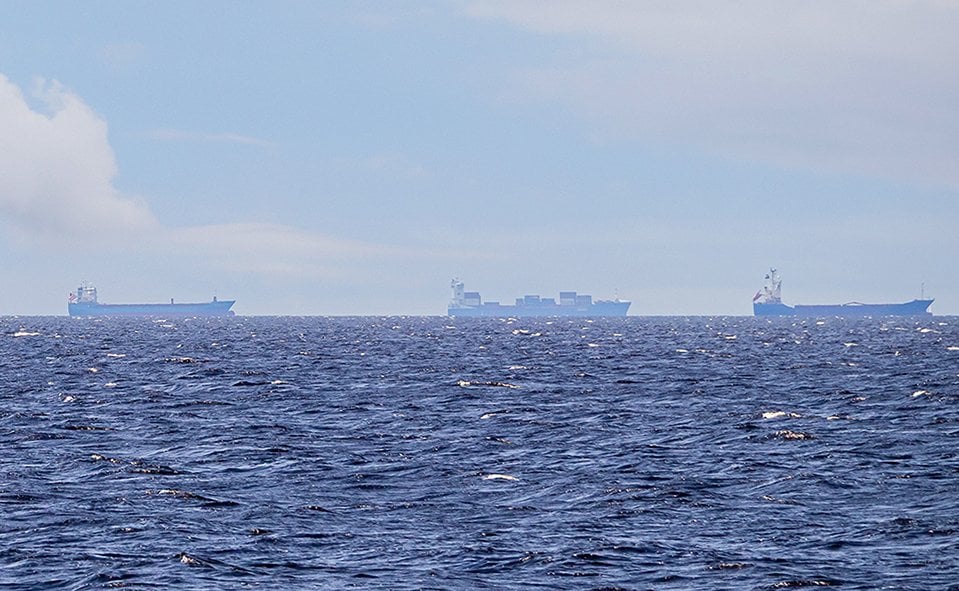
- Very likely the Strait of Hormuz will remain functionally restricted rather than fully open over the next 14 days. Preliminary data recorded seven commodity vessels transiting on 24 August, compared with a 10-day average of 15, and tracking data shows very few ships returning to the Gulf for further cargoes. Up to 400 ships carrying about 6,000 seafarers remain unable to depart safely. Iran has threatened unauthorised vessels and is reported to have attacked tankers, while US commanders state that American forces cleared mines and destroyed more than 90 percent of Iran's estimated inventory of around 8,000 mines. Confidence is medium because shipping data, IMO reporting and US military statements provide corroboration, but the mine-clearance claims conflict with continued low traffic and a separate report that the closure has largely been reinstated. (Confidence: medium · ASSESSED)
- I&W: Daily commodity transits remain at or below seven and tracking continues to show very few vessels returning to the Gulf for additional cargoes. (0-14 days)
- I&W: Commodity transits exceed the reported pre-war average of 15 for seven consecutive days and tracking shows sustained vessel returns for new cargoes. (0-14 days)
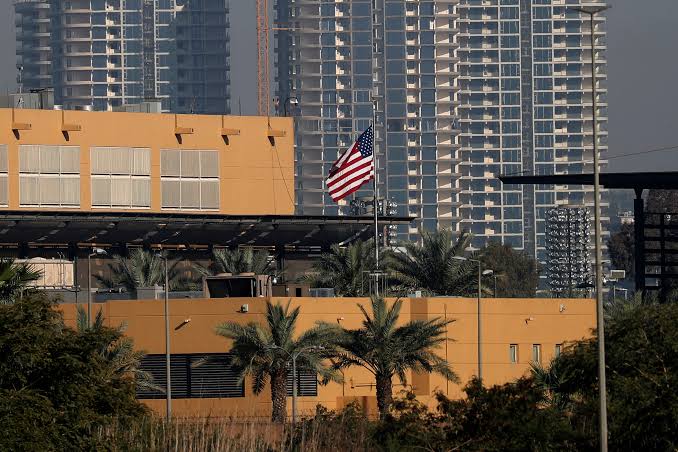
- Likely US, Pakistani and Iranian diplomatic activity will produce limited risk-management measures rather than a settlement during the next 14 days. On 29 August, the United States began returning diplomats and families to Middle East embassies, eased restrictions on regional staff and created a restricted-operations classification. Pakistan is seeking to keep communication channels open between Iran and the United States, while Iranian Foreign Minister Abbas Araghchi stated that restoring diplomacy is not impossible and Iranian officials are preparing a list of conditions. Confidence is medium because the US posture is supported by several reports, but the Iranian and Pakistani positions are statements and no implementation of a settlement is reported. (Confidence: medium · ASSESSED)
- I&W: US embassies in additional Middle East locations restore personnel or lift further restrictions, while Iran publishes conditions or announces an official communication channel with Washington. (0-14 days)
- I&W: The United States reimposes embassy restrictions or evacuation measures, or Iranian officials publicly reject further diplomatic contact. (0-14 days)
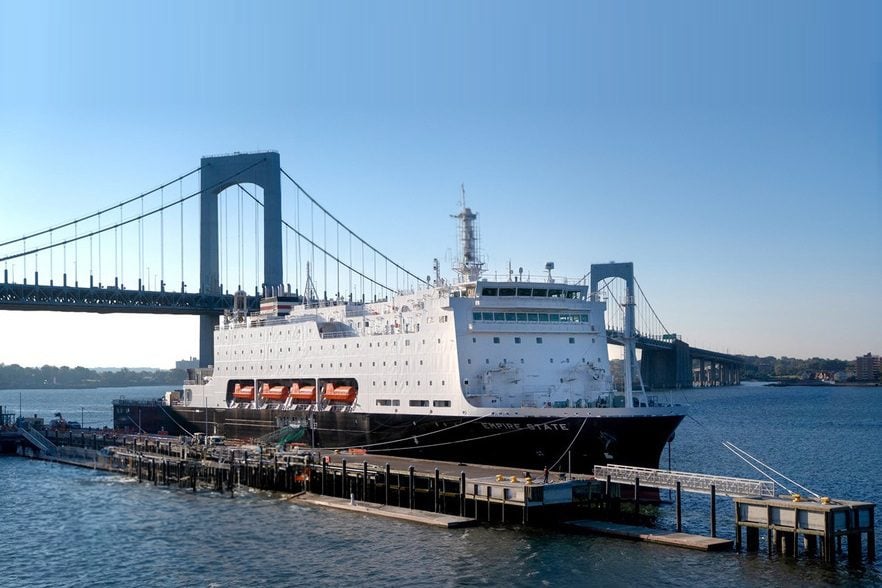
- Likely US logistics demand will remain elevated through approximately February 2027. The US Maritime Administration is preparing to activate SUNY Maritime College's training ship Empire State VII around 1 September 2026 for an approximately 170-day federal mission. The vessel can accommodate approximately 1,000 people and has a full hospital aboard, and the activation is linked in reporting to heightened US military logistics requirements in the Middle East. Confidence is medium because official government reporting supports the activation date and mission duration, while the destination and precise task remain undisclosed and the Diego Garcia deployment report is explicitly described as a rumour. (Confidence: medium · ASSESSED)
- I&W: MARAD confirms activation of Empire State VII around 1 September and retains the approximately 170-day federal mission. (0-14 days)
- I&W: MARAD cancels or delays the activation, or assigns Empire State VII back to SUNY Maritime College without a federal mission. (0-14 days)
- Likely reported US munitions constraints will remain a planning risk, but confidence in the scale and present effect of the constraint is low. Reporting describes a critical situation involving American PAC-3 interceptor stocks in Europe, extremely low levels of other weapons, concerns about US ability to deter China and Russia, and operational-plan adjustments by US European Command. The record also includes a low-confidence report that the United States had nearly exhausted its precision long-range missiles and a statement that Washington needed to replenish weapon stocks. Confidence is low because the assessment relies heavily on major-media reporting, includes inconsistent dates and lacks independent confirmation of current stock levels. (Confidence: low · ASSESSED)
- I&W: US or European command reporting identifies further PAC-3 or precision-missile reallocations, delivery delays or operational-plan changes linked to depleted stocks. (0-3 months)
- I&W: The United States announces completed replenishment deliveries and military planners report that PAC-3 and precision-missile availability has returned to normal planning levels. (1-3 months)
- Likely economic and humanitarian pressure will continue to reinforce regional instability over the next 1-3 months. Senior Iranian leadership has described the conflict as a full-scale economic war; reporting attributes a roughly 35 percent contraction in Iranian foreign trade, a critical gasoline shortage and annual inflation above 66 percent to the blockade and conflict. Gaza's population continues to face crisis levels of food insecurity, while 70 percent of Gulf food imports were reported disrupted by mid-March 2026 and Dubai's tourism industry faced a near-total freeze after repeated missile strikes. Confidence is medium because official and major-media reporting supports several indicators, but the figures span different dates and some lack a fresh update. (Confidence: medium · ASSESSED)
- I&W: Iranian reporting records further fuel shortages or a foreign-trade contraction of roughly 35 percent, while annual inflation remains above 66 percent. (0-3 months)
- I&W: Gulf authorities report restored food-import flows and Iran reports normalised gasoline availability and recovering foreign trade. (1-3 months)
Outlook & scenarios
Continued distributed conflict with restricted Hormuz (55%)
Iran continues missile and drone attacks against Israel, US bases and Arab countries, while Israel sustains strikes against Hezbollah in Lebanon. Iran-linked maritime pressure keeps the Strait of Hormuz below normal traffic levels. US diplomatic personnel continue a controlled return without a settlement.
Limited deconfliction without settlement (30%)
The United States expands restricted diplomatic operations, Pakistan preserves communication channels and Iran sets conditions for renewed diplomacy. Maritime restrictions ease at the margins, but Hormuz remains functionally restricted and the conflict remains unresolved.
Regional widening (18%)
Iran expands attacks against US bases, Arab countries and tankers while Israel intensifies operations against Hezbollah. The Mecca Joint Defense Agreement becomes a stronger political and military coordination mechanism for Saudi Arabia, Türkiye and Pakistan, increasing the risk that attacks involving one member affect the others.
Direct US ground entry and collective-defence activation (8%)
The United States begins ground operations in Iran after the option raised by President Donald Trump, while an attack involving Saudi Arabia, Türkiye or Pakistan prompts a formal response under the Mecca Joint Defense Agreement. This scenario would sharply increase the geographic scope and duration of the conflict.
Recommendations
- Maintain a 24-hour Hormuz watch using daily commodity-transit counts, vessel returns to the Gulf, tanker incidents in the Omani channel and Iranian authorisation warnings. Treat seven commodity vessels per day as the current disruption benchmark and flag sustained movement above 15 as evidence of material reopening.
- Track US embassy activity in Qatar, Kuwait, Bahrain and other Middle East locations separately from broader diplomatic messaging. Treat further staff returns as reversible until restrictions remain lifted for 14 consecutive days and Iran publishes conditions for an official channel.
- Verify the Empire State VII activation directly through MARAD and distinguish the confirmed 170-day federal mission from the unconfirmed Diego Garcia destination report. Update the logistics assessment immediately if the 1 September activation is delayed or its task is disclosed.
- Prioritise collection on PAC-3 and precision-missile availability in Europe, including US or European command announcements on reallocations, delivery schedules and operational-plan changes. Keep this issue at low confidence until independent evidence confirms current stock levels.
- Integrate maritime, economic and humanitarian indicators into one regional warning dashboard. Include Iranian fuel availability, foreign-trade volume, inflation, Gulf food-import flows, Gaza food insecurity and Dubai tourism activity, with a review every seven days.
- Raise the regional-widening scenario if a new Iranian strike hits a US base or Arab country, Iran attacks another tanker, or Israel expands operations against Hezbollah. Lower it if those incidents cease for 14 days while diplomatic restrictions continue to ease.
Confidence & uncertainty
Overall confidence is medium. Several judgments draw on official or near-primary reporting, including MARAD activation details, the IMO incident and shipping figures, and US diplomatic measures, while multiple major-media reports corroborate the broader pattern of military and economic pressure. The main uncertainties are the mixture of 2023 and 2026 dates, conflicting accounts of mine clearance and Hormuz access, and single-source or low-confidence reporting on US munitions stocks, the Empire State VII destination and some diplomatic outcomes.
Intelligence gaps
- [EEI 1.1 · UNCOVERED] Unusual long-range missile/rocket transporter-launcher (TEL) movements, storage activation, or assembly activity at known IRGC missile sites or forward staging areas. Recommended collection: satellite/imagery
- [EEI 1.2 · PARTIAL] Orders, threat-alert messages, or changes in posture from IRGC, Quds Force, or senior Iranian military leadership indicating attack timelines or rules of engagement changes. Recommended collection: signals/ELINT and HUMINT
- [EEI 1.3 · UNCOVERED] Large-scale transfers, deliveries, or convoy movements of armed UAVs/drones, guided munitions, or spare parts from Iran into Lebanon (Hezbollah), Iraq, Syria, or Gaza. Recommended collection: air/aviation track and HUMINT
- [EEI 1.4 · PARTIAL] Sustained changes in Israeli air-defense usage (SAM launches, radar activations), wide-area alerts, or NOTAMs indicating elevated imminent strike response. Recommended collection: air/aviation/NOTAMs and signals
- [EEI 2.1 · UNCOVERED] Concentration, repositioning, or sortie patterns of Iranian naval/IRGC patrol boats and fast-attack craft near shipping chokepoints or commercial lanes. Recommended collection: maritime/AIS and satellite/imagery
- [EEI 2.2 · PARTIAL] Reported attacks, mine sightings, close-approach incidents, or damage to commercial tankers/merchant vessels operating in the Red Sea, Persian Gulf, or eastern Mediterranean. Recommended collection: maritime/AIS and OSINT/incident reports
- [EEI 2.3 · UNCOVERED] Insurance market indicators: sudden spikes in war-risk or hull insurance premiums for routes through the Red Sea, Suez corridor, or Persian Gulf, and major carriers announcing route changes. Recommended collection: financial/market and commercial shipping notices
- [EEI 2.4 · PARTIAL] Port closures, naval escorts requested by commercial operators, or formal rerouting advisories issued by major shippers (e.g., Maersk, Hapag-Lloyd) for regional transits. Recommended collection: commercial/OSINT
- [EEI 3.1 · UNCOVERED] Deployment of foreign military assets to the region (carrier strike groups, amphibious ships, combat aircraft deployments, or additional bases activated) from the US, UK, France, Russia, or GCC states. Recommended collection: maritime/AIS and air/aviation and satellite/imagery
- [EEI 3.3 · UNCOVERED] Confirmed arms transfers, expedited weapons shipments, or transfer authorizations to Israel, Iran, or their proxies (aircraft parts, munitions, air defenses). Recommended collection: customs/INTEL and HUMINT
- [EEI 3.4 · UNCOVERED] Issuance of travel warnings, embassy evacuations or reductions, and closure of diplomatic missions by major capitals indicating escalation risk or shifted threat assessments. Recommended collection: OSINT/diplomatic
Cited sources
[1] Wikipedia · Reactions to the 2026 Iran war (B) · sha256:9e483c76f25f [2] BBC · US plans to cut off military aid to key Middle East ally, BBC told (A) · sha256:285edb031228 [3] maritime-executive.com · IMO: 400 Ships and 6,000 Seafarers Are Still Unable to Depart Persian Gulf (B) · sha256:3bd74a41bdbe [4] abc7.com · Iran live updates: 7th killed service member is identified (B) · sha256:5744fcb5bfd9 [5] gcaptain.com · Iran Urges Countries Not to Implement New U.S. Sanctions as Mediators Focus on Reopening Strait (A) · sha256:153a0115ab1b [6] sundayguardianlive.com · US-Israel-Iran War Live News: Govt Seeks Victory in 'Economic War' Says Iranian Minister After Military Conflict (B) · sha256:16104f068011 [7] maritime-executive.com · Maritime Security: A War Gone Wrong (B) · sha256:9d18b88cf558 [8] shorouknews.com · بعد 6 أشهر من حرب إيران. واشنطن تعيد دبلوماسييها إلى الشرق الأوسط (B) · sha256:508a2b80e45c [9] arabic.rt.com · عودة تدريجية للدبلوماسيين الأمريكيين إلى سفاراتهم في الشرق الأوسط (B) · sha256:01b069569e6c [10] thefridaytimes.com · From Security Talks To Strategic Mediation: The Munir Mission In Tehran (B) · sha256:45c626991be4 [11] nesan.net · واشنطن تضغط على إسرائيل لمنع التصعيد في سورية وإيران (B) · sha256:8797ac0445e7 [12] gcaptain.com · MARAD Activates SUNY Maritime Training Ship Empire State VII for Undisclosed National Mission (B) · sha256:7a082bab975f [13] maritime-executive.com · MARAD Calls Up Training Ship Empire State for Federal Service (A) · sha256:e3a398e0c501 [14] news.rambler.ru · WSJ: сокращение боеприпасов у США вызывает опасения по сдерживанию КНР и России (B) · sha256:2dd9b27b2476 [15] UK Government · Both parties must fulfil their commitments under Resolution 2803 and refrain from actions that undermine peace: UK statement at the UN Security Council (A) · sha256:22593220c0b4 [16] Wikipedia · Economic impact of the 2026 Iran war (B) · sha256:ef0033339360
Source content hashes were computed at collection time; the cited text is preserved unmodified for the life of this product.
TLP:CLEAR