TLP:CLEAR · Disclosure is not limited.
Iran-Israel Conflict: Hormuz Restrictions and Houthi Attacks Raise Regional Risk
Time window: Last 1 day · Audience: General analyst · Type: Situation report · DTG: 2026-09-14 19:37Z · Overall confidence: HIGH
BLUF
It is very likely that the conflict will remain regionalised over the next 14 days, with Houthi attacks on Saudi Arabia, Iranian restrictions in the Strait of Hormuz and the Saudi pipeline outage sustaining military and economic pressure. The postponed Oman meeting now offers an unlikely route to near-term maritime de-escalation, while Saudi export stocks face a five to seven day constraint if the pipeline remains offline.
Executive summary
Reporting on 14 September shows simultaneous pressure across Yemen, Saudi Arabia and the Strait of Hormuz. The Houthis claimed to have fired dozens of missiles and drones at the Khamis Mushait airbase, while Saudi authorities issued alerts in four southern cities. Iran reported that its IRGC destroyed an MQ-1 drone over Hormuz, although the operator and mission remain unconfirmed. Vessel transits through Hormuz remain at single-digit daily levels, Iran has listed 77 ships for possible penalties, and Foreign Minister Abbas Araqchi said reopening depends on US concessions. Oman postponed its meeting with Iran and Gulf states. Saudi Arabia's east-west pipeline remains offline, leaving Yanbu with reported export stocks for five to seven days. The International Organization for Migration estimates that 82,000 Yemenis have fled fighting since the start of September.
Change from previous assessment
Since the 13 September brief, the assessment has shifted towards greater near-term escalation and weaker diplomatic prospects. The Houthi attack on Khamis Mushait, the reported IRGC interception of a drone over Hormuz and Iran's expanded 77-ship enforcement list add pressure across separate fronts. The Oman meeting is now postponed rather than imminent, lowering the prospect of a near-term shipping arrangement. The Hormuz assessment is more precise: severe restriction remains very likely, but full closure is unconfirmed because single-digit vessel transits continue and reporting conflicts on the waterway's operating status. Saudi pipeline risk has become more immediate because Yanbu export stocks are reported at five to seven days. The assessment of Houthi territorial control remains medium because reporting on the persistence of positions at Perim Island and Ras Menhali is contradictory.
Key judgments
- It is very likely that the Iran-Israel conflict will remain a multi-front regional conflict over the next 14 days, involving Iran, the Houthis, Saudi Arabia and Yemeni government forces through attacks in Yemen and Saudi Arabia, maritime incidents in the Strait of Hormuz and pressure on Saudi energy infrastructure. The Houthi attack claim, the IRGC's reported drone interception, the 13 September vessel strike and the Saudi pipeline outage are separately reported. The attacker responsible for the pipeline strike and the full operational control of Houthi-held sites remain unresolved. This is an assessed synthesis, not evidence of a single command structure. (Confidence: high · ASSESSED)
- I&W: Confirmation: Saudi authorities report another Houthi strike on Khamis Mushait or Jazan, or UKMTO reports another projectile incident involving a vessel in the Strait of Hormuz. (0-14 days)
- I&W: Break: Hormuz transits rise materially above current single-digit levels for seven consecutive days while Houthi attacks on Saudi Arabia cease. (0-14 days)
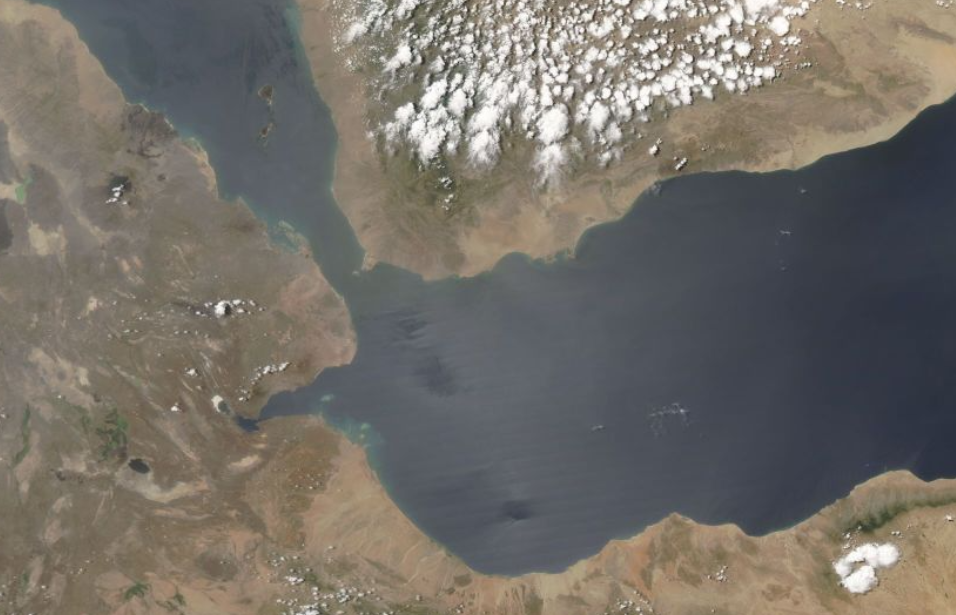
- It is very likely that commercial transit through the Strait of Hormuz will remain severely constrained through 27 September, while it is unlikely that Iran has achieved a continuously complete closure. Reported vessel movements have fallen to single-digit daily levels, Iran continues to restrict shipping, and Tehran has listed 77 ships for possible fines, detention or confiscation. Abbas Araqchi has tied reopening to US concessions. The claims that the strait is fully closed or effectively blocked conflict with reports of limited ongoing traffic and a contrary statement from Donald Trump. Confidence is medium because the restriction is well reported, but the exact operating status remains contested. (Confidence: medium · ASSESSED)
- I&W: Confirmation: AIS data continues to show single-digit daily transits and Iran announces enforcement action against one of the 77 listed vessels. (0-14 days)
- I&W: Break: Iran withdraws the 77-ship restrictions and AIS data shows sustained commercial traffic at materially higher levels for seven days. (0-14 days)
- It is likely that Saudi Arabia's east-west pipeline outage will keep Saudi export flows under pressure for at least the next five to seven days, with a roughly even chance of partial pumping before full repair. The 1,200-kilometre pipeline was knocked out by drone strikes, Yanbu reportedly has five to seven days of export stocks, and the route previously moved about four million barrels per day to Yanbu. Repair estimates range from five to six weeks to an earlier partial resumption. Riyadh's attribution to Iran-backed fighters in Iraq is reported but not independently established. Confidence is medium because the supply and repair estimates rely on industry sources and the responsible actor remains disputed. (Confidence: medium · ASSESSED)
- I&W: Confirmation: Saudi Arabia reports that the pipeline remains offline without partial pumping, while Yanbu export stocks continue to decline during the next five to seven days. (0-7 days)
- I&W: Break: Saudi Arabia confirms partial pipeline flows or a repair milestone that replenishes Yanbu export capacity before stocks are exhausted. (0-14 days)
- It is likely that Houthi forces will sustain attacks against Saudi Arabia and pressure on Red Sea shipping over the next one to three months, but confidence in their continuing control of Perim Island and Ras Menhali is medium. Wire and major-media reporting supports the Houthi seizure of Mocha and Perim Island, expansion along the Red Sea coast and the 14 September attack claim against Khamis Mushait. A trade-publication account states that there are no indications of a continuing Houthi presence on Perim Island or at Ras Menhali port. The extent and persistence of Houthi territorial control therefore remain contested. (Confidence: medium · ASSESSED)
- I&W: Confirmation: Houthi forces claim or are independently reported to have conducted another strike on Saudi territory, while Bab al-Mandeb AIS traffic falls further. (0-30 days)
- I&W: Break: Yemeni government forces or Southern Giants Forces are reported to have restored positions at Perim Island, Ras Menhali or Mocha, followed by a sustained halt in Houthi attacks. (1-3 months)
- It is unlikely that the postponed Oman-hosted meeting between Iran and Gulf states will produce an arrangement that reopens the Strait of Hormuz by 30 September, and it is very unlikely to deliver durable regional de-escalation within that period. Oman confirmed the postponement, while Iranian accounts variously attributed it to Yemen events, Saudi Arabia or unnamed regional states. Saudi Arabia also submitted amendments over the agreement's implications for the Strait of Hormuz. Araqchi said Iran would not reopen the waterway until the United States met Tehran's demands. Confidence is medium because the postponement is corroborated, but its cause, rescheduling and outcome remain unresolved. (Confidence: medium · ASSESSED)
- I&W: Confirmation: Oman does not announce a new meeting date and Iran reiterates that Hormuz will remain restricted until US demands are met. (0-14 days)
- I&W: Break: Oman announces a rescheduled meeting attended by Iran and Gulf states, followed by verified additional commercial transits through Hormuz. (0-30 days)
- It is likely that economic and humanitarian effects will remain elevated over the next one to three months. Brent crude traded between reported intraday levels of about 106 and more than 109 dollars per barrel on 14 September, US diesel exceeded 6.20 dollars per gallon, Saudi oil production was reported at 6.2 million barrels per day in August compared with 10.9 million in February, and the International Organization for Migration estimates that 82,000 Yemenis have fled fighting since the start of September. Confidence is medium because the exact Brent price and some oil-supply estimates are contested, although the direction of economic and humanitarian pressure is corroborated. (Confidence: medium · ASSESSED)
- I&W: Confirmation: US diesel records another weekly high and the International Organization for Migration reports additional displacement from fighting in Yemen. (0-30 days)
- I&W: Break: Saudi Arabia restores pipeline flows, Hormuz traffic rises for seven consecutive days and US diesel falls below 6 dollars per gallon. (0-30 days)
Outlook & scenarios
Contained but prolonged maritime pressure (45%)
Iran maintains severe restrictions on Hormuz without sustaining a fully closed waterway. The Houthis continue attacks against Saudi Arabia and retain enough access to the Red Sea coast to pressure shipping. Saudi Arabia and the United States expand defensive and intelligence support, while the Oman channel remains postponed or produces only a limited administrative arrangement.
Limited diplomatic and operational accommodation (25%)
Oman reschedules talks with Iran and Gulf states, Iran permits a measurable increase in commercial transits, and Saudi Arabia restores partial pipeline pumping. Houthi attacks fall in tempo without a durable regional ceasefire. Shipping companies retain contingency routes because Red Sea security remains conditional.
Cross-front escalation (20%)
A further Houthi strike on Saudi territory, an additional Hormuz vessel incident or an Iranian enforcement action against a blacklisted ship prompts stronger Saudi and US responses. Pakistan and Turkey face pressure to interpret the Mecca defence agreement, while diplomatic talks remain suspended.
Wildcard: maritime and energy shock (10%)
Iran detains or confiscates a listed vessel while the Saudi pipeline requires an extended repair period and Houthi forces retain positions around the Bab al-Mandeb. Commercial traffic contracts sharply across both waterways, Saudi export availability falls towards the reported four per cent of global supply at risk, and humanitarian displacement from Yemen accelerates.
Recommendations
- Maintain a daily maritime picture for the Strait of Hormuz and Bab al-Mandeb. Separate verified AIS transits, oil movements and container traffic from official claims that do not identify vessel movements.
- Treat Iran's 77-ship list as an operational warning. Identify listed vessels, their insurers, P&I clubs and classification societies, then flag any detention, diversion or service withdrawal.
- Track the Saudi east-west pipeline against a five to seven day decision window. Record repair milestones, partial pumping, Yanbu stocks and available stocks at Ain Sukhna and Sidi Kerir.
- Verify the Khamis Mushait attack through Saudi emergency alerts, independent imagery and official damage reporting. Keep the Khamis Mushait, Jazan and 13 to 14 September accounts separate until the location and timing are reconciled.
- Monitor the Oman channel for a new meeting date, attendance by Iran and Gulf states, and any Iranian change to the condition that US concessions precede Hormuz reopening.
- Watch for indicators of Mecca pact activation, including further Houthi attacks reaching the Saudi border and public military commitments from Pakistan or Turkey.
- Use the lower-confidence territorial-control reporting cautiously. Track whether Houthi forces maintain positions at Perim Island, Ras Menhali and Mocha before treating control of the Bab al-Mandeb as durable.
Confidence & uncertainty
Overall confidence is high for the core situation picture because the principal developments are corroborated by multiple high-reliability wire-service, major-media, trade-publication and multilateral reports. The Houthi attack on Saudi Arabia, severe but incomplete Hormuz disruption, Saudi pipeline outage and postponement of the Oman meeting are supported by more than one reporting stream. The main uncertainties concern the identity of the pipeline attackers, the operating status of Perim Island and Ras Menhali, the exact level of Hormuz traffic, the reasons for the diplomatic postponement and the timing of pipeline repairs.
Intelligence gaps
- [EEI 1.1 · PARTIAL] Number, type, launch times, and trajectories of ballistic missiles, cruise missiles, armed UAV strikes, and combat-air sorties launched by Iranian or Israeli forces toward the other's territory or forward bases within a 72-hour window. Recommended collection: signals/intel
- [EEI 1.2 · UNCOVERED] Observable changes in Israeli and Iranian force posture: mobilization or reserve call-up orders, unit road/rail movements, dispersal or sortie rates of air squadrons, redeployment of air-defense batteries, and activation of civil-defense alerts or sirens in major population centers. Recommended collection: open-source/media
- [EEI 1.3 · UNCOVERED] Indications of strike authorization or targeting preparations in Iranian or Israeli command chains: authenticated public orders by senior commanders, detected increases in encrypted communications consistent with targeting, or visible movement of strike munitions to launch/storage sites. Recommended collection: signals/intel
- [EEI 2.1 · UNCOVERED] Counts, launch locations (coordinates), weapons types, and assessed damage from rocket/missile/drone strikes originating from Lebanon into northern Israel attributed to Hezbollah or allied groups. Recommended collection: open-source/media
- [EEI 2.2 · PARTIAL] Reported attacks by Iranian-backed militias in Iraq and Syria: rocket/IED strikes on bases hosting US/coalition or Israeli personnel, documented militia unit movements toward borders, and captured movement or transfer of weapons systems to forward militia positions. Recommended collection: human
- [EEI 3.1 · UNCOVERED] Movements and arrival dates of foreign military assets into the region: carrier strike groups, amphibious ships, surface combatants, strategic airlift/tanker deployments, and air/sea patrol patterns by US, European, Russian, or regional militaries. Recommended collection: imagery/satellite
Cited sources
[1] GN Youth News (gnyouth.net) · Oil prices jump to near 4-month high as Oman-Iran talks on Strait of Hormuz postponed – GN Youth News (E) · Mon Sep 14 2026 08:04:00 GMT+0000 (Coordinated Universal Time) · sha256:dc968602413e [2] Reuters (republished by Global Banking and Finance) · Houthis attack Saudi Arabia as Gulf-Iran talks are postponed (A) · Mon Sep 14 2026 17:39:10 GMT+0000 (Coordinated Universal Time) · sha256:ea5f065d0fe4 [3] Al Jazeera · Strait of Hormuz talks postponed due to Yemen events, says Iran (A) · Mon Sep 14 2026 10:58:07 GMT+0000 (Coordinated Universal Time) · sha256:1dcb8b35598e [4] Reuters (republished by gCaptain) · New Attacks in Hormuz and Saudi Test Nerves as War's Spread Worsens Oil Disruption (A) · Mon Sep 14 2026 17:16:46 GMT+0000 (Coordinated Universal Time) · sha256:4d8e33104dc4 [5] The Business Standard · New wave of war drums in the Middle East: Coincidence or calculated design? (B) · Mon Sep 14 2026 14:00:00 GMT+0000 (Coordinated Universal Time) · sha256:de412845d2de [6] The Maritime Executive · Iran Expands Threats Against Shipping to P&I and Class Societies (C) · sha256:d5abc385e82e [7] gCaptain · Maersk, Hapag-Lloyd Accelerate Return to Suez Despite Red Sea Risks (C) · Mon Sep 14 2026 15:53:32 GMT+0000 (Coordinated Universal Time) · sha256:cd96ffd3e9be [8] Reuters (republished by gCaptain) · Gulf States Postpone Iran Talks as Houthis Strike Saudi Arabia (A) · Mon Sep 14 2026 16:25:34 GMT+0000 (Coordinated Universal Time) · sha256:d52bcd7f7927 [9] Bloomberg (republished by gCaptain) · Ports Giant DP World Redraws Hormuz Logistics With Truck Bet (A) · Mon Sep 14 2026 13:27:35 GMT+0000 (Coordinated Universal Time) · sha256:5b4fbcc596e9 [10] gCaptain (republishing Reuters) · Saudi Pipeline Outage Threatens Loss Of 4% Of Global Oil Supply (A) · Mon Sep 14 2026 01:48:18 GMT+0000 (Coordinated Universal Time) · sha256:867bf6bfb067 [11] The Maritime Executive · Houthis Being Pushed Back from Bab el-Mandeb (C) · sha256:7b5662429cfd [12] Bloomberg (republished by gCaptain) · Trump Demands Ukraine Halt Refinery Strikes As Diesel Surges (A) · Sun Sep 13 2026 22:11:16 GMT+0000 (Coordinated Universal Time) · sha256:e1495f52a281
Source content hashes were computed at collection time; the cited text is preserved unmodified for the life of this product.
Red cell review: CONCUR WITH COMMENT
TLP:CLEAR