TLP:CLEAR · Disclosure is not limited.
Iran-Israel Conflict: Hormuz Restrictions and Lebanon Escalation
Time window: Last 1 day · Audience: General analyst · Type: Situation report · DTG: 2026-08-27 16:09Z · Overall confidence: HIGH
BLUF
The conflict is likely to remain active on the Israel-Hezbollah front and very likely to keep the Strait of Hormuz functionally restricted, despite claims that it is open. Qatar and Oman are pursuing diplomatic off-ramps, but the reported corridor excludes warships and does not amount to a full reopening. A further tanker strike or casualty-producing incident in southern Lebanon would be the clearest near-term warning of wider regional destabilisation.
Executive summary
The conflict is generating pressure across southern Lebanon, Gaza and the Strait of Hormuz. Israeli forces shelled the plain of Marjayoun on 25 August and conducted an airstrike in southern Lebanon on 27 August that reportedly killed one woman and wounded six. Separate Israeli strikes in Gaza reportedly killed three people and wounded several others on 27 August. Iran and Oman are negotiating arrangements for Hormuz, while Qatar and other regional powers are seeking an off-ramp. The central uncertainty is whether reported commercial arrangements represent a genuine reopening, since Iran excludes warships and the head of the International Maritime Organization has said the strait is not open, despite Donald Trump's contrary assertion.
Change from previous assessment
Since 26 August, this assessment raises the Israel-Hezbollah continuity judgment from low to medium confidence after new reporting of Israeli shelling on 25 August and an Israeli airstrike in southern Lebanon on 27 August. It raises confidence in the persistence of mediation channels from low to medium because Qatar and other regional powers were reported seeking an off-ramp on 27 August, while retaining the assessment that a full Hormuz reopening is unlikely. The report adds Gaza diplomatic friction as a separate regional instability factor and retires the prior standalone US sanctions judgment from the primary set. Commercial disruption remains a medium-priority concern, while the principal unresolved issue remains the conflict between claims that Hormuz is open and reporting that it is not fully open.
Key judgments
- Likely Israel-Hezbollah exchanges in southern Lebanon will continue over the next 14 days. Reported Israeli shelling of the Marjayoun plain on 25 August, followed by an Israeli strike in southern Lebanon on 27 August and earlier IDF strikes against Hezbollah after drone launches, indicate that the current cycle of action and retaliation remains active. Confidence is medium because the reporting comes from multiple major-media and wire sources, but the supplied claims provide limited detail on Hezbollah's decision-making and the scope of the exchange. (Confidence: medium · ASSESSED)
- I&W: Confirm: UKMTO or reliable reporting records another Hezbollah drone or rocket launch followed by an Israeli strike in southern Lebanon, especially around Marjayoun or another named border locality. (0-14 days)
- I&W: Break: No further Hezbollah attack or Israeli strike in southern Lebanon is reported for 14 consecutive days. (0-14 days)
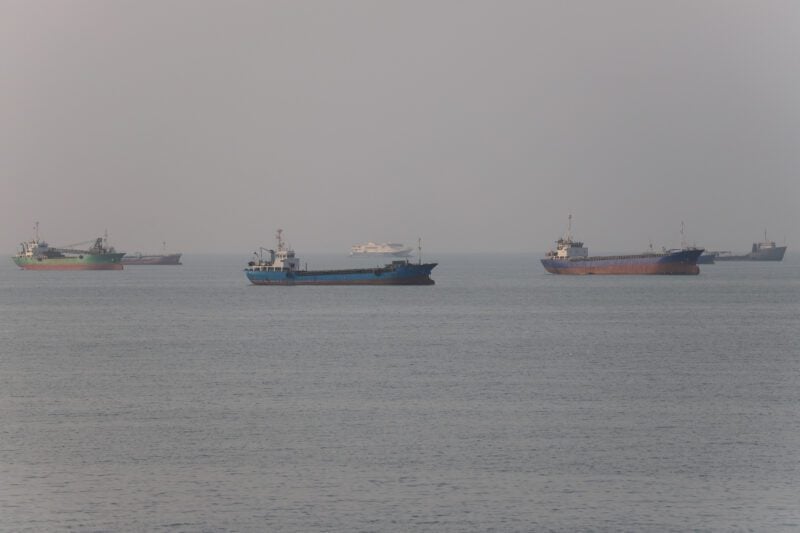
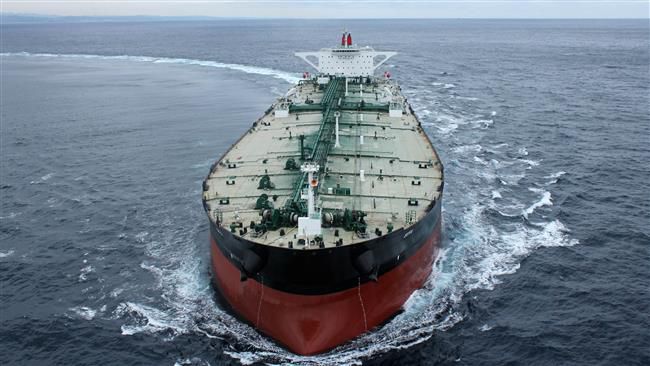
- Very likely the Strait of Hormuz will remain functionally restricted rather than fully open over the next 14 days. Reported restrictions limit the Iran-Oman arrangement to commercial vessels and exclude all warships, while the head of the International Maritime Organization has said the strait is not open. Iran has also blocked vessels and a tanker was hit on 25 August. Confidence is medium because these claims are supported by major-media, wire and maritime reporting, but they conflict with Donald Trump's assertion that the strait is open and with competing accounts of the agreement's status. (Confidence: medium · ASSESSED)
- I&W: Confirm: Iran issues or maintains navigation instructions that restrict passage to commercial vessels, exclude warships and require compliance with Iranian shipping rules. (0-14 days)
- I&W: Break: The International Maritime Organization or another authoritative maritime body confirms unrestricted two-way passage for commercial and military vessels, followed by verified transits by both categories. (0-14 days)
- Likely Qatar, Oman and Iran will keep diplomatic channels active over the next 14 days, but a full settlement on Hormuz is unlikely. Reported discussions cover a proposed Iran-Oman shipping corridor, future management of the strait and revenue sharing, while Qatar and other regional powers sought an off-ramp on 27 August. Iran's reported insistence on US compliance with a memorandum of understanding and the exclusion of warships limit the prospects for a comprehensive agreement. Confidence is medium because the claims come from several major-media and wire sources, but implementation is not independently verified and the chronology of some reporting is inconsistent. (Confidence: medium · ASSESSED)
- I&W: Confirm: Iran and Oman publish signed implementation terms covering commercial transit, water shares and revenue collection, with Qatar or Oman publicly endorsing the arrangement. (0-14 days)
- I&W: Break: Oman withdraws from the talks, Iran denies that a corridor or revenue agreement exists, or negotiations produce no operational instructions for commercial vessels. (0-14 days)
- Likely maritime and economic disruption will persist across Gulf trade over the next 1-3 months, with the clearest immediate effects at Jebel Ali and in Iranian oil logistics. Jebel Ali's reported container volumes fell by more than 90 per cent to 374,000 TEU in the second quarter. Iran is reported to be unable to load oil at Kharg Island, while Chinese purchases of Iranian oil have fallen to their lowest level in many years and Iran's economy faces further instability. Confidence is low because the Kharg Island claim is single-source and conflicts with the Iranian oil minister's statement that sales and deliveries have continued. (Confidence: low · ASSESSED)
- I&W: Confirm: Jebel Ali reports another quarter of sharply reduced throughput, while Iranian authorities or shipping data continue to show that Kharg Island cannot load oil at normal capacity. (1-3 months)
- I&W: Break: Jebel Ali throughput recovers materially and Iran confirms restored loading at Kharg Island alongside stable or rising Chinese purchases of Iranian oil. (1-3 months)
- Likely Israeli military activity and diplomatic friction in Gaza will sustain a separate source of regional instability over the next 14 days. Gaza's population is reported to face crisis-level food insecurity at 59 per cent, while Israeli strikes on 27 August reportedly killed three people and wounded several others. Israel's reported removal of two Dutch diplomats from the Gaza ceasefire coordination centre adds pressure to international engagement. Confidence is medium because the humanitarian reporting is supported by official and major-media sources, while the diplomatic removal claim is a single wire-service report. (Confidence: medium · ASSESSED)
- I&W: Confirm: Additional Israeli strikes in Gaza produce reported casualties, or Israel removes further foreign officials from Gaza-related coordination bodies. (0-14 days)
- I&W: Break: Israel permits predictable aid entry at scale and no further diplomatic expulsions or reported Gaza strikes occur during the period. (0-14 days)
Outlook & scenarios
Restricted corridor and contained exchanges (45%)
Iran and Oman maintain a corridor limited to commercial vessels, with warships excluded. Israel and Hezbollah continue reciprocal strikes around southern Lebanon without opening a sustained new front. Qatar and Oman keep diplomatic channels active, while shipping disruption and pressure on Gulf ports persist.
Maritime escalation and wider economic pressure (25%)
A further tanker incident in the Strait of Hormuz or a casualty-producing Israel-Hezbollah exchange prompts Iran to tighten transit rules. Commercial operators reduce Hormuz use, Jebel Ali remains under pressure and Iranian oil logistics deteriorate.
Negotiated commercial implementation (25%)
Iran and Oman formalise transit fees, water shares and a commercial corridor. Commercial traffic resumes partially, but warships remain excluded and the underlying Iran-Israel conflict continues. Qatar presents the arrangement as an initial off-ramp rather than a final settlement.
Cross-front escalation wildcard (5%)
Iran extends attacks to energy targets beyond Hormuz while Israel and Hezbollah sustain a broader exchange in southern Lebanon. Direct pressure on Gulf access and commercial shipping produces a sharp regional security and economic shock.
Recommendations
- For the next 0-14 days, maintain a single incident watchlist covering tanker attacks in the Strait of Hormuz, Israeli strikes in southern Lebanon, Hezbollah drone or rocket launches, and reported casualties. Record the location, actor attribution and time of each incident separately.
- Treat the Hormuz agreement as unimplemented until Iran and Oman publish operational terms and independent reporting confirms actual commercial transits. Distinguish commercial passage from warship passage in all updates.
- Reconcile the competing Hormuz narratives by comparing Iranian navigation instructions, International Maritime Organization statements, reported tanker incidents and verified vessel movements. Do not use political declarations alone to assess whether the strait is open.
- Monitor the economic warning points separately: Jebel Ali throughput, Iranian loading activity at Kharg Island, Chinese purchases of Iranian oil and reports of further tanker disruption. Flag any two indicators moving adversely within the same reporting period.
- Track Gaza-related diplomatic friction alongside military activity. Report any further removal of foreign officials, interruption of ceasefire coordination or change in predictable access for fuel and aid.
- Keep the 2026 incident chronology separate from older 2023 and undated reporting in the source set. This will reduce the risk of conflating separate tanker incidents, negotiation phases and shipping statistics.
Confidence & uncertainty
Overall confidence is high because the principal developments are supported by multiple reliable official, wire-service, major-media and maritime sources, including corroborated reporting on Israeli activity in southern Lebanon, Hormuz restrictions, diplomatic contacts and shipping disruption. The main uncertainties concern responsibility for the tanker strike, the operational status of the Iran-Oman arrangement, the conflicting claims from Donald Trump, Iran and the International Maritime Organization, and inconsistent dates in parts of the wider source set.
Intelligence gaps
- [EEI 1.1 · UNCOVERED] Unusual long-range missile/rocket transporter-launcher (TEL) movements, storage activation, or assembly activity at known IRGC missile sites or forward staging areas. Recommended collection: satellite/imagery
- [EEI 1.2 · PARTIAL] Orders, threat-alert messages, or changes in posture from IRGC, Quds Force, or senior Iranian military leadership indicating attack timelines or rules of engagement changes. Recommended collection: signals/ELINT and HUMINT
- [EEI 1.3 · PARTIAL] Large-scale transfers, deliveries, or convoy movements of armed UAVs/drones, guided munitions, or spare parts from Iran into Lebanon (Hezbollah), Iraq, Syria, or Gaza. Recommended collection: air/aviation track and HUMINT
- [EEI 1.4 · UNCOVERED] Sustained changes in Israeli air-defense usage (SAM launches, radar activations), wide-area alerts, or NOTAMs indicating elevated imminent strike response. Recommended collection: air/aviation/NOTAMs and signals
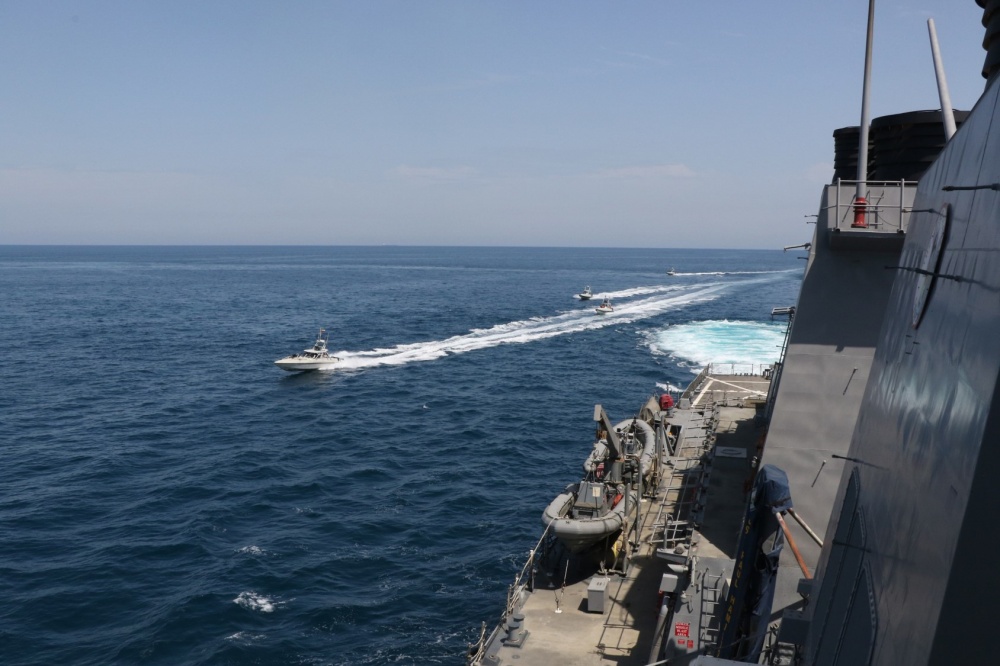
- [EEI 2.1 · UNCOVERED] Concentration, repositioning, or sortie patterns of Iranian naval/IRGC patrol boats and fast-attack craft near shipping chokepoints or commercial lanes. Recommended collection: maritime/AIS and satellite/imagery
- [EEI 2.3 · UNCOVERED] Insurance market indicators: sudden spikes in war-risk or hull insurance premiums for routes through the Red Sea, Suez corridor, or Persian Gulf, and major carriers announcing route changes. Recommended collection: financial/market and commercial shipping notices
- [EEI 2.4 · PARTIAL] Port closures, naval escorts requested by commercial operators, or formal rerouting advisories issued by major shippers (e.g., Maersk, Hapag-Lloyd) for regional transits. Recommended collection: commercial/OSINT
- [EEI 3.1 · UNCOVERED] Deployment of foreign military assets to the region (carrier strike groups, amphibious ships, combat aircraft deployments, or additional bases activated) from the US, UK, France, Russia, or GCC states. Recommended collection: maritime/AIS and air/aviation and satellite/imagery
- [EEI 3.3 · UNCOVERED] Confirmed arms transfers, expedited weapons shipments, or transfer authorizations to Israel, Iran, or their proxies (aircraft parts, munitions, air defenses). Recommended collection: customs/INTEL and HUMINT
- [EEI 3.4 · UNCOVERED] Issuance of travel warnings, embassy evacuations or reductions, and closure of diplomatic missions by major capitals indicating escalation risk or shifted threat assessments. Recommended collection: OSINT/diplomatic
Cited sources
[1] The Jerusalem Post · Live Updates: Latest from Israel, Iran, and the Middle East | The Jerusalem Post (A) · sha256:dafe909f004b [2] Associated Press · Regional powers seek off-ramp from Iran war, and other Middle East developments (A) · sha256:52a0930ede50 [3] cnn.com · ‘We will retaliate like an earthquake:’ How Iran could respond to Trump’s economic ‘D-Day’ | CNN (A) · sha256:e2532a4d79dc [4] maritime-executive.com · Iran's Strait of Hormuz Deal With Oman Would Ban All Warships (B) · sha256:d45fef5c3d9f [5] gcaptain.com · Iran, Oman Agree to Share Strait of Hormuz Revenue (B) · sha256:b26ea75e2e2b [6] military.com · Iran Scrambles to Sustain Trade as US Threatens to Sanction Countries That Refuse to Break Ties (B) · sha256:4a9bdfd21dc3 [7] maritime-executive.com · Ningbo-Zhoushan Tops Singapore as World’s Second Busiest Container Port (B) · sha256:7d1ab33fcb29 [8] maritime-executive.com · Iran's Floating Oil Storage Shrinks to Five-Month Supply (B) · sha256:234e2cdb565d [9] UK Government · Both parties must fulfil their commitments under Resolution 2803 and refrain from actions that undermine peace: UK statement at the UN Security Council (A) · sha256:22593220c0b4
Source content hashes were computed at collection time; the cited text is preserved unmodified for the life of this product.
TLP:CLEAR