TLP:CLEAR · Disclosure is not limited.
Iran-Israel Conflict: Hormuz Risk and Regional Spillover
Time window: Last 1 day · Audience: General analyst · Type: Situation report · DTG: 2026-10-07 10:45Z · Overall confidence: MEDIUM
BLUF
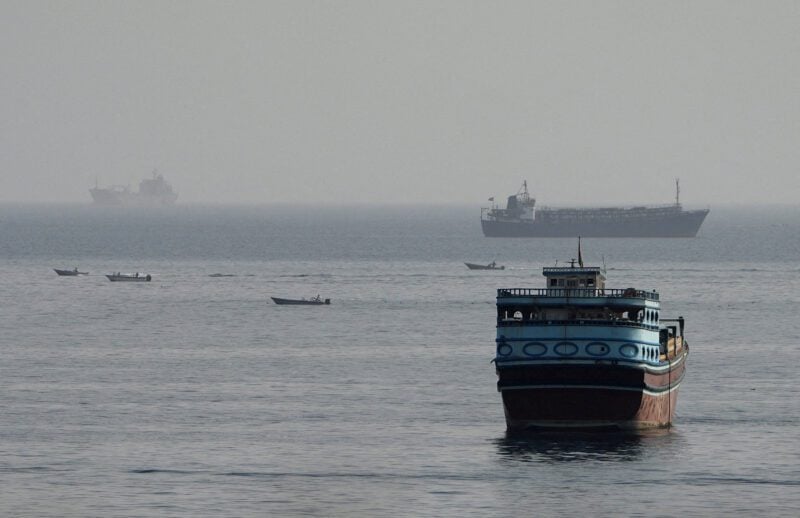
Commercial shipping in the Strait of Hormuz remains exposed to attack or coercion: UKMTO reported two tanker strike warnings for 5 October, and India reported 12 injuries aboard the On Peace. The identity of the attacker and whether the warnings describe separate incidents remain unresolved. Yemen fighting and displacement continue, while Iranian export estimates conflict over whether September shipments stopped entirely.
Executive summary
The US-Israeli war against Iran, which began on 28 February, is in its seventh month. Recent reporting describes attacks and coercive actions against tankers in the Strait of Hormuz, but does not establish responsibility for the 5 October strikes. Reports of the strait being closed sit alongside an estimate of 10-14 million barrels per day moving through it in recent days, indicating conflicting accounts of how much traffic continues. September Gulf crude and condensate exports recovered from August but remained below pre-war levels; refined-fuel exports remained further below their pre-war level. In Yemen, Operation Yemen Dawn is reported to be continuing, but battlefield control around Bab el-Mandeb is disputed. IOM and UNICEF reporting documents extensive displacement and school disruption. Qatar has reported continuing US-Iran message exchanges, but available reporting does not establish progress towards a ceasefire.
Change from previous assessment
Since the 6 October brief, reporting adds India's account that 12 crew members aboard the On Peace were injured, two UKMTO tanker warnings for 5 October, and the IMO's cumulative count of 80 verified vessel attacks and at least 22 seafarer deaths. This strengthens the evidence for acute Hormuz shipping risk, but does not resolve responsibility or whether the two warnings describe separate events. New September export data show a recovery in Gulf crude and condensate flows, while Iranian export estimates now conflict directly over zero versus 50,789 barrels per day. Reporting on Operation Yemen Dawn and recent displacement updates adds detail but does not settle battlefield control. The assessment that a full-scale US operation before the November elections is unlikely remains unchanged; Trump's statement points to a post-election period, not a decision to act.
Key judgments
- Commercial vessels are very likely to remain at elevated risk of attack or coercion in the Strait of Hormuz over the next 0-14 days. UKMTO reported two 5 October tanker strike warnings, and India's Ministry of External Affairs said a projectile struck the Panama-flagged On Peace, injuring 12 crew members. The IMO reported 80 verified attacks on merchant vessels in and around the strait since 28 February, with at least 22 seafarers killed. These reports corroborate repeated incidents, but the attackers remain unidentified and it is unresolved whether UKMTO warnings 156-26 and 157-26 describe separate incidents. Oil-flow estimates of 10-14 million barrels per day indicate that some traffic continues despite reports that Iran closed the strait. (Confidence: medium · ASSESSED)
- I&W: Confirm: UKMTO issues another tanker strike or coercion warning in the Strait of Hormuz, or India or Oman confirms a new crew evacuation. (0-14 days)
- I&W: Break: UKMTO reports no further attacks or coercive incidents and vessel operators confirm continuing routine transits through the strait. (0-14 days)
- Iranian crude exports were very likely sharply reduced in September, but reporting does not establish that they fell to zero. One report put exports at zero, while UANI's monthly data estimated 50,789 barrels per day, down from 966,133 in July; UANI separately reported no crude loadings at Iranian export terminals. The figures conflict, and the available reporting does not reconcile terminal loadings with exports measured through other shipping activity. Confidence is medium because the evidence supports a sharp contraction but not a definitive zero-export figure. (Confidence: medium · ASSESSED)
- I&W: Confirm: an independent vessel-tracking or satellite assessment reports September-like low exports and no sustained new loadings from Iranian terminals. (0-30 days)
- I&W: Break: an independent tracker reports Iranian exports materially above UANI's September estimate of 50,789 barrels per day. (0-30 days)
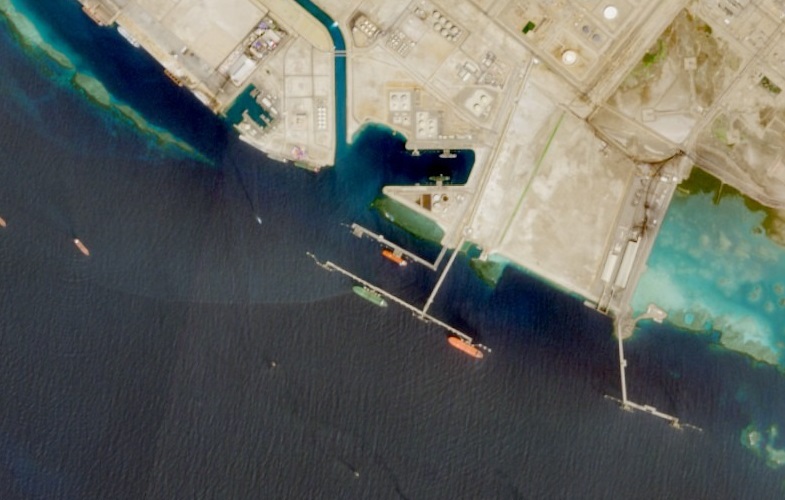
- Gulf crude and condensate exports had recovered substantially by September but remained below pre-war levels, while refined-fuel exports remained more depressed. Kpler data put exports from seven Gulf states at about 14.7 million barrels per day in September, up from 10.8 million in August; Vortexa put crude and condensate flows at 91% of pre-war levels and refined-fuel exports at 60%. The datasets use different groupings and baselines, but both indicate a partial recovery. Confidence is high in that overall direction because the independent Kpler and Vortexa estimates agree. (Confidence: high · REPORTED)
- I&W: Confirm: the next Kpler or Vortexa monthly release shows Gulf crude and condensate flows still below its stated pre-war baseline, with refined-fuel exports further behind. (1-3 months)
- I&W: Break: both data providers report crude, condensate and refined-fuel exports back at or above their respective pre-war levels. (1-3 months)
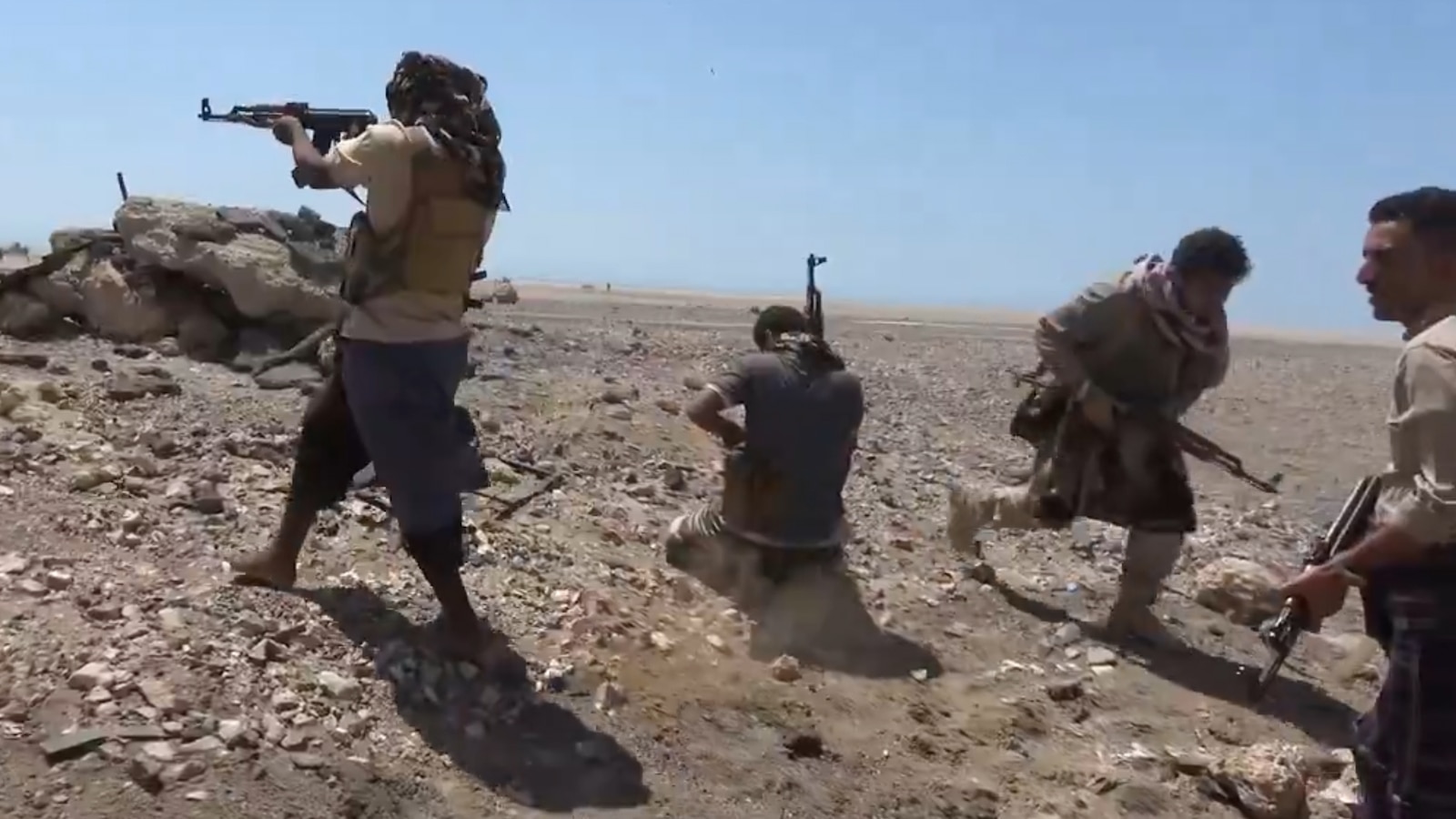
- Fighting between the Houthis and Yemeni government forces backed by Saudi Arabia is likely to continue over the next 0-14 days, but current reporting does not establish who controls key positions around Bab el-Mandeb. Yemeni officials credited the Saudi-led coalition with recapturing Dhubab, Bab and Hadeid, while Yemeni government reporting says Operation Yemen Dawn continues and the Houthis were reported to have captured Mokha and nearby islands last month. The accounts differ on battlefield control and attribution of gains; they are largely claims from parties to the conflict, so confidence is low. (Confidence: low · ASSESSED)
- I&W: Confirm: Yemeni government forces or the Saudi-led coalition report new operations near Dhubab or Bab, or the Houthis report attacks near Bab el-Mandeb. (0-14 days)
- I&W: Break: independent, geolocated reporting verifies a stable transfer of control over Dhubab, Bab or Mokha and no further clashes at those locations. (0-14 days)
- Yemen's renewed fighting is likely to sustain displacement and education disruption over the next 1-3 months. IOM reported more than 184,000 people displaced since early August, while UNICEF reported more than 57,000 children displaced during the first two weeks of September and school closures disrupting education for more than 137,000 students. The UN's earlier estimate of more than 150,000 displaced people was expected to rise. Agency reporting supports the scale of current harm; confidence is medium because future displacement depends on the course of fighting. (Confidence: medium · ASSESSED)
- I&W: Confirm: IOM reports a higher cumulative displacement total or UNICEF reports continued school closures and student disruption in conflict-affected parts of Yemen. (1-3 months)
- I&W: Break: IOM reports sustained returns that reduce the displaced population, while UNICEF documents reopening of schools and resumed attendance in affected areas. (1-3 months)
- A resumption of full-scale US military operations before the November congressional elections is unlikely on current reporting. President Donald Trump linked a possible resumption to the period after the elections, but that statement is not evidence of an execution order. Confidence is low because the assessment rests on one report of the President's remarks and no operational indicators of a decision are reported. (Confidence: low · ASSESSED)
- I&W: Break: the White House or US military announces a decision to resume full-scale operations before the November elections, or verified US strikes occur before then. (0-14 days)
- I&W: Confirm: the White House reiterates post-election timing while reporting identifies no new order to resume operations. (0-14 days)
- A near-term US-Iran diplomatic breakthrough is unlikely on the available evidence. Qatari Foreign Ministry official Ibrahim Al-Hashmi said indirect talks and message exchanges were continuing through Qatar and regional partners, but the reporting does not establish an agreed agenda or progress towards a ceasefire. The account is carried in social-media material and lacks independent confirmation, so confidence is low. (Confidence: low · ASSESSED)
- I&W: Break: Qatar announces a scheduled US-Iran meeting or the parties publicly accept a ceasefire framework. (0-14 days)
- I&W: Confirm: Qatar states that message exchanges have stopped, or US and Iranian officials publicly deny that a channel remains active. (0-14 days)
Outlook & scenarios
Continued conflict with constrained Hormuz traffic (60%)
This is the most likely path over the next 1-3 months. Attacks and coercive actions continue to expose tankers in the Strait of Hormuz, while some oil movement persists. Fighting between the Houthis and Yemeni government forces continues, and displacement in Yemen rises. Qatar's reported message exchanges do not produce a ceasefire.
Limited diplomatic pause (20%)
Qatar's reported contacts develop into a defined US-Iran agenda and a temporary reduction in military activity. Hormuz incidents decline, but the underlying conflict and Yemen fighting remain unresolved. This scenario requires independent confirmation of negotiations, which current reporting does not provide.
Wider military escalation (15%)
The conflict expands through renewed full-scale US operations after the November elections or further attacks on regional shipping and infrastructure. Iran's military officials claim weapons-production capacity has expanded, while President Donald Trump has publicly linked a possible resumption of US operations to the post-election period. Either development would raise the risk of further regional disruption.
Low-probability, high-impact Hormuz traffic shock (5%)
A concentrated sequence of attacks or coercive restrictions halts a substantial share of the 10-14 million barrels per day of petroleum that Vitol's CEO said was moving through the Strait of Hormuz in recent days. Russell Hardy's reported $200-per-barrel oil-price scenario is conditional on Hormuz flows stopping. This outcome is unlikely but would sharply intensify energy and shipping disruption.
Recommendations
- Reconcile UKMTO warnings 156-26 and 157-26 against the On Peace incident using vessel identity, position, timestamp and casualty details from UKMTO, India's Ministry of External Affairs and Omani authorities. Keep the two warnings separate in reporting until that check is complete.
- Maintain a daily Iranian export tracker that distinguishes terminal loadings, vessel departures and ship-to-ship transfers. Record the zero-export claim separately from UANI's estimate of 50,789 barrels per day, and flag new independent data that resolves the discrepancy.
- Require independent, geolocated reporting before assessing control of Dhubab, Bab or Mokha. Attribute claimed gains separately to Yemeni government forces, the Saudi-led coalition and the Houthis.
- Track IOM displacement updates and UNICEF reporting on school closures and student attendance in Yemen. Alert analysts when either agency reports a material change in cumulative displacement or access to education.
- Treat post-election US military action as a contingency, not a decision. Reassess the timing judgment only when the White House or US military reports an operational order or verified action.
Confidence & uncertainty
Confidence is medium because several core developments are supported by credible reporting from UKMTO, India's Ministry of External Affairs, the IMO, IOM, UNICEF and energy-data providers. The main uncertainties are the identity and number of Hormuz attacks, conflicting Iranian export estimates, competing claims about control in Yemen, and the limited reliability of reporting on US-Iran contacts through Qatar.
Intelligence gaps
- [EEI 1.1 · UNCOVERED] Number, type, launch times, and trajectories of ballistic missiles, cruise missiles, armed UAV strikes, and combat-air sorties launched by Iranian or Israeli forces toward the other's territory or forward bases within a 72-hour window. Recommended collection: signals/intel
- [EEI 1.2 · UNCOVERED] Observable changes in Israeli and Iranian force posture: mobilization or reserve call-up orders, unit road/rail movements, dispersal or sortie rates of air squadrons, redeployment of air-defense batteries, and activation of civil-defense alerts or sirens in major population centers. Recommended collection: open-source/media
- [EEI 1.3 · UNCOVERED] Indications of strike authorization or targeting preparations in Iranian or Israeli command chains: authenticated public orders by senior commanders, detected increases in encrypted communications consistent with targeting, or visible movement of strike munitions to launch/storage sites. Recommended collection: signals/intel
- [EEI 2.1 · UNCOVERED] Counts, launch locations (coordinates), weapons types, and assessed damage from rocket/missile/drone strikes originating from Lebanon into northern Israel attributed to Hezbollah or allied groups. Recommended collection: open-source/media
- [EEI 2.2 · UNCOVERED] Reported attacks by Iranian-backed militias in Iraq and Syria: rocket/IED strikes on bases hosting US/coalition or Israeli personnel, documented militia unit movements toward borders, and captured movement or transfer of weapons systems to forward militia positions. Recommended collection: human
- [EEI 2.3 · PARTIAL] Maritime harassment or attacks by proxies (e.g., Houthis): incidents of missile/rocket strikes against commercial vessels, small-boat swarm attacks, discovery or detonation of naval mines, and corresponding AIS anomalies in the Red Sea, Gulf of Aden, or southern Arabian Gulf. Recommended collection: maritime/AIS
- [EEI 3.1 · PARTIAL] Movements and arrival dates of foreign military assets into the region: carrier strike groups, amphibious ships, surface combatants, strategic airlift/tanker deployments, and air/sea patrol patterns by US, European, Russian, or regional militaries. Recommended collection: imagery/satellite
- [EEI 3.2 · PARTIAL] Concrete diplomatic and political actions: emergency UN/Arab League meetings called, official embassy evacuation orders, public declarations of intent to interpose or protect shipping/airspace, and newly announced sanctions or arms-transfer approvals tied to the conflict. Recommended collection: diplomatic
Cited sources
[1] gCaptain · A Dozen Seafarers Injured in Strait of Hormuz Tanker Attack, India Says (C) · 6 October 2026 · sha256:629eca54ff54 [2] gCaptain · IMO Chief Decries Rising Toll on Seafarers Caught in Conflict (C) · 6 October 2026 · sha256:206e12392858 [3] The Maritime Executive · Saudi Bypass Pipeline Quickly Rebounded After Attack, Export Data Shows (C) · sha256:35f4b3aaa01d [4] Tehran Times · Blood, Bombs & Billions (B) · sha256:bde8732e3878 [5] Reuters (republished by gCaptain) · Gulf Oil Flows Rise to Average 81% of Pre-war Rate in September (A) · 6 October 2026 · sha256:6cde5a909a33 [6] gCaptain · Iran’s Offshore Oil Stockpile Nears Exhaustion as Blockade Chokes New Supply (C) · 6 October 2026 · sha256:2b0ab0634033 [7] facebook.com · The conflict continues to escalate between the Iran-backed Houthis and pro-government forces backed by Saudi Arabia. | Trey Yingst (F) · sha256:b310ac711a55 [8] ABC News (republishing Associated Press reporting) · What to know as the fighting in Yemen escalates while US-Iran tensions remain high (A) · 6 October 2026 · sha256:8bad8b760c9e [9] جريدة الشرق (El Sharq Newspaper, Lebanon) · ﻋﻤﻠﻴﺔ «ﻓﺠﺮ اﻟﻴﻤﻦ» ﻣﺴﺘﻤﺮة وﺗﺤﺮﻳﺮ ﻣﻮاﻗﻊ ﺟﺪﻳﺪة ﻣﻦ اﻟﺤ - جريدة الشرق اللبنانية (D) · sha256:eed429fccdc5 [10] Al Jazeera · Yemen’s displaced children dream of returning to school (A) · 7 October 2026 · sha256:c532b3e74def [11] Middle East Eye · Mediator Qatar said the United States and Iran remain engaged in indirect talks aimed at ending the conflict, despite an apparent deadlock seven months into the US and Israel’s war on Iran. “The talks are continuing and the exchange of messages between different parties is continuing via Qatar and the regional partners,” Qatari Foreign Ministry official Ibrahim Al-Hashmi said. | Middle East Eye (E) · sha256:d1b6b90bbe86 [12] Inter Press Service (republished by Global Issues) · Prioritize Multilateralism to Resolve Iran War Deepening Humanitarian Crisis, Says OSF Vice President (B) · 6 October 2026 · sha256:b0c8ff2198f2
Source content hashes were computed at collection time; the cited text is preserved unmodified for the life of this product.
Red cell review: CONCUR WITH COMMENT
TLP:CLEAR