TLP:CLEAR · Disclosure is not limited.
Iran-Israel Conflict: Hormuz Shock and Regional Spillover
Time window: Last 1 day · Audience: General analyst · Type: Situation report · DTG: 2026-08-30 17:40Z · Overall confidence: MEDIUM
BLUF
The conflict is very likely to remain active through the next 0-14 days, with Israeli strikes in southern Lebanon and Gaza, Iranian missile and drone activity, and a tanker strike in the Strait of Hormuz sustaining regional instability. Normal Hormuz traffic is unlikely to return soon, although limited passage through temporary or risk-managed routes remains likely.
Executive summary
As of 30 August 2026, the conflict remains geographically dispersed. Israeli aircraft have struck sites in southern Lebanon, violence continues in Gaza despite a fragile ceasefire, and a tanker was struck in the Strait of Hormuz. Shipping through Hormuz is severely reduced, with only five tankers reported to have transited in the week ending 29 August, while Iran links full reopening to US commitments under a lapsed interim agreement. Diplomatic activity by Iran, Qatar, Iraq, Egypt, Kuwait, Türkiye, Saudi Arabia and Pakistan provides a constraint, but conflicting accounts of the Iran-US negotiating process and the status of Hormuz limit confidence.
Change from previous assessment
Since the 29 August brief, the assessment has shifted towards greater near-term concern over maritime disruption because a tanker was reported struck in the Strait of Hormuz on 30 August. Confidence that shipping will remain severely constrained is unchanged at medium because the new incident strengthens the disruption picture while traffic levels and the degree of closure remain contested. The brief adds a more explicit judgment on continued Israeli activity in southern Lebanon, a low-confidence assessment of sustained pressure on GCC infrastructure, and a separate warning on Gaza and West Bank humanitarian and political spillover.
Key judgments
- The Iran-Israel conflict is very likely to remain active and regionally distributed over the next 0-14 days. The record reports Israeli Air Force strikes on Hezbollah positions in southern Lebanon, including al-Mansouri, Nabatieh al-Fawqa, Wadi al-Hujari and Zawtar al-Sharqiyyeh, separate Israeli strikes in Gaza, Iranian missile and drone strikes against Israel, US bases and Arab countries, and a tanker strike in the Strait of Hormuz. This is an assessed continuation judgment. Confidence is medium because major-media, official and local reporting corroborate activity in several theatres, but the chronology and attribution of some incidents remain incomplete. (Confidence: medium · ASSESSED)
- I&W: A further Israeli strike is reported at al-Mansouri, Zawtar al-Gharbiyeh, Nabatieh al-Fawqa or Wadi al-Hujari, or a new Iranian missile or drone strike targets Israel, a US base or an Arab country, with confirmation from a second source. (0-14 days)
- I&W: Israel, Iran and the United States announce and observe a cessation covering strikes in Iran, Israel, Gaza, southern Lebanon and the Gulf for 14 consecutive days. (0-14 days)
- Normal commercial traffic through the Strait of Hormuz is unlikely to return over the next 0-14 days, while limited negotiated or risk-managed passage is likely to continue. The strait is described as largely closed, only five tankers reportedly transited in the week ending 29 August compared with 130 before the war, and war-risk insurance stood at roughly 7.5-10 percent of hull value. The 30 August tanker strike reinforces the disruption assessment. Confidence is medium because reporting conflicts between claims of full closure and evidence of limited transit, including the temporary Iran-Oman maritime route. (Confidence: medium · ASSESSED)
- I&W: Weekly reporting records five or fewer tanker transits, another vessel strike, or war-risk premiums remaining near 7.5-10 percent of hull value. (0-14 days)
- I&W: Verified tanker traffic rises towards the pre-war level of 130 per week, insurers materially reduce war-risk premiums, and Iran confirms unrestricted commercial passage. (1-3 months)
- Israeli air activity in southern Lebanon is very likely to continue over the next 0-14 days, keeping a broader Israel-Hezbollah confrontation at roughly even chance over the next 1-3 months. The record describes successive strikes near al-Mansouri and Zawtar al-Gharbiyeh, attacks on Hezbollah positions around Nabatieh and Ali al-Taher hill, and a reported Israeli military warning of escalation beginning on the night of 29 August. Hezbollah has also released footage of an explosive drone targeting soldiers at night in southern Lebanon. Confidence is medium, lowered by the mixture of Lebanese National News Agency reporting, blog reporting and lower-reliability social-media claims. (Confidence: medium · ASSESSED)
- I&W: Israeli aircraft strike another Hezbollah-linked position or town in southern Lebanon, or Hezbollah releases new footage of an attack using explosive or thermal-camera drones. (0-14 days)
- I&W: No further Israeli or Hezbollah strikes are reported in southern Lebanon for 14 consecutive days, alongside a confirmed halt to the Israeli Northern Command escalation warning. (0-14 days)
- Iran and Iran-backed groups are likely to sustain pressure on non-military infrastructure across the six GCC countries over the next 1-3 months. ACLED reporting attributes at least 172 attacks since 28 February, including a 27 July drone strike on Saudi Aramco's Abqaiq processing complex, which processes more than seven million barrels per day. Reporting on repeated attacks against Qatar's Ras Laffan Industrial City is single-source and low confidence, so confidence in the broader continuation judgment is low. (Confidence: low · ASSESSED)
- I&W: ACLED or a second reliable source records another attack on Saudi Aramco's Abqaiq processing complex or Qatar's Ras Laffan Industrial City. (0-14 days)
- I&W: Three consecutive months pass without a newly reported attack on non-military infrastructure in any GCC country. (1-3 months)
- Iran is likely to continue diplomatic signalling while retaining the Strait of Hormuz and economic pressure as bargaining leverage over the next 1-3 months. Mojtaba Khamenei has called for Muslim unity among Gulf states, Iran was reported to be intensifying truce efforts, and Qatar, Türkiye and Iraq have pursued de-escalation contacts. At the same time, Iran says full Hormuz reopening depends on US commitments. Confidence is low because claims of June memoranda ending or structuring the war conflict with late-August reporting that the talks remain unclear or at an impasse. (Confidence: low · ASSESSED)
- I&W: Iran and the United States announce a direct negotiating session with named representatives and published terms addressing the June memoranda, sanctions and Hormuz access. (0-14 days)
- I&W: Iran reopens Hormuz without the US commitments currently cited by Tehran, or ends the temporary maritime arrangement with Oman and announces further restrictions. (0-14 days)
- Humanitarian and local political pressures are likely to compound regional instability over the next 1-3 months. In Gaza, 59 percent of the population faces crisis-level food insecurity or worse, 1.9 million Palestinians remain displaced, fuel shortages affect hospitals and water infrastructure, and violence has continued despite a fragile ceasefire. In the West Bank, the UN reports 80 Palestinian and three Israeli deaths this year, while unrest in Qusra and the withholding of more than $6 billion in Palestinian revenues threaten local stability and public services. Confidence is medium because the humanitarian and West Bank reporting comes mainly from official or major-media sources, although the reporting periods and casualty methodologies differ. (Confidence: medium · ASSESSED)
- I&W: New official reporting records additional killings during the Gaza ceasefire, a rise above 59 percent in crisis-level food insecurity, or further displacement beyond 1.9 million Palestinians. (0-14 days)
- I&W: Further Israeli settler confrontations occur in Qusra or another West Bank locality while Palestinian revenues remain withheld and public services face additional disruption. (1-3 months)
Outlook & scenarios
Continued regionalised attrition (55%)
Israeli strikes in southern Lebanon and Gaza continue, Iran sustains missile and drone pressure, and violence persists around the Gaza ceasefire. Hormuz remains largely closed, with a small number of tankers using temporary or risk-managed routes. Diplomatic contacts continue without resolving the dispute over US commitments or the June memoranda.
Conditional de-escalation and constrained passage (30%)
Qatar, Iraq, Egypt, Kuwait and Türkiye intensify contacts with Iran and the United States. Iran and the United States resume substantive talks, while Oman-linked arrangements permit limited commercial passage through Hormuz. Israeli and Hezbollah activity declines but does not end, and Gaza remains subject to humanitarian pressure.
Widening Gulf or Lebanon front (10%)
Further strikes in southern Lebanon coincide with additional attacks on GCC infrastructure or commercial shipping. The first Saudi Arabia, Türkiye and Pakistan defence-pact meeting gives greater operational weight to the collective-defence framework, increasing pressure on the United States, Iran and Gulf governments to clarify their responses.
Wildcard: attack on a defence-pact signatory (5%)
A high-impact wildcard is a further attack on Saudi Arabia, including the Abqaiq processing complex, followed by invocation of the Mecca Joint Defence Agreement. The agreement treats an armed attack on one signatory as an attack on all three, but the publicly released text does not specify the military commitments that would follow. The resulting uncertainty would raise the chance of direct Turkish or Pakistani involvement in the regional conflict.
Recommendations
- Maintain a daily Strait of Hormuz tracker that records tanker transits, vessel strikes, the Iran-Oman temporary route, reported mine clearance and war-risk insurance premiums. Treat claims of full closure as approximate until transit data confirms them.
- Prioritise source validation for the 30 August tanker strike. Establish the vessel identity, location, damage, attacker attribution and whether the incident altered the number of ships using the strait.
- Track Israeli Air Force activity at al-Mansouri, Zawtar al-Gharbiyeh, Nabatieh al-Fawqa, Wadi al-Hujari and Ali al-Taher hill. Compare Lebanese National News Agency reporting, Israeli military statements and Hezbollah releases before assessing a broader Lebanon front.
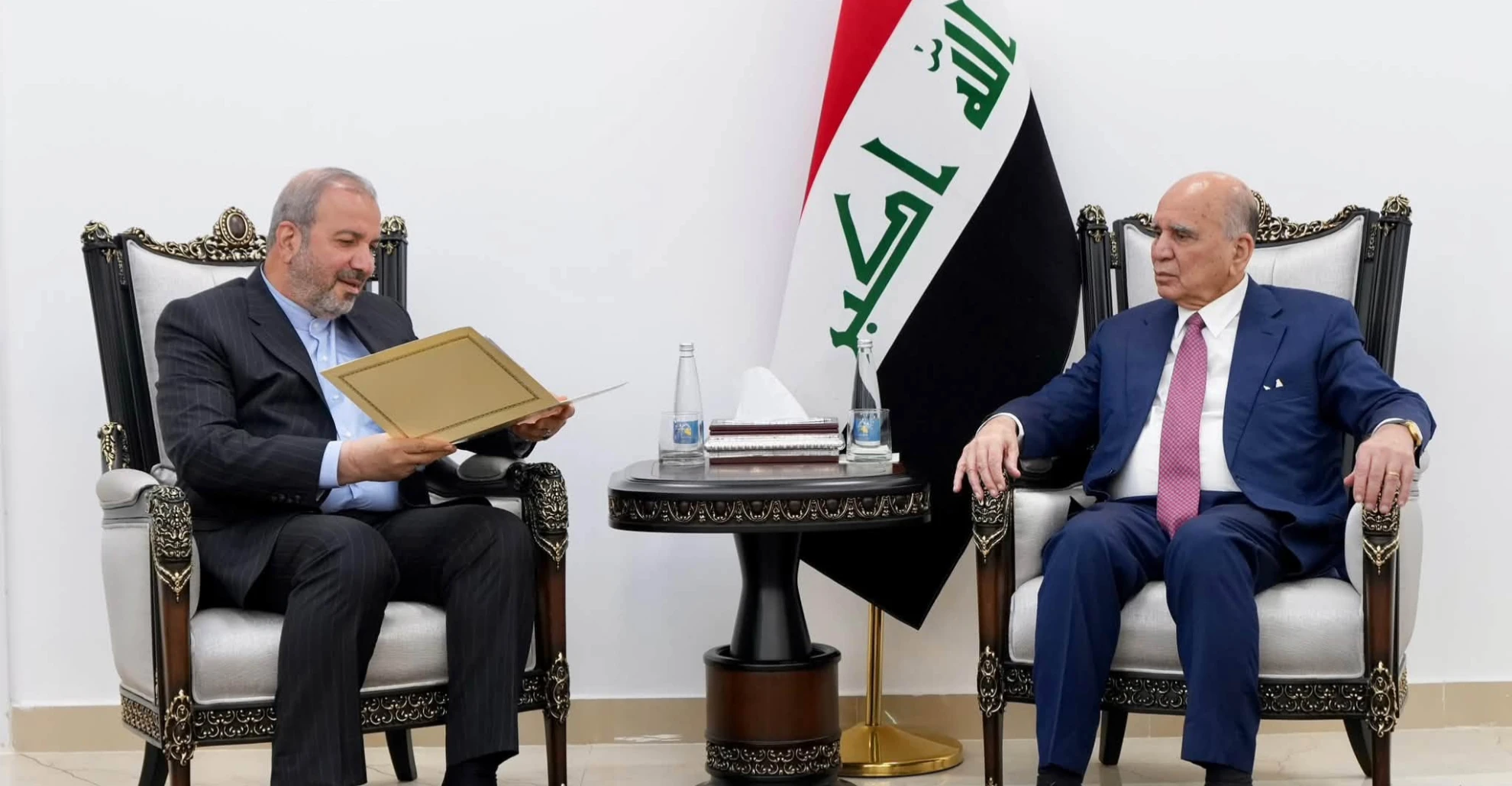
- Maintain a separate Iran-US diplomacy log covering the June memoranda, Iranian conditions for reopening Hormuz, Qatar's contacts with Tehran and Türkiye, and the Baghdad channel between Abbas Araghchi and Fuad Hussein. Do not treat the reported memoranda as proof of a current peace settlement.
- Monitor Saudi Arabia's Abqaiq processing complex and Qatar's Ras Laffan Industrial City as priority infrastructure indicators. Record new attacks separately from older incidents and label the Ras Laffan reporting as low-confidence until independently corroborated.
- Use a source-tiered humanitarian dashboard for Gaza and the West Bank. Track food insecurity, displacement, fuel access, deaths during the Gaza ceasefire, Qusra unrest and withheld Palestinian revenues while preserving the different reporting periods and casualty definitions.
Confidence & uncertainty
Overall confidence is medium. Multiple official-government and major-media sources corroborate continuing Israeli activity in Gaza and southern Lebanon, severe disruption in the Strait of Hormuz, Iranian and regional diplomatic activity, and humanitarian pressure in Gaza and the West Bank. Confidence is lower for the precise status of the Iran-US negotiating process, the attribution of some attacks, the operational meaning of the Mecca defence pact and claims drawn from blogs, social media or reference works. Conflicting reports on whether Hormuz is fully closed or partially open remain the main immediate uncertainty.
Intelligence gaps
- [EEI 1.1 · UNCOVERED] Observed repositioning, sustained increases, or new forward basing of Iranian conventional or IRGC forces (armored units, missile batteries, aircraft, naval vessels) toward borders or regional launch points. Recommended collection: IMINT/satellite
- [EEI 1.2 · UNCOVERED] Hezbollah or other Iran-aligned proxy forces conducting mass mobilization, visible rocket/artillery emplacements, cross-border firing incidents, or preparations for cross-border operations from Lebanon, Syria, Iraq or Yemen. Recommended collection: HUMINT/ground ISR
- [EEI 1.3 · PARTIAL] Detection of increased missile/rocket/torpedo launch events attributable to Iran, Israel, or proxies (launch signatures, trajectories, impact points) indicating a sustained campaign rather than isolated strikes. Recommended collection: SIGINT/IMINT/air-defense radar
- [EEI 1.4 · UNCOVERED] Interdicted or observed shipments (air, sea, land manifests, seizures, satellite imagery of transfers) of advanced weapons or missile components from Iran toward proxy groups or forward staging points. Recommended collection: maritime/AIS
- [EEI 2.4 · UNCOVERED] Rapid increases in war-risk insurance premiums for Middle East routes, shipping company advisories to avoid region, or major charter cancellations tied to the conflict. Recommended collection: financial/open-source
- [EEI 3.2 · UNCOVERED] Official expedited arms transfers, basing/overflight agreements, or declarations of operational support (formal government announcements, defense ministry releases, logistics flight manifests). Recommended collection: open-source/diplomatic
- [EEI 3.3 · UNCOVERED] Embassy evacuations, large-scale personnel movements, issuance of government travel bans/advisories, or multinational security alerts affecting foreign nationals and diplomatic posture in the region. Recommended collection: diplomatic/open-source
Cited sources
[1] HamerIntel · Israel–Hezbollah Cross-Border Strikes Expand as Air Force Hits Deep Into Southern Lebanon (E) · sha256:ec2866079148 [2] Sunday Guardian Live · US-Israel-Iran War Latest Live News: Iran Parliament Speaker Ghalibaf Hits Back at Bessent Over ‘Economic Outcast’ Claims, Cites $130 Billion War Costs (B) · sha256:afe6da5a0cc0 [3] Wikipedia · Reactions to the 2026 Iran war (C) · sha256:9e483c76f25f [4] Sunday Guardian Live · US-Israel-Iran War Latest News: Netanyahu Condemns Rioters Amid Escalating West Bank Settler Violence As Middle East Conflict Intensifies (B) · sha256:7f65c95e5360 [5] The Jerusalem Post · Live Updates: Latest from Israel, Iran, and the Middle East | The Jerusalem Post (B) · sha256:8c057080e310 [6] Al Jazeera · Mapping Iran war’s strikes on Gulf energy and its impact on future of oil (A) · sha256:241152272e20 [7] Fair Value (Buttondown newsletter) · Fair Value, Saturday, August 29, 2026 (E) · sha256:278fdc450023 [8] hamerintel.com · Iran’s Slowdown in Hormuz Ship Attacks Eases Pressure but Leaves Oil Flows Exposed (D) · sha256:575e2e223990 [9] The News International (thenews.pk, TNS/Dialogue section) · Collective security | Dialogue | thenews.pk (B) · sha256:0b5e11564ec5 [10] بوابة الهدف الإخبارية (Hadaf News Portal, Telegram channel) · بوابة الهدف الإخبارية 🇵🇸 (E) · sha256:7138a1e94f3a [11] The Jerusalem Post · Saudi Arabia, Turkey, Pakistan to hold first meeting under new defense pact in Istanbul (A) · sha256:0ff777c69759 [12] Shafaq News · Shafaq News.Iran’s Araghchi sends message to Iraqi FM (D) · sha256:3195422b02ff [13] Middle East Eye · Egypt, Kuwait urge return to US-Iran negotiations, de-escalation (B) · sha256:ae1261c4bf75 [14] Wikipedia · 2025–2026 Iran–United States negotiations (C) · sha256:51f0c9595190 [15] UK Government (gov.uk) · Both parties must fulfil their commitments under Resolution 2803 and refrain from actions that undermine peace: UK statement at the UN Security Council (A) · sha256:22593220c0b4 [16] Sunday Guardian Live · US-Israel-Iran War Latest News: Netanyahu Condemns Rioters Amid Escalating West Bank Settler Violence As Middle East Conflict Intensifies (B) · sha256:28ccbbb26244
Source content hashes were computed at collection time; the cited text is preserved unmodified for the life of this product.
TLP:CLEAR