TLP:CLEAR · Disclosure is not limited.
Iran-Israel Conflict: Lebanon Escalation and Hormuz Disruption
Time window: Last 1 day · Audience: General analyst · Type: Situation report · DTG: 2026-08-27 14:37Z · Overall confidence: HIGH
BLUF
Israeli airstrikes and a ground incursion in southern Lebanon on 27 August indicate that regional spillover is widening, while Iran continues to describe the Strait of Hormuz as closed despite reported talks with Oman. The most likely outlook is persistent conflict with controlled but severe disruption to maritime traffic, rather than a comprehensive settlement.
Executive summary
Israeli forces conducted strikes across southern Lebanon and entered Mays al-Jabal with tanks and military bulldozers on 27 August. Gaza's ceasefire and demilitarisation process remains under pressure from continued Israeli strikes, Hamas military regeneration and competing implementation demands. Iran and Oman have announced elements of a Hormuz arrangement, including revenue sharing and mine clearance, but Iran's Deputy Foreign Minister still describes the strait as closed and Iran continues to impose conditions on shipping. Israel-Turkey friction over Syria is also continuing alongside diplomatic contacts intended to prevent clashes.
Change from previous assessment
Since the 26 August brief, the assessment has added a same-day Israeli ground entry into Mays al-Jabal and a wider set of strikes across southern Lebanon, raising the regional spillover judgement from likely to very likely. The Hormuz judgement remains that limited access is likely but full reopening is unlikely, with the new reporting adding a claimed Iran-Oman mine-clearance project while Iran's Deputy Foreign Minister still describes the strait as closed. The brief also adds a distinct judgement on continuing Israel-Turkey friction over Syria, alongside limited diplomatic deconfliction. The Gaza assessment is unchanged in direction, but current reporting of another strike against displaced Palestinians reinforces the expectation of sustained ceasefire pressure.
Key judgments
- Israeli operations in southern Lebanon are very likely to continue through the next 0-14 days, including airstrikes and limited ground incursions. On 27 August, Israeli forces reportedly entered Mays al-Jabal with tanks and military bulldozers, burned homes and uprooted agricultural tents, and struck Haris, Mansouri, Mayfadoun, Zawtar al-Sharqiyah, Srebbine, Arob Salim and Ali Al Taher Hill. Reporting also links the strikes to Israeli allegations that Hezbollah launched two explosive drones at Israeli troops. This is an assessed continuation judgement, supported by multiple same-day major-media reports. (Confidence: high · ASSESSED)
- I&W: Confirmation: Israeli forces conduct another reported armoured ground entry or airstrike in southern Lebanon within 14 days. (0-14 days)
- I&W: Break: Israel and Hezbollah announce a cessation of fire and no Israeli strikes or ground entries are reported for 14 consecutive days. (0-14 days)
- A conditional Iran-Oman mechanism for access through the Strait of Hormuz is likely to remain incomplete, and unrestricted reopening is unlikely during the next 0-14 days. Iran's military and the IRGC report revenue-sharing and water-sharing arrangements, while Iran's Deputy Foreign Minister says the strait remains closed, Iran states that reopening requires more than a deal with Oman, and Oman opposes transit fees. The record also reports a joint mine-clearance project and alleged US obstruction. The evidence supports agreement at the announcement level, but implementation remains unverified and contested. Confidence is medium because the reporting contains direct policy contradictions and relies partly on statement-based major-media coverage. (Confidence: medium · ASSESSED)
- I&W: Confirmation: Iran and Oman publish a route map, vessel eligibility rules and mine-clearance procedures, followed by commercial ships transiting under those rules. (0-14 days)
- I&W: Break: Iran announces unrestricted commercial access without Iranian permission, surveillance or fees, and major carriers resume regular Hormuz sailings. (0-14 days)
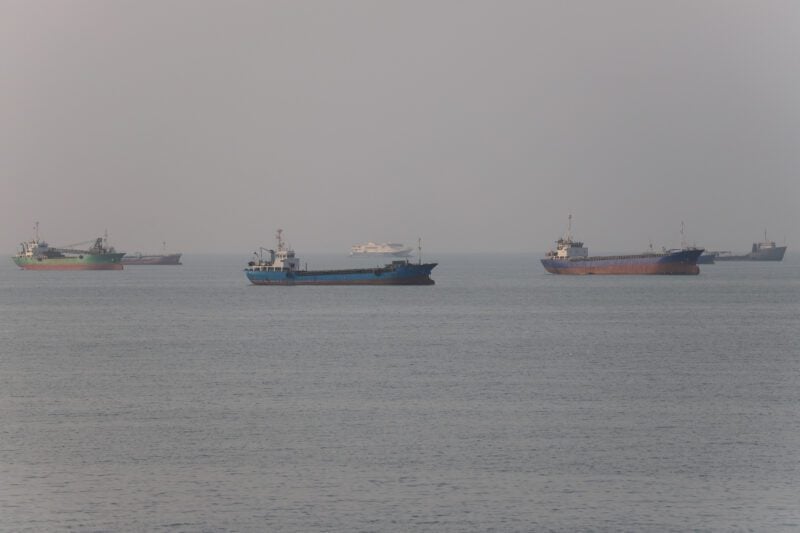
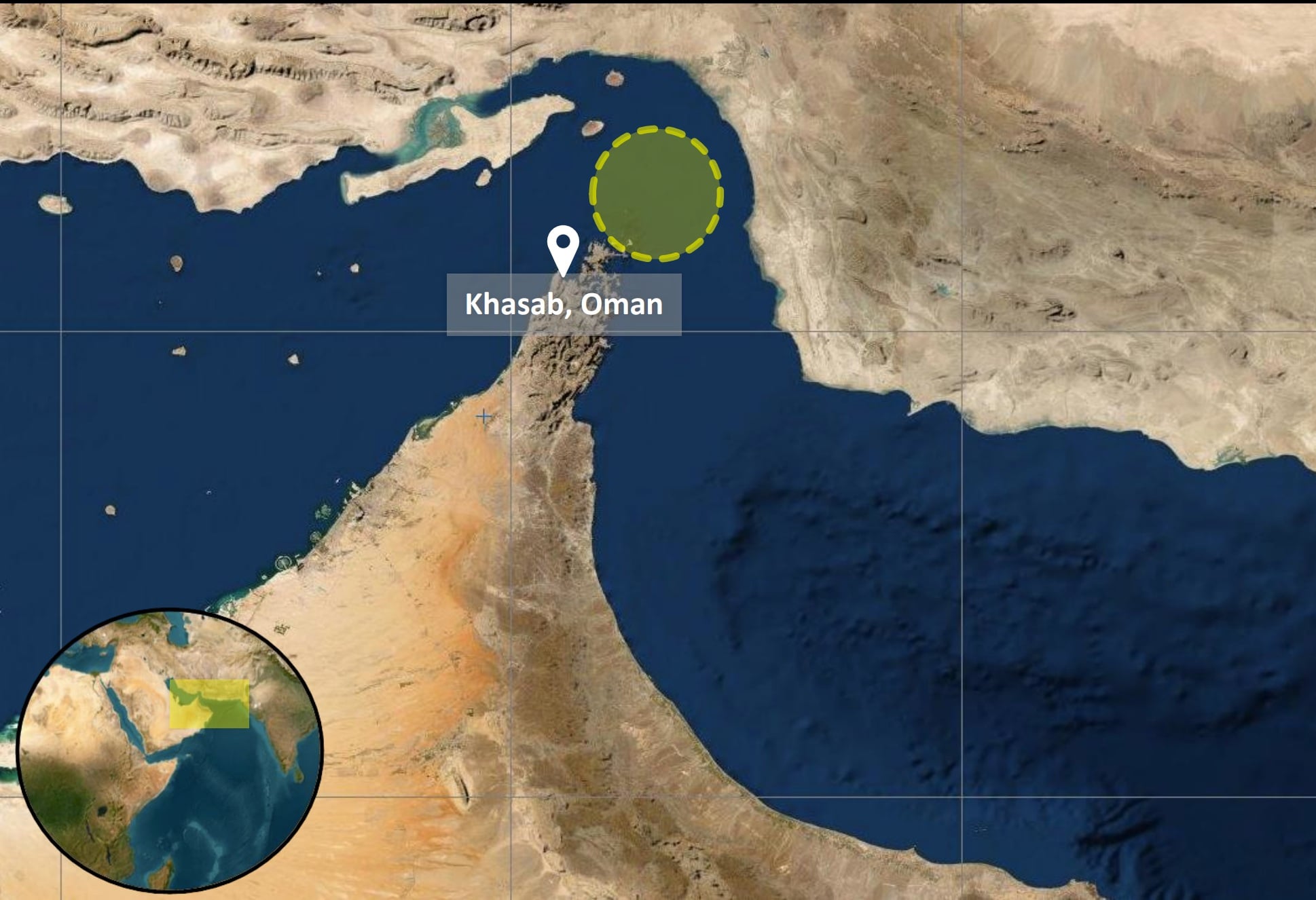
- Severe and incomplete disruption to commercial shipping through the Strait of Hormuz is very likely to persist during the next 0-14 days. UKMTO received a report that an oil tanker was hit on 25 August, Iran has blocked vessels and published a list of 45 ships it says violate its rules, US forces have redirected 71 commercial ships, and about 20 Iranian oil tankers are reported off Sri Lanka. War-risk insurance has risen to 7.5-10 per cent of hull value. The mine picture remains disputed because US President Donald Trump claimed that all mines had been cleared, while Iranian statements and other reporting describe mine threats and mine-clearance activity. Confidence is medium because some shipping and incident entries carry inconsistent 2023 and 2026 dates. (Confidence: medium · ASSESSED)
- I&W: Confirmation: UKMTO reports another tanker incident, or Iran adds named commercial vessels to its 45-vessel enforcement list. (0-14 days)
- I&W: Break: Iran removes its vessel restrictions and commercial carriers report seven consecutive days of regular Hormuz transits without attacks, diversions or new mine warnings. (0-14 days)
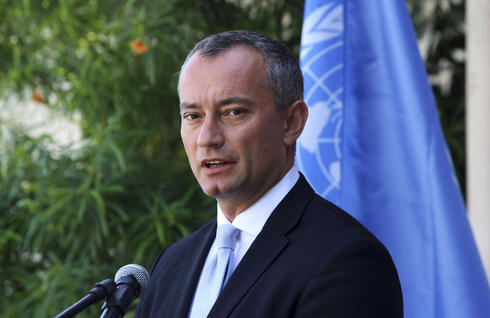
- The Gaza ceasefire and demilitarisation process is likely to remain under severe strain over the next 1-3 months. Israeli strikes continue despite the ceasefire, IDF Chief of Staff Eyal Zamir has stated that the campaign against Hamas will not ease before Gaza is demilitarised, and reporting describes Hamas rebuilding infrastructure and recruiting between 10,000 and 15,000 new members. Nickolay Mladenov has warned that the gap between ceasefire terms and events on the ground threatens the process. Confidence is medium because some casualty figures come from Hamas-run authorities and the record contains inconsistent chronology, although the core reporting on continued strikes and the demilitarisation dispute is corroborated by major media and official statements. (Confidence: medium · ASSESSED)
- I&W: Confirmation: Israel reports another strike in Gaza while Eyal Zamir maintains that operations continue until Hamas weapons are decommissioned. (0-14 days)
- I&W: Break: Verified decommissioning of Hamas weapons is followed by the start of a phased IDF withdrawal from Gaza. (1-3 months)
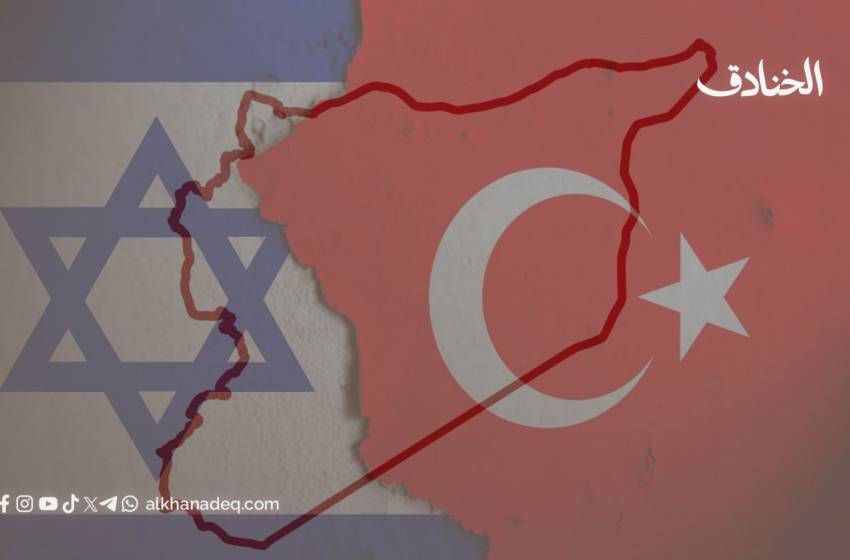
- Israel-Turkey friction over Syria is likely to continue alongside limited diplomatic deconfliction over the next 1-3 months. Israeli forces entered Turnejeh in Quneitra governorate and reportedly shelled and entered locations near the occupied Golan Heights on 27 August. Israel has also conducted attacks and ground raids in southern Syria, regards Turkish military involvement as a concern, and has targeted Syria repeatedly. Azerbaijan has hosted Israel-Turkey talks, while other reporting describes efforts to reduce tensions. Confidence is medium because the operational reporting is supported by major media, but the explanations for Israeli actions and the extent of Turkish military activity rely partly on contested think-tank reporting. (Confidence: medium · ASSESSED)
- I&W: Confirmation: Israeli forces conduct another strike or ground entry in southern Syria, or Israeli officials identify Turkish radar or air-defence deployments as an operational target. (0-14 days)
- I&W: Break: Azerbaijan hosts another Israel-Turkey round and both governments announce an operational incident-prevention mechanism that is followed by no reported cross-border military incident for 30 days. (1-3 months)
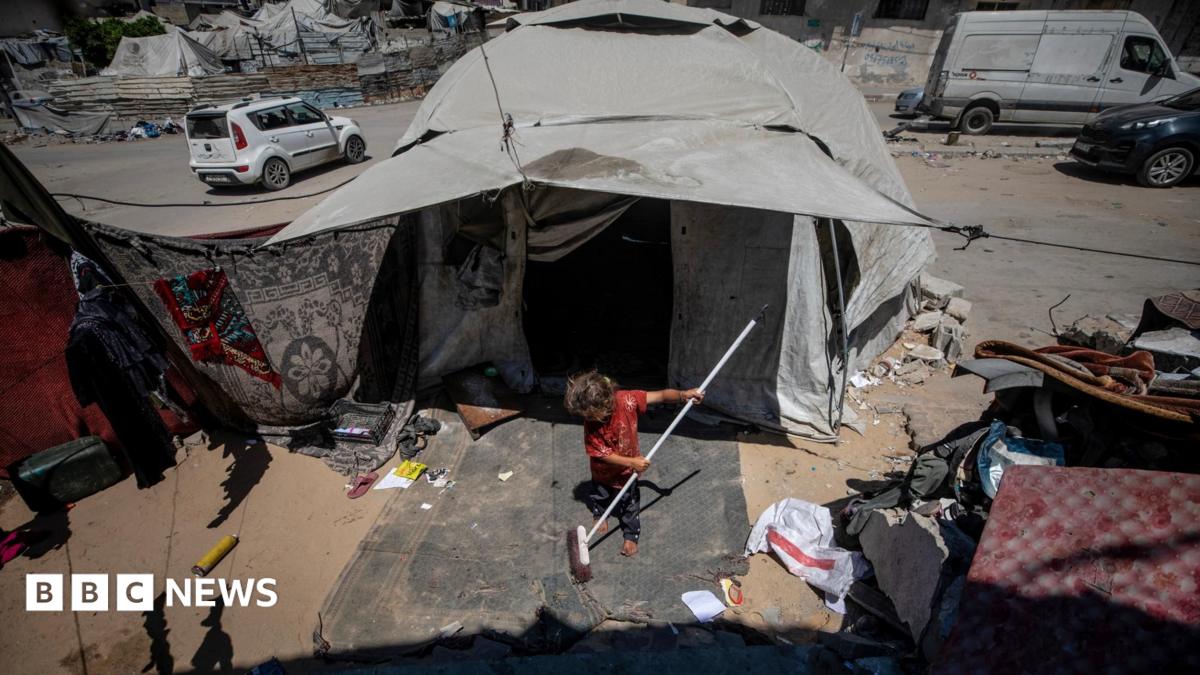
- Humanitarian conditions in Gaza and Lebanon are very likely to remain severe over the next 1-3 months. The UK Government reports that 1.9 million Palestinians remain displaced in Gaza and that 59 per cent of Gaza's population faces crisis-level food insecurity or worse. Reporting on Lebanon describes more than one million displaced people, 4,350 deaths and more than 12,307 injuries since 2 March 2026. Continued Israeli strikes in Gaza and southern Lebanon sustain the conditions behind these figures. Confidence is medium because the Gaza indicators come from a high-reliability official source, while the Lebanon figures and some casualty reporting rely on lower-confidence or conflict-affected reporting. (Confidence: medium · ASSESSED)
- I&W: Confirmation: Displacement in Gaza remains close to 1.9 million and food insecurity remains at or above 59 per cent during the next reporting cycle. (1-3 months)
- I&W: Break: Gaza displacement falls materially below 1.9 million and food insecurity falls below 59 per cent while Israeli strikes in Gaza and southern Lebanon decline. (1-3 months)
Outlook & scenarios
Persistent conflict with contained regional spillover (55%)
This is the most likely path. Israeli strikes continue in southern Lebanon, Gaza and Syria, while Iran maintains a conditional closure posture in Hormuz. Iran-Oman contacts continue without producing unrestricted access. Regional diplomacy limits direct escalation between Israel and Turkey but does not stop military incidents.
Controlled maritime deconfliction (30%)
Iran and Oman convert their announced arrangements into a monitored transit system, with mine-clearance activity and vessel permissions defined in writing. Commercial traffic resumes in a controlled fashion, but Israeli operations in Lebanon and Gaza continue and wider political tensions remain.
Regional widening through energy infrastructure (15%)
This is an unlikely but high-impact outcome. Iranian forces or aligned actors extend attacks to energy targets beyond the Strait of Hormuz. Israel intensifies operations in Lebanon and Syria, and maritime escorts, diversions and insurance restrictions expand across adjacent routes.
Diplomatic stabilisation and partial reopening (15%)
A diplomatic track secures verified Hamas weapons decommissioning and begins a phased IDF withdrawal from Gaza. Iran and Oman implement a limited Hormuz arrangement, reducing tanker diversions and insurance pressure. The outcome requires sustained compliance from Israel, Hamas, Iran and Oman.
Recommendations
- Treat the Strait of Hormuz as conditionally accessible rather than open for operational planning during the next 14 days. Require route-specific confirmation from maritime authorities before assessing any tanker movement as normal.
- Maintain a daily incident log for southern Lebanon, Gaza and southern Syria. Separate reports dated 27 August 2026 from entries carrying 2023 dates, and record location, unit, platform, reported target and casualty detail separately.
- Place the Mays al-Jabal ground entry, further Israeli armoured movements, additional tanker incidents and any Iranian additions to the 45-vessel list on the immediate warning watchlist.
- Track Iran-Oman communiques for four implementation details: permitted vessel categories, Iranian monitoring rules, fee arrangements and mine-clearance responsibilities. Treat the arrangement as unimplemented until commercial transits confirm it.
- Monitor the Gaza process against two decision points: verified Hamas weapons decommissioning and the start of phased IDF withdrawal. Continued Israeli strikes or further Hamas recruitment should trigger a reassessment of ceasefire viability.
- Track Israeli and Turkish activity in Syria separately from the Iran-Israel conflict. Prioritise reports of Turkish radar or air-defence deployments, Israeli strikes near Turkish-linked positions and any Azerbaijan-hosted deconfliction meeting.
- Update humanitarian reporting at least weekly using displacement, food insecurity, deaths and injuries as separate measures. Do not combine Gaza and Lebanon figures into a single casualty estimate.
Confidence & uncertainty
Overall confidence is high for the occurrence of the main developments because official-government, wire-service and major-media reporting independently covers the 27 August Israeli operations in Lebanon, the 25 August tanker incident and Gaza humanitarian conditions. Confidence is lower for the status of the Iran-Oman mechanism and for the exact chronology of some Hormuz and Gaza reporting, where dated entries conflict or rely on single-source statements.
Intelligence gaps
- [EEI 1.1 · PARTIAL] Detection and characterization of ballistic/cruise missile or rocket launches originating from Iranian territory or from Iran-controlled positions in Iraq/Syria (time, launch coordinates, missile type, flight trajectory/impact area). Recommended collection: satellite/imagery
- [EEI 1.2 · PARTIAL] Movements and posture changes of Iran-backed proxy forces (Hezbollah units in Lebanon, militias in Syria/Iraq): concentrations of personnel, transport of rocket/artillery launchers, visible logistics build-up within operational range of Israel. Recommended collection: human/intel
- [EEI 1.3 · PARTIAL] Israeli defensive and offensive posture changes: reservist call-ups, mobilization orders, sorties/airstrikes attributed to Israel, and domestic activation of missile-defense systems (locations and activation times). Recommended collection: open-source/media
- [EEI 1.4 · UNCOVERED] Evidence of pre-positioning or arming of naval mines, fast attack craft, or anti-ship missile systems in the Gulf of Oman, northern Arabian Sea, or off the Lebanese/Syrian coasts that could be used to interdict Israeli or allied shipping. Recommended collection: maritime/AIS
- [EEI 2.1 · UNCOVERED] Movements and tasking changes of external military assets: carrier strike groups, amphibious ready groups, expeditionary air wings, or ballistic-missile defense units into the Eastern Mediterranean, Persian Gulf, or Red Sea (vessel/aircraft IDs, routing, on-station times). Recommended collection: maritime/AIS
- [EEI 2.2 · PARTIAL] Formal diplomatic/military actions: evacuation orders or embassy closures, public troop posture statements, bilateral/multilateral defense commitments announced, requests for overflight or basing rights in regional states. Recommended collection: diplomatic
- [EEI 2.3 · UNCOVERED] Changes to force protection or alert levels at foreign bases in the region (e.g., US bases in Kuwait, Qatar, UAE; Russian bases in Syria): activation of additional air defenses, curfews, or reinforcement shipments (personnel/equipment manifests). Recommended collection: signals/intel
- [EEI 3.1 · PARTIAL] Incidents against commercial vessels: attacks, seizures, mine strikes, or forced rerouting of tankers and bulk carriers in the Strait of Hormuz, Bab al-Mandeb, Red Sea, or eastern Mediterranean (vessel names/IMO, location, damage/impairment). Recommended collection: maritime/AIS
- [EEI 3.2 · PARTIAL] Changes in crude oil and refined product flows from key terminals (reported tanker loading delays, terminal closures, throughput volumes at Kharg, Mina al-Ahmadi, Ras Tanura, and major Gulf ports compared to baseline). Recommended collection: commercial/ports
- [EEI 3.3 · UNCOVERED] Market and insurance indicators: sudden spikes in war-risk or hull insurance premiums for Middle East routes, large moves in regional FX/stock indices, and notable changes in commodity futures (oil, freight rates) tied to regional risk perceptions. Recommended collection: financial/transactional
Cited sources
[1] thenationalnews.com · Israel strikes Syria and Lebanon despite US-brokered diplomacy (A) · sha256:245f5c41b739 [2] aljazeera.net · إسرائيل تكثف غاراتها على جنوب لبنان وتتوسع برا في ميس الجبل (A) · sha256:36b165f99602 [3] The Jerusalem Post · Live Updates: Latest from Israel, Iran, and the Middle East | The Jerusalem Post (A) · sha256:f6e0e1f5c115 [4] Associated Press · Regional powers seek off-ramp from Iran war, and other Middle East developments (A) · sha256:145ef90faa7e [5] gcaptain.com · Iran, Oman Agree to Share Strait of Hormuz Revenue (B) · sha256:6daef8156ec8 [6] Al Jazeera · Why Hormuz remains high risk for ships despite US claims of mine-clearing (A) · sha256:12d9a013e5e6 [7] cnn.com · ‘We will retaliate like an earthquake:’ How Iran could respond to Trump’s economic ‘D-Day’ | CNN (A) · sha256:e2532a4d79dc [8] maritime-executive.com · Tanker Hit By "Unknown Projectile" in Strait of Hormuz (B) · sha256:7019d36379fe [9] alwatan-aljadeed.com · أسطول إيران محاصر جنوب سريلانكا. 20 ناقلة بلا طريق للعودة – وكالة الوطن الجديد (B) · sha256:eea0264a0ae5 [10] ynetnews.com · Trump’s top Gaza official warns Israeli strikes could derail ceasefire and Hamas disarmament (B) · sha256:3650ab713e59 [11] bbc.co.uk · Board of Peace's Gaza envoy criticises Israeli strikes and Hamas actions (A) · sha256:560200a8e9f9 [12] Haaretz · 'Israel is sending armed Gaza militias to commit war crimes – and I have to protect them' (A) · sha256:a212bea29221 [13] jpost.com · Turkey may view Israel as its regional rival after strikes in Syria - analysis (B) · sha256:3cc21b7f9162 [14] alkhanadeq.com · ما بعد أبو الظهور: هل تستطيع "إسرائيل" احتواء تركيا دون مواجهتها؟ (C) · sha256:1bd6c938522e [15] jpost.com · Israeli arms, Iranian drones, Turkish oil: Azerbaijan’s high-stakes balancing act (B) · sha256:205146a77c09 [16] jpost.com · US Ambassador Barrack has a unique position, balancing work in Syria, Turkey, Iraq - analysis (B) · sha256:1c2b1ca0bfe5 [17] UK Government · Both parties must fulfil their commitments under Resolution 2803 and refrain from actions that undermine peace: UK statement at the UN Security Council (A) · sha256:22593220c0b4
Source content hashes were computed at collection time; the cited text is preserved unmodified for the life of this product.
Red cell review: CONCUR WITH COMMENT
TLP:CLEAR