TLP:CLEAR · Disclosure is not limited.
Iran-Israel Conflict: Maritime Attacks and Regional Spillover Risks
Time window: Last 1 day · Audience: General analyst · Type: Situation report · DTG: 2026-09-21 22:42Z · Overall confidence: HIGH
BLUF
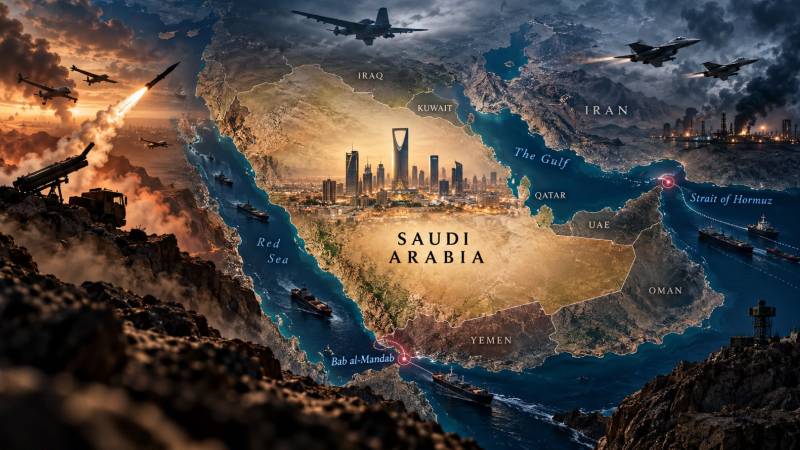
The US-Israel-Iran war is very likely to remain coercive over the next 0-14 days, with Iran threatening wider retaliation, tanker attacks continuing in the Strait of Hormuz and Houthi forces tightening pressure near the Bab el-Mandeb. Hormuz remains severely constrained but operationally open to selected traffic, while rising diesel prices and new UK support for Saudi air operations increase the risk of broader regional and economic disruption.
Executive summary
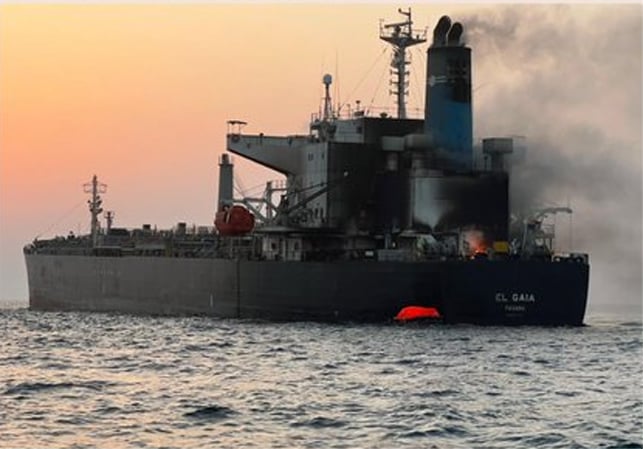
Reporting on 21 September indicates simultaneous pressure across Iran, the Strait of Hormuz and Yemen. Iran's military command warned of a broader response to renewed US strikes, while two tankers were hit in Hormuz and an IRGC statement claimed the destruction of a US MQ-1 drone. Commercial traffic remains sharply below pre-war levels, although oil continues to move through US-protected corridors and ship-to-ship transfers in the Gulf of Oman. Houthi forces have advanced towards the Bab el-Mandeb, prompting the UK to deploy an RAF Voyager to refuel Saudi aircraft. Diplomatic channels remain active through Pakistan, Oman and Qatar, but Iranian preconditions and mixed US messaging make a comprehensive agreement unlikely in the near term.
Change from previous assessment
Since the 20 September brief, the assessment has shifted towards a higher near-term maritime and regional spillover risk. New reporting describes two tanker incidents in the Strait of Hormuz, an IRGC claim that it destroyed a US MQ-1 drone, Houthi advances towards the Bab el-Mandeb and a UK decision to deploy an RAF Voyager to refuel Saudi aircraft. The assessment that Hormuz will remain constrained but partially open remains in place, with medium confidence because vessel counts conflict. The diplomatic judgment remains that contacts will continue but a comprehensive agreement is very unlikely. Initial confidence in the core event picture remains high, while attribution of the tanker attacks and the precise scale of maritime traffic remain unresolved.
Key judgments
- The US-Israel-Iran war is very likely to remain unresolved and coercive over the next 0-14 days. Donald Trump is considering negotiation, continued blockade or wider offensive operations, while Iran's military command has warned that renewed US aggression would change the weaponry and geography of the conflict. Mohsen Rezaei has separately threatened strikes on US bases and interests in the region. Mike Waltz's statement that the door remains open to negotiations indicates that Washington's policy signals are mixed rather than settled. (Confidence: medium · ASSESSED)
- I&W: Confirmation: US forces conduct a new strike on Iran, or Iran announces a change in weaponry and geography followed by attacks on US bases or interests. (0-14 days)
- I&W: Break: Washington and Tehran announce a formal negotiating session accompanied by a halt in new strikes and Iranian military threats. (0-14 days)
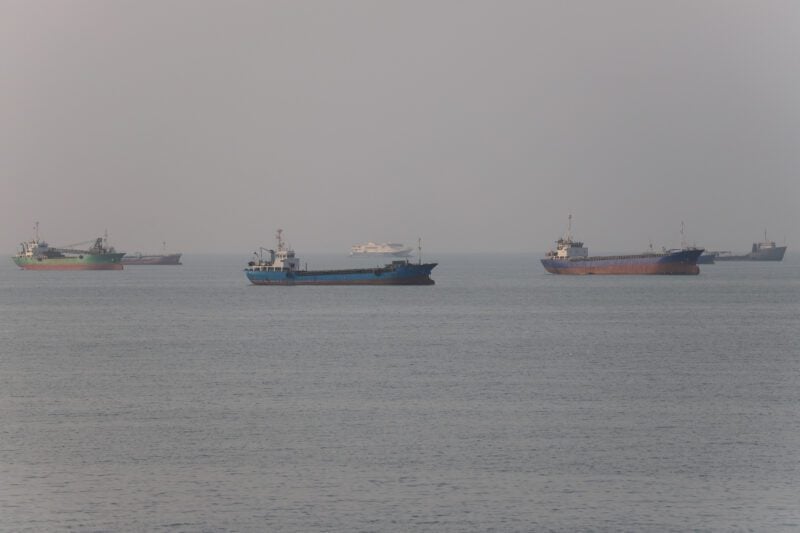
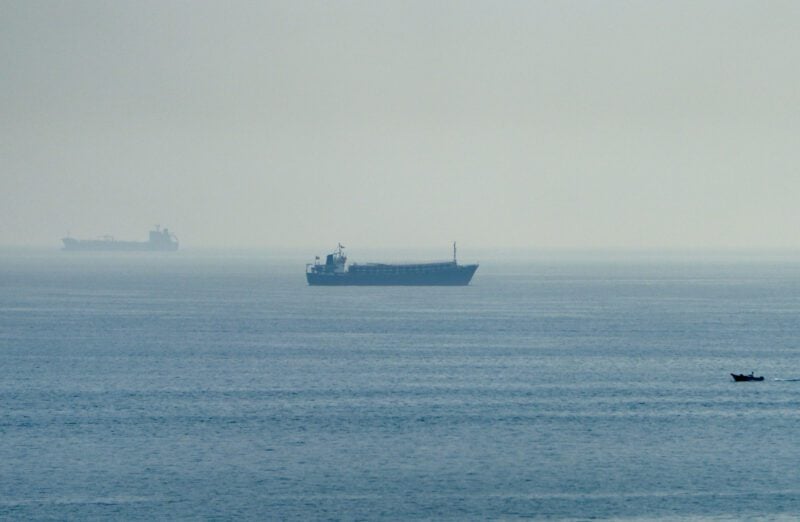
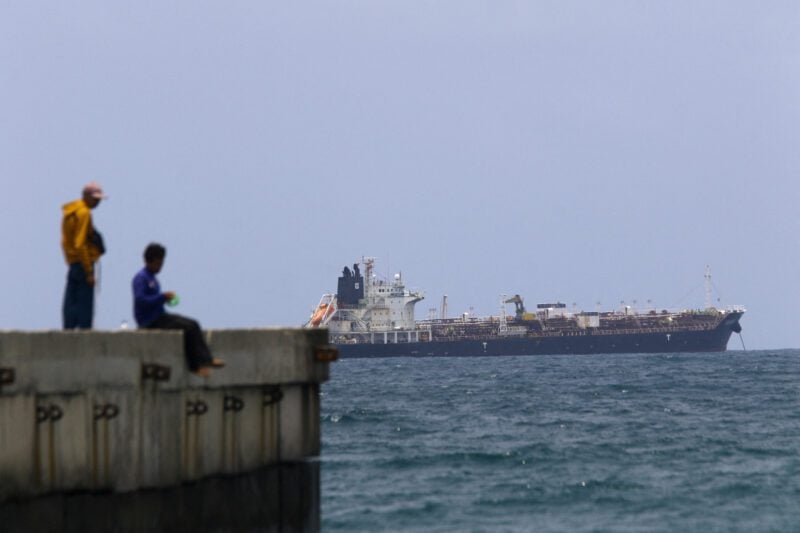
- The Strait of Hormuz is very likely to remain severely constrained but partially open to selected commercial traffic over the next 0-14 days. Kpler counted 17 visible commodity vessels over the latest weekend, compared with roughly 125 large commercial vessels per day before the war, while JMIC reported single-digit transits. US Naval Cooperation and Guidance for Shipping data indicated more than 30 vessels per day in the preceding 72 hours, showing that the sources use different vessel categories or time windows. Oil movement continues through US-protected Omani coastal corridors and ship-to-ship transfers in the Gulf of Oman, but tanker attacks and continuing IRGC harassment sustain a severe threat environment. UKMTO has not attributed the tanker attacks and describes the projectiles as unknown. (Confidence: medium · ASSESSED)
- I&W: Confirmation: JMIC and Kpler continue to record single-digit or similarly low transits, while UKMTO reports another tanker incident in the strait. (0-14 days)
- I&W: Break: visible commercial traffic returns towards roughly 125 large vessels per day, or Saudi oil loadings from Yanbu resume after the reported absence since 16 September. (0-14 days)
- Houthi forces are likely to sustain pressure on Saudi Arabia and shipping near the Bab el-Mandeb over the next 0-14 days. The group has tightened its grip on the strait, advanced to adjacent areas and increased concern over Saudi energy infrastructure and international shipping. Its assurance to avoid US vessels explicitly excludes Saudi vessels. The UK government's agreement to provide air-to-air refuelling, including an RAF Voyager deployment for several weeks, marks direct British defensive support to Saudi operations. The level of future US action remains unsettled because Donald Trump reportedly came close to ordering strikes but made no direct pledge during his call with Yemeni President Rashad al-Alimi. (Confidence: medium · ASSESSED)
- I&W: Confirmation: Houthi forces conduct another attack on Saudi energy infrastructure, Saudi shipping or vessels using the Bab el-Mandeb, or advance closer to the strait. (0-14 days)
- I&W: Break: Houthi forces withdraw from areas adjacent to the Bab el-Mandeb and extend their non-attack assurance to Saudi vessels and energy infrastructure. (0-14 days)
- Energy and maritime logistics disruption is likely to persist for the next 1-3 months, despite continued oil exports through alternative routes. Saudi Arabia recorded no visible oil loadings from Yanbu after 16 September, while around 2.5 million barrels per day are expected to move through ship-to-ship transfers in the Gulf of Oman during September. UAE oil exports are set to reach 3.6 million barrels per day, showing that regional supply is being rerouted rather than uniformly halted. European diesel futures reached an all-time high, US retail diesel prices exceeded USD 6 per gallon and US diesel stocks remained nearly 15 percent below the five-year average. The assessment has medium confidence because traffic counts use differing methodologies and the supplied reporting does not independently corroborate all attribution and operating-status claims concerning Saudi export infrastructure. (Confidence: medium · ASSESSED)
- I&W: Confirmation: European and US diesel prices remain at or near reported record levels while US stocks stay close to 15 percent below the five-year average. (1-3 months)
- I&W: Break: Saudi loadings from Yanbu resume and Hormuz traffic returns towards pre-war levels without a corresponding rise in ship-to-ship transfers. (0-3 months)
- Diplomatic contacts are likely to continue over the next 0-14 days, but a comprehensive US-Iran agreement is very unlikely in that period. Pakistan, Oman and Qatar continue to facilitate contact, Mohsin Naqvi made his sixth visit to Tehran since the war began, and Mike Waltz said the door remains open to negotiations. Iran's stated conditions require an end to the war on all fronts, the release of frozen assets and the lifting of the naval blockade, while Mohammad Bagher Ghalibaf has tied both renewed negotiations and the reopening of Hormuz to Iranian preconditions. These demands remain difficult to reconcile with the US options described by Donald Trump. (Confidence: medium · ASSESSED)
- I&W: Confirmation: Mohsin Naqvi, Oman, Pakistan or Qatar announce another mediation session with US and Iranian participation. (0-14 days)
- I&W: Break: Washington and Tehran formally accept reciprocal conditions that include a ceasefire and an agreed status for the Strait of Hormuz. (0-14 days)
Outlook & scenarios
Coercive conflict with constrained maritime access (55%)
This is the most likely path over the next 0-14 days. US and Iranian statements remain hostile, IRGC harassment and tanker incidents continue, and the Strait of Hormuz stays open only to selected traffic using US-protected corridors and Gulf of Oman ship-to-ship transfers. Houthi pressure near the Bab el-Mandeb continues without a confirmed large-scale US strike on Yemen.
Mediated pause without a comprehensive settlement (20%)
Pakistan, Oman and Qatar sustain mediation, with Mohsin Naqvi's Tehran engagement and Mike Waltz's statement about an open negotiating door producing a limited pause. Iran retains its conditions on frozen assets, the naval blockade and Hormuz, so the pause stops short of a comprehensive US-Iran agreement.
Regional maritime widening (20%)
Houthi forces conduct further attacks against Saudi-linked shipping or energy infrastructure near the Bab el-Mandeb. The UK extends support through the RAF Voyager and Sky Sabre system, Saudi operations expand and commercial risk rises in both the Bab el-Mandeb and Strait of Hormuz. Oil continues to move through alternative routes, but diesel prices and shipping costs remain elevated.
High-impact US-Iran escalation (5%)
Donald Trump orders wider offensive operations against Iran. Iran follows through on threats to change the weaponry and geography of the war and targets US bases or interests across the region. Further attacks on commercial shipping sharply reduce Hormuz traffic and force heavier reliance on Gulf of Oman transfers and Red Sea routes.
Recommendations
- Maintain a daily maritime incident matrix that reconciles UKMTO, JMIC, Kpler, US Naval Cooperation and Guidance for Shipping, and CENTCOM reporting. Record vessel definitions, geographic scope and time windows before comparing transit figures.
- Keep tanker-attack attribution separate from incident reporting. Treat the projectiles as unattributed until UKMTO or another authoritative investigation identifies the responsible actor.
- Prioritise monitoring of three 0-14 day tripwires: a new US strike on Iran, an IRGC attack or interception involving US forces, and a Houthi attack on Saudi energy infrastructure or shipping near the Bab el-Mandeb.
- Track the operational use of the RAF Voyager and Sky Sabre system in Saudi Arabia, alongside any expansion of Saudi air operations or changes in Houthi assurances concerning US and Saudi vessels.
- Update energy disruption estimates using the 2.5 million barrels per day Gulf of Oman ship-to-ship figure, UAE exports of 3.6 million barrels per day, Saudi Yanbu loading data, European and US diesel prices, and US diesel inventories.
- Maintain a diplomatic contact tracker for Mohsin Naqvi, Oman, Pakistan, Qatar, Mike Waltz and Iranian negotiators. Record each side's stated conditions and distinguish mediation activity from an actual ceasefire or agreement.
- Flag the conflicting 2025 and 2026 dates attached to some tanker and Admiral Cooper reporting before using those records in formal assessments.
Confidence & uncertainty
Overall confidence is high for the core situation picture because multiple high-confidence claims from wire services, major media, maritime reporting and official statements corroborate the continuation of the war, tanker incidents, severe Hormuz risk, Houthi advances and energy-market disruption. Confidence is lower for forward-looking judgments because traffic counts use different methodologies, UKMTO has not attributed the tanker attacks, and several records contain date or incident-count discrepancies. These uncertainties affect attribution and measurement more than the central assessment that regional instability is increasing.
Intelligence gaps
- [EEI 1.1 · UNCOVERED] Observed repositioning, sustained increases, or new forward basing of Iranian conventional or IRGC forces (armored units, missile batteries, aircraft, naval vessels) toward borders or regional launch points. Recommended collection: IMINT/satellite
- [EEI 1.2 · PARTIAL] Hezbollah or other Iran-aligned proxy forces conducting mass mobilization, visible rocket/artillery emplacements, cross-border firing incidents, or preparations for cross-border operations from Lebanon, Syria, Iraq or Yemen. Recommended collection: HUMINT/ground ISR
- [EEI 1.3 · PARTIAL] Detection of increased missile/rocket/torpedo launch events attributable to Iran, Israel, or proxies (launch signatures, trajectories, impact points) indicating a sustained campaign rather than isolated strikes. Recommended collection: SIGINT/IMINT/air-defense radar
- [EEI 1.4 · PARTIAL] Interdicted or observed shipments (air, sea, land manifests, seizures, satellite imagery of transfers) of advanced weapons or missile components from Iran toward proxy groups or forward staging points. Recommended collection: maritime/AIS
- [EEI 2.1 · PARTIAL] Satellite or on-the-ground imagery showing fires, damage, or operational shutdown at major oil export facilities, refineries, storage terminals, or key pipeline infrastructure in the Gulf and Red Sea. Recommended collection: IMINT/satellite
- [EEI 2.4 · PARTIAL] Rapid increases in war-risk insurance premiums for Middle East routes, shipping company advisories to avoid region, or major charter cancellations tied to the conflict. Recommended collection: financial/open-source
- [EEI 3.1 · UNCOVERED] Movement/arrival of major foreign military assets into the region: US carrier strike groups, amphibious ready groups, strategic bomber flights, Russian/Chinese naval taskings, or allied expeditionary units (visible in AIS, NOTAMs, satellite imagery, official releases). Recommended collection: IMINT/satellite
- [EEI 3.2 · PARTIAL] Official expedited arms transfers, basing/overflight agreements, or declarations of operational support (formal government announcements, defense ministry releases, logistics flight manifests). Recommended collection: open-source/diplomatic
- [EEI 3.3 · UNCOVERED] Embassy evacuations, large-scale personnel movements, issuance of government travel bans/advisories, or multinational security alerts affecting foreign nationals and diplomatic posture in the region. Recommended collection: diplomatic/open-source
Cited sources
[1] The Express Tribune · All Iranian airlines to shut down worldwide by Sept 23 US Treasury chief says (B) · Mon Sep 21 2026 15:48:23 GMT+0000 (Coordinated Universal Time) · sha256:09fdc7f67df4 [2] al-hiwarnews.com (Al-Hiwar News) · قالت الصحف: الجنوب في الأمم المتحدة هذا الأسبوع وسط مؤشرات التصعيد في المنطقة (D) · Mon Sep 21 2026 06:04:51 GMT+0000 (Coordinated Universal Time) · sha256:1e1040a3dba6 [3] The Maritime Executive · CENTCOM's Commander Highlights Successes of U.S. Blockade (C) · sha256:41beece76d49 [4] Observer Research Foundation (ORF) · Xi Signals China's Readiness to Mediate in the US-Iran War (C) · Mon Sep 21 2026 14:06:25 GMT+0000 (Coordinated Universal Time) · sha256:9f02ebcb6655 [5] gCaptain · Two More Tankers Hit in Strait of Hormuz as Attacks Mount (C) · Mon Sep 21 2026 16:06:53 GMT+0000 (Coordinated Universal Time) · sha256:41290b91667f [6] The Friday Times · Israel-America Watch. Saudi-Houthi Fight (B) · Mon Sep 21 2026 13:47:00 GMT+0000 (Coordinated Universal Time) · sha256:8c3dda77e94a [7] The Maritime Executive · Iran Keeps Up Pressure, Hitting Another Tanker as US Asserts Hormuz is Open (C) · sha256:0c6408c39779 [8] Reuters (republished by gCaptain) · Hormuz Shuttles Keep Oil Flowing, But At a High Cost (A) · Mon Sep 21 2026 16:38:06 GMT+0000 (Coordinated Universal Time) · sha256:09ea1e20149d [9] The Guardian · UK to give support to Saudi jets in attempt to counter Houthi fighters (A) · Mon Sep 21 2026 21:33:09 GMT+0000 (Coordinated Universal Time) · sha256:c627841372ee [10] The Asian Age (Bangladesh) · Outcome of Iran War Might Change Middle East Geopolitical Algorithm Forever | The Asian Age Online, Bangladesh (D) · Mon Sep 21 2026 04:53:00 GMT+0000 (Coordinated Universal Time) · sha256:9fbdef8f4ea9 [11] Reuters (republished by gCaptain) · Global Diesel Prices Hit Record Highs (A) · Mon Sep 21 2026 17:43:49 GMT+0000 (Coordinated Universal Time) · sha256:d526ac30b3d5
Source content hashes were computed at collection time; the cited text is preserved unmodified for the life of this product.
Red cell review: CONCUR WITH COMMENT
TLP:CLEAR