TLP:CLEAR · Disclosure is not limited.
Iran-Israel Conflict: Maritime Disruption and Proxy Escalation
Time window: Last 1 day · Audience: General analyst · Type: Situation report · DTG: 2026-09-13 19:08Z · Overall confidence: HIGH
BLUF
The conflict is widening across three linked fronts: a tanker has been struck in the Strait of Hormuz, Houthi forces have advanced towards the Bab al-Mandab, and drones launched from Iraq have targeted Saudi Arabia's East-West pipeline. US maritime protection is continuing, but whether US forces have conducted a retaliatory strike on an Iranian vessel remains unresolved. Talks in Oman on 14 September offer a limited opportunity to reduce shipping risks, not a clear path to ending hostilities.
Executive summary
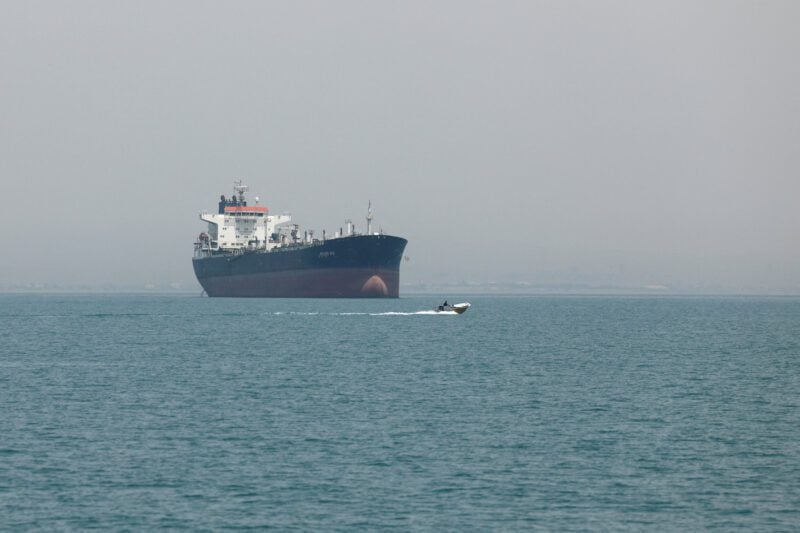
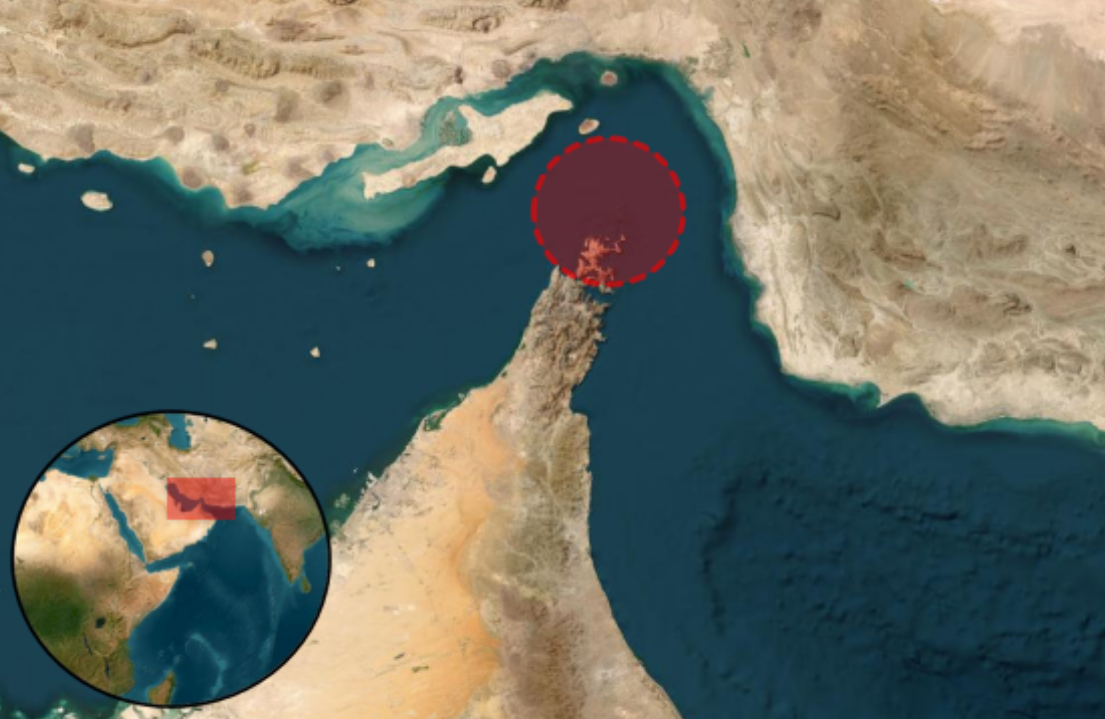
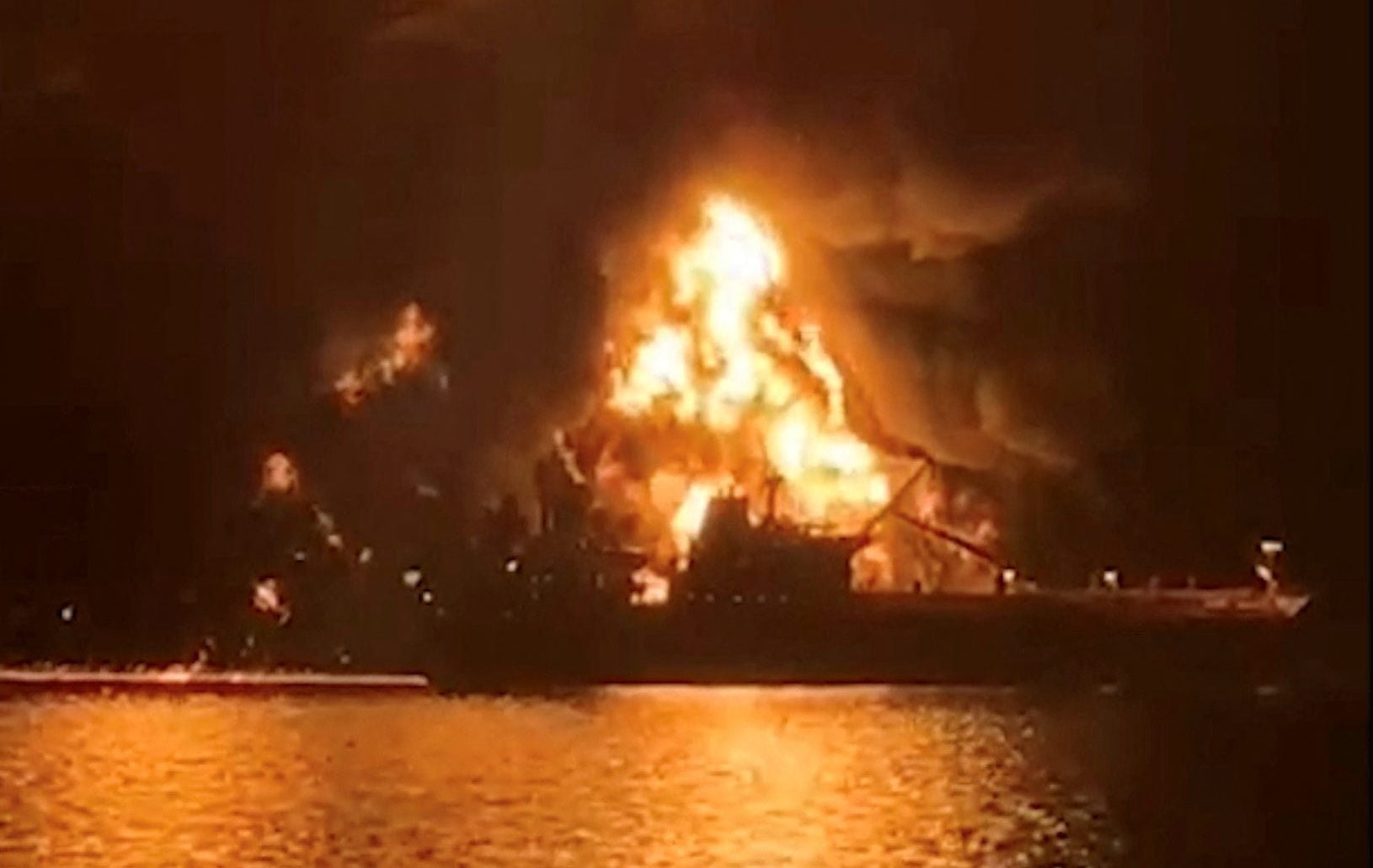
The Strait of Hormuz remains severely disrupted after a vessel was struck by an unknown projectile, caught fire and required crew evacuation on 13 September. UKMTO traffic measures indicate sharply reduced movement, although AIS-derived, US-facilitated and total transit figures are not directly comparable. Houthi forces have reached Perim, taken Dhubab and the Hanish islands, and are reported to have captured Mocha, while fighting with Yemeni government forces continues and displacement has exceeded 82,000 since the start of September. Saudi Arabia has temporarily closed the East-West pipeline after drone attacks linked to Iraqi territory, while Baghdad has dismissed the Maysan operations commander and opened an investigation. Israel is sustaining offensive operations in southern Lebanon, where more than 330,000 people remain displaced. Iran's reported request for advanced Russian Geran drones adds a potential capability concern, but delivery to Iranian forces is unconfirmed.
Change from previous assessment
Since the 12 September brief, the assessment has shifted towards greater confidence that maritime disruption is producing direct commercial-vessel casualties, with a tanker strike, fire and evacuation now reported in the Strait of Hormuz. Houthi advances towards Perim, Mocha and the Hanish islands are more extensively reported, although the status of Mocha and full coastline control remains disputed. The Saudi pipeline assessment now includes a reported Maysan launch site, the dismissal of the Maysan operations commander and an Iraqi investigation, while Saudi restraint remains the baseline. New judgments cover Israel's renewed offensive and displacement in southern Lebanon, Iran's reported request for advanced Russian Geran drones, and the unresolved attribution of a possible US retaliatory strike. The Oman talks remain a limited deconfliction opportunity rather than evidence of a broader ceasefire.
Key judgments
- Commercial shipping through the Strait of Hormuz is very likely to remain severely constrained over the next 14 days, while full closure is unlikely. UKMTO reported on 13 September that a vessel was struck by an unknown projectile, caught fire and required crew evacuation. Traffic is reported at roughly 20 per cent of pre-conflict levels, US-facilitated transits have averaged about 20 vessels per day compared with six AIS-derived transits, and protected sailing windows have been reduced to two daily time slots. These measures use different methods, so the scale of disruption is less certain than the existence of disruption. (Confidence: medium · ASSESSED)
- I&W: Confirm: UKMTO reports another projectile strike, fire or crew evacuation involving a commercial vessel in the Strait of Hormuz, or AIS-derived traffic remains near six transits per day. (0-14 days)
- I&W: Break: UKMTO reports sustained traffic materially above roughly 20 per cent of pre-conflict levels and US protection expands beyond two daily sailing windows. (0-14 days)
- The Houthis are very likely to retain their reported position on Perim and their gains at Dhubab and the Hanish islands over the next 14 days, but there is a roughly even chance that they have consolidated formal control of Mocha and the full Yemeni Red Sea coastline. Four Yemeni government sources reported Houthi arrival on Perim on 11 September, and separate reporting described the withdrawal of Saudi-backed Yemeni government forces. Other reporting says the Houthis captured Mocha, Mayyun and the Hanish islands, while conflicting accounts describe Mocha as an ongoing objective and the claim of full coastline control as unverified. Fighting is likely to sustain displacement, with the International Organization for Migration reporting more than 82,000 displaced people since the start of September and more than 2,000 arrivals in Djibouti in the previous 24 hours. (Confidence: medium · ASSESSED)
- I&W: Confirm: independent reporting verifies Houthi military or administrative presence on Perim and Mocha, while Yemeni government forces continue regrouping in Marib rather than returning to either location. (0-14 days)
- I&W: Break: Saudi-backed Yemeni government forces retake Mocha or re-enter Perim and establish a sustained position there. (0-14 days)
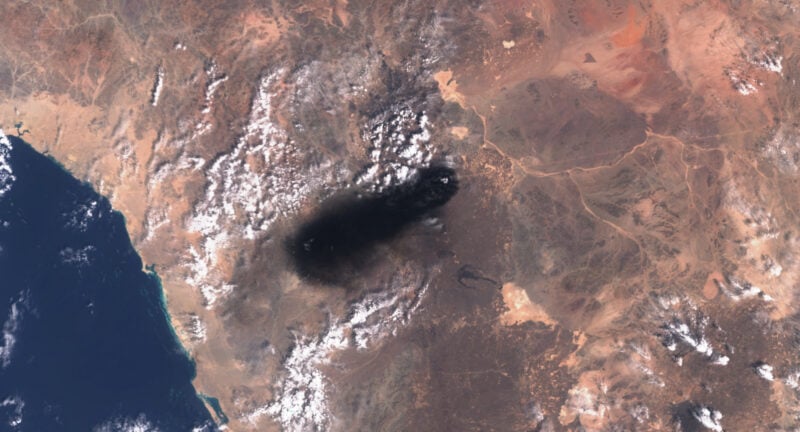
- Further Houthi or Iraq-based Iran-aligned militia attacks on Saudi energy infrastructure or southern cities are very likely within 30 days, while direct Saudi retaliation against Iraq is unlikely within 14 days. Saudi officials attributed the East-West pipeline attack to drones launched from Iraq, and Iraqi Prime Minister Ali al-Zaidi dismissed the Maysan operations commander and ordered an investigation after determining that the attack originated in Maysan. Responsibility remains contested between Iraqi Iran-aligned militias, Iran and the Houthis. Saudi Arabia has stated that it will not retaliate immediately, while Houthi attacks have continued against Jazan, Sharurah and other Saudi targets. (Confidence: medium · ASSESSED)
- I&W: Confirm: another drone or missile attack damages a Saudi pipeline, refinery, energy site or urban target, or Saudi Arabia reports another temporary energy shutdown. (0-30 days)
- I&W: Break: Saudi Arabia conducts a publicly acknowledged strike against an Iraqi target, especially in Maysan, or abandons its stated policy of delaying retaliation. (0-14 days)
- Iran is likely to seek advanced Russian Geran-4 and Geran-5 drones, but it is unlikely that current reporting establishes delivery to or operational use by Iranian forces. Reporting based on Western security officials and a person close to the Kremlin says Tehran requested the systems earlier in 2026. The reported Geran-5 carries a 90-kilogram warhead and reaches 600 kph, while both newer models reportedly include thermal vision, AI-powered targeting and anti-jamming equipment. Confidence is reduced by the single underlying reporting stream and by unresolved disagreement over the direction of Russia-Iran drone and missile technology transfers. (Confidence: medium · ASSESSED)
- I&W: Confirm: Iranian military releases, identifiable debris or satellite imagery show Geran-4 or Geran-5 systems at an Iranian base or used in an Iranian strike. (1-3 months)
- I&W: Break: credible Russian or Iranian reporting states that no transfer occurred and no Iranian use of Geran-4 or Geran-5 is identified. (1-3 months)
- Israel is very likely to sustain offensive operations in southern Lebanon over the next 14 days, and displacement from border areas is likely to persist over the next 1-3 months. Reporting states that Israel has intensified air attacks, reinvaded southern Lebanon and occupied more than 50 villages. More than 330,000 people remain displaced, although more than 810,000 have returned home or moved nearby. The June framework agreement between Israel and Lebanon has not stopped attacks, and reports of a possible Israeli pullback to a Grey Line leave the future status of border villages unresolved. The scale figures and occupancy assessment rely mainly on one major-media account, which limits confidence. (Confidence: medium · ASSESSED)
- I&W: Confirm: Israeli airstrikes continue and the number of Israeli-held villages in southern Lebanon rises above the reported 50, with no sustained civilian return to border communities. (0-30 days)
- I&W: Break: independently verified Israeli forces withdraw to the reported Grey Line and substantial numbers of displaced residents return to border villages. (1-3 months)
- The 14 September Oman meeting between Iran, Iraq and Gulf Arab states has a roughly even chance of producing a limited safe-shipping arrangement within 14 days, but is unlikely to produce a signed agreement that ends US-Iran hostilities. Iran has confirmed the meeting, while a senior Iranian official said that no signed agreement is expected. Xi Jinping has called for a political settlement and ceasefire, and the BRICS declaration urged restraint without condemning either side. Iran's refusal to surrender and President Trump's defence of the US campaign indicate that diplomatic engagement is more likely to manage shipping risks than to settle the conflict. (Confidence: medium · ASSESSED)
- I&W: Confirm: the Oman meeting produces a joint communiqué specifying protected routes, sailing windows or procedures for commercial vessels through the Strait of Hormuz. (0-14 days)
- I&W: Break: the meeting ends without a joint text and UKMTO reports another vessel strike or fire in the Strait of Hormuz. (0-14 days)
- There is a roughly even chance that the reported strike on an Iranian small container ship was conducted by US forces, while US defensive maritime support is very likely to continue. One account attributes a low-intensity strike off Iran to US forces, another describes an unattributed airstrike near Hengam, and a separate report says US forces did not conduct the expected tanker retaliation. This is a direct contradiction involving low- and medium-confidence reporting, so confidence in attribution is low. (Confidence: low · ASSESSED)
- I&W: Confirm: US authorities publicly acknowledge the container-ship strike or independent imagery and vessel reporting identify a US weapon or platform. (0-14 days)
- I&W: Break: US authorities deny conducting the strike and independent reporting attributes the damage to another actor or to a non-kinetic incident. (0-14 days)
Outlook & scenarios
Constrained conflict and proxy expansion (45%)
The most likely path is continued US-Iran maritime confrontation around the Strait of Hormuz, with traffic kept at sharply reduced levels. The Houthis retain positions near Perim and the Bab al-Mandab, continue pressure on Saudi targets, and Yemeni government forces regroup in Marib. Saudi Arabia maintains restraint towards Iraq while keeping the East-West pipeline closed or operating below normal levels.
Limited maritime deconfliction (25%)
Iran, Iraq and Gulf Arab states reach a narrow arrangement in Oman covering protected sailing windows or designated routes. Commercial traffic improves from current levels, but vessel movements remain restricted and the agreement does not stop Israeli operations in Lebanon, Houthi attacks or the wider US-Iran confrontation.
Multi-front escalation (20%)
A further strike on a commercial vessel, Saudi energy site or US-linked facility prompts additional US or Israeli action. Iran-backed Iraqi militias and the Houthis intensify attacks, Saudi Arabia conducts direct action against an Iraqi target, and the Bab al-Mandab and Strait of Hormuz face simultaneous disruption. Oil tanker rates and displacement in Yemen and Lebanon rise further.
Wildcard: widespread tanker attacks after direct retaliation (10%)
A confirmed US strike on an Iranian tanker or vessel triggers an Iranian response against multiple tankers in the Persian Gulf and Gulf of Oman. The result is a sharp reduction in commercial sailings, suspension of remaining protection windows and a rapid shift from constrained transit to effective maritime closure.
Recommendations
- Maintain separate tracking series for AIS-derived traffic, US-facilitated transits and total reported Hormuz movements. Do not combine the six daily AIS-derived transits, roughly 20 daily facilitated transits, 210 weekly transits and the 20 per cent estimate into a single measure.
- Prioritise daily review of UKMTO and JMIC reporting for vessel strikes, fires, crew evacuations, route changes and protection-window changes. Record northern Iranian-water traffic separately from the southern Omani route.
- Treat Houthi control of Mocha and the wider Yemeni Red Sea coastline as contested. Require two-source confirmation before reporting consolidated control, and monitor Perim, Dhubab, the Hanish islands, Marib regrouping and arrivals in Djibouti.
- Track the Maysan investigation, the status of the East-West pipeline and activity by Kata'ib Hezbollah, Harakat al-Nujaba, Kata'ib Sayyid al-Shuhada, Harakat Ansar Allah al-Awfiya and Saraya Awliya al-Dam. Separate confirmed physical damage from disputed attribution.
- Distinguish US defensive maritime support from offensive retaliation in all reporting. Flag any official US attribution of the Iranian container-ship incident or any new strike on an Iranian tanker.
- Prepare a same-day readout for the 14 September Oman meeting. Assess any joint text against concrete measures, including protected routes, sailing windows, vessel notification procedures and subsequent UKMTO traffic.
- Monitor for evidence of Geran-4 or Geran-5 transfer or Iranian use, including identifiable debris, official imagery and strike signatures. Treat the reported Russian transfer as unconfirmed until delivery or operational use is independently established.
- Track Israeli-held villages, airstrike locations, the reported Grey Line and displacement in Beirut, Sidon, Tyre, Chouf and Aley to assess whether the southern Lebanon front is becoming a sustained territorial and humanitarian crisis.
Confidence & uncertainty
Overall confidence is high because the core developments are supported by multiple reporting streams, including UKMTO maritime reporting, wire-service accounts, International Organization for Migration figures, Saudi and Iraqi official statements, and market data. The main uncertainties concern the attribution of attacks, the status of Mocha and the wider Yemeni coastline, the scale of Hormuz traffic, the disputed US retaliatory strike, the start and continuity of the US-Iran conflict timeline, and whether Russia has delivered advanced Geran drones to Iran.
Intelligence gaps
- [EEI 1.1 · UNCOVERED] Movement, dispersal, or emplacement of Iranian conventional or IRGC heavy assets (ballistic missile launchers, Khoramshahr/Toofan-class missile transporters, ground-to-ground TELs, air defense batteries, amphibious units) from garrison areas toward forward bases or coastal launch sites. Recommended collection: satellite/IMINT
- [EEI 1.2 · PARTIAL] Authenticated Iranian military orders, NSC/IRGC operations directives, or senior leadership statements explicitly directing strikes against Israel or US forces or authorizing cross-border operations. Recommended collection: human/diplomatic
- [EEI 1.3 · UNCOVERED] Changes in Israeli and US force posture indicating anticipation of direct large-scale conflict, elevated readiness levels, mobilization notices, pre-positioning of munitions, or public/private orders to prepare offensive strikes. Recommended collection: open-source/diplomatic
- [EEI 2.1 · UNCOVERED] Observable pre-launch preparations for missile/rocket/cruise missile strikes (fueling, warhead mating, launcher orientation, support vehicle congregation) and abnormal munitions handling at known launch sites. Recommended collection: satellite/IMINT
- [EEI 2.2 · UNCOVERED] Indications of proxy arms shipments and weapons transfers (truck convoys, small boat transfers, container movements from Iran to proxies, new stockpiles in Lebanon, Iraq, Yemen, Syria). Recommended collection: maritime/AIS
- [EEI 2.3 · UNCOVERED] Evidence of cyber attack planning or active exploitation campaigns targeting Israeli or US military/critical infrastructure (emergence of new command-and-control servers, spear-phishing campaigns against defense personnel, successful intrusions). Recommended collection: cyber
- [EEI 3.1 · UNCOVERED] Movements and posture changes of US regional platforms (carrier strike groups, amphibious ready groups, B-52/B-1/B-2 or fighter deployments, missile defense assets repositioning) and associated armament loadouts. Recommended collection: satellite/IMINT
- [EEI 3.2 · PARTIAL] Official or leaked US government/diplomatic communications indicating thresholds for strikes, authorization for offensive operations, or limits on action (NSC/DoD statements, congressional notifications, diplomatic notes). Recommended collection: diplomatic/human
- [EEI 4.1 · PARTIAL] Hezbollah-specific indicators: convoys and logistics movements toward Lebanon, Israel border, artillery/rocket emplacement in southern Lebanon, documented strikes-preparation activity, public mobilization orders or recruitment drives. Recommended collection: satellite/IMINT
- [EEI 4.2 · PARTIAL] Houthi-attributed maritime attack indicators: AIS anomalies/loss of contact for commercial vessels, reports of missile/drone strikes or near-miss incidents in Bab al-Mandeb/Red Sea, Houthi claims paired with imagery of weapons launches. Recommended collection: maritime/AIS
- [EEI 4.3 · PARTIAL] Militia cross-border attack evidence from Iraq/Syria: recorded rocket/mortar launch events into Israel or strikes against US facilities, movement of armed convoys toward border areas, and intercepted communications coordinating cross-border operations. Recommended collection: signals/ELINT
Cited sources
[1] gCaptain · Crew Of Vessel Attacked In Hormuz Strait Evacuated (B) · Sun Sep 13 2026 14:46:08 GMT+0000 (Coordinated Universal Time) · sha256:b31229b45bac [2] The Maritime Executive · U.S. Shows More Restraint After Latest Iranian Tanker Strike (C) · sha256:10b7ff3bfb76 [3] gCaptain · U.S.-Facilitated Hormuz Transits Help Lift Gulf Crude Exports Above 10 Million Bpd (C) · Fri Sep 11 2026 17:25:50 GMT+0000 (Coordinated Universal Time) · sha256:66948c5bfcea [4] Reuters (republished by gCaptain) · US Limits Air Defense Time Slots For Tankers Sailing Through Hormuz (A) · Sun Sep 13 2026 14:20:18 GMT+0000 (Coordinated Universal Time) · sha256:f4be381706cc [5] Reuters (republished by gCaptain) · Oil Tanker Rates Hit Record Highs Following Iran, US Shipping Attacks (A) · Fri Sep 11 2026 18:21:06 GMT+0000 (Coordinated Universal Time) · sha256:ea58de5951ab [6] Reuters (republished by gCaptain) · Yemen's Houthis Reach Strategic Island at Mouth of Vital Shipping Lane (A) · Fri Sep 11 2026 17:16:25 GMT+0000 (Coordinated Universal Time) · sha256:3ef4ca38f978 [7] Al Jazeera · Fighting continues between Yemen gov’t forces, Houthis: What is the latest? (A) · Sun Sep 13 2026 10:47:19 GMT+0000 (Coordinated Universal Time) · sha256:30a6d8d3afaf [8] East Bay Times (Bloomberg News content) · Trump says Iran-backed Houthis asked US not to target them (B) · Sat Sep 12 2026 20:58:55 GMT+0000 (Coordinated Universal Time) · sha256:8fd1ec5adcbb [9] Roya News · Day 198 | Trump claims Houthis requested US non-intervention (D) · sha256:b5ad98d8ed1f [10] Middle East Eye · Tucker Carlson says Israel sought regional hegemony by weakening Gulf states through Iran war (B) · Sun Sep 13 2026 12:12:17 GMT+0000 (Coordinated Universal Time) · sha256:0d74dc6e779c [11] New York Post · Iranian president says country 'won't surrender' as he accuses US of targeting civilians (B) · Sun Sep 13 2026 01:47:27 GMT+0000 (Coordinated Universal Time) · sha256:c30fca3a7bf7 [12] Bloomberg (republished by gCaptain) · Iraq Under Pressure After Drone Strikes Close Key Saudi Pipeline (A) · Sun Sep 13 2026 15:19:32 GMT+0000 (Coordinated Universal Time) · sha256:13e849f83813 [13] The Jerusalem Post · Saudi pipeline attack exposes growing power of Iran-backed militias - analysis (B) · Sat Sep 12 2026 17:36:12 GMT+0000 (Coordinated Universal Time) · sha256:b6a8c56cd479 [14] The Jerusalem Post · Iran requested new Russian Geran drones for attacks on Israeli, American targets amid war - report (B) · Sun Sep 13 2026 17:19:32 GMT+0000 (Coordinated Universal Time) · sha256:8f1c8c0c773b [15] The Free Press · Simon Sebag Montefiore: Who Will Rule the Middle East? (B) · Tue Sep 08 2026 19:53:18 GMT+0000 (Coordinated Universal Time) · sha256:b84ca70a663e [16] Al Jazeera · How Israel’s destruction of south Lebanon is making displacement permanent (A) · Sun Sep 13 2026 13:09:22 GMT+0000 (Coordinated Universal Time) · sha256:5116ed32e575 [17] Al Jazeera · BRICS summit 2026: What are the key takeaways? (A) · Sun Sep 13 2026 12:04:39 GMT+0000 (Coordinated Universal Time) · sha256:da6323eb4de1 [18] Al Jazeera · The Iran war reveals the limits of BRICS (B) · Sun Sep 13 2026 12:46:58 GMT+0000 (Coordinated Universal Time) · sha256:11b761ad1e62
Source content hashes were computed at collection time; the cited text is preserved unmodified for the life of this product.
TLP:CLEAR